Drones Over Moscow, a Fragile Iran Deal, and a $2.8 Trillion Rocket Firm: The World on June 16, 2026
Ukrainian drones struck Moscow's largest oil refinery on Tuesday as the Trump administration declared an Iran nuclear agreement 'complete' — two seismic developments unfolding simultaneously against a backdrop of record-breaking market euphoria around SpaceX's four-day-old IPO.
How this was made Verified AI
Every Intellegix briefing is generated from that day's broadcast and run through automated checks before it publishes — with a human paged on any flag. Here is the trail for this edition.
Ukraine Hits Moscow's Fuel Heart, Signaling Escalation Has Become Routine
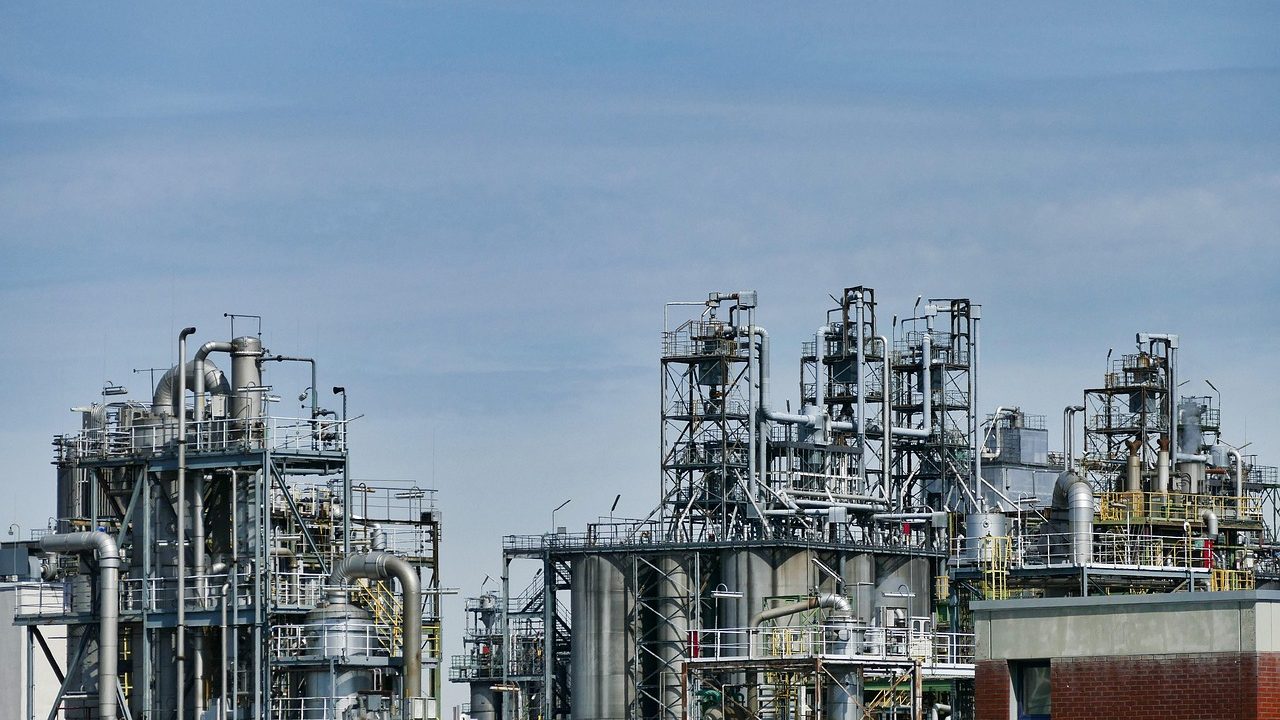
Ukrainian drones struck the Gazprom Neft refinery in Moscow's Kapotnya district in the early hours of Tuesday, targeting the Russian capital's primary oil processing facility — a site that sits within Moscow's own administrative boundaries and supplies fuel the city depends on daily. The choice of target reflects a deliberate strategic calculus: Kyiv has concluded that striking Russian energy infrastructure inside Russia itself is both legitimate and sustainable, mirroring Moscow's sustained campaign against Ukrainian power plants, heating stations, and grid substations throughout the war.
What was once unthinkable has become, in the words of close observers, almost unremarkable. A drone strike inside Moscow would have dominated global coverage for a week not long ago; on Tuesday it ranked as one of twelve major headlines. The escalation ladder has been climbed so gradually that each new rung barely registers. Yet the military logic is coherent: Ukraine is attempting to impose symmetric costs on an adversary that has made energy infrastructure a primary instrument of war.
The timing was almost certainly not accidental. President Zelenskyy was in Puglia, Italy, joining G7 discussions as trade and war pressures converged. Hitting a Moscow refinery the morning of those talks served as a signal to Western partners that Ukraine retains offensive capability and strategic initiative — a message with particular weight at a moment when the Iran situation and domestic political pressures in the United States are crowding the alliance's agenda.
The economic dimension compounds the pressure. The US Strategic Petroleum Reserve has fallen to 340.3 million barrels — its lowest level since 1983 — driven partly by an 8.9-million-barrel weekly drawdown tied to disruptions from the Iran conflict. Two simultaneous theaters of conflict are now straining global energy supply chains, and the Kapotnya strike, even if production disruption proves temporary, adds psychological weight to markets already on edge.
Germany's military posture underscores how seriously European defense establishments are reading the moment. Luftwaffe chief Lieutenant General Holger Neumann stated publicly this week that the German Air Force is ready to 'fight tonight' against Russia if Moscow attacks any NATO member. The bluntness is historically striking from a country that has spent decades deliberately restraining its military rhetoric. The statement reflects NATO's deterrence strategy — adversaries must believe the alliance will respond, not merely that it might — and arrives alongside Germany's significantly increased defense spending, a longstanding sore point in transatlantic relations that the Trump administration pressed hard.
Trump's Iran 'Deal' Is Declared Done — But Five Complications Say Otherwise
President Trump declared the US-Iran peace agreement 'complete' on Tuesday, with Vice President Vance confirming that nuclear inspectors will return to Iran under the terms of the accord. Prediction market Polymarket offered the starkest measure of how fast the landscape shifted: contracts pricing the probability of a deal by June 15th had sat at just 8% as recently as last week before repricing to near-certainty within 72 hours of Trump's announcement. That velocity signals a sudden top-level decision made among a small number of principals, bypassing the pre-announcement signaling that normally allows markets and analysts to price in probability gradually.
Complications began accumulating almost immediately. The UN snapback mechanism — triggered when the original JCPOA collapsed — does not simply dissolve because a new agreement is announced. Several European powers, alongside Russia and China, hold divergent interpretations of what snapback means in the current context, and that legal ambiguity could block the sanctions relief Iran was reportedly promised, regardless of what Washington declared.
Iran's domestic situation adds another layer of tension. The regime executed two men this week connected to the January 2026 protest wave, a grim reminder that even as diplomatic progress occurs at the summit level, the government's response to internal dissent is unchanged. Iran's leadership appears to view internal stability as the primary existential threat — a nuclear deal does not alter that calculus for the hardline factions that retain significant power.
The nuclear inspectors commitment is the most technically significant element of the agreement, if it holds. The IAEA had essentially lost visibility into Iran's program after inspectors were expelled, and restoring that access would provide at least some ability to monitor enrichment levels and centrifuge activity. But 'inspectors will return' and 'inspectors will have meaningful access to all undeclared sites' are materially different commitments — and the gap between those two formulations is precisely where previous agreements broke down.
Ripple effects are already visible in adjacent geopolitics. Sudan reportedly curbed its Iranian arms purchases specifically to demonstrate alignment with American interests and court US support — a reminder that when major powers shift relationship frameworks, smaller states scramble to reposition accordingly. Meanwhile, a durable Iran agreement, by stabilizing oil markets, could theoretically make it marginally easier for Europe and the United States to sustain Ukraine support over a longer horizon, though that outcome remains several steps removed from current reality.
SpaceX at $2.8 Trillion: What the Largest US IPO in History Actually Means
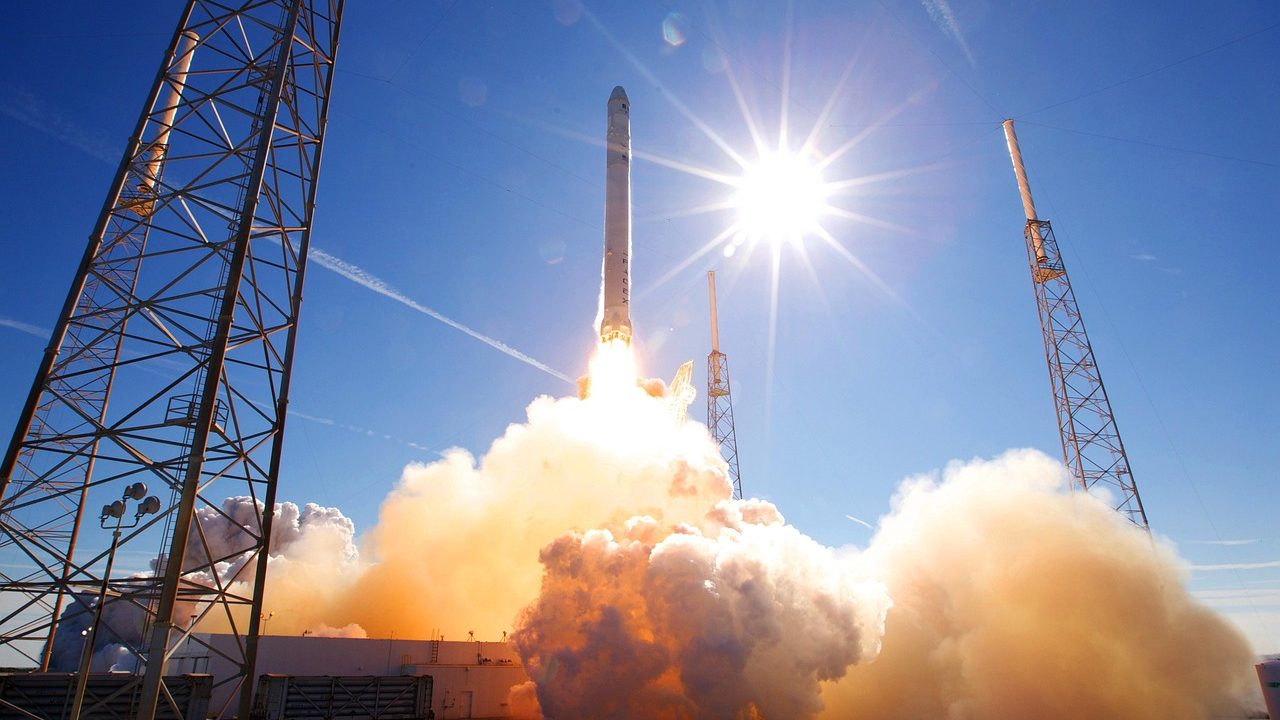
Four days after its historic debut — described as the largest US IPO on record — SpaceX reached a market capitalization of nearly $2.8 trillion in Tuesday premarket trading, a 50% gain in three sessions that pushed the company past Amazon in market value. Options trading launched Tuesday, introducing the mechanics that analysts are warning could generate a gamma squeeze: as traders buy call options betting on further gains, market makers hedge by purchasing the underlying shares, pushing prices higher, making more options profitable, triggering yet more hedging purchases in a potentially self-reinforcing loop.
The fundamental valuation arithmetic is striking. Amazon — the company SpaceX just surpassed — generates roughly $575 billion in annual revenue. SpaceX's last reported annual revenue was estimated somewhere in the $15 to $20 billion range. Paying Amazon-scale valuations for a company with approximately 3% of Amazon's revenue requires assumptions about an almost vertical growth trajectory, driven by Starlink's more than 7 million global subscribers, Falcon 9 commercial launches, Starship development contracts, and government defense and NASA work. Some serious analysts believe that trajectory is realistic; others consider it speculative overreach.
The IPO's most consequential signal may be structural rather than specific to SpaceX. By demonstrating that private-market unicorn valuations can survive public market scrutiny — and then some — SpaceX has given bankers and boards at other high-profile private companies confidence to pursue their own debuts. Analysts are now characterizing the listing as clearing the runway for OpenAI and Anthropic to go public, a claim that carries weight even if those companies' revenue profiles differ substantially from a business built around physical rockets and satellite infrastructure.
On the same morning its stock was generating Wall Street euphoria, SpaceX's Cargo Dragon capsule was undocking from the International Space Station — a simultaneity of financial spectacle and actual space operations that captures something genuine about where the company sits. Nvidia, meanwhile, launched its first bond sale since 2021, seeking $20 billion across seven tranches. The fact that a company with a market capitalization above $3 trillion is raising debt at scale reflects the broader institutional appetite for AI-linked exposure in any investable form. Separately, a World Gold Council survey found a record share of central banks plan to increase gold holdings — two very different reads on global financial confidence coexisting in the same week.
AI Access as National Policy: The Anthropic Ban, Chinese Rivals, and a Novel DOJ Legal Theory

The US government, exercising export control authority, blocked international access to Anthropic's most advanced AI models — Fable 5 and Mythos 5 — while negotiations between Anthropic and the White House over carve-outs or managed access frameworks collapsed without a deal. The fallout has reached the highest levels of allied diplomacy: UK Prime Minister Starmer and Canadian Prime Minister Carney are heading to the G7 summit specifically to confront the Trump administration over restrictions that treat close allies the same as adversary state actors in terms of AI access.
The administration's counterargument — that ally exemptions create pressure for further exemptions and allow models to migrate through intermediaries to restricted destinations — is not without logic. But blanket restrictions without a trusted-partner framework are generating real economic and research disruption among genuinely aligned countries. Anthropic's own workaround, an identity verification policy taking effect July 8th that restores access to verified US citizens, sets a new precedent: access to AI capabilities gated by citizenship documentation rather than the terms-of-service agreements that have historically governed software access. The privacy implications of collecting identity documents at that scale remain largely unexplored.
The DOJ filed a separate, striking argument this week: that xAI's data center — Elon Musk's AI company — is vital to national security and should therefore be immune from an NAACP environmental pollution lawsuit filed by affected communities. The legal theory, if accepted by courts, would effectively allow companies with government contracts to weaponize national security designation as litigation immunity against environmental accountability claims — a precedent legal observers say appears to be without clear prior precedent.
Chinese AI competitors are not pausing while Washington works out its export control framework. DeepSeek raised $7.4 billion in its first funding round at a valuation above $50 billion, demonstrating that the Chinese AI ecosystem retains substantial domestic and international capital access. Zhipu, another Chinese AI developer, saw its stock surge 48% in Hong Kong after JPMorgan raised its price target. The premise of US export restrictions is partly to preserve American competitive advantage; DeepSeek's fundraising suggests the competitive gap may be narrower than policymakers assumed.
A Cornell University study added a different dimension to AI security concerns: researchers found that malicious content planted on Reddit can manipulate AI agents that use web search as a tool. The agent retrieves adversarially crafted content, treats it as credible, and produces outputs or takes actions based on poisoned information — prompt injection at scale. The finding suggests that agentic AI systems carry vulnerability surfaces that have not yet been fully mapped, even as those systems are being deployed in increasingly consequential applications.
Primary Day, Social Security Pushback, and a FOIA Fight Over the Kirk Killing
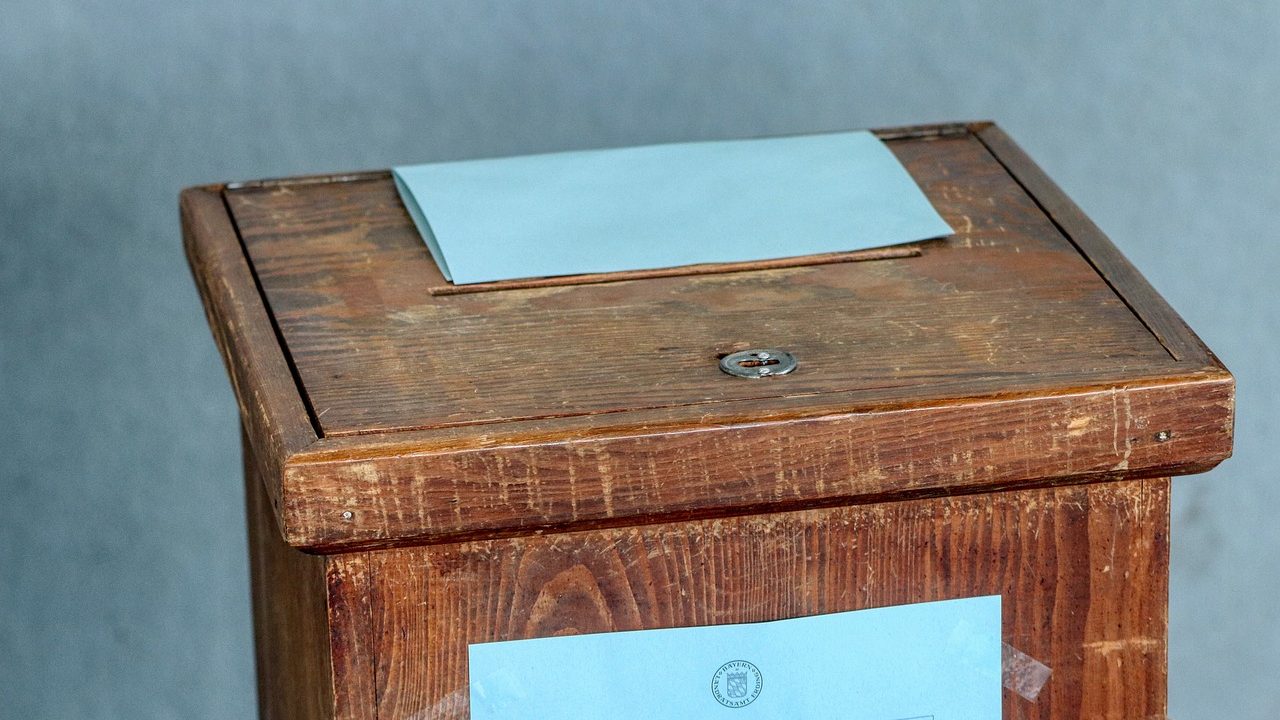
Georgia Republicans are holding runoff elections for both Senate and governor on Tuesday, consequential contests for a state that became a genuine battleground after Democrats swept both Senate seats in the 2021 runoffs. The primary outcomes will determine whether the GOP consolidates behind strong candidates heading into November or remains fractured. Oklahoma is simultaneously voting on governor and Senate primaries alongside a ballot measure that would double the state minimum wage from $7.25 to $15 — a test of whether economic populism on wages can prevail in deeply conservative political territory. Several red states have passed minimum wage increases through ballot initiatives in recent cycles, often outperforming Republican candidates in the same elections.
California's 14th Congressional District is holding a special primary to fill the seat vacated by Eric Swalwell, who resigned in April amid sexual assault allegations. Eleven candidates are competing, making a runoff almost certain in the lower-turnout special election format. The district, covering parts of the East Bay, has been a reliably Democratic seat, but the crowded field creates the possibility of unexpected primary-round outcomes.
Speaker Johnson's push on Social Security reform is generating pushback from within his own caucus — a politically significant development given that the program is widely described as the third rail of American politics. Republicans in vulnerable districts are resisting, reflecting the electoral mathematics of a 2026 cycle where cutting or restructuring the most universally used federal program carries obvious risks. Jay Clayton, nominated for Director of National Intelligence, faces a confirmation hearing on Wednesday; his financial regulatory background as former SEC chair under Trump's first administration will likely be a central focus as senators probe whether that experience translates to leading the intelligence community.
The FBI's rejection of a FOIA request from Candace Owens seeking Kash Patel's travel records before the Charlie Kirk killing carries several layers. The Bureau's refusal suggests either that the records fall under ongoing investigation exemptions or that releasing them would fuel political controversy during an active investigation. Owens, who has her own fraught history with Kirk, has been pursuing the records through formal channels. Separately, Governor Newsom is publicly claiming Trump ordered a DOJ probe into him, though reporting indicates the relevant investigations predate the current administration — a framing dispute both sides have incentives to sustain as Newsom's positioning for a potential 2028 presidential run becomes increasingly apparent.
A Depleted Oil Reserve, a Million Lost Jobs, and a Labor Movement at a Crossroads
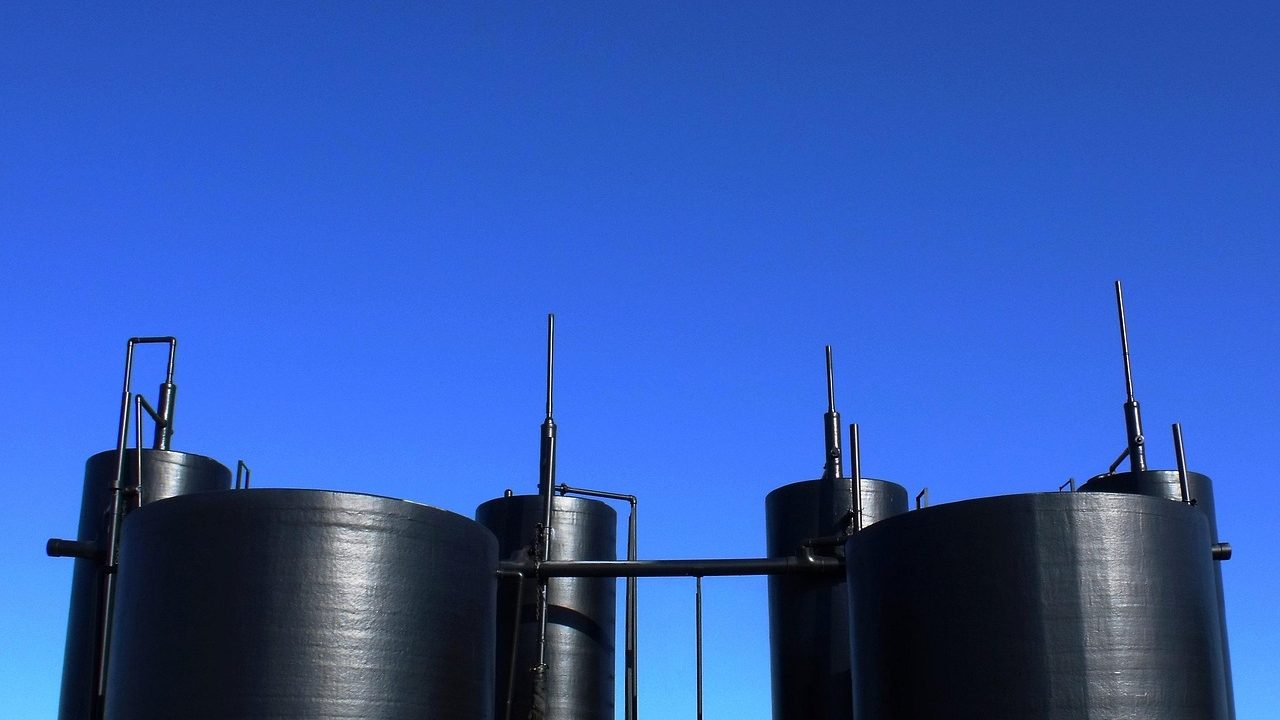
The US Strategic Petroleum Reserve's decline to 340.3 million barrels — its lowest level since 1983 — is drawing fresh scrutiny. Built after the 1973 oil embargo as an emergency buffer, the reserve is being drawn down at roughly 8.9 million barrels per week to manage supply disruptions from the Iran conflict. The precedent most cited is the 2022 drawdown during the post-Ukraine-invasion oil price spike, when roughly 180 million barrels were released over several months. That action left the reserve at levels already debated as too low; the current trajectory continues the depletion, raising the policy question of when an emergency stockpile becomes too depleted to handle a true supply shock.
A report from a think tank founded by former Vice President Pence — a conservative-aligned organization — claims that Trump-era tariffs suppressed 1 million jobs. The figure is a counterfactual estimate, with the methodological complexity that implies, but the directional argument is mainstream economics: tariffs increase costs for domestic manufacturers who use imported inputs. The source carries particular significance; when Republican-affiliated institutions criticize Republican tariff policy on employment grounds, the argument lands differently than identical criticism from the political left.
Elon Musk pushed back this week against claims that government support built Tesla, arguing that continued sales growth after federal EV tax credits expired demonstrates the company does not depend on subsidies. The argument holds on its own terms but sidesteps a more specific question: whether Tesla would have survived long enough to reach self-sufficiency without the early-stage support — Department of Energy loans and federal EV buyer credits — that provided runway during a period when the company was genuinely at risk of failure. Whether it needs subsidies now and whether it would have survived to not need them are different questions.
UAW president Shawn Fain is seeking a second term as the union's Detroit convention opens, testing whether members credit his aggressive 2023 strike strategy — which won significant wage increases from Ford, GM, and Stellantis — with delivering tangible gains. A bipartisan bill targeting Buy America rules that slow affordable housing is moving separately, with lawmakers from both parties acknowledging that domestic content requirements, however well-intentioned, add cost and time to construction in the middle of a housing affordability crisis. Microsoft, meanwhile, shuttered Compulsion Games — the studio behind 'We Happy Few' and 'South of Midnight' — laying off 90 employees as the company continues rationalizing its gaming portfolio following the Activision Blizzard acquisition.
Flickering Stars, a Planet-Eating Sun, and Reefs That May Survive After All
The Chandra X-ray Observatory has detected what researchers describe as 'flickering' supernova remnants in galaxy M83 — the Southern Pinwheel Galaxy, approximately 15 million light-years away. About half of the supernova remnants examined showed unexpected changes in X-ray brightness across a 14-year observation window. The leading explanation is that stellar survivors — companion stars that were not destroyed when their binary partner went supernova — are orbiting collapsed stellar remnants, and the interaction between the companion's stellar wind and the collapsed object generates the brightness variations. The finding illustrates the scientific value of sustained infrastructure: discoveries that require multi-decade datasets are impossible without the long-term maintenance of instruments like Chandra, which has been in orbit since 1999.
Separately, astronomers identified a sun-like star roughly 1,300 light-years away that appears to have consumed one of its planets. Chemical signatures in the star's atmosphere — specific ratios of iron, nickel, and silicon at concentrations inconsistent with natural stellar chemistry — suggest absorbed planetary material. The star's similarity to our own sun in mass and age makes the finding relevant to thinking about the long-term future of our solar system.
Astrobotic unveiled the Griffin-1 lunar lander, which NASA has designated 'Moon Base II,' targeting a late 2026 launch as part of a strategy to establish permanent infrastructure at the lunar South Pole. The South Pole is the target because of evidence of water ice in permanently shadowed craters, which could be converted into drinking water, oxygen, and hydrogen fuel for future missions. A successful Griffin-1 landing would represent a meaningful step from the Apollo era's flags-and-footprints model toward infrastructure designed to stay.
A coral reef study presented at the Our Ocean Conference in Kenya offered rare encouraging news in climate science. Researchers identified 166,000 square kilometers of climate-resilient reefs — areas that appear capable of tolerating warming beyond current projections — three times the area previously believed to have that potential. The reefs are not immune to warming but appear to possess genetic or ecological characteristics enabling faster adaptation, suggesting that targeted conservation of these resilient pockets could preserve significant coral biodiversity even under continued warming scenarios. The finding exists in direct tension with a UNICEF report released the same week estimating that 1.1 billion children — roughly every other child on Earth — already face three or more overlapping climate hazards, with drought, extreme heat, and heatwaves most common and most concentrated in Sub-Saharan Africa and South Asia.
Intel-Nvidia Chip Leak, a School Data Breach, and Why the Iran Deal May Be Less Solid Than It Looks

A leaked roadmap points to a product codenamed Serpent Lake — targeting a Q1 2028 launch — that would integrate an Nvidia RTX GPU tile directly into an Intel processor package, reportedly the first co-designed hardware between the two historically competitive companies. The technical significance lies in bandwidth and power: packaging CPU and GPU compute on the same substrate dramatically increases the speed of communication between them while reducing energy consumption. For AI inference workloads run locally on devices rather than in the cloud, that kind of integrated architecture is potentially transformative. Qualcomm said separately it is developing more than 40 AI device designs, underscoring that the race to embed capable AI compute into laptops, phones, and embedded systems is accelerating across every major chip architecture.
On the security front, the Arch Linux AUR community package repository froze new registrations following what appears to be an attack on its systems — a notable target given that Arch Linux is particularly popular among technically sophisticated developers and security researchers. The extortion group ShinyHunters leaked 137,000 school staff records from Infinite Campus, a widely used student information system, after the company reportedly declined to pay a ransom. The exposed data includes names, phone numbers, physical addresses, and support ticket contents, with the address exposure creating potential physical safety risks for educators. A New York judge separately blocked a subpoena for ChatGPT conversation records in a civil lawsuit, an early judicial data point in what is likely to become a sustained legal debate about the evidentiary status of AI conversation logs.
Justin Gaethje took home a record $825,000 in cryptocurrency bonuses at a UFC event held at the White House — a pairing that reflects both the Trump administration's cultural positioning and the increasing denomination of prize money in digital assets for events with crypto sponsors. Chris Stapleton and the Smashing Pumpkins are set to headline a July 4th concert at the LA Coliseum. The FBI seized 21 drones as part of World Cup airspace security operations.
The closing 'What If We're Wrong' exercise this week targets the Iran deal, where analytical confidence may be running ahead of verifiable evidence. The UN snapback mechanism remains legally active and could block the sanctions relief Iran was reportedly promised regardless of Trump's announcement. Iran's own official characterizations of the inspection access terms are reportedly more ambiguous than the American description. The regime's hardline factions, whose influence was signaled by this week's executions of January protest participants, have historically treated nuclear transparency as a non-negotiable sovereign issue that the Supreme Leader would need to explicitly override — and evidence of that override is limited. The indicators worth watching: Iran's precise language on inspector access, whether European powers invoke the snapback mechanism in the next 30 days, and whether IAEA Director General Grossi describes the returning inspectors' mandate in narrow or comprehensive terms.