Billions in Federal Contracts Can't Hide San Diego's Deepening Economic Divide
San Diego enters the Labor Day weekend caught between surging defense and biotech investment and mounting layoff notices, a tension that cuts across neighborhoods, industries, and the lived realities of hundreds of local workers.

“A headline unemployment rate averaged across a Northrop engineer and a Stone Brewing production worker, as one analysis put it, tells you almost nothing about what either is actually experiencing.”
How this was made Verified AI
Every Intellegix briefing is generated from that day's broadcast and run through automated checks before it publishes — with a human paged on any flag. Here is the trail for this edition.
A Region Booming and Bracing at Once

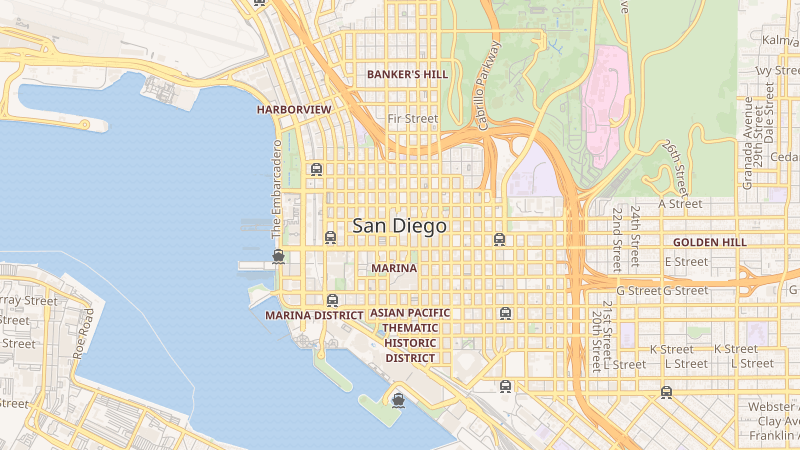
Thursday, September 3rd, 2026 finds San Diego in a state of productive contradiction: defense contracts measured in the billions, biotech labs flush with venture capital, and — on the same ledger — a beloved craft brewer filing layoff notices alongside a tech company trimming more than a hundred local positions. The prosperity is real. So is the precarity.
Today's coverage spans the full arc of that tension, from a proposed half-cent sales tax that could reshape how the county funds the Tijuana River sewage crisis, to a constitutional standoff between the County Board of Supervisors and Sheriff Kelly Martinez over immigration enforcement, to what San Diego Unified's sweeping Chromebook restriction policy actually looks like now that more than 100,000 students are back in classrooms.
Federal Dollars Flow In While Layoff Notices Go Out

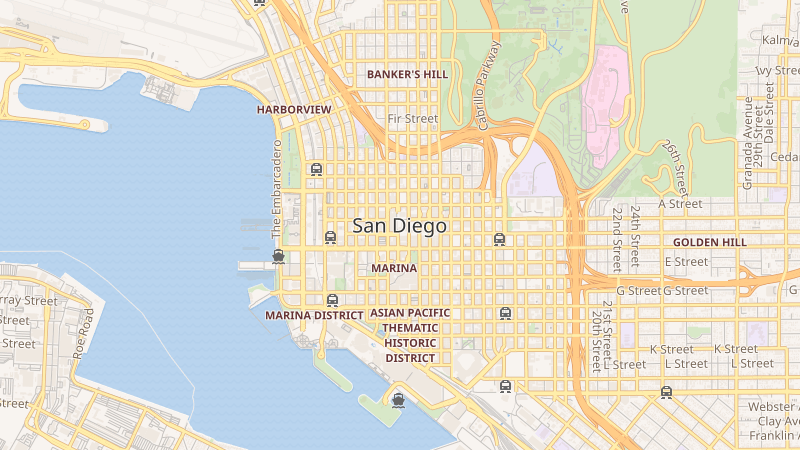
The high end of San Diego's economic ledger is striking by any measure. Northrop Grumman locked in a three-billion-dollar Department of Defense agreement providing thousands of local employees multi-year economic visibility. General Atomics received a twenty-million-dollar California Competes tax credit tied specifically to fusion energy expansion at the DIII-D National Fusion Facility — the only fusion research device operating as a Department of Energy national user facility in the entire western United States. On the biotech side, Khartis Therapeutics closed a fifty-million-dollar Series B, Japan's Craif established a thirty-three-million-dollar R&D fund focused on pancreatic cancer diagnostics, and UC San Diego is running an eighteen-million-dollar NSF quantum materials research center as part of a six-center, hundred-and-eight-million-dollar national initiative.
Sitting directly alongside those figures: ServiceNow is cutting 133 San Diego positions, with terminations hitting by September 28th. The company has described the reductions as strategic rather than financially driven, noting their concentration at senior and director levels — a framing that matters considerably less to the 133 people updating their résumés. Stone Brewing, one of the defining brands of San Diego's craft beer identity, filed a WARN notice covering 220 positions, with the first layoff phase scheduled for October 19th. The brewery's situation reflects a national industry-wide shift, with consumers moving away from craft beer toward ready-to-drink products and wine alternatives.
The county's unadjusted unemployment rate stood at 4.7 percent in July, tied for the year's high, while the seasonally adjusted figure of 4.3 percent trails both Orange County at 4.2 percent and San Francisco at 3.9 percent — regions San Diego typically outcompetes. More telling still, the regional labor force fell to 1.63 million workers in July, the lowest level in three years and nearly 50,000 below the March 2025 peak. When a labor force contracts at that scale, it signals residents leaving the region or leaving the workforce entirely.
The geography of who bears the pain sharpens the picture further. Defense contracts and biotech funding concentrate in corridors like Sorrento Valley, Torrey Pines, and Miramar. Stone Brewing's workforce is distributed differently — its Escondido brewery, its taprooms — touching a different slice of working-class San Diego than the sectors pulling in federal dollars. A headline unemployment rate averaged across a Northrop engineer and a Stone Brewing production worker, as one analysis put it, tells you almost nothing about what either is actually experiencing.
The housing market adds further texture: the county median for existing single-family homes reached $1.099 million in July, up 5.7 percent year-over-year, but sales volume fell 6.7 percent month-over-month. In commercial real estate, industrial vacancy reached 7.06 percent with net absorption turning negative at minus 236,000 square feet — a sharp reversal from positive 1.1 million square feet the prior quarter. The picture that emerges is a region genuinely strong in its federally anchored sectors and genuinely stressed at its edges, with the gap appearing wider than it did two years ago.
Sewage Tax, Sheriff Standoff, and Storm Prep Define the Policy Week

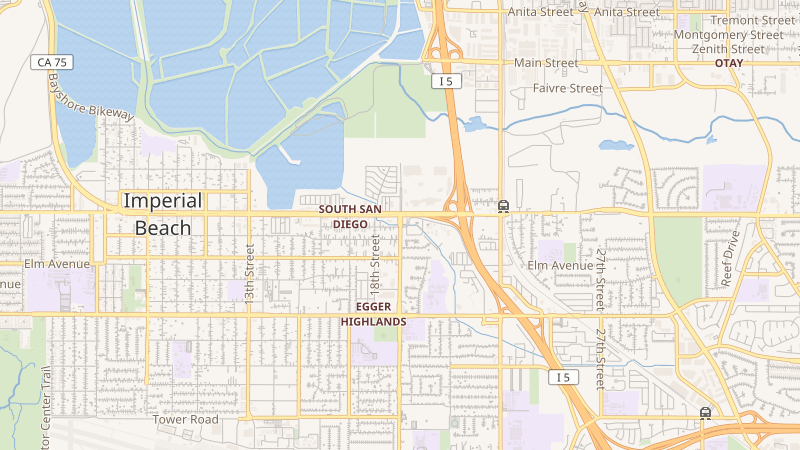
The Tijuana River sewage crisis — where hydrogen sulfide readings at Saturn Boulevard have measured sixteen times the state air-quality standard — is moving toward a potential November ballot decision. Supervisors Terra Lawson-Remer and Paloma Aguirre are asking colleagues to approve a $5.8 million spending package: $1.8 million for an eighteen-month engineering analysis and $4 million for design and permitting of a box-culvert project at Saturn Boulevard. The longer horizon involves a proposed half-cent countywide sales tax that would raise the county rate from 7.75 percent to 8.25 percent, generating roughly $360 million in year-one revenue, with 22.5 percent earmarked specifically for Tijuana River mitigation.
The political arithmetic is tight. Lawson-Remer and Aguirre are the two supervisors championing the measure; whether they can secure a third vote will determine whether the proposal reaches voters at all. Asking San Diego County residents to raise their own sales tax rate for an environmental crisis rooted in aging infrastructure on the Mexican side of the border is a hard political sell, even for communities that can smell the hydrogen sulfide from their backyards.
A separate and constitutionally significant fight is unfolding between the Board of Supervisors and Sheriff Kelly Martinez. The Board voted 3-to-2 on August 18th to terminate ICE and Customs and Border Protection training access at Otay Mesa and Camp Elliott. Sheriff Martinez subsequently used her independent executive authority to restore CBP access for roughly 1,700 officers needing recertification — while keeping ICE entirely cut off. That distinction is legally meaningful: CBP is a domestic border security agency, while ICE primarily handles interior immigration enforcement. By splitting the two agencies, Martinez is asserting that CBP recertification falls within her constitutionally protected law enforcement authority and is not subject to a Board policy directive. California sheriffs hold a constitutional independence from county boards that most department heads do not, and whether restoring CBP training access sits inside or outside that protected zone remains an open question.
On the preparedness front, the City Council has been working through its El Niño briefing under council item S503. The Office of Emergency Services has flagged storm-drain maintenance priorities for fiscal year 2027 and conducted outreach to roughly 7,000 properties identified as vulnerable due to slope position or floodplain location. The Council has also formalized a requirement for the Risk Management Department to report on police litigation costs — a new obligation tied to SDPD litigation, which an August 27th report identified as the primary driver of rising city payouts.
Biotech Vacancy and a Tower Signal Mixed Signals for Commercial San Diego


San Diego's life-sciences cluster is generating headline funding rounds while quietly carrying a vacancy rate that complicates the celebratory narrative. Despite Khartis Therapeutics' fifty-million-dollar Series B, Craif's thirty-three-million-dollar pancreatic cancer R&D fund, and UC San Diego's eighteen-million-dollar NSF quantum center, the life-science real estate vacancy rate in San Diego was running around 26 percent as of the most recent available data. Funding rounds and lab-space demand are not moving in the same direction — companies are raising capital without necessarily expanding their San Diego footprints proportionally.
Part of the explanation is that many Series B-stage biotech companies remain lean, funding science rather than square footage. The Craif situation is notable precisely because it represents a Japanese company establishing a San Diego R&D fund, suggesting the region's reputation as a pancreatic cancer research hub is pulling international capital in — but whether that translates into actual San Diego hiring remains the open question.
Broader commercial real estate signals are mixed. Industrial vacancy at 7.06 percent, with net absorption at negative 236,000 square feet, represents a meaningful reversal from positive 1.1 million square feet the prior quarter — and industrial has been San Diego's strongest commercial sector for several years. Office vacancy holds at 13.4 percent, below the national average but still elevated. In residential development, Cresleigh Homes is reportedly planning a 37-story residential tower in downtown San Diego that would rank among the tallest buildings in the downtown core, though no unit count or confirmed timeline has been made public.
On the entertainment side, Live Nation's plan to convert the 102-year-old Wonder Bread building in downtown San Diego into a music venue continues to move forward. The building has sat in various states of redevelopment discussion for years; a Live Nation-backed conversion would give downtown an intimate mid-size venue that currently has almost no equivalent — San Diego's existing music infrastructure runs from very large, like Petco Park and Viejas Arena, to very small, with little in between.
East County Quiet This Cycle

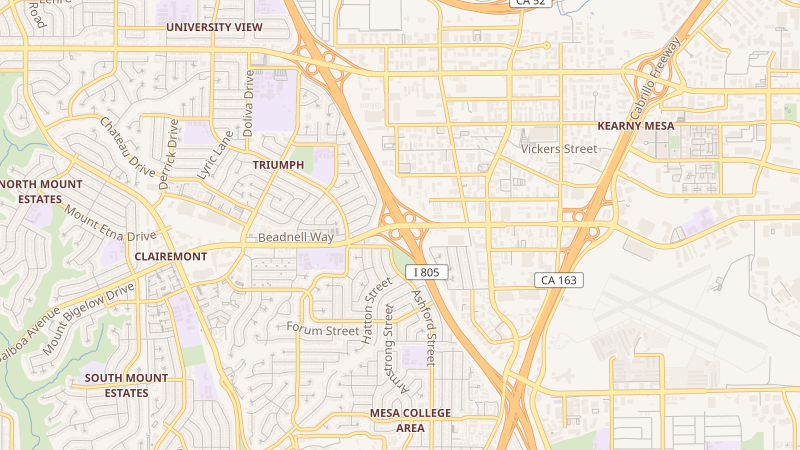
No qualifying votes, rulings, arrests, or filings have emerged from Santee and the surrounding East County communities in the past 48 hours that have not already been addressed in recent episodes. Coverage will resume as developments warrant.
Chromebook Blocks and an Enrollment Boom That Still Has to Prove Itself

More than 100,000 San Diego Unified students across 175 schools are now navigating the district's new Chromebook restriction policy, which the board passed unanimously 5-to-0. YouTube is blocked by default on district-issued devices unless a teacher actively enables it for instruction; non-instructional gaming is blocked entirely; and Chromebook carts have been removed from transitional-kindergarten classrooms. The unanimity of the board vote reflects unified leadership on direction — but unanimous passage and smooth classroom implementation are two different things.
The YouTube default block creates an immediate pedagogical friction point, since a substantial portion of legitimate educational content — language instruction videos, science demonstrations, primary-source historical footage — lives on the platform. Teachers who want to use it must now navigate an enable/disable workflow that did not previously exist, and in schools with high staff turnover or less tech-confident teachers, that friction is likely to translate into less educational video being used overall. The policy also includes carve-outs for students with IEPs, 504 accommodations, or language-learning needs — administering those exceptions consistently across 175 schools with varying support staff capacity is not a trivial compliance challenge.
The district's enrollment surge presents a different kind of question. Superintendent Fabiola Bagula's team brought in 3,033 new students over the summer against an annual recruitment target of 1,309 — more than double — through 52 in-person enrollment hubs deployed across the county. On paper, this is a genuine success for a district fighting enrollment decline. The harder question is whether those numbers will hold.
California's Average Daily Attendance funding mechanism pays not for students who enrolled, but for students who show up consistently every day. Summer enrollment is a behaviorally distinct moment from sustained September attendance. Families who enrolled through a burst of summer outreach — reached at exactly the right moment by a neighborhood hub — may not sustain daily attendance patterns through a full school year. The 52 enrollment hubs were deliberately deployed in lower-income and immigrant-community neighborhoods, which is sound equity strategy; those same communities, however, often face the highest attendance volatility, including housing instability, transportation barriers, and irregular work schedules that create school pickup challenges.
The October ADA count is the first real accountability moment. If the district's per-pupil funding calculation reflects significantly fewer daily attendees than the 3,033 enrollment figure would suggest — a gap of more than 400 students, for example — that would signal budget assumptions baked into the fiscal year may need revision. San Diego Unified is not in a financial position where a mid-year revenue shortfall is easily absorbed. Watchers should note whether Superintendent Bagula's team releases any preliminary attendance data before the official count, and whether the district pursues additional mid-year enrollment outreach in November and December — either of which would be a meaningful signal. Separately, SDSU's record of more than 124,000 applicants for its incoming class reflects the university's growing national trajectory, and the Teach Lead program has expanded from 22 students at two schools in 2021 to 400 high school students working as paid assistant teachers across 20 schools — a quiet but consequential pipeline strategy in a region where teacher shortages remain endemic.
Relief Arrives as the Region Looks Toward October's Economic Reckoning

The defining story of the week is economic bifurcation: billions in federal defense and research funding flowing into anchored sectors while 353 workers at Stone Brewing and ServiceNow collectively navigate layoff notices. That gap is unlikely to resolve quickly, and October labor market data will serve as the next meaningful checkpoint alongside San Diego Unified's ADA attendance report.
On the government front, the Tijuana River fight is approaching a moment of decision — either the Board of Supervisors advances a half-cent sales tax to November voters, or the near-term engineering and permitting work moves forward without the larger revenue mechanism behind it. The Sheriff-versus-Board standoff on CBP training access remains constitutionally unresolved.
For weather, the news is genuinely welcome after last week's extreme heat pushed inland valley temperatures 10 to 15 degrees above late-August averages and triggered emergency protocols across the county. San Diego coastal areas should see highs in the mid-to-upper 70s Thursday and Friday, with the marine layer returning overnight. Inland communities including El Cajon, Santee, and La Mesa are looking at highs in the mid-to-upper 80s — significantly cooler than the triple-digit readings of the past two weeks. No heat advisories are in effect.