Sewage Tax, Sheriff Standoff, and Storm Prep Define the Policy Week
How this was made Verified AI
Every Intellegix briefing is generated from that day's broadcast and run through automated checks before it publishes — with a human paged on any flag. Here is the trail for this edition.

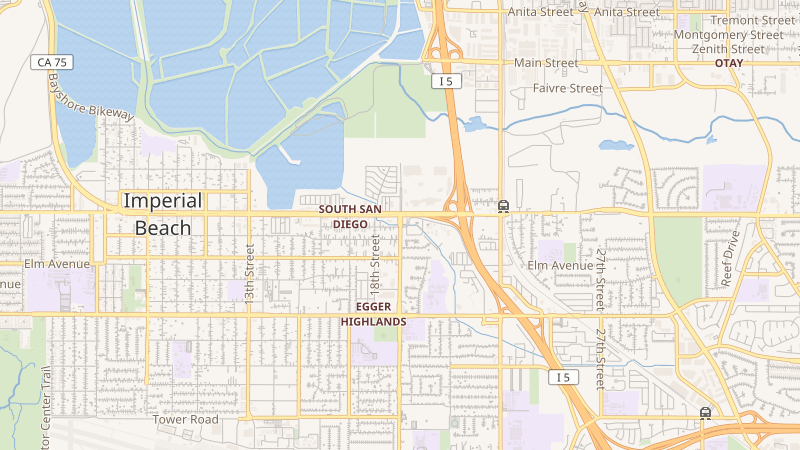
The Tijuana River sewage crisis — where hydrogen sulfide readings at Saturn Boulevard have measured sixteen times the state air-quality standard — is moving toward a potential November ballot decision. Supervisors Terra Lawson-Remer and Paloma Aguirre are asking colleagues to approve a $5.8 million spending package: $1.8 million for an eighteen-month engineering analysis and $4 million for design and permitting of a box-culvert project at Saturn Boulevard. The longer horizon involves a proposed half-cent countywide sales tax that would raise the county rate from 7.75 percent to 8.25 percent, generating roughly $360 million in year-one revenue, with 22.5 percent earmarked specifically for Tijuana River mitigation.
The political arithmetic is tight. Lawson-Remer and Aguirre are the two supervisors championing the measure; whether they can secure a third vote will determine whether the proposal reaches voters at all. Asking San Diego County residents to raise their own sales tax rate for an environmental crisis rooted in aging infrastructure on the Mexican side of the border is a hard political sell, even for communities that can smell the hydrogen sulfide from their backyards.
A separate and constitutionally significant fight is unfolding between the Board of Supervisors and Sheriff Kelly Martinez. The Board voted 3-to-2 on August 18th to terminate ICE and Customs and Border Protection training access at Otay Mesa and Camp Elliott. Sheriff Martinez subsequently used her independent executive authority to restore CBP access for roughly 1,700 officers needing recertification — while keeping ICE entirely cut off. That distinction is legally meaningful: CBP is a domestic border security agency, while ICE primarily handles interior immigration enforcement. By splitting the two agencies, Martinez is asserting that CBP recertification falls within her constitutionally protected law enforcement authority and is not subject to a Board policy directive. California sheriffs hold a constitutional independence from county boards that most department heads do not, and whether restoring CBP training access sits inside or outside that protected zone remains an open question.
On the preparedness front, the City Council has been working through its El Niño briefing under council item S503. The Office of Emergency Services has flagged storm-drain maintenance priorities for fiscal year 2027 and conducted outreach to roughly 7,000 properties identified as vulnerable due to slope position or floodplain location. The Council has also formalized a requirement for the Risk Management Department to report on police litigation costs — a new obligation tied to SDPD litigation, which an August 27th report identified as the primary driver of rising city payouts.