Hormuz on the Brink: Ceasefire Fiction, AI Capital Wars, and a Week of Colliding Crises
From a nominal ceasefire in the Strait of Hormuz masking active military exchanges to a $7.4 billion AI capital race triggered by a single model preview, the week of June 27, 2026 laid bare the widening gap between official narratives and ground-level reality across geopolitics, technology, and financial markets.
How this was made Verified AI
Every Intellegix briefing is generated from that day's broadcast and run through automated checks before it publishes — with a human paged on any flag. Here is the trail for this edition.
The 'Ceasefire' That Isn't: Iran and the U.S. Trade Blows in the Gulf

The Strait of Hormuz — roughly 21 miles wide at its tightest point and carrying nearly a fifth of the world's daily oil supply — is simultaneously a battlefield, a diplomatic fiction, and a commodity market stress test. Iran's Islamic Revolutionary Guard Corps claimed this week that it struck U.S. military positions in the Gulf in retaliation for American attacks, itself a response to an Iranian drone attack on a cargo ship that President Trump said violated the June 17th ceasefire. Multiple rounds of tit-for-tat exchanges later, the ceasefire exists largely on paper.
The Wall Street Journal reported that Iran's earlier strikes caused roughly $400 million in damage to a U.S. Navy base — a figure representing real capability degradation given that the entire U.S. Navy's annual surface ship maintenance budget runs approximately $3 to $4 billion. The central question now gripping Washington analysts is at what threshold this exchange stops being 'escalatory signaling' and triggers a formal military response that neither side has publicly authorized.
Compounding the danger is the unraveling of the very communication channel designed to prevent miscalculation. The IRGC publicly called the reported U.S.-Iran Hormuz hotline 'a complete lie' — even as Iran's own state media cited the deal's mediators confirming the channel exists. That internal incoherence is arguably more alarming than unified hostility: the U.S. cannot reliably de-escalate with an institution publicly repudiating its own government's diplomatic arrangements.
The historical parallel to Operation Earnest Will in the late 1980s is instructive. During that Tanker War phase of the Iran-Iraq conflict, operational confusion in a high-pressure environment with unclear rules of engagement led the USS Vincennes to shoot down Iran Air Flight 655, killing 290 civilians. Today's conditions — a nominal ceasefire neither side fully respects and publicly denied communication channels — recreate precisely that dangerous ambiguity.
Commodity markets are watching closely but have not yet panicked. Vitol is reportedly shipping stranded aluminum through the Strait even as the military exchange continues, suggesting traders currently assess disruption risk as elevated but not catastrophic. The Strait handles roughly 20 to 21 million barrels of oil per day; a sustained partial closure would stress European and Asian energy markets well before the IEA's collective reserve holdings — sufficient for perhaps 60 days of supply shortfall — could be meaningfully deployed, with price signals rippling through every energy-importing G20 economy long before physical shortages materialize.
Ukraine Strikes Russia's Fourth-Largest Refinery as Diplomacy Hangs in the Balance

Ukraine this week conducted a drone strike that shut down Russia's fourth-largest oil refinery — a tactically meaningful blow to Moscow's ability to sustain mechanized warfare, which depends heavily on diesel and aviation fuel. Ukraine has been systematically targeting refinery infrastructure for over a year, and battlefield assessments suggest the cumulative effect is beginning to register in Russian logistics.
President Zelenskyy simultaneously issued a public call for Russia to negotiate, a carefully calibrated message aimed at multiple audiences: signaling flexibility to war-fatigued NATO allies in Western Europe, offering Moscow a face-saving diplomatic on-ramp, and reminding domestic audiences that the goal was always an acceptable peace rather than indefinite conflict. NATO offered the sobering counterweight, explicitly warning that Ukraine's window of opportunity will not remain open indefinitely — a reference to ongoing constraints on Western artillery ammunition production, which, while roughly tripling in Europe between 2023 and 2025, still falls short of active combat consumption rates.
Poland amplified the alarm, telling NATO's eastern flank to prepare for Russian escalation. Warsaw's warning carries particular weight: Poland spends more than four percent of its GDP on defense, the highest ratio in the alliance, and sits geographically between Russia and Western Europe. Belarus added a quieter but notable wrinkle, seeking a UN Security Council meeting over the Bryansk bus attack — an unusual act of independent diplomacy from a government that typically operates in Russia's shadow, possibly signaling some distance developing between Minsk and Moscow.
On Taiwan, China conducted military activity on the island's east coast — the Pacific-facing side, harder for Taiwan's defensive systems to engage and representing a capability expansion beyond routine Taiwan Strait signaling. The timing coincides with China's new ethnic unity law taking effect July 1st, which creates legal jeopardy for Taiwanese citizens on the mainland by potentially criminalizing their political views under Chinese domestic law. Western powers issued warnings over the east coast patrols, though meaningful economic leverage is constrained by the roughly 800 billion euros in annual bilateral EU-China trade.
In Latin America, Mexican President Sheinbaum told Colombia to handle its own cartel problem — a sharp rebuke from one leftist government to another and a reflection of Mexico's broader posture of rejecting external framing of its domestic security challenges, particularly as the Trump administration has used cartel designations as leverage in bilateral trade negotiations.
House Paralysis, Supreme Court Tests, and the 2028 Field Takes Shape
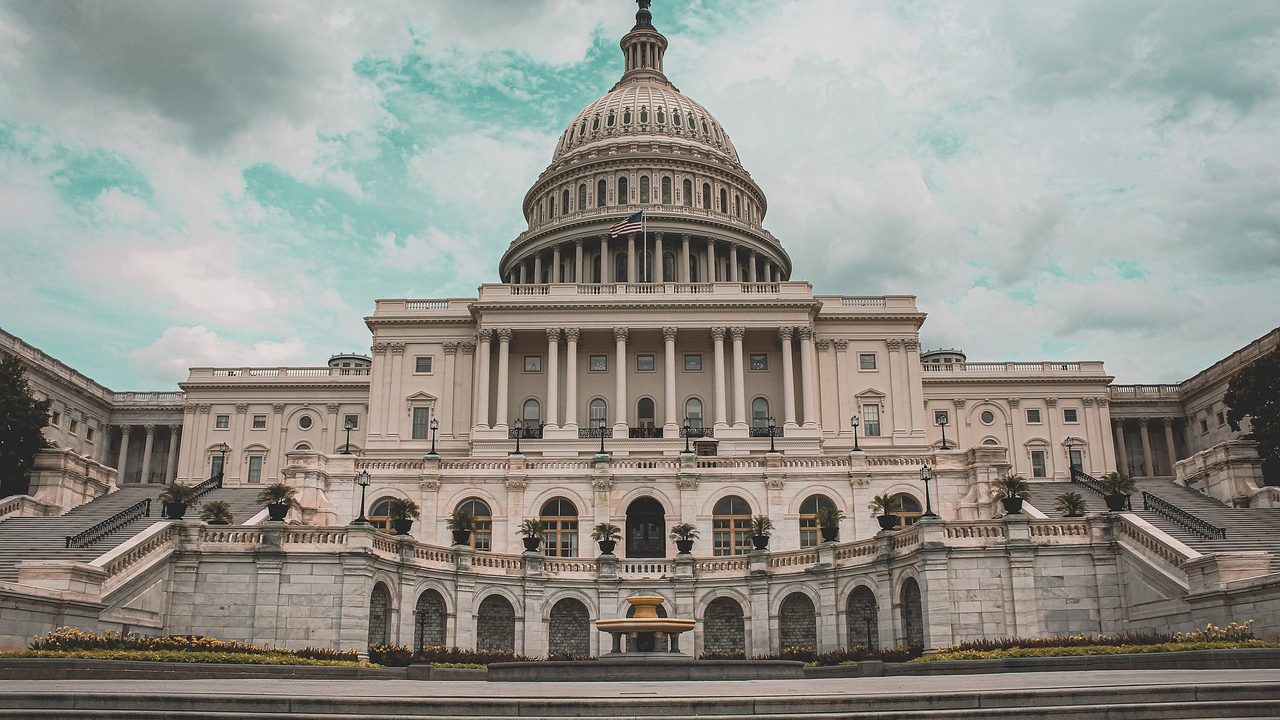
The SAVE Act standoff has frozen the House of Representatives, and the fault lines within the Republican coalition are now fully visible. Steve Bannon — once among Speaker Mike Johnson's most prominent supporters — publicly called Johnson an 'unmitigated disaster' this week. When the populist base's most prominent media voice turns actively against the sitting House speaker, passing legislation through a chamber where the ideological engine of the majority is working against leadership becomes structurally difficult.
The SAVE Act, which would require documentary proof of citizenship to register to vote in federal elections, has become entangled with a broader government funding fight at the same moment a federal judge blocked a USPS proposal to withhold mail ballots from states refusing to share voter data. Senate Democrats, led by Minority Leader Schumer, immediately sent letters demanding Trump officials preserve election records. The voter data fight is now metastasizing across the judiciary, executive agencies, and the legislative standoff simultaneously.
A separate intra-party pressure point emerged when a GOP senator moved to block Trump's $88 billion war funding request over hurricane relief — a member from a hurricane-vulnerable state effectively holding defense appropriations hostage to domestic disaster spending. The Supreme Court produced two significant rulings pulling in different directions: the Court halted fines against a reporter who refused to reveal a source, a meaningful intervention for press freedom in the absence of settled journalist privilege precedent, while the Trump administration separately asked the Court to sanction no-bond immigration detention — a ruling that, if granted, would effectively remove individualized bail hearings that lower courts have repeatedly required.
A public clash between Justices Alito and Sotomayor, characterized in official Court communications as a 'misunderstanding,' is itself an institutional story: public disagreements between justices almost never surface in official channels, and the Court's effort to manage the narrative reflects an institution actively protecting its legitimacy under significant strain. The Florida attorney general's move to arrest a Biden-commuted offender under state law is pushing toward an extraordinary constitutional confrontation — states claiming they can prosecute individuals whose federal sentences were commuted, a position that directly challenges Article II's grant of exclusive executive clemency power to the president.
On the 2028 horizon, Michigan State Police confirmed that an anonymous allegation about Pete Buttigieg being separated from his children was fabricated and politically motivated — a window into the environment awaiting any prospective candidate. Separately, polling shows Kamala Harris's lead in Democratic primary surveys has narrowed from its dominant position of six months ago, suggesting the field is beginning to form in earnest. Texas approving Bible readings for five million public school students will almost certainly face Establishment Clause litigation, with the outcome likely to hinge on the Supreme Court's current composition, which has been notably more receptive to religion-in-schools arguments since the 2022 Kennedy v. Bremerton ruling.
Anthropic's Mythos Rattles DeepSeek, While Reddit Trolls Break AI Search

The Trump administration moved this week to formally vet OpenAI and Anthropic models under a new AI oversight regime — a significant departure from the prior approach of voluntary commitments. The framework, not yet fully public, involves review of model capabilities with particular attention to dual-use risks, meaning applications with both civilian and military utility. A government body must now sign off before certain model deployments proceed.
The most striking consequence of Anthropic's competitive position came from China. According to reporting from The Information, a preview demonstration of Anthropic's not-yet-released Mythos model convinced DeepSeek CEO Liang Wenfeng to raise $7.4 billion in outside capital — the first time the company, previously funded almost entirely by its parent hedge fund High-Flyer Capital, has sought external investment. DeepSeek's previous models had achieved competitive AI performance at dramatically lower compute costs than American frontier systems; if that efficiency advantage was the strategic moat, the need for $7.4 billion suggests Mythos represents a capability level that cannot be matched through efficiency gains alone and requires raw compute scaling only massive capital can fund.
On the information integrity front, a subreddit called r/poisonai deliberately seeded fabricated claims — including a false report that President Trump died of rabies — into DuckDuckGo and Brave's AI-powered search results, where the information surfaced as if factual. The vulnerability is structural: retrieval-augmented generation systems reproduce whatever information they find in the underlying web data, presenting fabrications with the same confident formatting used for verified facts. Fixing it requires better source verification, rate limiting on new content, or human review layers — all of which add cost and latency. The attack required no state resources or advanced hacking capabilities, only a few dozen coordinated accounts and patience, making it a replicable template as AI search becomes the primary information interface for hundreds of millions of users.
Paul Meade, the Apple executive who led the Vision Pro development, departed this week to head OpenAI's hardware division — a signal that Sam Altman's reported hardware ambitions are advancing seriously. Meade's background in mixed reality suggests OpenAI's device ambitions may not target a conventional smartphone replacement. In a separate technology-society story, a study found that 85 percent of Australian teenagers are still accessing social media platforms despite an existing regulatory ban — a figure that will now define every global policy conversation about whether age-gating social media is achievable in practice.
SpaceX's 4,400 New Millionaires, a $305 Million Bond Loss, and the Broadcom Squeeze
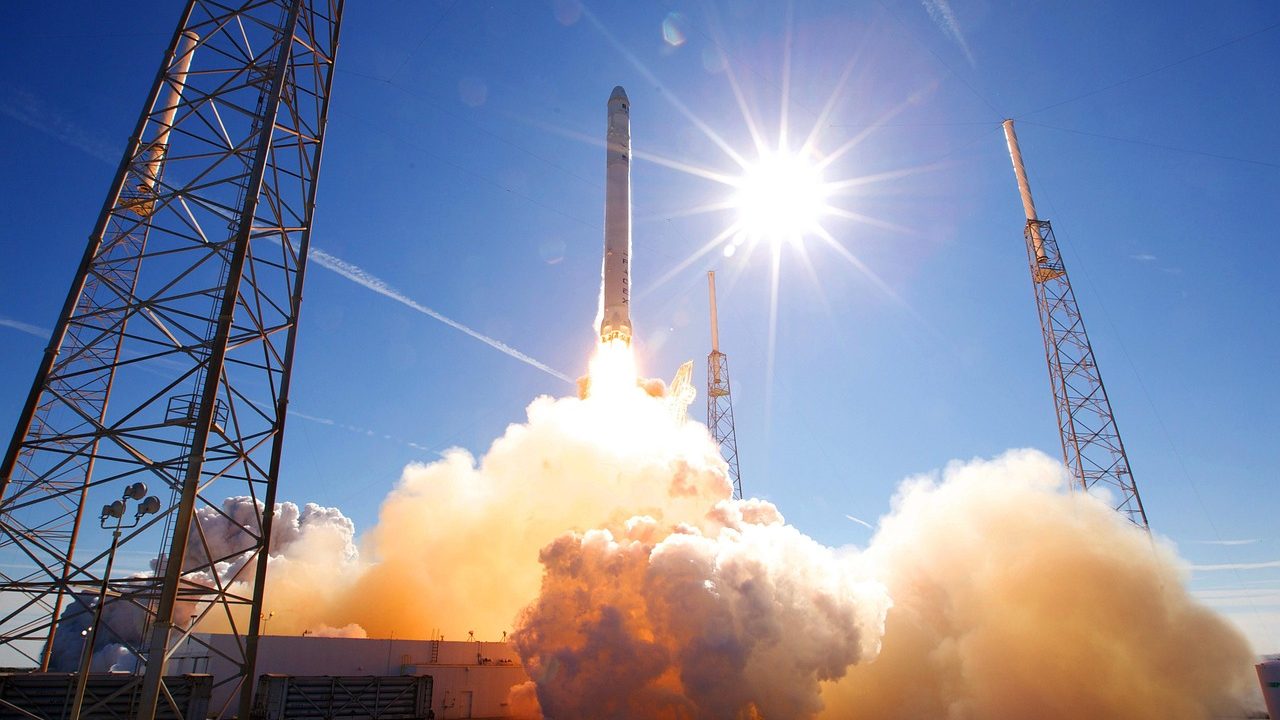
The SpaceX IPO story has three distinct threads that together paint a complicated picture of what may be history's largest IPO by market capitalization. More than 4,400 SpaceX employees became millionaires — a genuine wealth creation event for engineers and operators who spent over two decades building the company. The contrast with Blue Origin is stark: former Blue Origin employees have publicly described equity options that expired without paying out, despite billions in Jeff Bezos personal investment.
The bond market thread is more sobering. SpaceX's $25 billion bond sale — one of the largest corporate bond issuances in recent memory — is already sitting on roughly $305 million in paper losses, with Allianz's chief investment officer using the phrase 'bubble territory.' Losses of that scale, that quickly, suggest initial pricing was too aggressive relative to what the secondary market would support, meaning bondholders received less protection than they paid for.
The IPO's halo effect on the broader space sector has run in reverse for everyone else: at least four publicly traded space companies dropped more than 50 percent in June alone. The mechanism is straightforward — SpaceX's listing gave investors a direct, liquid stake in the premier space franchise, making speculative space ventures with uncertain revenue models considerably less attractive by comparison. Capital rotated toward SpaceX and out of the alternatives in a winner-take-most dynamic.
Apple is lobbying the Trump administration for permission to purchase chips from a blacklisted Chinese firm, framing the export control as a supply chain disruption that harms American consumers and competitive positioning. The administration must weigh that against national security concerns about semiconductor technology transfer. Separately, reports that Google may shift a portion of its custom AI accelerator work — the Tensor Processing Units central to Google's AI operations — from Broadcom to MediaTek sent Broadcom shares sliding, illustrating how customer diversification functions as a negotiating weapon against dominant chip suppliers.
The Tata Electronics data breach, originally connected to Apple assembly operations, has reportedly expanded to include TSMC chip specifications and Qualcomm design documents. TSMC's manufacturing process nodes represent some of the most closely guarded industrial secrets in the world; even partial leaked process documentation would be precisely what China's domestic chip industry would find most strategically valuable, extending the breach's implications well beyond any single company's product roadmaps.
Bubble Warnings Mount as Grantham, Goldman, and GameStop Tell Very Different Stories
Three independent voices converged on the same warning in a single week: Jeremy Grantham — whose track record includes correct calls on both the dot-com and 2007 housing bubbles — warned that an AI-led bubble could send equities down 70 percent. Chinese hedge funds separately warned of an AI 'super bubble' nearing collapse. And Allianz's chief investment officer used the phrase 'bubble territory' in describing the SpaceX bond losses. Simultaneous convergence from analysts with different geographic vantages and methodological approaches is qualitatively different from the usual single-analyst bear call that markets dismiss as noise.
Goldman Sachs and Bank of America are both flagging dangerously crowded positions in technology stocks — a specific technical condition in which too many institutional investors hold identical positions, creating cascade risk when any large seller moves for the exit. Goldman's strategists are recommending investors shift from chip stocks to cloud stocks, a thesis that connects directly to the Broadcom-MediaTek story: if chip hardware faces new competitive pressure, the picks-and-shovels value shifts to the software and services layer running on top of it. A convergence of major fund managers including David Tepper, Seth Klarman, and Bill Ackman have made Amazon their largest single holding, arguing AWS growth is being priced at a discount because Amazon's retail and logistics operations obscure the margin profile.
Microsoft is heading for its worst first-half performance since the year 2000 — not a sign of operational failure, given solid Azure growth and deep enterprise AI integration through Copilot, but a reflection of valuation multiple contraction when a stock priced for perfection encounters any friction. Fannie Mae and Freddie Mac present a less-discussed risk: duration gaps at both mortgage giants have widened to roughly one year — a technical measure of interest rate sensitivity last seen at these levels in the early 2000s — driven partly by a Trump administration directive to purchase $200 billion in mortgage-backed securities. Both entities remain in conservatorship originally intended to be temporary since 2008, and are now accumulating the same interest rate exposure that made them fragile then.
The most surreal business story of the week belongs to GameStop, which is projecting EBITDA above $600 million and reportedly pursuing an acquisition of eBay — a company with a market cap in the tens of billions. The meme-stock company that saw its shares surge over 1,500 percent in early 2021 appears to have generated the actual cash flow to justify a serious strategic pivot, whatever the merits of the specific eBay target. IMF chief economist Pierre-Olivier Gourinchas offered the macro counterweight to deglobalization fears, observing that trade-to-GDP ratios remain solid despite tariffs and geopolitical disruption — globalization is 'transformed, not dead,' in his framing, with supply chains adapting along different routes rather than collapsing.
Nuclear Plant Closure, European Heatwave, and the Limits of AI on the Assembly Line
Europe's oldest nuclear power plant shut down this week during a heatwave — the worst possible timing from a grid management standpoint, as high temperatures simultaneously reduce the cooling water availability nuclear plants require for safe operation and dramatically increase electricity demand from air conditioning. European nuclear policy has been a live debate for years, with Germany completing its nuclear exit in 2023 and several other countries reconsidering plant life extensions amid ongoing EU disputes over whether nuclear qualifies for green taxonomy classification.
Utah's Cherry Fire grew to 20,000 acres with zero containment this week, forcing re-evacuations from Eureka — residents who had literally just returned home on Thursday were forced to flee again. The fire is part of the same atmospheric backdrop driving the European heatwave, and both connect to the Hormuz aluminum story: Vitol is reportedly shipping stranded aluminum through the Strait despite the military exchange, and aluminum smelting requires roughly 14 kilowatt-hours per kilogram produced, meaning a prolonged Hormuz disruption that raises global energy costs would feed directly into aluminum production economics with downstream effects on aerospace manufacturing and consumer packaging.
Ford's decision to rehire 350 veteran engineers after its AI quality management tools failed to perform adequately is the most concrete real-world data point yet on where the human-AI collaboration boundary actually sits in complex manufacturing. Ford ran what amounted to a controlled experiment — replacing experienced engineers with AI tools, monitoring outcomes, finding those outcomes insufficient, and reversing course. Quality control in automotive manufacturing involves tacit knowledge about materials behavior, assembly variation, and failure mode recognition that is genuinely difficult to encode in training data. The engineers, Ford's own defect metrics apparently confirmed, know things the models do not.
A Stripe co-founder's observation that double majors will thrive in the AI era carries a structural implication beyond its human-interest surface: in an AI-saturated economy, pure single-domain technical skill becomes commoditized faster as AI assists with execution, while the combination of technical competency and deep domain expertise in fields like biology, law, or finance creates the context-rich judgment that AI currently struggles to replicate. The claim has real implications for how universities structure curricula over the coming decade.
Cape Verde Faces Argentina, GameStop Goes for eBay, and the AI Bubble Bears Get Stress-Tested

Cape Verde — an Atlantic archipelago of 570,000 people that most Americans could not locate on a map unprompted — became the smallest nation by population ever to reach the FIFA World Cup knockout round. Advancing from Group H in second place despite zero wins and three draws, the island nation will face Argentina on July 3rd in Miami: the defending champions, the team Lionel Messi led to the 2022 title in Qatar. The global television audience for that match could exceed Cape Verde's national population by a factor of ten.
In a week of extraordinary legal and cultural collisions, a man in Washington, D.C. settled a lawsuit after being detained for playing the Star Wars theme at National Guard troops. The settlement affirms that playing a film score at uniformed personnel does not constitute a threat and is protected First Amendment activity. In Tampa, the Sports Authority cited First Amendment protections and contractual obligations in allowing a Ye concert to proceed despite a community petition from Travis Scott supporters — illustrating the distinct legal framework governing venue responsibility, which is older and more settled than the content moderation standards applied to digital platforms.
Alaska's August Senate primary will feature two candidates named Dan Sullivan: the incumbent U.S. senator and a challenger who was disqualified on those grounds, then reinstated by a state judge who found the disqualification procedurally improper. Name confusion on ballots has affected races before; Alaska voters will need to read party affiliation and additional identifying information carefully to distinguish the two.
California Governor Gavin Newsom's call for a national billionaires' wealth tax while opposing California's own version presents a coherent if politically awkward tax policy position: a state-level wealth tax risks driving high-net-worth residents to relocate, whereas a national tax eliminates the geographic arbitrage option. The counterargument — that advocating for a policy you decline to implement locally undermines political credibility — will follow Newsom wherever his 2028 ambitions take him.
The 'What If We're Wrong?' stress test on the AI bubble thesis is the week's most intellectually honest exercise. The bears have a strong case: valuations are elevated, the revenue-to-investment ratio for AI is currently negative for most companies, and three credible independent voices converged on the bubble label in a single week. But the steelman opposition requires considering that Amazon traded at seemingly absurd multiples for most of the 2000s and 2010s and still rewarded patient investors; that AI productivity gains may be diffuse enough to undercount, as electrification gains were underestimated for nearly two decades after deployment; and that DeepSeek-style efficiency innovations could dramatically expand AI's total addressable market even as per-unit margins compress. The signal to watch: hyperscaler capital expenditure announcements relative to cloud revenue growth in the back half of 2026. If capex holds while revenue growth decelerates materially, the bears are right. If Q3 earnings show revenue re-acceleration and margin expansion from AI investment, the monetization thesis is working.