Iran Deal Teeters, Ukraine Battles Rage, and AI Competition Reshapes Global Tech: Monday Briefing
From fragile nuclear negotiations to record heat deaths in France, Monday, June 22, 2026 opens on multiple simultaneous crises — diplomatic, military, technological, and environmental — each carrying its own capacity to reshape global markets and policy.
How this was made Verified AI
Every Intellegix briefing is generated from that day's broadcast and run through automated checks before it publishes — with a human paged on any flag. Here is the trail for this edition.
Iran's Nuclear Gamble: A Deal Both Sides Claim to Be Winning

Vice President JD Vance is leading U.S. nuclear negotiations with Iran while Secretary of State Marco Rubio — who spent years advocating for regime change in Tehran — has maintained near-total public silence on the substance. The unusual arrangement reflects a calculation that Rubio's hawkish history would create messaging problems for a deal already under fire from within Trump's own party.
The memorandum of understanding under discussion has drawn immediate Republican criticism, with opponents calling it a 'surrender document' and 'flimsy.' UN Ambassador Mike Waltz went on CBS Sunday to defend it, saying the administration is 'laser focused' on ending Iran's nuclear program, but declined to detail the verification mechanisms that ultimately doomed the original JCPOA during Trump's first term.
Iran's own president, Masoud Pezeshkian, publicly declared the deal 'principally benefits Tehran' — a remarkable claim to make openly while the agreement is still being contested in Washington. Simultaneously, a top adviser to Supreme Leader Khamenei threatened an energy shutdown if talks stall, a posture that amounts to taking credit for winning while threatening to blow up the table.
Oil markets are treating the arrangement as temporary at best. Iranian Light crude is reportedly being offered at discounts of up to five dollars a barrel below Brent, according to Bloomberg, with tanker traffic through the Strait of Hormuz surging as sellers rush to move product while the diplomatic window remains open. Senator Lindsey Graham, a reliable gauge of hawkish Republican sentiment, went further than most — explicitly predicting collapse and warning the U.S. would 'annihilate' Iran if diplomacy fails.
Trump is simultaneously defending the deal against critics and threatening to resume military strikes over Hezbollah activity in Lebanon, a characteristic dual-track approach that keeps maximum pressure in play while dangling six billion dollars in frozen Iranian funds as an incentive for Tehran to stay engaged. Israel's far-right National Security Minister Itamar Ben-Gvir compounded the complexity by publicly rejecting any Lebanon ceasefire ahead of Washington talks this week — signaling that even a diplomatic accord would face fierce regional resistance at the implementation stage.
Ukraine Fights on Three Fronts as Patriot Missile Deal Offers a Lifeline
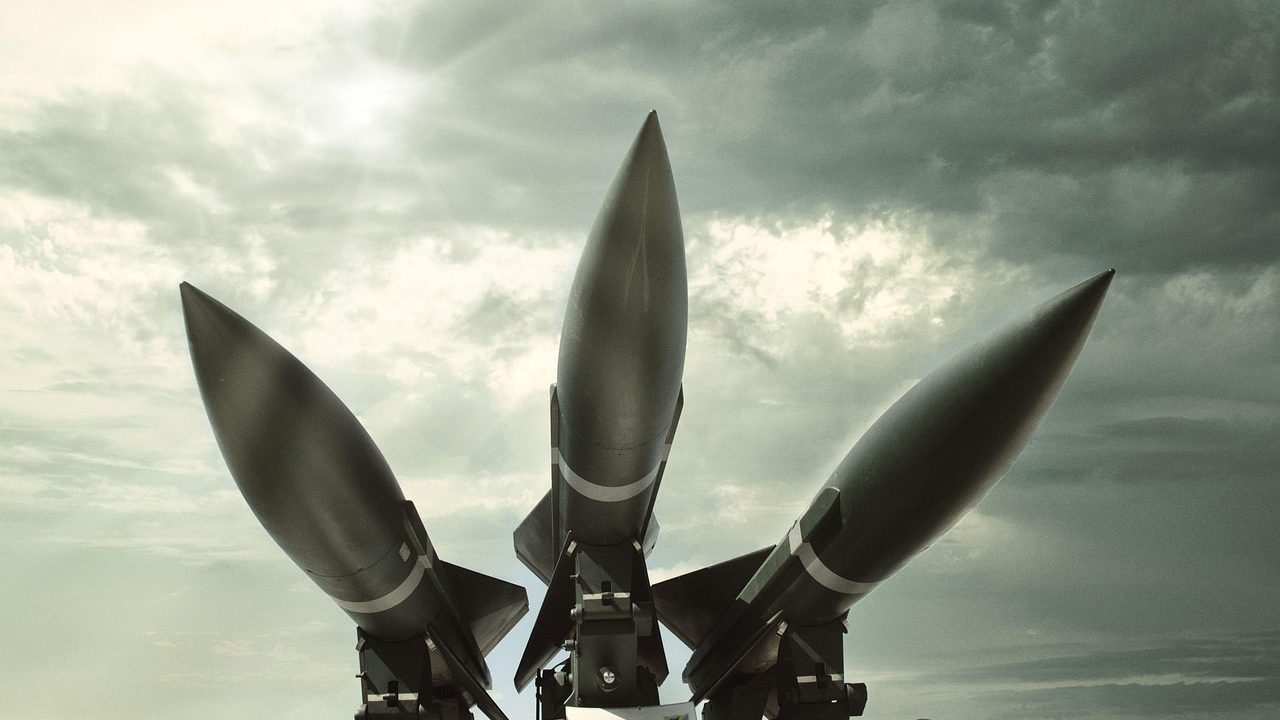
The war in Ukraine is advancing on three simultaneous and strategically distinct tracks. Russian forces have pushed into Kostyantynivka, one of the last Ukrainian-held cities in the Donbas, a development that threatens Ukraine's entire eastern defensive architecture. These are not symbolic gains — Kostyantynivka functions as a logistical chokepoint whose loss would place enormous pressure on the broader regional defense.
Ukraine struck the Crimea Bridge again in what is at least the third major attack on the crossing since 2022. Each strike degrades Russian supply lines into occupied Crimea and signals that no piece of infrastructure behind the front line is permanently secure. The latest strike is reportedly causing significant disruption to ammunition and fuel movements onto the peninsula.
Running in parallel is an intensifying energy war. Russia launched strikes on Ukrainian energy infrastructure following what is described as a record Ukrainian attack on the Tyumen refinery inside Russian territory. Ukraine hitting a refinery in Siberia is not merely about output — it is a demonstration of reach into targets previously considered beyond risk, a development that alters the risk calculus for all Russian energy infrastructure.
Against that backdrop, President Zelenskyy's agreement with Germany for 600 Patriot missiles represents the most concrete positive development for Ukraine in weeks. A single Patriot battery typically fires two to four missiles per engagement, and Ukraine has burned through air defense munitions faster than resupply has arrived for most of the past two years. Six hundred missiles, if delivered on schedule, would meaningfully extend Ukraine's defensive capacity through at least mid-2027. Zelenskyy also noted that Trump responded positively to the idea of licensing domestic Patriot production inside Ukraine itself — a shift that would move the country from dependence on foreign resupply toward its own defense industrial base.
Diplomatically, Zelenskyy's public comparison of Poland's newly elected president, Karol Nawrocki, to Viktor Orbán — over a medal dispute — is less a sideshow than it appears. Poland has been among the most critical transit and logistics hubs for Western military aid, and Nawrocki has signaled more skepticism toward Ukrainian refugee integration and EU solidarity than his predecessor. Using the Orbán comparison as a deliberate insult within European political discourse reflects how seriously Kyiv regards Polish political alignment. Meanwhile, a senior Kremlin aide stated plainly that Russia seeks victory, not a negotiated deal — a direct rebuke of the diplomatic shuttle diplomacy being floated in Washington.
Birthright Citizenship, Senate Warnings, and a School District in Crisis
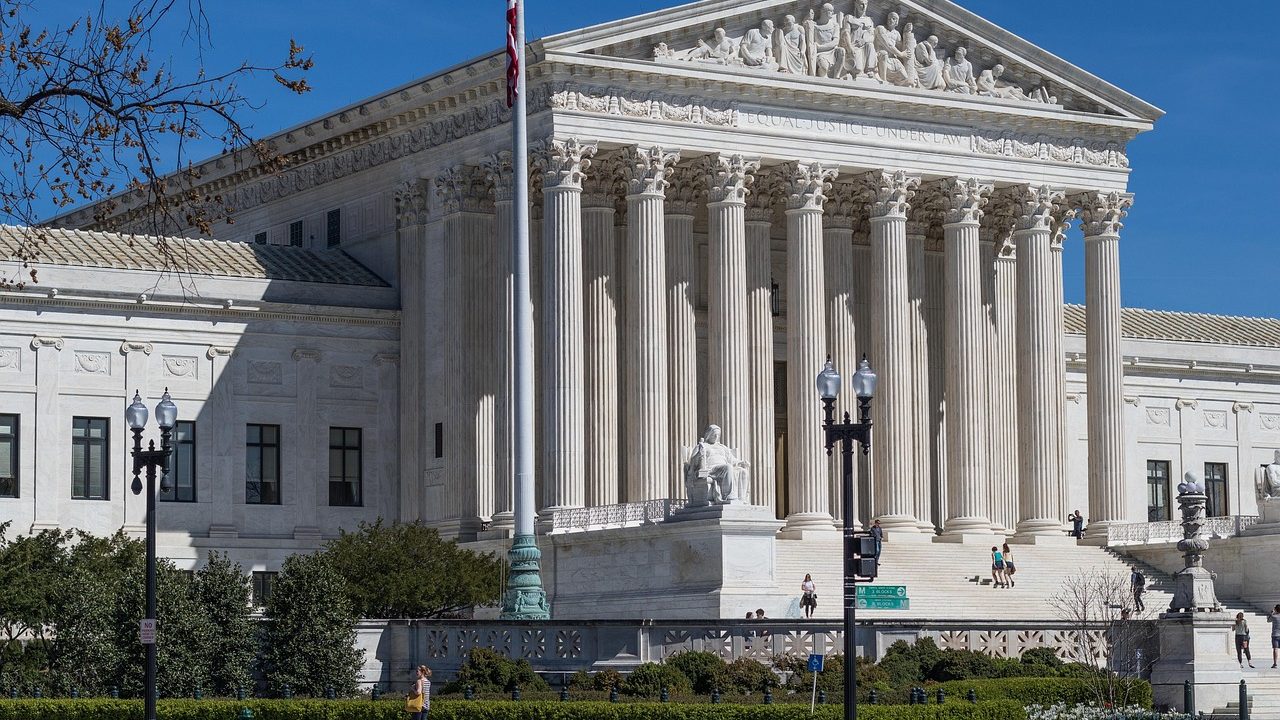
Legal scholar Jonathan Turley publicly predicted over the weekend that the Trump administration will lose the birthright citizenship case at the Supreme Court. Turley, who has generally been sympathetic to executive power arguments, framed the Fourteenth Amendment's existing jurisprudence — consistent since the 1898 Wong Kim Ark decision — as too well-settled to be overturned by executive order. His assessment signals that even analysts favorably disposed toward the administration's agenda see this particular legal path as untenable.
Hawaii Senator Brian Schatz issued a pointed warning to the White House, telling the administration to prepare for a 'tougher Democratic Senate.' Schatz, who sits on the Senate Appropriations Committee, was signaling that if Democrats flip the chamber in November's midterms, oversight authority would be deployed aggressively. In Georgia, Senator Jon Ossoff sharpened his attacks on Republican challenger Mike Collins at an Atlanta church rally, a setting that traditionally signals base-turnout consolidation rather than persuasion of moderates.
The most locally explosive domestic story is the resignation of Alberto Carvalho, superintendent of the Los Angeles Unified School District, which serves roughly 420,000 students and carries an annual budget of over nine billion dollars. Carvalho stepped down Sunday, nearly four months after FBI agents raided both his home and district offices over contract-related allegations. Widely considered a reformist leader and a national model for urban district management, his departure under federal scrutiny raises serious questions about contracting oversight in large urban school systems.
Representative Ro Khanna escalated Democratic criticism of Elon Musk and the Department of Government Efficiency, calling for a formal probe and charging that DOGE-driven cuts to USAID may have contributed to the deaths of 4.5 million children worldwide — a figure grounded in the statistical mortality consequences of cutting global health programs targeting childhood disease in Sub-Saharan Africa and South Asia. Whether that demand advances depends on whether Democrats can build committee majorities.
Inside the White House itself, Musk clashed publicly with Vice President Vance over how the federal government should capture value from AI development. Vance has backed the concept of a sovereign wealth fund holding AI company equity, while Musk argued for direct Treasury payments to citizens. The disagreement between two political allies over U.S. AI industrial policy will have direct budget implications heading into the next appropriations cycle.
China's Open-Source AI Leaps Into the Global Top Four — and a Viral Story Gets It Wrong
A viral claim spread rapidly across social media Friday and Saturday alleging that Anthropic's AI system, called Mythos, had successfully hacked NSA classified networks. The story reached tens of thousands of shares before serious pushback emerged. According to the journalist who originally reported on Mythos and multiple industry leaders who responded over the weekend, the event was an authorized red-team test: Anthropic was invited by the government to attempt to penetrate classified systems specifically to identify vulnerabilities. The 'hack' framing transformed a structured and responsible security exercise into a panic narrative.
The speed of the story's spread illustrated how AI misinformation propagates differently from other types. Believers in imminent superintelligence treated it as confirmation of a capability threshold crossed; skeptics treated it as evidence of dangerous, uncontrolled AI development. Both camps shared it heavily — and both were wrong. The episode arrived the same week Elon Musk reiterated his prediction that AI will surpass all of humanity within four to five years, a timeline most AI researchers — including many working at frontier model companies — would privately dispute.
The competitive development demanding more sustained attention is China's. Z.AI, backed by Zhipu AI and closely connected to Chinese government research institutions, released GLM-5.2 as an open-weights model. It scored 51 on the Artificial Analysis Intelligence Index, placing it fourth globally and above every current Google model. Technology executives are reacting with what might charitably be described as genuine admiration and less charitably as alarm.
The open-weights dimension is decisive for understanding the competitive stakes. When a closed model such as GPT-5 or Claude 4 achieves a benchmark breakthrough, the capability remains within the company's infrastructure. When an open-weights model at near-equivalent performance is released, the capability becomes freely downloadable, deployable without API restrictions, and available for fine-tuning in ways the original developers never intended. GLM-5.2's benchmark ranking will influence enterprise procurement decisions in the near term.
A separate controversy highlighted the fault line running through AI training data. The artist SZA went public over the weekend after discovering that 238 of her songs had been used to train AI music systems without her consent. In contrast, Getty Images separately announced a licensing deal to display its images within ChatGPT — compensation in exchange for contribution rather than extraction without permission. Those two stories effectively map the industry's two diverging paths: systematic licensed compensation or continued operation in a legal gray zone that is generating an accumulating wave of litigation.
SpaceX Slides from Its Peak as Merger Speculation and a Short-Seller's Warning Grow Louder
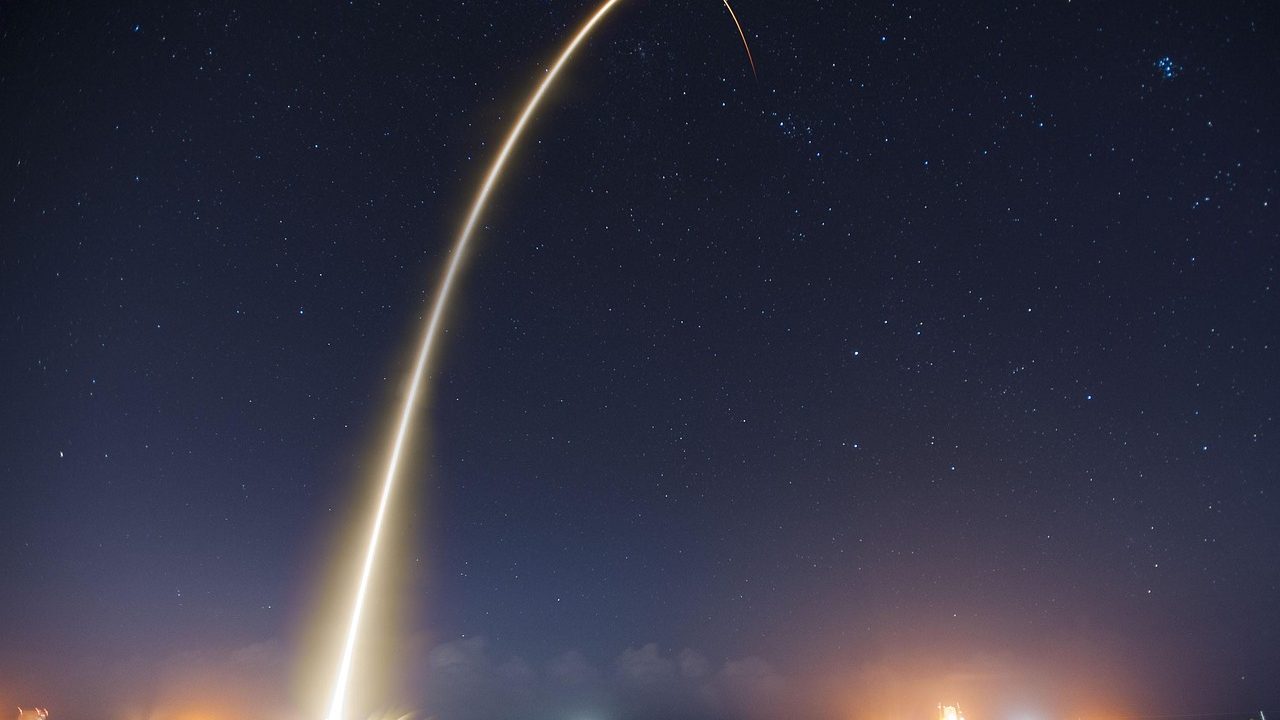
Ten days after SpaceX's June 12 IPO, the stock has shed more than 20 percent from its all-time high above $225, though it remains well above the $135 IPO price. The correction follows a familiar post-IPO pattern: institutional enthusiasm gives way to valuation arithmetic. At peak pricing, SpaceX was valued at roughly $350 billion — a figure that requires an enormous and sustained growth trajectory to justify, particularly in a segment where Starlink subscriber revenue, not rocket launches, is the real earnings engine.
The far more consequential question circulating in prediction markets and analyst notes is a potential SpaceX-Tesla merger. Some analysts are floating a combined entity valued at roughly four trillion dollars, which would make it the largest company on earth by market capitalization, exceeding Apple's current valuation of approximately three-point-two trillion. The strategic narrative — vertically integrating terrestrial electric transportation, satellite connectivity, and space access — is compelling for certain investors, though the operational realities are complicated by the Defense Department contracts and FAA oversight under which SpaceX operates.
On the Tesla product front, Full Self-Driving hardware has been spotted on a Tesla Semi for the first time. Semi has been in limited commercial delivery since late 2022, and adding FSD capability to the heavy truck platform opens the possibility of autonomous long-haul freight — an addressable market measured in hundreds of billions of dollars annually in U.S. logistics alone.
Veteran short seller Jim Chanos issued a warning that received less attention than it deserved. His argument is that the AI profit boom is masking a deferred depreciation problem: companies are booking revenue from AI services now, but the capital expenditure depreciation on the chips and data centers purchased over the past eighteen months — typically hitting in years three through five of an asset's life — has not yet appeared in earnings. Chanos compares the dynamic to the late 1990s telecom and internet infrastructure buildout, where companies showed strong earnings growth until a depreciation wave and overcapacity crash arrived simultaneously. Whether the analogy holds depends on whether AI revenue grows fast enough to offset what is coming.
Also briefly notable: Faraday Future, a company that has had more near-death experiences than almost any other startup in automotive history, is announcing a mobile manipulator robot debut at Automate 2026. The pivot toward robotics — rather than competing directly with Tesla and BYD in electric vehicles — at least places the company in a market with genuine current momentum.
Markets Brace for UK Political Shock as Labor Strife and Private Equity Debt Draw Scrutiny
Markets opened Monday with a cautious posture, with S&P futures around 7,561 and sterling under selling pressure on reports that UK Prime Minister Keir Starmer may announce a resignation timeline as early as Monday. Starmer came to power in July 2024 promising economic stability and has since faced austerity backlash, an electoral surge by Reform UK, and what appears to be an accelerating political unraveling. A mid-term leadership change would leave the Labour Party without an obvious successor commanding broad support.
The dollar is firming against that backdrop. Simultaneous Hormuz tension, a fragile Iran deal, UK political instability, and ongoing European energy uncertainty are all activating the dollar's safe-haven function — a dynamic that makes U.S. exports relatively more expensive and creates an earnings headwind for multinationals that does not appear in the futures number. On the Fed side, analysts project that Kevin Warsh's Federal Reserve will not allow a rate hike threat to derail the bull market, with the base case being stable rates through end-2026 unless core PCE inflation re-accelerates above three-and-a-half percent.
Goldman Sachs published a significant commodities call over the weekend, forecasting a structural aluminum surplus in 2027 driven by supply waves from Indonesia and China that will more than offset war-driven deficits. For investors long aluminum as a geopolitical risk play, Goldman is forecasting that the fundamental thesis gets crowded out by oversupply within eighteen months.
Private equity firms are drawing scrutiny for piling debt onto portfolio companies to fund distributions back to themselves through so-called dividend recapitalizations. The mechanics allow a PE firm to have a portfolio company borrow money — which flows directly back to the firm as a 'dividend' — leaving the company holding the debt. With interest rates still significantly above pre-pandemic levels, these leveraged-up companies face real debt service burdens that constrain investment and, in stress scenarios, can trigger defaults.
Two labor stories round out the economic picture. JD.com's CEO warned that robots will replace 700,000 couriers — a displacement figure comparable to the automation of entire manufacturing sectors, raising urgent questions about the pace of transition and whether social safety net structures can adjust. Meanwhile, approximately 200 unionized hotel workers walked off the job at the Sheraton Philadelphia on Sunday, demanding wages matching standards already negotiated at five other Center City hotels. The timing — during the FIFA World Cup, which has flooded Philadelphia with high-spending tourists — is deliberate, maximizing management's cost of disruption and media visibility simultaneously.
Record Heat Deaths in France, 20,000-Acre Florida Wildfire, and a Cancer Therapy Breakthrough

France issued its broadest-ever red heat alert this weekend, a designation that signals danger to life rather than mere discomfort. Three people have already died in the current wave. French authorities are opening cooling centers and restricting outdoor work hours — responses that draw a direct line to the catastrophic 2003 heatwave that killed roughly 15,000 people and prompted France to build its current alert infrastructure. The fact that even the expanded system is being fully activated underscores the severity of this event.
In South Florida, Miami-Dade County wildfires burned over 20,000 acres before nearing full containment — a figure remarkable for a region historically defined by its wetlands. That acreage reflects how significantly the area's hydrology has been altered under prolonged drought conditions. Farther west, the Bonneville Fire reached 200 acres near the University of Utah campus in Salt Lake City, prompting evacuations and air quality warnings.
Severe thunderstorms swept from Nebraska to Tennessee on Sunday, bringing damaging winds and hail across Oklahoma. Flood warnings are now active in five states, with the Neosho River near Commerce, Oklahoma expected to crest four feet above flood stage by Tuesday. Atmospheric scientists describe this as a 'loaded gun' pattern — extreme heat driving powerful convective systems that produce central corridor flooding while drought persists elsewhere simultaneously.
These events connect to a building Super El Niño threat. The UK Meteorological Office has deployed AI-based forecasting tools — including systems capable of generating probabilistic forecasts at two-to-four week ranges, well beyond the roughly ten-day ceiling of traditional numerical models — to improve prediction timelines for the coming event. U.S. farmers are reportedly facing a fourth consecutive year of losses as the Super El Niño threatens to intensify Plains drought conditions, a generational stress on farm economics that ripples through rural banks, agricultural suppliers, and commodity export infrastructure.
In medical science, China's National Medical Products Administration approved CARsgen Therapeutics' satri-cel as the world's first CAR-T cell therapy for a solid tumor — specifically advanced stomach cancer. CAR-T therapies, which reprogram a patient's own T-cells to attack cancer, have been highly effective against blood cancers since the first approvals in 2017, but solid tumors present a fundamentally different challenge: their immunosuppressive microenvironments have historically neutralized the engineered cells before they can act. If satri-cel's efficacy holds and the approach can be generalized to other solid tumor types — lung, pancreatic, colorectal — the implications for oncology could be substantial.
Clark Wins a Second U.S. Open, GTA 6 Sets a Price, and the AI Profit Consensus Gets Stress-Tested

Wyndham Clark won his second U.S. Open, surviving what reporting describes as a late collapse that could easily have cost him the title. Clark won his first U.S. Open at Los Angeles Country Club in 2023, making this second victory in three years at a tournament specifically designed by the USGA to punish errors a meaningful credential rather than a one-time breakthrough. In mixed martial arts, Justin Gaethje won the UFC lightweight title at UFC Freedom 250 — held, notably, at the White House — with an upset over Ilia Topuria, who had been considered near-unbeatable after his featherweight performances. Gaethje, who had suffered back-to-back losses before the fight, declared his intention to stay active and defend the belt.
House of the Dragon opened its third season without easing viewers in gently, killing off Prince Jacaerys Velaryon in the premiere episode and generating significant audience reaction with an Aemond-Alicent scene that immediately dominated entertainment discussion. The show has consistently pursued discomfort over reassurance, and the premiere appears to deepen that commitment. On the gaming front, GTA 6 pre-orders open Wednesday with a November 19 release date, and a European retailer price leak of €89.99 for the standard edition — roughly equivalent to approximately ninety-five U.S. dollars — suggests Rockstar is pricing well above the standard sixty-dollar baseline that held for most of the previous console generation, setting up a practical test of whether audiences will accept premium pricing for the industry's most anticipated title.
The most consequential analytical question to close the week concerns the dominant consensus view in financial and technology media: that the AI infrastructure buildout represents durable, compounding value creation over a multi-year horizon. Two structural assumptions underpin that consensus. The first is that enterprise adoption of AI tools will produce productivity gains large enough to justify the capital expenditure. The second is that frontier model companies maintain enough competitive moat that revenue accrues to them rather than to competitors offering equivalent capability at lower cost.
GLM-5.2's open-weights benchmark performance directly challenges the second assumption. If open-source models reach parity with frontier closed models within one to two years, the pricing power justifying current cloud AI margins evaporates. The first assumption is also more contested than consensus acknowledges: productivity gains from AI in legal services or healthcare may accrue primarily to the clients deploying the tools, not to the AI vendors, if competition keeps pricing low.
The specific counterscenario worth monitoring: open-weights models within five percentage points of frontier closed models on most enterprise benchmarks within two years; cloud AI API margins compressing sharply; the depreciation wave Jim Chanos describes hitting major data center balance sheets; and enterprise customers finding that AI productivity gains improve their own margins without translating into higher AI subscription spending. The signal to watch is Azure, Google Cloud, and AWS quarterly earnings — specifically, whether AI API revenue growth falls below thirty percent year-over-year while capital expenditure commitments remain above fifty billion annually. If that pattern emerges, Chanos's depreciation thesis moves from theoretical to near-term earnings problem.