Record Heat Deaths in France, 20,000-Acre Florida Wildfire, and a Cancer Therapy Breakthrough
How this was made Verified AI
Every Intellegix briefing is generated from that day's broadcast and run through automated checks before it publishes — with a human paged on any flag. Here is the trail for this edition.
France issued its broadest-ever red heat alert this weekend, a designation that signals danger to life rather than mere discomfort. Three people have already died in the current wave. French authorities are opening cooling centers and restricting outdoor work hours — responses that draw a direct line to the catastrophic 2003 heatwave that killed roughly 15,000 people and prompted France to build its current alert infrastructure. The fact that even the expanded system is being fully activated underscores the severity of this event.
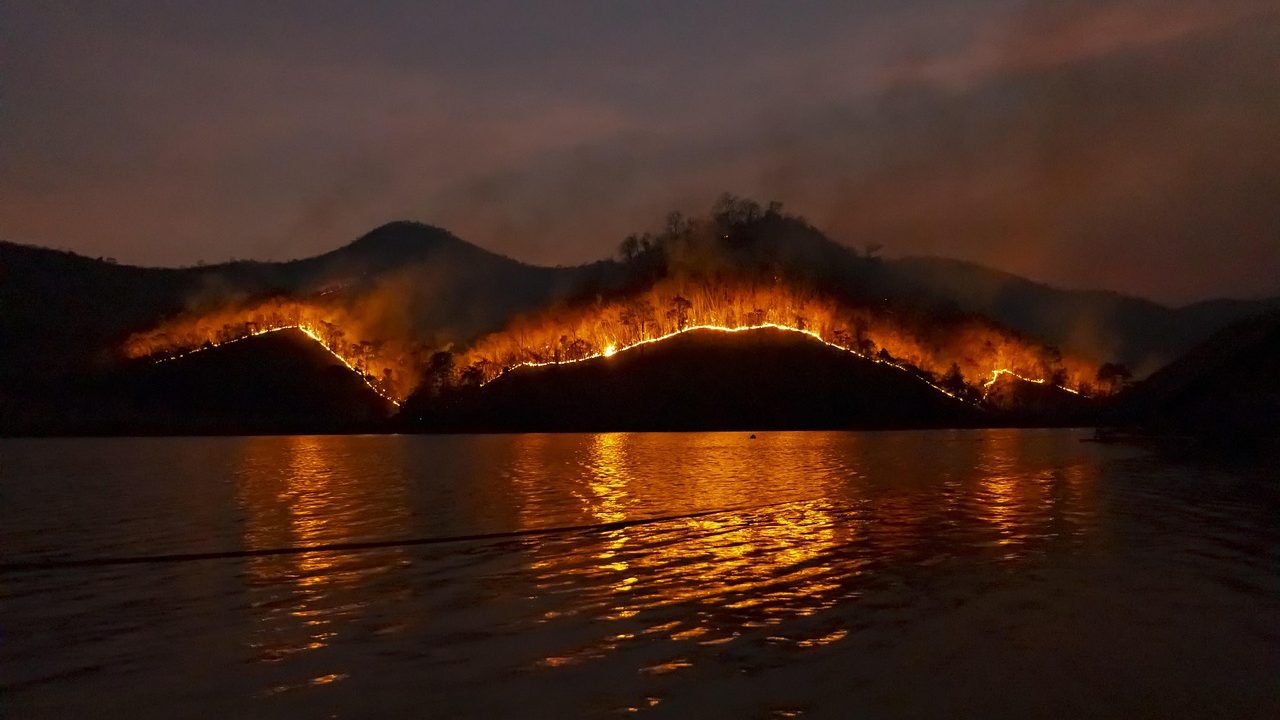
In South Florida, Miami-Dade County wildfires burned over 20,000 acres before nearing full containment — a figure remarkable for a region historically defined by its wetlands. That acreage reflects how significantly the area's hydrology has been altered under prolonged drought conditions. Farther west, the Bonneville Fire reached 200 acres near the University of Utah campus in Salt Lake City, prompting evacuations and air quality warnings.
Severe thunderstorms swept from Nebraska to Tennessee on Sunday, bringing damaging winds and hail across Oklahoma. Flood warnings are now active in five states, with the Neosho River near Commerce, Oklahoma expected to crest four feet above flood stage by Tuesday. Atmospheric scientists describe this as a 'loaded gun' pattern — extreme heat driving powerful convective systems that produce central corridor flooding while drought persists elsewhere simultaneously.
These events connect to a building Super El Niño threat. The UK Meteorological Office has deployed AI-based forecasting tools — including systems capable of generating probabilistic forecasts at two-to-four week ranges, well beyond the roughly ten-day ceiling of traditional numerical models — to improve prediction timelines for the coming event. U.S. farmers are reportedly facing a fourth consecutive year of losses as the Super El Niño threatens to intensify Plains drought conditions, a generational stress on farm economics that ripples through rural banks, agricultural suppliers, and commodity export infrastructure.
In medical science, China's National Medical Products Administration approved CARsgen Therapeutics' satri-cel as the world's first CAR-T cell therapy for a solid tumor — specifically advanced stomach cancer. CAR-T therapies, which reprogram a patient's own T-cells to attack cancer, have been highly effective against blood cancers since the first approvals in 2017, but solid tumors present a fundamentally different challenge: their immunosuppressive microenvironments have historically neutralized the engineered cells before they can act. If satri-cel's efficacy holds and the approach can be generalized to other solid tumor types — lung, pancreatic, colorectal — the implications for oncology could be substantial.