Cease-Fires, AI Trillions, and Wildfire Emergencies: The World on Summer Solstice 2026
From a fragile Lebanon cease-fire to a massive AI infrastructure forecast and twin wildfires forcing evacuations in Utah, June 21, 2026 presents an unusually dense convergence of geopolitical, economic, and domestic crises. This is a comprehensive analysis of the forces shaping the week ahead.
“when a noted bull shifts tone, markets pay attention”
How this was made Verified AI
Every Intellegix briefing is generated from that day's broadcast and run through automated checks before it publishes — with a human paged on any flag. Here is the trail for this edition.
Hormuz Open, But Asian Refiners Are Not Rushing Back

Israeli Prime Minister Benjamin Netanyahu ordered his forces to halt strikes in southern Lebanon following an intense exchange with Hezbollah that threatened to destabilize the fragile US-Iran peace framework the Trump administration has been constructing. Crucially, Netanyahu refused to order a troop withdrawal — leaving the underlying military posture unchanged and the cease-fire dependent on Hezbollah's willingness to accept an asymmetric standoff.
The diplomatic pause carries direct economic consequences. Despite the Strait of Hormuz reopening after the Iran conflict, Asian refiners in South Korea, Japan, China, and India are hesitating to rush back to Gulf crude. The reluctance reflects a mix of price uncertainty, alternative supply contracts locked in during the disruption, and a structural shift in how refiners weigh supply reliability. The lesson many are internalizing is diversification, not opportunism.
Economists are warning that the US-Iran deal will not quickly unwind the inflation already embedded in global supply chains. Cost increases absorbed during the conflict have become structural price levels for producers and retailers; a ten-dollar drop in Brent crude does not automatically lower goods on store shelves. Climate advocacy group 350.org released analysis claiming the Iran war channeled three hundred and seventy-four billion dollars into the fossil fuel industry through emergency contracts, strategic reserve replenishment, and accelerated extraction.
The World Economic Forum's Energy Transition Index 2026, which reported record global clean-energy investment of $3.3 trillion, simultaneously warned that geopolitical shocks are fragmenting the transition. The Iran disruption has accelerated some renewable adoption as utilities hedge against fossil fuel volatility, while simultaneously pulling enormous capital back toward conventional energy security — two countervailing forces operating in parallel.
Vice President JD Vance moved Sunday to urge GOP critics to support the fourteen-point Iran memorandum, dismissing President Trump's own 'fall guy' comment and calling the agreement a win-win. The fact that Vance was performing public clean-up duty on a Sunday suggested internal administration tensions over how to frame the deal remain unresolved.
Kerch Port Strike Halts Crimea's Fuel Sales as Assassination Charges Land in Poland

A Ukrainian strike on Kerch port in Crimea produced an immediate and striking consequence: Russian-occupied Crimea halted all public fuel sales. The stoppage — not a restriction but a complete halt — underscores how dependent the peninsula is on the Kerch logistics node, which serves as a primary resupply artery for both military operations and civilian energy supply. The strike forces Russian commanders into emergency allocation decisions about whether scarce fuel flows to military vehicles or civilian gas stations.
The strategic logic is one of sustained pressure through logistics rather than direct territorial engagement. Fuel shortages ripple through heating, farming, and commerce, degrading civilian morale in a territory Russia has sought to win over since its 2014 annexation. The operation fits a broader pattern: NATO and Ukraine are separately offering up to €250,000 through an innovation challenge for technologies that can persistently — not merely temporarily — disable enemy airfield infrastructure and aviation assets.
Russian drones struck the Mondelez factory in Ukraine for the second time this year, a reminder that economic targets remain firmly in Russia's crosshairs. Hitting a consumer goods factory rather than a military installation serves dual purposes: strategic supply disruption and a signal to foreign businesses still operating in the country.
In a story receiving less attention than its significance warrants, Polish authorities charged a Georgian citizen in the killing of Putin critic Skrepetsky on Polish soil. The use of a foreign intermediary is consistent with how intelligence services say these operations are typically structured — building in layers of deniability while delivering a message to the broader dissident community. The charge lands against a backdrop of Wall Street Journal reporting detailing an Iran-Russia-North Korea sanctions evasion architecture involving shell companies, dark-fleet tankers, and Chinese financial channels spanning more than a thousand sanctions designations.
The Chinese banking infrastructure enabling Russian and Iranian economic survival represents a structural alignment that analysts warn will not unwind quickly even if diplomatic conditions change — a complication for any Western strategy that assumes sanctions pressure remains effective as a tool of coercion.
Texas, New York, and South Carolina Test the Shape of 2026 Politics

Democratic Senate nominee Talarico in Texas is absorbing attacks from both President Trump and Republican opponent Ken Paxton while deliberately refusing to engage the culture war framing his opponents are offering. His response — dismissing the attacks as 'corny nicknames' and pledging to focus on affordability — reflects a calculated bet that economic anxiety over housing costs, energy bills, and healthcare expenses will outweigh culture war activation in a high-turnout environment. Texas's major metro areas have shifted the demographic landscape enough that analysts consider a statewide Democratic path plausible, making Talarico's strategic choice a meaningful test of that hypothesis.
New York City primaries are drawing thirty million dollars in spending and functioning as a stress test of Zohran Mamdani's organizational influence within progressive politics. Separately, JFK grandson Jack Schlossberg is engaged in a fifty-six million dollar battle in the NY-12 primary — a contest that has become a proxy fight between the legacy-brand model and the activist infrastructure model for what kind of Democrat should represent a heavily Democratic district. National donors across multiple wings of the party have decided both races are worth investing in.
President Trump's endorsement of both Pamela Evette and Republican opponent Alan Wilson in South Carolina's GOP gubernatorial runoff — endorsing both candidates in a two-person race — drew attention for its political novelty. The dual endorsement provides no directional signal to voters and follows Trump-backed candidates losing in Iowa and Georgia, suggesting the move is aimed at preserving the appearance of political relevance while hedging against further embarrassment.
In Washington, a Senate panel is moving toward a vote to block the transfer of special education oversight from the Department of Education to the Department of Health and Human Services. Advocates for disabled children argue the transfer risks diluting specific legal protections under the Individuals with Disabilities Education Act. Bipartisan Senate resistance would represent a significant check on the administration's broader agency reorganization plans.
A Gallup finding that fewer than half of Americans now believe everyone can achieve the American Dream carries deep political implications. Dropping below 50 percent on that metric describes a country where a majority views the system as structurally exclusionary rather than merely individually challenging — a belief shift that analysts say fuels political disruption across the ideological spectrum.
AI in Court, in the Clinic, and Under Antitrust Scrutiny

The OpenAI accountability case tied to the murder of Darron Lee is shaping up as one of the most legally significant AI stories of 2026. The victim's family is seeking to hold OpenAI liable on the grounds that AI-generated content or interaction played a role in the circumstances leading to the killing. The legal question being tested — whether AI companies can face tort liability for harms that flow from how their systems are used — is genuinely unresolved, and sits at a different point in the liability spectrum than the platform-hosting questions resolved under Section 230 of the Communications Decency Act. An AI system that generates and shapes conversations, rather than passively hosting third-party content, may face a distinct legal analysis.
A group of neuroscientists published a formal warning this week that AI chatbots are not conscious despite sounding empathetic. Their concern is that simulated understanding and care creates a false sense of relationship, leading users to disclose sensitive information, rely on AI for emotional support in unsafe ways, or be manipulated through the appearance of empathy. The gap between how these systems present and what they actually are sits at the center of the accountability debate.
Deutsche Bank analysis flagging a 65-times cost gap between frontier AI models and open-weight alternatives adds an economic dimension to the safety and governance conversation. The cost differential is simultaneously an argument for open-weight adoption — supporting the democratization case — and a reflection of the capability premium frontier systems command. The accountability and concentration pictures cannot be fully separated from the underlying economic architecture.
UK businesses sounded alarms about Anthropic AI export restrictions covering models described as Fable 5 and Mythos 5, which have stranded global users including British companies that had integrated these tools into their workflows. The UK government has worked to position itself as an AI-friendly jurisdiction post-Brexit, and having US export controls constrain what British companies can access undermines that ambition. Allied nations pushing back on US AI export policy represents a new front in the broader technology sovereignty debate.
On the antitrust question increasingly surrounding large AI companies, the legal standard under the Sherman Act is worth noting: having a large market share is not itself illegal. What the law prohibits is acquiring or maintaining monopoly power through exclusionary conduct — actively foreclosing competition rather than simply outcompeting rivals. In the AI context, that legal test would focus on specific behaviors such as exclusive data agreements that block competitors from training on key datasets, rather than dominant market position alone. The political concern about concentration and the legal question of actionable monopolization are separate inquiries.
Racks, Terabits, and Memory: The Physical Anatomy of the AI Buildout

JPMorgan's forecast of five and a half trillion dollars in global AI capital expenditure acquires concrete meaning through Foxconn Chairman Young Liu's rack-by-rack pricing of the Nvidia Vera Rubin data center configuration. Each rack costs $9.1 million; a one-gigawatt facility requires 3,557 racks; and that facility consumes $1.3 billion annually in power costs alone. The five-and-a-half-trillion figure, in other words, has a physical substrate of land, racks, cooling systems, network interconnects — and staggering electricity demand.
JPMorgan separately forecast that Broadcom could top one hundred and fifty billion dollars in annual revenue, reflecting the company's position as a custom AI chip supplier — particularly through its work with Google — for hyperscalers seeking to reduce dependence on Nvidia while deploying custom silicon at scale. Nokia and partners are deploying a 200-terabit AI optical network across the Midwest, the kind of regional backbone capacity that enables distributed AI training and inference at a scale where geography becomes less of a constraint.
The TSMC and Amkor ten-year chip packaging deal in Arizona advances a more complete domestic semiconductor supply chain. Chip packaging — encasing finished silicon and connecting it to circuit boards — has historically been outsourced to Asia; a long-term TSMC-Amkor agreement in Arizona adds a meaningful downstream link to US semiconductor manufacturing capacity. A worker at TSMC's Phoenix facility was rescued safely after becoming trapped during operations, a reminder of the human risk involved in the extraordinary construction scale underway.
Perplexity unveiled a memory system called Brain for its agent platform, which builds a context graph of past tasks so the agent can learn from what worked and failed across multiple sessions rather than starting fresh each time. Google simultaneously announced memory access for Gemini Live voice chats, allowing the voice assistant to retain context from previous conversations. The convergence of both announcements in the same news cycle suggests the industry is shifting toward persistent AI context as a standard feature — with significant implications for user privacy and behavioral data accumulation.
AMD's hybrid quantum-classical computing strategy positions the company's CPUs, GPUs, and FPGAs as the classical computing backbone that quantum systems require to operate usefully — a transitional framing that avoids competing directly with pure-play quantum hardware makers while asserting AMD's relevance in whatever form useful quantum systems eventually emerge.
Bear Market Warnings, PE Debt Extraction, and the Musk-Vance AI Rift

S&P futures stood at around seventy-five fifty-six, down roughly fourteen and a half points from the prior close on Sunday evening. Against that backdrop, Fundstrat's Tom Lee — historically one of the more persistently optimistic voices through multiple market corrections — warned of bear market conditions emerging later in 2026. The signal carries weight precisely because of its source: when a noted bull shifts tone, markets pay attention.
SpaceX trades at what MSCI describes as the priciest valuation of any S&P 500 equivalent stock, but cannot join the actual index until 2027 under S&P Dow Jones Indices' eligibility rules. The stock has shed 20 percent from its recent peak as retail investors exit. MSCI also assigned SpaceX its lowest possible ESG rating ahead of index inclusion decisions, creating a structural headwind: ESG-mandated institutional funds cannot hold positions in the lowest-rated stocks regardless of the growth thesis, constraining the capital formation story even as the underlying business may remain strong.
Vice President Vance's backing of a sovereign wealth fund to hold government equity stakes in AI companies drew a public rebuke from Elon Musk, who advocated for direct Treasury payments instead. The disagreement — playing out between the sitting Vice President and a figure with significant AI interests through xAI — reflects a genuine ideological fault line within the administration about whether the state should be a shareholder in the AI industry, with profound implications for valuations and governance if Vance's position prevails.
Jane Street is planning to hire more than 500 people as it scales AI trading operations. The firm, which now employs 3,500 people, is building its own data center to train AI models for predicting asset prices — a capital commitment that separates firms with genuine AI ambitions from those using AI as a marketing term. In private equity, half of 2026's dividend recapitalization volume has arrived in the last four weeks, as PE owners exploit favorable loan markets to extract cash from portfolio companies, leaving those companies more leveraged and more fragile ahead of any market downturn.
The EU's three-euro duty on cheap online imports takes effect July 1, targeting platforms like Temu and Shein whose business models depend on low-cost goods shipped directly from Chinese manufacturers, previously below duty thresholds. Goldman Sachs cut smartphone demand forecasts, citing memory cost pressure: the AI buildout has consumed high-bandwidth memory that would otherwise supply consumer devices, driving prices up and suppressing upgrade cycles at the margins. Novo Nordisk shares climbed despite a ransomware crisis as investors priced in the long-term potential of an oral formulation of semaglutide, which could expand the addressable GLP-1 patient population substantially beyond injectable alternatives.
Twin Utah Wildfires, a Airport Near-Miss, and Steroids in Ancient Bones
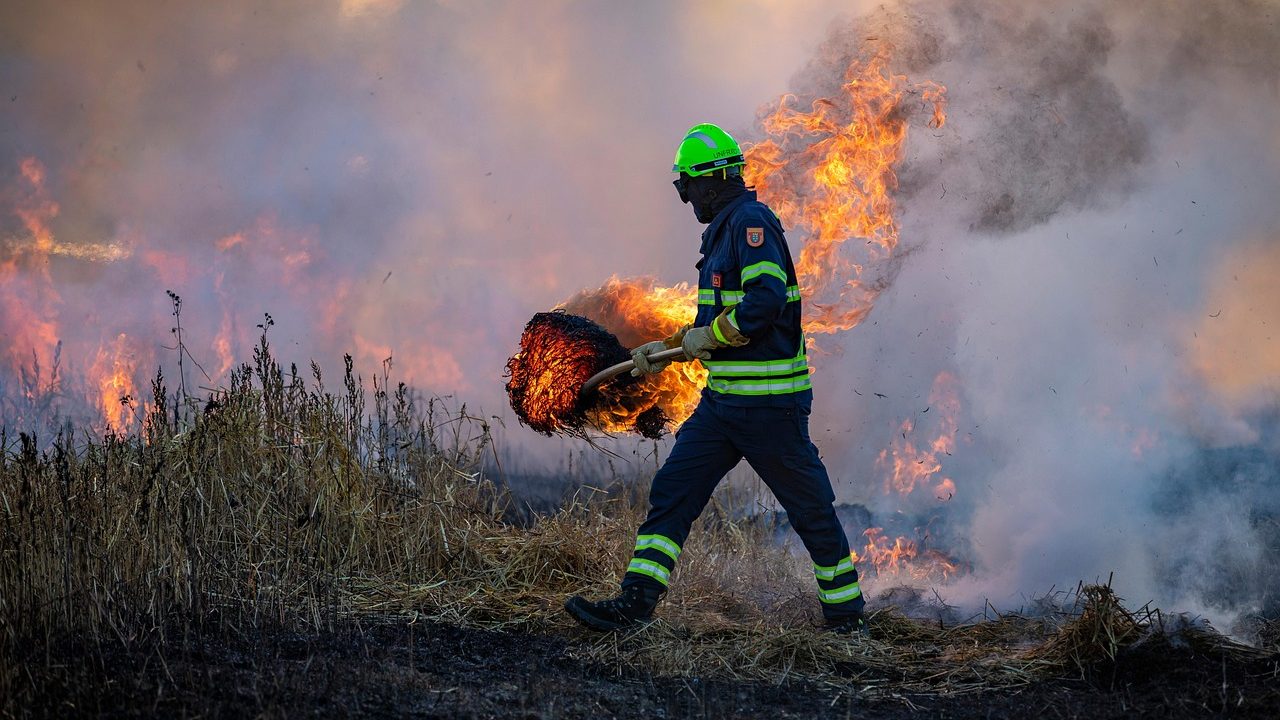
Two wildfires burning simultaneously in Utah on the summer solstice illustrate the grim pattern of annual wildfire emergencies in the American West. The Iron Fire has exploded to 13,000 acres, forcing evacuations in Eureka, Utah, a town of roughly 10,000 people. Governor Spencer Cox declared a state of emergency. The Bonneville Fire, far smaller at 200 acres, poses a higher-consequence urban risk: shelter-in-place orders have been issued across the University of Utah campus in Salt Lake City, where thousands of students, faculty, and staff are in proximity to the fire's perimeter.
Urban-adjacent wildfires have been among the most destructive in the western US over the past decade precisely because the interface between dense vegetation and built structures creates conditions that can overwhelm standard suppression capacity. The Bonneville Fire's proximity to the university and surrounding residential neighborhoods makes it an unusually high-profile wildland-urban interface situation despite its relatively small acreage.
The FAA is investigating a close call at an airport after air traffic control cleared an American Airlines jet for takeoff into the landing path of an incoming Delta flight. Delta pilots executed a go-around — the correct response — and no collision occurred. The investigation will focus on the communication sequence that produced the conflict and whether systemic factors beyond individual controller error were involved.
The United Nations launched a $1 million IAEA-FAO project to boost production of sterile New World screwworm flies, responding to the northward spread of the parasite from Central America toward the United States. Cochliomyia hominivorax — whose larvae consume living tissue — was eradicated from the US through the sterile insect technique in 1966. Livestock losses in affected areas can be severe, and the agricultural stakes are significant relative to the modest size of the multilateral response.
In paleontology, researchers announced the discovery of steroid compounds in pterosaur fossil remains for the first time. Organic molecules of this type are generally thought to degrade over geological timescales, and their survival in Mesozoic-era fossils opens new possibilities for biochemical analysis of ancient organisms — potentially revealing aspects of pterosaur physiology that bone structure alone cannot. NASA separately sent the official 2026 World Cup ball, the Adidas Trionda, to the International Space Station to recreate a 2019 microgravity experiment studying how ball balance affects movement in zero gravity, with applications in fluid dynamics and sports equipment design.
Hollywood Jobs at Risk, an AI Capex Reckoning, and the Sauerkraut Doctrine

An L.A. County analysis estimates roughly 2,500 Los Angeles jobs and 6,000 positions globally could be eliminated as the Paramount and Warner Bros. Discovery merger advances under David Ellison's target of $6 billion in cost reductions. Hollywood has absorbed previous consolidation rounds, but the combination of Paramount and WBD would represent the largest media merger in years — and in a city where the entertainment industry functions as an integrated economic ecosystem, 2,500 local job losses constitute a significant community shock.
The cast of the canceled Netflix sci-fi series The Boroughs is rallying Emmy voters in a final advocacy campaign after the platform canceled the show despite its popularity and award season momentum. The situation reflects a recurring structural tension in streaming: a show builds a devoted audience and critical recognition, then gets canceled because the platform's internal metrics — completion rates, subscriber acquisition attribution, cost per hour viewed — diverge from audience passion and critical reception.
Four senior administration officials including Vice President Vance are reportedly following a fermented food regimen promoted by Dr. Sean O'Mara, and the detail that this dietary philosophy has reportedly shaped new federal dietary guidelines elevates it from personal wellness curiosity to genuine policy story. Federal dietary guidelines govern school lunch programs, nutrition labeling, and medical guidance at enormous scale, making the pathway from a vice presidential wellness choice to official federal nutrition guidance worth scrutiny.
Halo Studios reversed a requirement that split-screen co-op players on PS5 each maintain a PlayStation Plus subscription after immediate and significant fan backlash. The studio cited an incorrect FAQ. The episode illustrates how quickly gaming communities mobilize against policies perceived as consumer-hostile — and how swiftly corporate reversals can follow when that mobilization is visible and loud.
Turning to the What If We're Wrong exercise: the most confident consensus claim in today's news cycle is that the AI capital expenditure supercycle is structurally self-sustaining, comparable in durability to the railroad or internet infrastructure buildouts. The counterargument begins with the absence of systematic evidence that AI productivity gains are flowing through to corporate earnings in ways that justify the next investment wave. If gains remain diffuse or narrowly concentrated, the cycle could slow faster than assumed. A second pressure point: if open-weight models close the capability gap rapidly, the 65-times cost differential Deutsche Bank identified could narrow to a point where the frontier capex race loses its commercial justification. A third constraint is physical — Foxconn's $1.3 billion annual power cost for a single gigawatt facility implies that at JPMorgan's projected scale, AI data centers would strain regional grids faster than new generation capacity can be permitted and built. The leading indicator to watch is hyperscaler guidance on AI-attributable revenue per dollar of AI infrastructure investment in Q3 and Q4 earnings calls. Clear monetization language strengthens the bull case; vague or disappointing revenue attribution would likely slow the investment pace materially.