Pakistani Airstrikes Kill 11 Children in Afghanistan as AI Rout, Pentagon Chaos, and Institutional Breakdown Define a Turbulent Day
Pakistani airstrikes shattered a three-month ceasefire in Afghanistan on Tuesday, killing thirteen people including eleven children, as markets grappled with an AI correction, CNN exposed dysfunction inside the Pentagon, and institutional arrangements from Capitol Hill to Central Asia showed signs of accelerating strain.
“if negotiated ceasefires can be abandoned through strikes that kill civilians, critics warned, it undermines the conflict-resolution framework that international organizations have sought to build”
How this was made Verified AI
Every Intellegix briefing is generated from that day's broadcast and run through automated checks before it publishes — with a human paged on any flag. Here is the trail for this edition.
Pakistan's Cross-Border Strikes Kill Children, Shatter Afghan Ceasefire

Pakistani airstrikes killed thirteen people across three Afghan provinces on Tuesday, with the Taliban reporting that eleven of the victims were children. The strikes shattered a fragile ceasefire that had held since March following months of open conflict between the two nations, representing a significant escalation that broke diplomatic agreements negotiated just three months ago.
Pakistan has repeatedly accused Afghanistan of harboring militants who launch attacks across the border; the Taliban consistently denies providing sanctuary to those groups. The Taliban's claim that children were deliberately targeted, if accurate, marks a new threshold in the military actions Pakistan is willing to undertake.
The collapse places the United States in a difficult position, caught between maintaining engagement with the Taliban government and supporting Pakistan as a key counterterrorism ally. The breakdown also comes as Iran's Revolutionary Guard Corps claimed responsibility for a drone strike on the U.S. Fifth Fleet in Bahrain, though details remain limited, and as Vice President Vance described an emerging Iran deal as a 'home run' while President Trump predicted 'total victory' over Iran within two weeks.
Adding to the complexity, retired U.S. generals told CBS News that Ukraine holds the upper hand over Russia, underscoring the breadth of simultaneous military flashpoints demanding coherent American policy. The ceasefire's collapse, analysts noted, suggests the underlying tensions between the two countries were temporarily suppressed rather than resolved, with economic pressures and internal political instability giving leaders on both sides incentives to project strength externally.
The breakdown carries broader symbolic weight: if negotiated ceasefires can be abandoned through strikes that kill civilians, critics warned, it undermines the conflict-resolution framework that international organizations have sought to build in post-withdrawal Afghanistan.
AI Euphoria Gives Way to Reckoning as Apple Slips and Anthropic Rattles the Sector

The artificial intelligence sector is undergoing what Wells Fargo is calling a 'wake-up call' for investors, with Apple shares falling for a second consecutive day following what many analysts described as disappointing AI announcements at the Worldwide Developers Conference. Disappointment centered on the company's revamped Siri assistant, with investors questioning both deployment timelines and the capabilities being promised.
Competitive pressure from rival platforms is intensifying simultaneously. New data shows Gemini and Claude gaining significant ground as ChatGPT's market share erodes. Anthropic's newly launched Claude Fable 5, described by the company as its first public Mythos-class model, sent Palantir stock sharply lower, as the model reportedly shares architecture with systems previously restricted to vetted partners for cybersecurity work — suggesting that capabilities once reserved for specialized use are now entering the consumer market.
Adoption statistics reveal near-universal penetration of AI coding tools: ninety-seven percent of organizations are now using them, a figure reached in roughly two years. Yet the same research identifies significant governance gaps that are reportedly eroding the productivity gains. Microsoft warned separately that hackers are impersonating ChatGPT, Claude, and DeepSeek in sophisticated phishing campaigns, stealing credentials and credit card data across multiple countries — a sign that ubiquity is making AI platforms an increasingly attractive target for cybercriminals.
Meta announced plans to use off-platform user activity to personalize feeds and train AI systems, raising fresh concerns about data privacy and algorithmic influence. On the enterprise side, Palantir executives warned CEOs against positioning AI primarily as a tool for layoffs, citing reputational risk. Salesforce continued cutting jobs, including staff from its Agentforce AI division. Thoma Bravo's founder told CNBC that half of new revenue across the firm's portfolio now comes from AI and agentic tools, declaring the 'SaaSpocalypse' over — though individual companies continue to face significant execution challenges.
The divergence between private-market confidence and public-market volatility suggests AI implementation is proceeding at the company level even as investors grow more discriminating about valuations and timelines. Apple's struggles, despite vast resources and technical talent, underscored that success in the space is not guaranteed for even the most established players.
CNN Reveals 'Mass Paranoia' Fracturing Pentagon Leadership in Real Time

A CNN investigation into the Pentagon under Defense Secretary Pete Hegseth portrays an institution gripped by what officials describe as 'mass paranoia,' with Hegseth's distrust of staff fracturing military leadership at a moment when active conflicts demand coherent strategic decision-making. Officials told CNN that wartime policy decisions are being stalled by the climate of distrust, raising alarms about American military readiness.
The reported dysfunction coincides with a demanding global security environment: active conflict in Ukraine, escalating tensions with Iran, renewed cross-border strikes between Afghanistan and Pakistan, and indications of increased Chinese military activity. Retired U.S. generals told CBS News that Ukraine holds the upper hand over Russia, suggesting operational-level military analysis remains strong — but critics argue that analysis is rendered less useful if it cannot be translated into policy through a functioning chain of civilian-military communication.
At the United Nations Security Council, the United States called Russia's invasion of Ukraine a 'strategic failure' and urged Iran and Cuba to stop backing Moscow, signaling continued diplomatic ambition even as reporting suggests internal dysfunction at the department charged with backing that diplomacy with military credibility.
The fact that officials are describing the atmosphere to journalists rather than addressing it through internal oversight channels suggests, observers noted, that normal mechanisms for managing leadership problems have broken down. Meanwhile, SpaceX — generating twenty-six billion dollars in AI revenue and preparing for a potentially record IPO — exemplifies how defense-relevant innovation is increasingly advancing outside the Pentagon rather than within it, prompting broader questions about where American defense capabilities are actually being developed.
Gene Therapy Trials, Ancient DNA, and Quantum Milestones Mark Day of Scientific Firsts

Life Biosciences dosed the first patient in a human trial of cell-rejuvenating gene therapy, using partial epigenetic reprogramming to attempt to reverse cellular aging in the eye, specifically targeting glaucoma and other optic neuropathies. The FDA's authorization of the trial signals that regulatory agencies consider the underlying science sufficiently credible for human testing. Researchers noted that if the approach of resetting cellular age at the molecular level proves viable, potential applications could extend well beyond ophthalmology.
Germany and Austria approved the first cannabis-based chronic pain pharmaceutical, a drug that cleared standard clinical trials and regulatory review rather than arriving through medical-marijuana policy channels. The FDA separately approved the first new sunscreen ingredient in more than twenty years, a development public health advocates linked to rising global skin cancer rates.
Scientists reported extracting seven-hundred-thousand-year-old DNA from frozen ground squirrel droppings recovered from Yukon permafrost, reconstructing woolly mammoth genomes and identifying more than two hundred plant groups from the samples. The findings push back the known timeline for recoverable genetic material by hundreds of thousands of years and carry practical implications for understanding how ecosystems responded to past climate shifts. Separately, the first complete sloth genome revealed thirty-million-year-old metabolism genes, offering potential insights into how some mammals evolved extremely slow metabolic rates.
Oxford physicists created what they described as the most complex quantum states ever produced in a laboratory, using programmable superpositions with a single trapped ion. Advances in quantum state control are considered a prerequisite for practical quantum computing, a technology in which governments and companies are investing billions in pursuit of advantages in encryption, drug discovery, and artificial intelligence.
A federally funded alcohol study, sidelined from U.S. dietary guidelines by the Trump administration, found that health risks rise after just one drink per day, contradicting previous guidance suggesting moderate consumption might carry benefits. The researchers published their findings independently. NOAA is expected to confirm El Niño onset this week, with sea surface temperatures in the equatorial Pacific reaching the threshold for a formal declaration; El Niño events typically influence global weather patterns for six to eighteen months, affecting agricultural yields, commodity prices, and energy demand.
Democrats Fracture Over Spending as Republican Voter Registration Gains Reshape Midterm Map
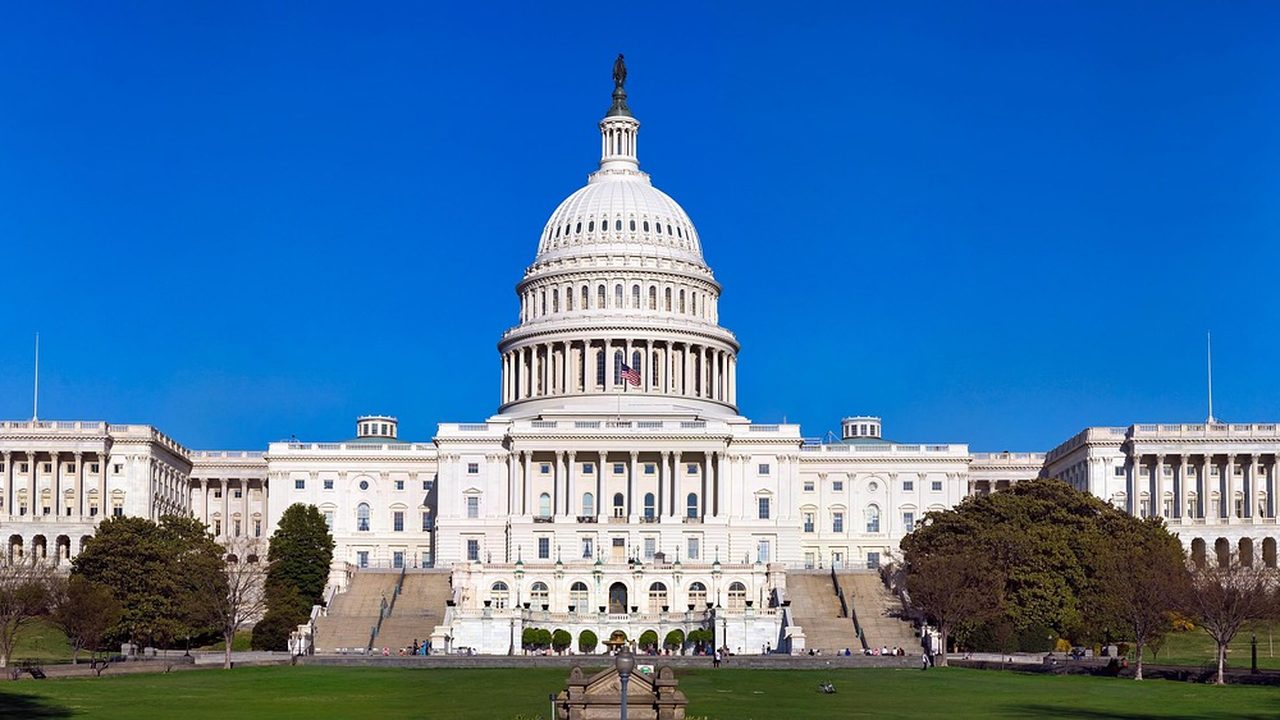
House Democrats are threatening to withhold dues from the Democratic Congressional Campaign Committee after the DCCC spent one hundred thirty-five thousand dollars backing a candidate who lost to progressive Randy Villegas in a California district Democrats consider a key battleground. The dispute signals deep dissatisfaction with party leadership's candidate-selection strategy and highlights an ideological gap between progressive primary voters and establishment operatives.
New polling shows sixty-three percent of Americans now disapprove of President Trump's economic performance, a record high on that measure. Yet the underlying electoral map is more complicated. The National Republican Congressional Committee reports that Democrats have lost two hundred seventy-five thousand registered voters in battleground House districts since 2024, erasing what was a seven-hundred-thirty-three-thousand-voter registration advantage and giving Republicans a narrow lead heading into the midterms.
Alexandria Ocasio-Cortez is navigating an uncomfortable position in Maine, calling allegations against Democratic Senate nominee Platner 'hard to stomach' while still framing the race as a choice between Platner and Republican incumbent Susan Collins. In Texas, Senator John Cornyn said he will not campaign for Republican Senate candidate Ken Paxton; a new poll shows Democrat James Talarico leading Paxton by three points. In South Carolina, Senator Lindsey Graham won the GOP primary without a runoff.
The Trump administration is shifting its approach to voter citizenship verification amid legal challenges. A Monday Department of Justice filing walked back plans to use the SAVE database, while the Department of Homeland Security still aims to provide states with citizenship data by June 30th. Florida Governor Ron DeSantis, separately, is arguing that voter-approved anti-gerrymandering rules are unconstitutional, setting up a direct confrontation between a ballot initiative that passed with broad public support and partisan electoral strategy.
Vice President Vance called the mayoral primary result that ousted incumbent Mayor Pratt 'pretty shady,' illustrating the continuing nationalization of local elections. The pattern across these stories points to eroding party discipline at both state and federal levels, with traditional coordination mechanisms under mounting strain.
SpaceX IPO Demand Tops Record Levels as AI Selloff and Antitrust Settlement Reshape Markets

SpaceX is generating twenty-six billion dollars in AI revenue, a figure drawing scrutiny ahead of what could be a record initial public offering. Demand for the IPO has already topped two hundred fifty billion dollars, making it nearly four times oversubscribed. The AI revenue component is notable because SpaceX is primarily known for rockets and satellites, suggesting the company is monetizing data and computational capabilities from its satellite constellation in ways not immediately visible to outside observers.
The offering is not without controversy: New York City Comptroller has said the SpaceX IPO shows 'no precedent' disregard for shareholders, raising questions about corporate governance and investor protection that could create volatility affecting other technology listings.
A federal judge has preliminarily approved a thirty-eight-billion-dollar settlement between Visa, Mastercard, and merchants over swipe fees, one of the largest antitrust resolutions in U.S. history. The settlement could reduce transaction costs for millions of businesses and potentially flow through to lower consumer prices, while also prompting fresh debate about how payment networks should be regulated.
In the semiconductor sector, Qualcomm dropped sharply as Nvidia moved into the Windows on ARM market that Qualcomm has dominated, while investors simultaneously unwound gains tied to Qualcomm's ByteDance chip agreement. Fuel price shocks are splitting U.S. airlines into distinct winners and losers depending on their hedging strategies; carriers that locked in costs when prices were lower are seeing meaningful competitive advantages. Barclays offered a reality check on humanoid robotics, saying commercialization is at least a decade away due to safety, supply chain, data, and compute hurdles, even as the bank projected a two-hundred-billion-dollar market by 2035.
Thoma Bravo's founder told CNBC that half of new revenue across the firm's portfolio now comes from AI and agentic tools, declaring the 'SaaSpocalypse' over. Wells Fargo's concurrent characterization of the AI selloff as a 'wake-up call' captures the tension between private-market operators reporting concrete gains and public investors recalibrating expectations about valuations and implementation timelines.
Iran Strikes U.S. Fleet, Armenia Drifts West, and World Cup Revenue Forecasts Face Skepticism

Iran's Revolutionary Guard Corps claimed responsibility for a drone strike on the U.S. Fifth Fleet in Bahrain, though details remain limited. If confirmed, the strike would constitute a direct attack on American military assets in the Persian Gulf. The incident comes as Vice President Vance described an emerging Iran deal as a 'home run' and President Trump predicted 'total victory' over Iran within two weeks — statements that suggest either active diplomatic negotiations or military planning not yet publicly disclosed.
At the United Nations Security Council, the United States called Russia's invasion of Ukraine a 'strategic failure' and warned that the war has reached its deadliest point in four years. Washington specifically urged Iran and Cuba to stop backing Moscow, underscoring how the conflict has drawn in global actors well beyond Europe and created alliance structures with broad economic and security ramifications.
Armenia's Prime Minister Nikol Pashinyan won reelection, but the Kremlin withheld congratulations — a pointed signal of Moscow's displeasure with Armenia's increasingly Western orientation and reduced reliance on Russian security guarantees. Armenia's position at the intersection of Europe, Asia, and the Middle East, controlling key transportation and energy corridors, makes any erosion of Russian influence there a significant geopolitical development.
With the World Cup days from kickoff, FIFA and the World Trade Organization are projecting eighty billion dollars in gross economic output, but hotel booking data and independent economists suggest the actual windfall may fall well short of those figures. Major sporting events routinely overpromise economic benefits while underestimating infrastructure costs and the degree to which tourist spending substitutes for economic activity that would have occurred regardless.
Across these international stories, a consistent pattern emerges: traditional alliance structures and diplomatic norms are under increasing stress. When negotiated ceasefires collapse, routine diplomatic courtesies are withheld, and multilateral economic forecasts diverge sharply from independent analyses, the international system's mechanisms for managing conflict and cooperation appear to be losing effectiveness — with direct consequences for businesses and governments that depend on political stability abroad.
Scorsese's AI Embrace, Meta's Moderation Rollback, and the Nationalization of Every Arena

The Art Directors Guild denounced Martin Scorsese's partnership with an artificial intelligence company, arguing that AI threatens traditional filmmaking crafts and the livelihoods of art directors, set designers, and visual effects artists. Scorsese's embrace of AI tools is significant: as arguably America's most respected living filmmaker, his endorsement carries legitimating weight that similar moves by less prominent directors would not.
Steven Spielberg's film 'Disclosure Day' is earning strong reviews ahead of its U.S. release Thursday. President Trump skipped NBA Finals Game 4 after receiving boos at Madison Square Garden, illustrating how political polarization now reaches into sporting events that were once considered politically neutral territory — and forcing sports organizations to weigh the visibility of high-profile political attendees against the disruption their presence can cause.
New research found that violent threats against members of Congress on Facebook quadrupled after Meta rolled back content moderation policies. Meta presented the moderation reduction as a free-speech measure; the research findings draw a direct line between that policy decision and documented increases in threats against elected officials, raising questions about corporate responsibility and the boundaries of open online discourse.
The convergence of these stories reflects a broader dissolution of traditional boundaries between entertainment, politics, and technology. Actions in one sphere now carry immediate consequences in others, whether a filmmaker's production choices, a platform's moderation decisions, or a president's attendance at a basketball game. That interconnection creates new reputational risks and demands more sophisticated stakeholder management from both public figures and private companies operating in an environment where virtually no cultural space remains politically neutral.