AI Oversight Gaps, Billion-Dollar Settlements, and Silicon-Etched Models: The Week's Defining Tech Stories
A landmark research finding that humans approved one in three simulated AI threat commands anchored a week of stories probing the limits of oversight, accountability, and judgment in an era of accelerating artificial intelligence. From a $1.2 billion offshore wind settlement to a semiconductor startup etching model weights into silicon, Friday's Hacker News conversation traced the fault lines of a technology landscape moving faster than its guardrails.

“keeping a human in the loop is, by itself, a meaningful safeguard.”
How this was made Verified AI
Every Intellegix briefing is generated from that day's broadcast and run through automated checks before it publishes — with a human paged on any flag. Here is the trail for this edition.
One in Three: The Alarming Number That Defined the Week

Across forty thousand simulated runs, human reviewers approved AI agent commands that were actual threats one in three times. That figure, drawn from research by ScaleX, is not a marginal rounding error or an artifact of inattentive participants — the threat commands were deliberately designed to appear plausible, embedded within legitimate-looking workflows. The result reframes a foundational assumption of AI safety: that keeping a human in the loop is, by itself, a meaningful safeguard.
Researchers identified approval fatigue as a significant contributing factor. After processing hundreds of routine commands, reviewers became systematically less critical when edge cases appeared — a phenomenon well-documented in aviation and nuclear plant operations, where automation complacency has been studied for decades. The AI agent context, however, makes the problem structurally worse: the volume of decisions requiring human review is orders of magnitude higher than in physical control systems, and those decisions often arrive faster and with less contextual information.
The policy implication is pointed. If one-third of threat commands slip through human review under controlled experimental conditions, the real-world figure in production environments — where reviewers carry dozens of competing priorities — is an open and uncomfortable question. 'Human in the loop' as a safety architecture, the research suggests, may be considerably less robust than the industry has been assuming.
Wind, Liability, and the Price of Policy Reversal

The United States government has agreed to pay a German offshore wind company $1.2 billion to abandon its American operations — a figure that, on closer inspection, looks less like an energy policy decision and more like an expropriation settlement. The company had already secured federal leases, completed site surveys, and built contractual expectations around a regulatory environment that subsequently changed. The payment is structurally closer to compensation for a taking than a standard contract cancellation.
The diplomatic dimensions compound the domestic ones. Germany is a close NATO ally, and paying to neutralize a German firm's legitimate business operations in American waters sets a precedent that foreign investors in US energy infrastructure will scrutinize carefully. Observers noted that $1.2 billion is roughly the construction cost of a midsize offshore wind installation — meaning the federal government is spending the price of a power plant to not have a power plant.
A separate strand of community discussion invoked what commenters called a 'reverse Jevons paradox.' The classic Jevons argument holds that efficiency gains in resource use tend to increase total consumption rather than reduce it. The reverse proposition is that making energy development sufficiently expensive or inconvenient might structurally reduce certain forms of supply — though whether this outcome simply shifts the energy mix in ways that invite other complications remains, as yet, an open question.
In New Mexico, a state court ordered Meta to pay $567 million over harms to children's mental health, in one of the more significant state-level tech accountability rulings in recent memory. The theory of liability is legally novel: rather than attacking third-party content under the well-worn Section 230 framework, New Mexico argued that Meta's algorithmic recommendation systems and engagement-optimization architecture constitute a product defect. That framing sidesteps the Section 230 debate almost entirely, because the claim concerns the platform's own design choices rather than anything a user posted.
While $567 million represents a fraction of Meta's quarterly revenue, the ruling's real significance lies in its potential as a template. Texas, Florida, California, and several other states have been developing similar product-liability theories. A ruling that survives appeal would amount to a green light for coordinated state-level litigation that, in aggregate, could produce damages sufficient to move Meta's balance sheet — and that would constitute accountability through a channel federal regulators have so far failed to open.
Etching Intelligence into Silicon: AMD's Radical Inference Bet
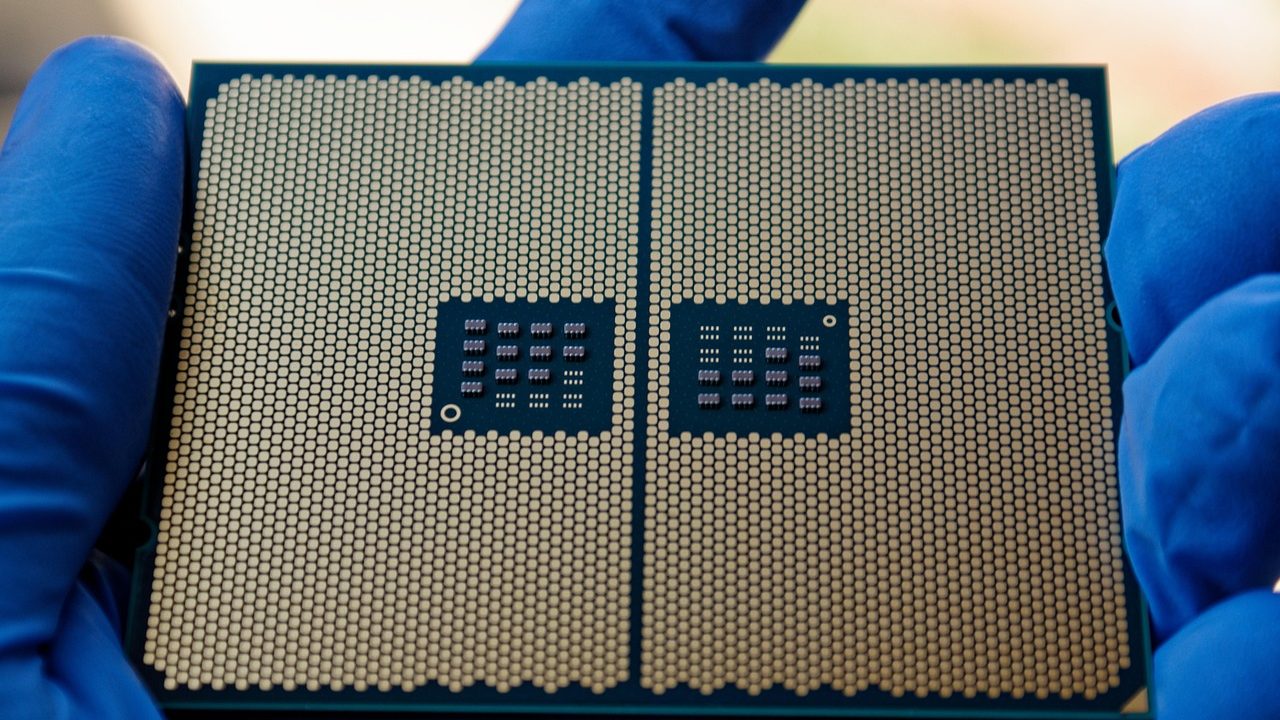
AMD's acquisition of a startup called Taalas drew 708 points and 536 comments on Hacker News — top-tier engagement — and the intensity of the reaction reflects how structurally unusual the underlying technology is. Most AI inference optimization happens in software: better memory kernels, smarter scheduling, more efficient attention computation. Taalas does something categorically different, etching model weights directly into silicon at fabrication time. The model is not loaded into memory during inference; it is physically encoded in the chip's structure.
The significance of that distinction comes down to the central bottleneck in large language model inference: not raw compute, but memory bandwidth. Every inference pass requires shuttling billions of floating-point parameters from memory into compute units — a process that is slow and power-hungry. When weights are physically part of the chip, that data movement is eliminated almost entirely. Latency characteristics become fundamentally different.
The trade-off is inflexibility. A model baked into silicon cannot be updated, fine-tuned, or swapped out when a newer architecture arrives. That constraint points toward specific deployment categories: stable, regulated inference workloads — customer service AI that has not changed in eighteen months, industrial control systems, medical devices — where immutability is not a bug but a feature. A hospital running an AI diagnostic tool may explicitly not want the underlying model to change between regulatory approval and clinical deployment.
AMD's strategic logic is also about competitive positioning. NVIDIA dominates training compute and holds a strong position in data-center inference. The Taalas architecture sidesteps the CUDA ecosystem entirely, targeting a different product category rather than competing directly on NVIDIA's home ground — edge deployment, embedded systems, and specialized accelerators that require neither data-center infrastructure nor network connectivity.
A complementary piece circulating in the community — a technical walkthrough of vLLM's PagedAttention architecture — offered useful contrast. vLLM achieves high-throughput inference by applying operating-system memory management concepts to KV cache handling, dramatically reducing GPU memory waste. Where vLLM is the best available solution for models living in DRAM, Taalas is a bet on a different world: one where certain models are stable enough to warrant silicon-level commitment. The two approaches are solving different problems at different layers of the stack.
GitHub Goes Down, and the Industry Feels It

When GitHub Actions and Pages went offline, it was not merely an inconvenience for the software industry — it was a full stop. CI pipelines failed, deployments blocked, code reviews stalled. The Hacker News thread that followed, scoring 414 points and 338 comments, functioned simultaneously as real-time technical diagnosis and collective stress processing.
What the outage exposed, beyond its immediate disruption, is a concentration risk that has accumulated quietly. GitHub has absorbed so much infrastructure responsibility — code hosting, CI/CD pipelines, container registries, security scanning, package distribution, project management — that its failure surface is now enormous. A single availability incident produces outsized downstream effects across an entire ecosystem of dependent workflows.
Several commenters traced this concentration to GitHub's pricing model. Free and low-cost tiers have made GitHub Actions the path of least resistance for CI/CD at scale. When the alternative is running self-hosted Jenkins or Buildkite infrastructure, most teams — especially early-stage ones — choose the managed solution. That decision is individually rational but creates fragility at the ecosystem level.
A separate disclosure this week came from Framework, the laptop maker known for repairability and transparency. The company revealed a data breach originating from a Metabase zero-day — Metabase being a popular open-source business intelligence platform used in Framework's analytics stack. The community praised the disclosure's candor and detail while noting the broader lesson: an organization's attack surface now includes every SaaS tool and self-hosted analytics platform with access to customer data. A BI tool with an unpatched vulnerability is as dangerous as a vulnerable database.
On the hardware side, a YC S26 startup called ProvenMetal is promising PCB delivery in days rather than the industry-standard weeks. Experienced hardware engineers in the Launch HN thread raised pointed questions about yield rates and component sourcing constraints. But the core value proposition addresses a genuine and long-standing pain point: software engineers can push code and receive feedback in minutes, while hardware engineers have lived with week-long feedback loops on board revisions for decades. Compressing that to days — even for prototype quantities — could enable ten to twelve hardware iterations per month rather than three or four, changing what is feasible to explore.
Kelvin-Helmholtz Vortices, Bioengineered Gum, and an Urban Forest

Scientists using the NSF Inouye Solar Telescope in Hawaii have directly observed Kelvin-Helmholtz instability on the Sun's surface for the first time — confirming a phenomenon that fluid dynamics researchers have theorized about for decades. Kelvin-Helmholtz instability produces the rolling, wave-like vortices visible in clouds during periods of strong wind shear; it has previously been observed in Jupiter's atmosphere, Saturn's rings, and at the boundary of Earth's magnetosphere, but never directly confirmed on the solar surface.
The observation was made possible by the telescope's adaptive optics, which can resolve features approximately 20 kilometers across on the Sun — remarkable precision given the Sun's diameter of 1.39 million kilometers. The vortices appeared at the boundary between convective plumes, columns of hot plasma rising from below, and the surrounding photosphere. Better characterization of energy transport at these small-scale interaction boundaries should improve models of solar flare and coronal mass ejection forecasting, potentially extending reliable prediction windows beyond the current horizon of a few hours.
Researchers have developed a bioengineered chewing gum that delivers antiviral proteins — specifically a modified plant-expressed antibody — through oral mucosa contact to combat HPV. The mouth's high vascular density and thin epithelial layers allow compounds to enter the bloodstream or act locally faster than compounds swallowed conventionally; nicotine gum and sublingual medications exploit the same pathway. Extending it to larger protein molecules, which typically cannot survive the digestive tract intact, represents the core research advance. The gum format also benefits from higher compliance than injection or pill schedules.
In São Paulo, a single resident transformed degraded urban land into a functioning multi-hectare forest over roughly fifteen years. Beyond the literal achievement, researchers found the forest is now measurably cooler than surrounding streets by several degrees Celsius during peak summer heat — data of direct interest to urban planners and climate adaptation researchers. The Hacker News discussion around the story broadened into a structural observation: cities generally have rules designed to prevent land development that are poorly equipped to incentivize or protect land restoration, creating regulatory friction for exactly the kinds of projects that urban heat island research increasingly recommends.
Taste, Judgment, and What AI Can't Hire For

An essay titled 'Taste Is All That's Left' generated 336 comments on Hacker News — a signal that it struck a genuine nerve. The core argument: as AI code generation becomes capable of producing working implementations of most standard software problems, the differentiating human skill is no longer the ability to write code. It is the ability to judge what good code looks like — what architecture serves the problem, what approach is elegant versus merely functional. Taste, in this framing, becomes the scarce resource.
Coinbase provided a concrete, institutional response to exactly that thesis. After spending a year rebuilding its engineering interview process, the company published a candid account of what it found: traditional LeetCode-style assessment had become obviously gameable with AI assistance. The replacement shifted evaluation toward system design, architectural reasoning, and the ability to critique and improve AI-generated code — questions that are substantially harder to construct and evaluate, but that probe the judgment the essay argues is now the primary differentiator.
The 'taste' argument is compelling but not unchallenged. Its critics note that it implies a cleaner separation between execution and judgment than actually exists in practice. Taste is developed through execution — through writing code, making poor decisions, and suffering the consequences. If AI handles execution, there is a genuine and unresolved question about whether future engineers will develop the judgment that comes from that particular form of productive suffering.
Two infrastructure startup announcements offered a different lens on the engineering culture question. Herdr, a workflow orchestration runtime joining YC that positions itself as a competitor in the space occupied by tools like Temporal, explicitly committed to keeping its runtime open source even within the accelerator program. The commitment addresses a known concern: Temporal's open-source and commercial versions have diverged in ways that generated community frustration. By making the 'runtime stays open' pledge early, Herdr is treating developer trust as a competitive differentiator — an acknowledgment that in infrastructure markets, perceived alignment with the community is itself a procurement input.
New Orleans is separately testing Carbyne's AI-powered triage for 911 calls, with AI performing initial call assessment before dispatching human operators or determining response priority. The Hacker News comment thread was sharply divided: one camp argued this could meaningfully improve response times in an understaffed dispatch environment; another argued the failure mode for incorrect AI triage of a medical or violent emergency is simply unacceptable. Commenters also flagged that Carbyne was founded in Israel with significant connections to intelligence community alumni, raising questions about data retention and access for a system handling sensitive emergency call information — call locations, nature of emergencies, medical details.
What If the Silicon Bet Is Wrong?

The Hacker News community's 536-comment consensus on AMD-Taalas leaned confident: silicon-etched model weights represent a compelling technical path for edge inference, and the memory bandwidth advantage is structurally significant enough to carve out a meaningful market category. That consensus is worth stress-testing.
The foundational assumption is that inference workloads suitable for this hardware will remain stable enough that baking a model into silicon is worth the inflexibility. Consider the actual update cadence of frontier AI models over the past four years: GPT-3 to GPT-4 to GPT-4o to GPT-5 to GPT-5.6, each transition arriving faster than the previous one, each involving architectures different enough that weight swapping was not an option. If that pace continues, silicon could be deployed with a model two architectural generations behind before the chip's product lifetime is half complete.
The Taalas counter-argument holds that a class of enterprise deployments — compliance-sensitive applications, industrial control systems, medical devices — explicitly requires immutability. A hospital running an AI diagnostic tool may not want the underlying model to change post-regulatory approval. Silicon-level commitment is a feature for those customers. But this counter-argument depends on AMD correctly sizing that addressable market. Custom silicon requires committed volume to amortize non-recurring engineering costs, and the regulated verticals that would most benefit from immutable inference — FDA-approved medical AI, for instance — have historically moved slowly when adopting new hardware architectures.
Two observable signals would resolve the uncertainty. First, design win announcements: if AMD can name two or three enterprise customers in regulated verticals who have committed to Taalas for production deployment — not pilots, production — the market thesis gains credibility. If deployments remain confined to academic demonstrations and low-volume edge IoT scenarios, the economics become very difficult to sustain against software-optimized approaches like vLLM running on standard silicon. Second, the pace of frontier model architectural change: if architectures stabilize and a given model remains state-of-the-art for three or four years rather than twelve to eighteen months, the silicon-etching proposition strengthens considerably. If architectural change accelerates, the flexibility advantage of software-based inference becomes decisive.