Etching Intelligence into Silicon: AMD's Radical Inference Bet
How this was made Verified AI
Every Intellegix briefing is generated from that day's broadcast and run through automated checks before it publishes — with a human paged on any flag. Here is the trail for this edition.
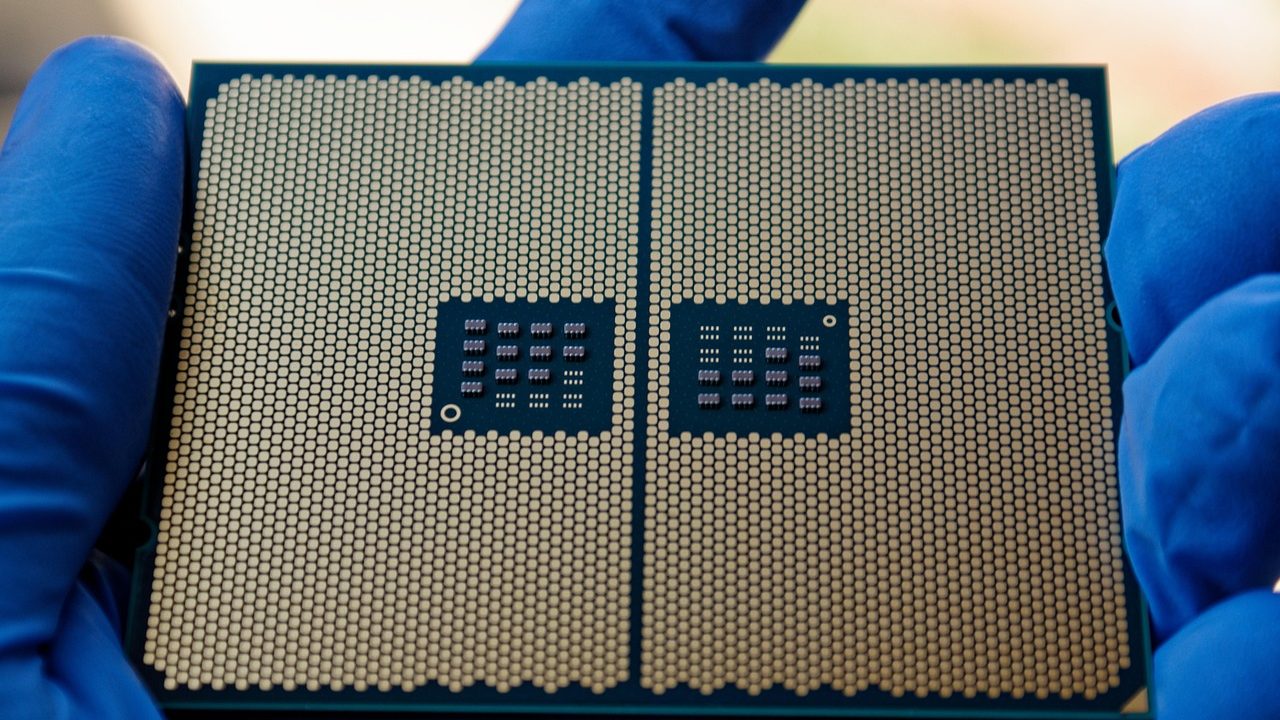
AMD's acquisition of a startup called Taalas drew 708 points and 536 comments on Hacker News — top-tier engagement — and the intensity of the reaction reflects how structurally unusual the underlying technology is. Most AI inference optimization happens in software: better memory kernels, smarter scheduling, more efficient attention computation. Taalas does something categorically different, etching model weights directly into silicon at fabrication time. The model is not loaded into memory during inference; it is physically encoded in the chip's structure.
The significance of that distinction comes down to the central bottleneck in large language model inference: not raw compute, but memory bandwidth. Every inference pass requires shuttling billions of floating-point parameters from memory into compute units — a process that is slow and power-hungry. When weights are physically part of the chip, that data movement is eliminated almost entirely. Latency characteristics become fundamentally different.
The trade-off is inflexibility. A model baked into silicon cannot be updated, fine-tuned, or swapped out when a newer architecture arrives. That constraint points toward specific deployment categories: stable, regulated inference workloads — customer service AI that has not changed in eighteen months, industrial control systems, medical devices — where immutability is not a bug but a feature. A hospital running an AI diagnostic tool may explicitly not want the underlying model to change between regulatory approval and clinical deployment.
AMD's strategic logic is also about competitive positioning. NVIDIA dominates training compute and holds a strong position in data-center inference. The Taalas architecture sidesteps the CUDA ecosystem entirely, targeting a different product category rather than competing directly on NVIDIA's home ground — edge deployment, embedded systems, and specialized accelerators that require neither data-center infrastructure nor network connectivity.
A complementary piece circulating in the community — a technical walkthrough of vLLM's PagedAttention architecture — offered useful contrast. vLLM achieves high-throughput inference by applying operating-system memory management concepts to KV cache handling, dramatically reducing GPU memory waste. Where vLLM is the best available solution for models living in DRAM, Taalas is a bet on a different world: one where certain models are stable enough to warrant silicon-level commitment. The two approaches are solving different problems at different layers of the stack.