Sheriff-Supervisor Standoff Over Immigration Training Access Remains Unresolved
How this was made Verified AI
Every Intellegix briefing is generated from that day's broadcast and run through automated checks before it publishes — with a human paged on any flag. Here is the trail for this edition.

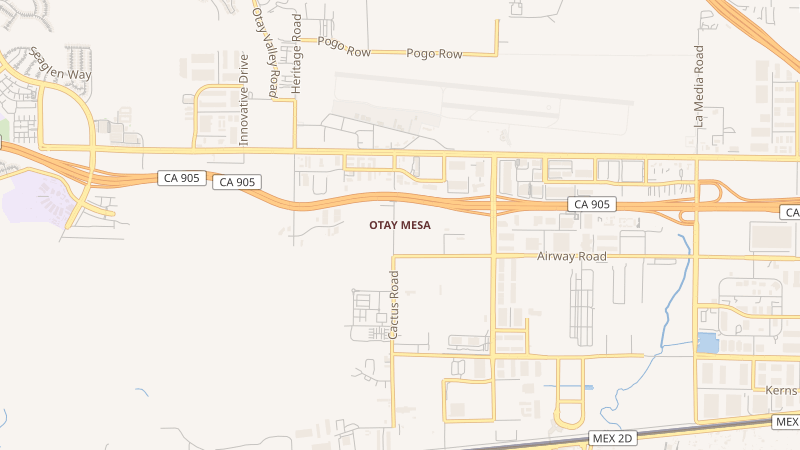
The confrontation between San Diego County Sheriff Kelly Martinez and the Board of Supervisors over immigration enforcement training access has not resolved — it has paused. On August 18th, the Board voted three to two to terminate training access for ICE and CBP agents at Otay Mesa and Camp Elliott. Sheriff Martinez subsequently restored CBP access unilaterally — explicitly not ICE access, a distinction she drew carefully — citing approximately 1,700 officers requiring recertification and asserting that maintaining a certified law enforcement agency falls within her independent executive authority. The Board has not initiated legal action to compel compliance, and Martinez has not reversed course.
The dispute exposes a structural ambiguity in California county governance. Sheriffs are elected separately from the boards they work alongside, and California's legal architecture grants sheriffs meaningful operational independence — particularly on law enforcement certification and training. Where exactly that independence ends, however, has not been defined by a court in this specific context. The legal boundary remains undrawn.
The backdrop against which this plays out is substantial. ICE arrest data for July showed nearly 2,000 arrests across San Diego and Imperial counties — roughly 50 percent more than the approximately 1,300 recorded in June. About 60 percent of those arrested reportedly had no criminal conviction and no pending charge. Community stakes are not abstract.
Separately, the City Council has formalized a litigation cost reporting requirement for SDPD following an August 27th report identifying police litigation as the primary driver of rising city legal expenses. The Risk Management Department must produce a full accounting before the next budget cycle opens in early 2027 — meaning the report will arrive with direct financial consequences rather than as an advisory document. The city's golf course audit, meanwhile, revealed that private operators of eight city-owned courses covering more than 800 acres generated $34 million in gross revenue in fiscal year 2025 while the city collected $3.5 million in rent for all of calendar year 2024. What the Council does with that finding during the next lease renewal cycle will determine whether the audit represents political theater or genuine policy reform.
On the Midway Rising development, the City Council repealed Measure C on August 25th under a court order. State Senator Akilah Weber Pierson is expected to pursue a gut-and-amend legislative maneuver to exempt the project from standard CEQA review — a legally and politically contentious move given the project's location in a coastal zone, where the Coastal Commission retains independent jurisdiction. The county's ethics posture also tightened in August: the Board approved a two-year cooling-off period barring former officials from lobbying their prior government, and restricted officials from trading on prediction-market platforms such as Kalshi and Polymarket when they hold relevant nonpublic information.