San Diego Enters Fall Under Economic Strain, Governance Standoffs, and a Skyline on the Move
On Labor Day 2026, San Diego County faces a complicated economic portrait — not crisis, but a deepening mismatch between where jobs are being lost and where investment is flowing — even as disputes over sheriff's authority, downtown development, and school enrollment all demand attention.

“When a labor force contracts, economists caution, it does not always mean displaced workers found jobs — it often means they stopped looking entirely.”
How this was made Verified AI
Every Intellegix briefing is generated from that day's broadcast and run through automated checks before it publishes — with a human paged on any flag. Here is the trail for this edition.
San Diego's Labor Day Reckoning: Growth and Loss in the Wrong Places

San Diego County's labor market arrived at Labor Day 2026 in a state of genuine tension. The unadjusted unemployment rate held at 4.7 percent in July — tying the year's high — while the seasonally adjusted figure stood at 4.3 percent. Neither number, in isolation, signals alarm. But the regional labor force shrank to 1.63 million in July, its lowest level in three years and roughly 49,000 people below its March 2025 peak. When a labor force contracts, economists caution, it does not always mean displaced workers found jobs — it often means they stopped looking entirely.
The composition of recent layoffs deepens the concern. ServiceNow cut 133 San Diego positions concentrated at senior and director levels. Stone Brewing filed a WARN notice covering 220 jobs, with the first layoff phase scheduled for October 19th. Stone Brewing's situation reflects more than a single company's difficulties: management has framed the cuts as a response to a category-level consumer shift away from craft beer toward ready-to-drink products and hard seltzers. Both rounds of layoffs are expected to show up in October and November unemployment data.
Investment, meanwhile, is arriving — but in sectors that offer little immediate refuge for displaced tech managers or brewery workers. General Atomics secured a $20 million California Competes tax credit tied to job creation at its DIII-D fusion facility expansion. UC San Diego received an $18 million NSF grant for a quantum materials research center. Khartis Therapeutics closed a $50 million Series B. Japan-based Craif established a $33 million R&D fund in San Diego focused on pancreatic cancer diagnostics. Each is genuinely significant for the region's innovation economy; none readily absorbs a senior director from a technology firm.
The real estate market adds further complexity. The single-family median in San Diego County reached $1.099 million in July, up 5.7 percent year-over-year — a figure that implies health. But sales volume fell 6.7 percent month-over-month, and older condos and townhomes in some submarkets have declined ten to fifteen percent from their 2022 peaks. HOA fees have reportedly surged sixty to seventy percent in some buildings over that same period, with special assessments as high as $100,000 per unit in properties with deferred maintenance. Workers facing October layoffs who also own condos purchased near the peak face a particular financial squeeze.
Industrial real estate offers another warning signal: vacancy reached 7.06 percent in the second quarter, up from 6.91 percent the prior quarter, and net absorption flipped to negative 236,000 square feet — a sharp reversal from positive 1.1 million square feet the quarter before. That sector spans defense manufacturing, biotech lab space, and cross-border logistics. Northrop Grumman's $3 billion Department of Defense agreement provides structural cushion for defense-sector workers, but whether that insulation is sufficient to offset losses in tech and hospitality-adjacent industries remains the open question heading into autumn.
Sheriff-Supervisor Standoff Over Immigration Training Access Remains Unresolved

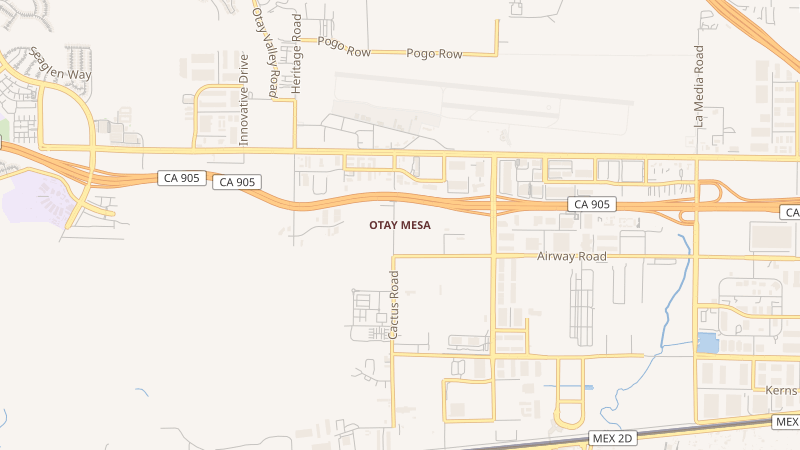
The confrontation between San Diego County Sheriff Kelly Martinez and the Board of Supervisors over immigration enforcement training access has not resolved — it has paused. On August 18th, the Board voted three to two to terminate training access for ICE and CBP agents at Otay Mesa and Camp Elliott. Sheriff Martinez subsequently restored CBP access unilaterally — explicitly not ICE access, a distinction she drew carefully — citing approximately 1,700 officers requiring recertification and asserting that maintaining a certified law enforcement agency falls within her independent executive authority. The Board has not initiated legal action to compel compliance, and Martinez has not reversed course.
The dispute exposes a structural ambiguity in California county governance. Sheriffs are elected separately from the boards they work alongside, and California's legal architecture grants sheriffs meaningful operational independence — particularly on law enforcement certification and training. Where exactly that independence ends, however, has not been defined by a court in this specific context. The legal boundary remains undrawn.
The backdrop against which this plays out is substantial. ICE arrest data for July showed nearly 2,000 arrests across San Diego and Imperial counties — roughly 50 percent more than the approximately 1,300 recorded in June. About 60 percent of those arrested reportedly had no criminal conviction and no pending charge. Community stakes are not abstract.
Separately, the City Council has formalized a litigation cost reporting requirement for SDPD following an August 27th report identifying police litigation as the primary driver of rising city legal expenses. The Risk Management Department must produce a full accounting before the next budget cycle opens in early 2027 — meaning the report will arrive with direct financial consequences rather than as an advisory document. The city's golf course audit, meanwhile, revealed that private operators of eight city-owned courses covering more than 800 acres generated $34 million in gross revenue in fiscal year 2025 while the city collected $3.5 million in rent for all of calendar year 2024. What the Council does with that finding during the next lease renewal cycle will determine whether the audit represents political theater or genuine policy reform.
On the Midway Rising development, the City Council repealed Measure C on August 25th under a court order. State Senator Akilah Weber Pierson is expected to pursue a gut-and-amend legislative maneuver to exempt the project from standard CEQA review — a legally and politically contentious move given the project's location in a coastal zone, where the Coastal Commission retains independent jurisdiction. The county's ethics posture also tightened in August: the Board approved a two-year cooling-off period barring former officials from lobbying their prior government, and restricted officials from trading on prediction-market platforms such as Kalshi and Polymarket when they hold relevant nonpublic information.
A 37-Story Tower, a Century-Old Bakery, and a Biotech Surge Reshape San Diego's Future
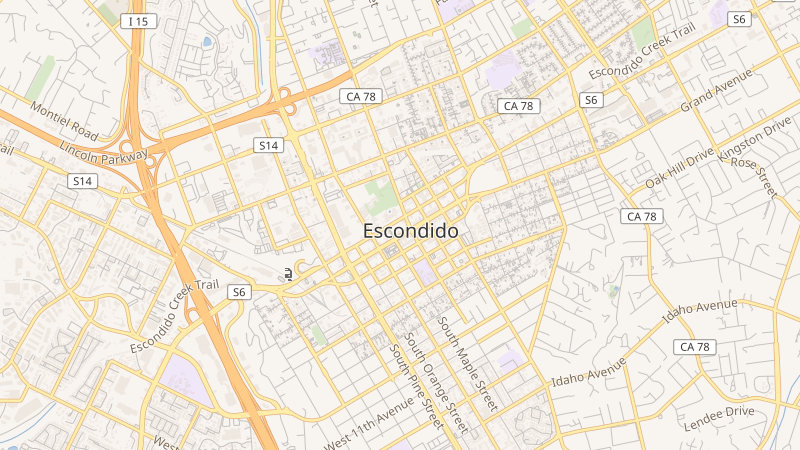
Downtown San Diego's skyline could look markedly different within a decade. Cresleigh Homes has proposed a 37-story residential tower in the downtown core — which, if built, would rank among the city's tallest structures. No confirmed unit count or construction timeline has been released, placing the project in early stages. Still, the scale of the proposal reflects developer confidence in the downtown residential market even as the broader condo sector faces pressure across the county.
A more immediately tangible project is Live Nation's bid to convert the 102-year-old Wonder Bread building into a music venue seating between 1,000 and 3,000 people. That capacity range targets what observers describe as a genuine gap in San Diego's live music infrastructure: large arenas and small clubs exist, but almost nothing in between. An adaptive reuse of a historic structure rather than demolition would represent a favorable planning outcome. No construction timeline has been confirmed, though Live Nation's public engagement suggests planning conversations are substantive.
The hotel market recorded a significant transaction in late August. Montage International acquired the Pendry San Diego — a 317-room property in the Gaslamp Quarter — for $147 million, or roughly $463,000 per room. The premium price reflects confidence in San Diego's tourism economy, though the acquisition changes ownership rather than the hotel's brand in the near term.
On the affordable housing front, construction is underway on the Navajo Family Apartments in San Carlos: a 45-unit development with eight units specifically designated for residents with intellectual or developmental disabilities. The county also approved an affordable housing and health facility project in Logan Heights on August 18th. Both projects move slowly relative to headline-generating commercial development, but represent targeted investment in communities with acute need.
The life sciences funding environment reinforces San Diego's position as a national biotech hub. Khartis Therapeutics' $50 million Series B and Craif's $33 million pancreatic cancer diagnostics fund build long-term economic depth, while General Atomics' $20 million California Competes tax credit — tied to specific job creation and retention commitments at its DIII-D fusion facility — anchors advanced manufacturing through accountability mechanisms that pure grants typically lack. The industrial real estate market's softening, however, with vacancy rising and net absorption turning negative in Q2, represents a financing headwind that will affect development economics across these sectors over the next two to three years.
East County: A Quiet Day on the Public Record

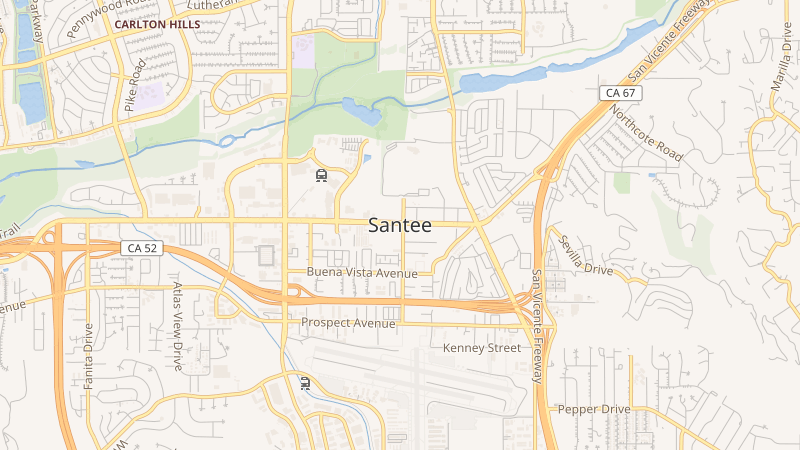
No new public-record developments emerged Monday from Santee or the surrounding East County communities. The Santee City Council has sessions scheduled for September 9th and September 23rd; those agendas are worth monitoring for items with direct community impact.
San Diego Unified's Enrollment Surge Looks Promising — The October Attendance Report Is the Real Test

San Diego Unified's summer enrollment campaign delivered numbers that exceeded expectations on paper: 3,033 new students signed up against an annual target of 1,309, more than double the goal. Superintendent Fabiola Bagula credited the deployment of 52 in-person enrollment hubs across the county and characterized the results as evidence that aggressive outreach works. The Chromebook restriction policy, passed unanimously five-to-zero by the board, is now fully active across all 175 district schools covering more than 100,000 students — with YouTube blocked by default unless enabled by teachers, non-instructional gaming eliminated, and device carts removed from transitional kindergarten classrooms.
But California school funding is calculated on average daily attendance, not enrollment headcount. A student who enrolls and attends half the time generates roughly half the funding of one who attends every day. The October ADA report — not the enrollment figure — is the financial test of the summer campaign, and it has not yet been released. Superintendent Bagula has been explicit that October is the real measure; the district is not overclaiming on enrollment alone.
Several questions complicate the confident interpretation of the summer numbers. Enrollment campaigns may capture families who were already within reach of the district without addressing the structural reasons others have left — charter schools, private schools, neighboring districts, or out-of-county relocation. Whether the 52 hubs were concentrated in neighborhoods where families were already favorably disposed to the district, or were deployed to genuinely convert skeptical families, is unclear; no geographic breakdown of new enrollments has appeared in available reporting. If a significant share of the 3,033 newly enrolled students were already irregular attendees who were re-enrolled rather than newly converted to consistent attendance, the headline number may overstate the funding gain.
The counter-case for the district is real: even if October ADA figures disappoint, the summer campaign built a contact database and operational infrastructure for outreach that did not previously exist at this scale. Fifty-two hubs in a single summer is a logistical accomplishment. If the October report shows strong attendance — 90 percent or better attendance rates from a high share of newly enrolled students — the model is validated. If attendance rates fall below 60 percent among new enrollees, the district will face a harder question about whether it invested in re-enrollment mechanics or in the underlying barriers — transportation, family stability, language access — that keep students off enrolled rolls or absent from classrooms.
Elsewhere in the schools segment: SDSU reported a record 124,000-plus applications for the incoming class, driven by improving research output, rising national rankings, and students reportedly priced out of UC campuses — a success for SDSU that also reflects a broader access problem in California higher education. The Teach Lead program, which places high school students as paid assistant teachers in elementary classrooms while earning elective credit, has grown from 22 students at 2 schools when it launched in 2021 to 400 students across 20 schools — a pipeline model whose results will take years to measure but whose structural logic, recruiting future teachers from within the communities they will serve, is broadly sound.