Golf Leases, Police Costs, and a Border Training Standoff: City Hall's Unfinished Business
How this was made Verified AI
Every Intellegix briefing is generated from that day's broadcast and run through automated checks before it publishes — with a human paged on any flag. Here is the trail for this edition.

San Diego's City Council is sitting with the results of a golf course audit that raises pointed questions about public-land returns. The city owns eight leased golf courses covering more than 800 acres. Private operators generated thirty-four million dollars in gross revenue in fiscal year 2025; the city received three and a half million dollars in rent for all of calendar year 2024 — roughly ten cents on every dollar of revenue flowing through publicly owned land. The audit has produced no announced governance response: no lease renegotiations, no in-house operations proposal, no formal alternative-use review.
On police costs, the Council formalized a reporting requirement directing Risk Management to complete an analysis of litigation payouts before the next budget cycle. An August 27th report identified police litigation as the primary driver of rising city payouts. The reporting requirement makes the issue a budget-negotiation pressure point in early 2027, though whether it leads to substantive policy change or remains documentation for its own sake is an open question.
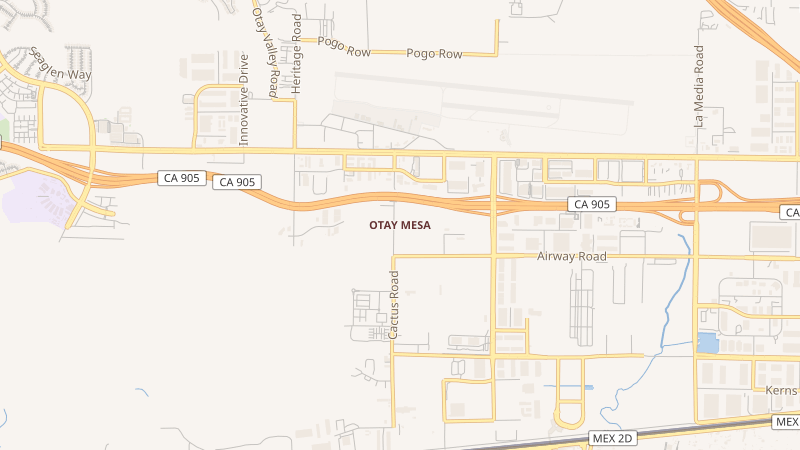
The most legally unsettled governance dispute involves Sheriff Kelly Martinez and the County Board of Supervisors. The Board voted three-to-two on August 18th to terminate ICE and CBP training access at Otay Mesa and Camp Elliott. Sheriff Martinez subsequently used her independently held executive authority to restore CBP access specifically — for roughly 1,700 officers requiring recertification — while maintaining the ICE exclusion. The core legal question is whether that restoration falls within the Sheriff's constitutionally protected operational independence or whether the Board's budget-rooted authority over facilities takes precedence. California law does not offer a clean answer, making litigation or a formal attorney general opinion a likely outcome.
The stakes extend beyond the political dispute. Those 1,700 officers needing CBP recertification represent operational capacity at one of the busiest ports of entry in the world. If training access lapses and recertification cannot proceed, the effects on border security operations flow directly through San Diego regardless of the underlying policy positions.
On physical infrastructure, the Office of Emergency Services has conducted direct outreach to roughly 7,000 properties identified as vulnerable to storm damage — either from slope position or floodplain location — with storm-drain maintenance priorities flagged for fiscal year 2027. At Sunset Cliffs, enforcement efforts since July 26th have produced 20 citations and more than 300 warnings, alongside three separate rescue operations in three weeks including a low-angle rope rescue near The Arch. The citation numbers are accumulating; the behavior is not fundamentally changing, suggesting the eventual conversation will need to shift from enforcement to access design — a far more complex process involving the California Coastal Commission, the city's parks department, and likely federal coastal management review.