San Diego Faces Bifurcated Housing Market, 353 Layoffs, and Unresolved Governance Questions Heading Into Labor Day
On a quiet Friday before Labor Day weekend, San Diego County's structural economic realities came into sharp focus: a contracting labor force, major job cuts from two industries, a housing market split along property-type lines, and a string of governance disputes with no resolution in sight.

“supply constraints slow a decline but do not stop it if demand falls quickly enough.”
How this was made Verified AI
Every Intellegix briefing is generated from that day's broadcast and run through automated checks before it publishes — with a human paged on any flag. Here is the trail for this edition.
Beneath the Holiday Calm, a Region at a Crossroads
Friday, September 4th, 2026 arrived without breaking news in San Diego — but the absence of fresh headlines only sharpened the outlines of the structural forces already reshaping the region. A softening labor market, dueling narratives in real estate, and unresolved fights over public land and immigration enforcement policy together sketch a county at a genuine inflection point.
The day's agenda spans the regional economy's mixed signals, two major employer layoffs totaling more than 350 jobs, a bifurcated housing market sending opposite messages to different property owners, and a Padres team chasing a playoff spot under the most expensive ownership transfer in baseball history.
353 Jobs Gone, Labor Force Shrinking: San Diego's Economy Sends Mixed Signals

San Diego County's unadjusted unemployment rate held at 4.7 percent in July, tying the year's high, according to data from the California Employment Development Department. The seasonally adjusted figure of 4.3 percent trails Orange County at 4.2 percent and San Francisco at 3.9 percent — positioning San Diego behind both of its major California peer metros. The most telling figure in the dataset may be the labor force count itself: 1.63 million workers in July, the lowest in three years and roughly 49,000 below the March 2025 peak.
Two WARN Act notices filed this week deepened that picture. ServiceNow is eliminating 133 San Diego positions, with terminations scheduled by September 28th. The company characterizes the cuts as strategic restructuring rather than financial distress, and the reductions are concentrated at senior and director levels — suggesting a flattening of management layers rather than a retreat from core operations. Still, 133 senior-level departures represent significant household income leaving the region, and raises questions about whether San Diego's cost structure is making it harder to retain corporate leadership even from otherwise healthy employers.
Stone Brewing's notice carries a different kind of weight. Two hundred and twenty positions are being cut, with the first phase of layoffs scheduled for October 19th. Stone built itself into a flagship of San Diego's craft brewing identity, and the pressures behind the cuts are not company-specific: nationally, craft beer consumption has been declining as consumers migrate toward ready-to-drink products, hard seltzers, and wine alternatives. Stone is, in this reading, a casualty of a category shift.
Together, the two announcements — 353 jobs across two unrelated industries, hitting within weeks of each other — land on top of a July unemployment rate already at its annual peak. Offsetting signals exist: Northrop Grumman locked in a three-billion-dollar Department of Defense agreement, General Atomics received a twenty-million-dollar California Competes tax credit tied to fusion energy expansion, Khartis Therapeutics closed a fifty-million-dollar Series B, and Japan's Craif established a thirty-three-million-dollar San Diego R&D fund focused on pancreatic cancer diagnostics. UC San Diego also anchors an eighteen-million-dollar NSF quantum materials research center within a six-center, hundred-and-eight-million-dollar national initiative.
The tension the region faces is between sustained capital formation in defense and life sciences on one hand, and employment-level signals pointing in the opposite direction on the other — with August labor figures not due for roughly six weeks.
Golf Leases, Police Costs, and a Border Training Standoff: City Hall's Unfinished Business

San Diego's City Council is sitting with the results of a golf course audit that raises pointed questions about public-land returns. The city owns eight leased golf courses covering more than 800 acres. Private operators generated thirty-four million dollars in gross revenue in fiscal year 2025; the city received three and a half million dollars in rent for all of calendar year 2024 — roughly ten cents on every dollar of revenue flowing through publicly owned land. The audit has produced no announced governance response: no lease renegotiations, no in-house operations proposal, no formal alternative-use review.
On police costs, the Council formalized a reporting requirement directing Risk Management to complete an analysis of litigation payouts before the next budget cycle. An August 27th report identified police litigation as the primary driver of rising city payouts. The reporting requirement makes the issue a budget-negotiation pressure point in early 2027, though whether it leads to substantive policy change or remains documentation for its own sake is an open question.
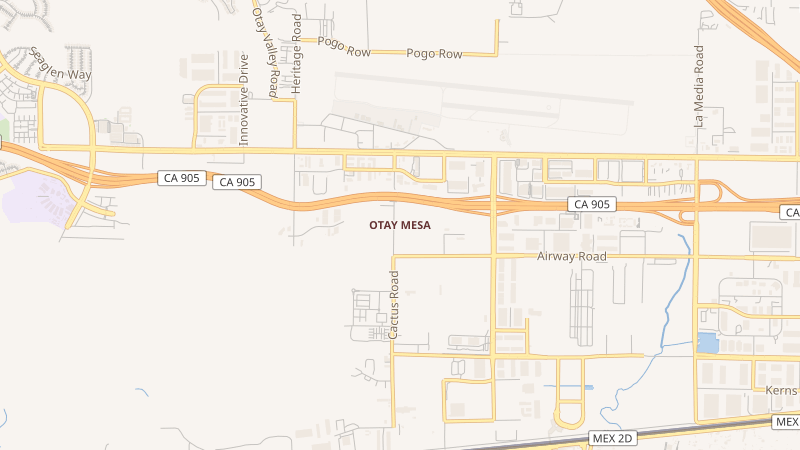
The most legally unsettled governance dispute involves Sheriff Kelly Martinez and the County Board of Supervisors. The Board voted three-to-two on August 18th to terminate ICE and CBP training access at Otay Mesa and Camp Elliott. Sheriff Martinez subsequently used her independently held executive authority to restore CBP access specifically — for roughly 1,700 officers requiring recertification — while maintaining the ICE exclusion. The core legal question is whether that restoration falls within the Sheriff's constitutionally protected operational independence or whether the Board's budget-rooted authority over facilities takes precedence. California law does not offer a clean answer, making litigation or a formal attorney general opinion a likely outcome.
The stakes extend beyond the political dispute. Those 1,700 officers needing CBP recertification represent operational capacity at one of the busiest ports of entry in the world. If training access lapses and recertification cannot proceed, the effects on border security operations flow directly through San Diego regardless of the underlying policy positions.
On physical infrastructure, the Office of Emergency Services has conducted direct outreach to roughly 7,000 properties identified as vulnerable to storm damage — either from slope position or floodplain location — with storm-drain maintenance priorities flagged for fiscal year 2027. At Sunset Cliffs, enforcement efforts since July 26th have produced 20 citations and more than 300 warnings, alongside three separate rescue operations in three weeks including a low-angle rope rescue near The Arch. The citation numbers are accumulating; the behavior is not fundamentally changing, suggesting the eventual conversation will need to shift from enforcement to access design — a far more complex process involving the California Coastal Commission, the city's parks department, and likely federal coastal management review.
A Tale of Two Markets: Single-Family Strength Masks Condo Distress


San Diego's real estate market is bifurcated in ways that matter enormously depending on what kind of property an owner holds. The countywide median for existing single-family home sales reached $1.099 million in July, up 5.7 percent year-over-year. Inventory remains tight and days on market are relatively short, even as sales volume fell 6.7 percent month-over-month and the 30-year fixed mortgage rate sits at 6.69 percent. For single-family homeowners, constrained supply is holding values elevated despite affordability pressure suppressing transaction volume.
The condo and townhome market tells a starkly different story. Older condos and townhomes in some submarkets are down 10 to 15 percent from their 2022 peaks — on a unit that peaked at $600,000, a 12-percent decline represents $72,000 in lost equity. HOA fees in some buildings have surged 60 to 70 percent over the same period, and special assessments as high as $100,000 per unit have been reported in buildings with deferred maintenance and aging infrastructure. Condo owners are simultaneously absorbing declining asset values and rising monthly carrying costs — a financial squeeze that does not surface in headline median figures dominated by single-family transactions.
Commercial and industrial real estate adds a third layer. Industrial vacancy reached 7.06 percent in Q2 2026, up from 6.91 percent the prior quarter, with net absorption turning negative at minus 236,000 square feet — a significant reversal from positive 1.1 million square feet the previous quarter. Office vacancy holds at 13.4 percent, below the national average but elevated in absolute terms. The reversal in industrial absorption suggests the distribution and logistics demand surge that carried the sector through 2023 and 2024 is losing momentum.
On the development side, Cresleigh Homes is reportedly planning a 37-story residential tower among the tallest in the downtown core, with no confirmed unit count or timeline yet. Live Nation's plan to convert the 102-year-old Wonder Bread building into a mid-size music venue is moving forward — a use that fits the building's scale and fills a documented gap in San Diego's live music infrastructure between clubs and arenas. The Midway Rising project remains complicated: the City Council repealed Measure C on August 25th under a court order, and State Senator Akilah Weber Pierson is expected to lead a legislative maneuver to exempt the project from standard CEQA review, a move that is both politically and legally contentious given the project's coastal zone location.
East County: No New Developments

No new public-record developments emerged from Santee or the broader East County on Friday. Coverage will resume as reporting warrants.
Padres in Contention, Schools Surge, and a Hard Look at Housing Confidence

The Padres entered September at 72 and 62, second in the NL West. A division title is a long shot; the wild card is the realistic path. The ownership backdrop gives September added weight: José Feliciano and Kwanza Jones completed their $3.9 billion ownership transition, ratified by MLB on August 24th — the largest franchise sale by price in baseball history. A first playoff push under that ownership either begins a foundation narrative or becomes a cautionary tale depending on how October unfolds. The NWSL's Wave also head into their regular-season stretch run with momentum after a 4-2 win over Utah on Fan Appreciation Night, with Trinity Byars scoring twice and Melanie Barcenas and Ludmila also on the scoresheet.
In schools, San Diego Unified's new Chromebook restriction policy is now fully live across 175 schools covering more than 100,000 students. YouTube is blocked by default unless a teacher actively enables it for instruction; non-instructional gaming is blocked entirely; Chromebook carts were removed from transitional-kindergarten classrooms. The board passed the policy unanimously, five to zero. Students with IEPs, 504 plans, or language-learning designations retain required access. The practical question — whether implementation will be consistent across schools with vastly different IT capacity and staffing — is one the policy as written does not resolve.
More broadly encouraging is the district's enrollment surge: a summer campaign brought in 3,033 new students against an annual recruitment target of 1,309, with 52 in-person enrollment hubs deployed countywide and more than 71 percent of 2026 graduates deemed college- or career-ready. The critical caveat is the October ADA reporting date, when California's attendance-based funding formula locks in — summer enrollment numbers mean little if students are not showing up consistently in October. SDSU, meanwhile, received more than 124,000 applications for its incoming class, a university record, driven by its improving national research profile and students priced out of UC campuses seeking rigorous alternatives. The district's Teach Lead program has grown from 22 students at two schools in 2021 to 400 high school students working as paid assistant teachers across 20 schools, earning both elective credit and a paycheck.
The episode's 'What If We're Wrong' segment challenged the widely held assumption that single-family home values in San Diego County are structurally insulated from softening pressures. The confident case rests on supply constraints: zoning limits new construction, geography limits sprawl, and defense and biotech employment provides durable demand support. Three factors complicate that case. First, the labor force contraction — 49,000 workers below the March 2025 peak — shrinks the pool of potential buyers with qualifying income; supply constraints slow a decline but do not stop it if demand falls quickly enough. Second, the condo market's distressed involuntary sellers establish comparable sale prices that appraisers apply to nearby properties, including single-family homes, making the firewall between the two segments more permeable than headline numbers suggest. Third, the California FAIR Plan announced a 29-percent rate increase effective October 1st affecting Alpine, Lakeside, and Spring Valley; as private insurers pull back and FAIR Plan rates rise, the carrying cost of homeownership in certain submarkets rises independently of mortgage rates or taxes, and homes that are nominally affordable at current prices become unaffordable when insurance costs climb 60 percent in two years.
The specific indicator to watch: the share of San Diego County single-family listings reducing their asking price within the first 30 days. That data is publicly available weekly from Redfin and Zillow. If the share climbs above 20 percent of active listings, it signals that the supply-constraint argument is losing to demand-side pressure. The October ADA enrollment figures at San Diego Unified offer a parallel leading indicator on household stability — with a projected lag of roughly six to nine months before any shortfall in retained enrollment would appear in housing market data.
Labor Day Weekend Weather and a Region Weighing Its Choices

Coastal communities can expect highs in the mid-to-upper 70s Friday and into Saturday, with the marine layer returning overnight. Inland valleys including El Cajon, Santee, and Lakeside are forecast for lows-to-mid 90s Friday, moderating slightly Saturday. The backcountry — Alpine, Ramona, Julian — faces mid-to-upper 80s with gusty afternoon winds possible Saturday as onshore flow strengthens. No fire weather watch is currently in effect, but low humidity means any ignition source in the backcountry warrants serious concern. The holiday weekend weather pattern is broadly favorable for outdoor coastal events and manageable inland.
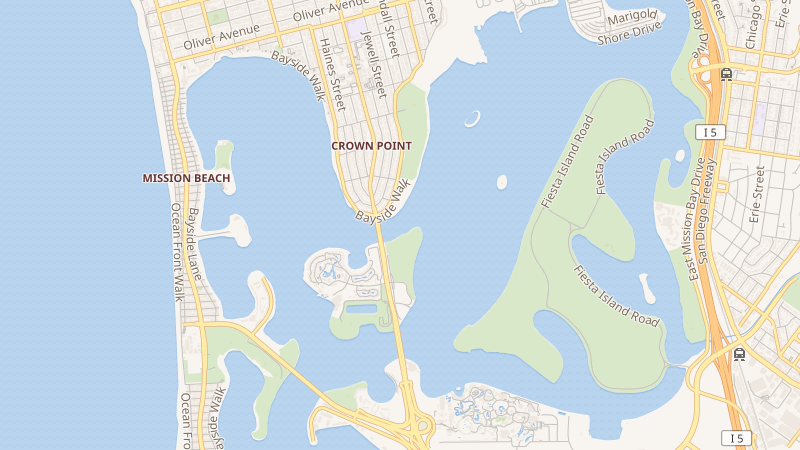
For the weekend, community festivals, farmers markets, and outdoor concerts are expected across the county. Mission Bay should be fully accessible with all 13 restrooms now open, a funding fix secured through December 31st via combined District 1 and District 2 community project allocations.
The week's economic themes resist easy summary. Defense and research sectors remain strong; innovation capital formation is real. At the same time, the labor market is softening, two major employers are cutting hundreds of jobs, housing is bifurcated in ways that affect owners very differently, and governance disputes from golf course leases to immigration enforcement to the Midway Rising CEQA fight remain unresolved. None constitutes a crisis in isolation. Together they outline a region that faces genuine choices in the next six to twelve months about what kind of economy it is building — and for whom.