Commercial Real Estate Splits, and San Diego's Innovation Economy Keeps Adding Anchors
How this was made Verified AI
Every Intellegix briefing is generated from that day's broadcast and run through automated checks before it publishes — with a human paged on any flag. Here is the trail for this edition.

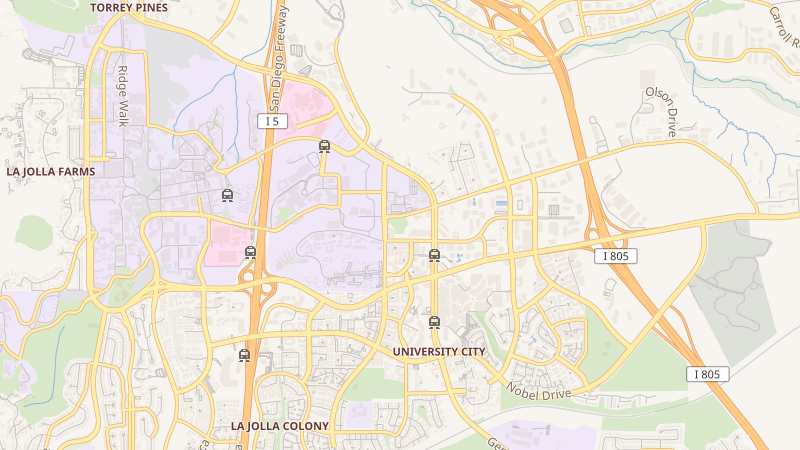
San Diego County's commercial real estate market is operating on three separate tracks. Office vacancy countywide stood at 15.4 percent as of the first quarter of 2026 — a figure reflecting ongoing uncertainty about hybrid work patterns and the difficulty of office-to-residential conversion. Industrial vacancy ran much tighter at 7.3 percent, and retail tighter still at 5.5 percent. The Eastgate submarket near UC San Diego has led office absorption for two consecutive quarters, pointing to where tech and biotech employment is concentrating.
On the residential development side, Moody's projects nearly 5,900 new apartment units will be added countywide in 2026, with projected rent growth of just 1.2 percent and average apartment vacancy expected to reach 5.1 percent. New supply is keeping rents relatively stable — real relief compared to the spike years — but the gap between renting and buying, at 6.69 percent rates against a million-dollar median, is wider than it has been in a generation.
The City Council's approval on July 28th of a $500 million Affordable Housing Trust Fund — passed 7-2 — represents one policy response. The fund draws from tax-increment financing, a new commercial linkage fee on large developments, and anticipated federal and state matching funds, and it offers density bonuses of up to 50 percent for projects near existing and planned trolley lines. The stated projection is 12,000 additional units over a decade.
The broader innovation economy continued to add institutional weight this week. Northrop Grumman locked in a $3 billion Department of Defense agreement. 3D Systems received a $9 million Air Force contract for advanced metal printing. West Health and UC San Diego Health launched a $40 million care technology accelerator. General Atomics secured a $20 million California Competes tax credit for fusion development, and UC San Diego received an $18 million NSF quantum materials grant. The challenge San Diego has historically faced is translating that economic strength into quality-of-life access for a broader share of its population — a translation the housing market, by any measure, has not yet completed.