Padres Stumble, Sierra Club Sues, and Schools Test a Tech Gamble: San Diego's Sunday Digest
San Diego County opened a packed August Sunday with road closures for a major half marathon, a housing market at a crossroads, and a fresh lawsuit threatening to reshape where tens of thousands of homes get built near the U.S.-Mexico border.

“only roughly 17 percent of households can qualify for a median-priced home”
How this was made Verified AI
Every Intellegix briefing is generated from that day's broadcast and run through automated checks before it publishes — with a human paged on any flag. Here is the trail for this edition.
A City in Motion: Half Marathons, Concerts, and the Texture of a Summer Sunday


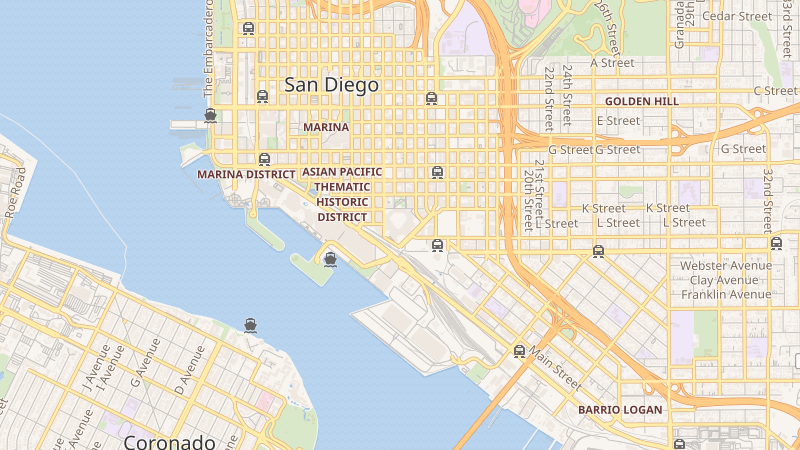
Thousands of runners threaded through central San Diego neighborhoods Sunday morning for the America's Finest City Half Marathon, one of the region's signature summer races, generating rolling road closures across much of the city's core grid. Participants and spectators filled streets that will later yield to a different kind of crowd: Jason Aldean and Luke Bryan headline a concert at Petco Park tonight, while the Rady Shell at Jacobs Park hosts a classical performance along the waterfront simultaneously.
The convergence of events makes the downtown and Gaslamp Quarter unusually busy even by summer standards. Drivers heading near either venue Sunday evening were advised to build in extra time. Out in East County, where the marine layer that softens the coast never quite arrives, temperatures were already pushing toward 85 degrees by mid-morning — a reminder that San Diego County contains multitudes within a single August day.
Padres Fall to Cleveland as Division Race Tightens

A six-game winning streak that had San Diego feeling like a postseason lock came to an abrupt halt Saturday night, as the Padres dropped a 6-1 decision to the Cleveland Guardians at Petco Park. The loss pushes the club's record to 66-58 and leaves them three games back in the NL West — a meaningful shift after what had been a momentum-building stretch.
Just two days earlier, on August 14th, the Padres beat Cleveland 7-5 behind run production from Campusano and Bogaerts, with Tatis homering for the fifth time in nine games. The team appeared to be finding another gear. Saturday's blowout loss reopens questions about the division lead that had briefly seemed within reach, and puts added weight on the next series as a character test for the roster.
The Padres have roughly six weeks remaining in the regular season. Three games back is not insurmountable in a genuinely competitive NL West, but it is no longer a cushion.
A Million-Dollar Market Softens — But Stays Out of Reach for Most
San Diego County's residential real estate market reached a record median home sale price of approximately $1.085 million in June before beginning a five-month softening trend. The most recent figures place the median around $1.02 million as of July — still a million-dollar market, but one where the direction of travel has shifted noticeably.
The culprit is a combination of elevated mortgage rates and structural affordability constraints. The 30-year fixed rate currently sits at 6.69 percent, and when applied against county income levels, only roughly 17 percent of households can qualify for a median-priced home. Active listings countywide have been hovering around 6,000 units — elevated compared to two and three years ago — and more than half of all closed transactions in June, 53 percent, involved some price reduction from the original list.
For buyers who have spent years on the sidelines waiting for any negotiating leverage, the shift is real, if modest. For sellers, it represents an adjustment after years of a market that moved almost exclusively in their favor. Whether the softening continues into fall depends heavily on national interest rate movements and the durability of the local job market. County unemployment ticked up to 4.4 percent in June — still below last year's 4.7 percent — with healthcare, defense, and biotech remaining structural anchors.
Sierra Club Sues Over 5,130-Home Border Project, Testing City's Land-Use Logic

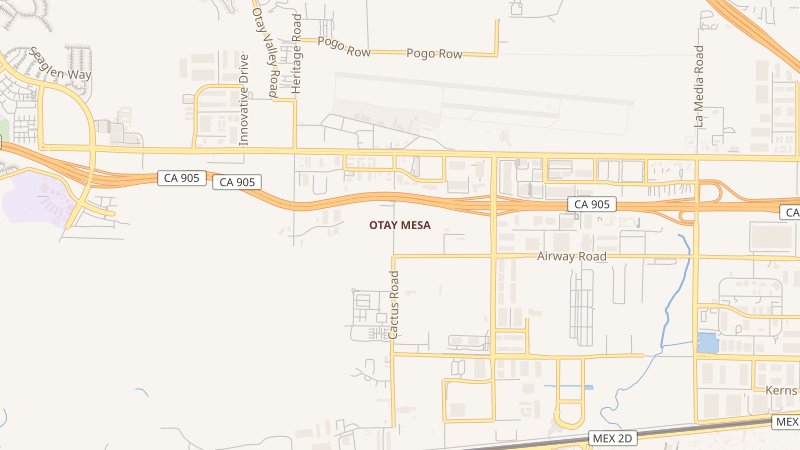
The Sierra Club filed suit in San Diego Superior Court on August 12th challenging the city's approval of Otay Mesa Southwest Village, a roughly 490-acre development near the U.S.-Mexico border that would allow up to 5,130 homes. The project, developed by Irvine-based Tri Pointe Homes, cleared the City Council on a 6-2 vote in July. Its first phase envisions 1,500 to 2,100 units, 92 income-restricted apartments, a new school, 175,000 square feet of commercial space, and approximately 200 acres of open space and parks.
The lawsuit advances two legal arguments. First, the environmental review conducted under the California Environmental Quality Act — CEQA — allegedly failed to fully account for the project's actual impacts. Second, the Sierra Club contends the project directly conflicts with the city's own general plan and climate action plan, both of which call for new housing to be concentrated in urban infill areas served by existing infrastructure and transit, not in greenfield sites that require new roads to connect them to the rest of the city.
That road issue is the sharpest point of contention. Sierra Club Legal Chair Dave Hogan specifically named the planned extension via Beyer Boulevard and Caliente Avenue through protected open space, calling it 'textbook destructive urban sprawl.' The argument is that building housing in an underconnected location and then solving for that connectivity by cutting through protected land violates both the letter and the spirit of the city's own planning commitments.
For Tri Pointe Homes, the legal exposure is material: a successful CEQA challenge can require supplemental environmental review, delaying a project by years. For the city, a ruling that the 6-2 approval was legally deficient would be an institutional embarrassment, given that council members voted for the project knowing environmental litigation was likely. California courts have historically demanded thorough environmental review, and the Sierra Club has a track record in such cases.
The lawsuit puts a fine point on San Diego's central growth tension: a genuine housing shortage — evidenced by that 17 percent affordability figure — is pushing enormous pressure to add units anywhere they can be built, while the city's own policy documents explicitly direct that growth toward transit-served infill. The court will now decide which takes precedence.
Homicide Investigation and Supervisors Meeting Headline a Quiet Government Weekend


The San Diego City Council remains on recess through August 17th, and the Board of Supervisors holds no session this weekend, but Tuesday's supervisors meeting carries real stakes. The August 18th agenda includes public comment on the proposed Golden Pacific Powerlink — SDG&E's large-scale transmission project for which the utility has not yet filed its formal California Public Utilities Commission application, though that filing is expected sometime this fall or winter. County Board Chair Terra Lawson-Remer has been visible on the issue, and advocates note that public comment at this early stage shapes the regulatory record in ways that matter later in the process.
On the public safety front, SDPD's overnight dispatch logs showed the city managing a range of serious incidents over the weekend, including an active burglary call in North Park and an assault-with-deadly-weapon call in Mira Mesa. The Mira Mesa homicide investigation — a double shooting on Summerview Court on August 7th that killed a woman and left her husband critically injured — remains open nine days later with no arrests announced. Police have not publicly updated the surviving victim's condition. Homicide investigations of this complexity routinely take weeks before charges are filed, but for the family and neighborhood involved, the absence of public updates extends an already difficult period.
Commercial Real Estate Splits, and San Diego's Innovation Economy Keeps Adding Anchors

San Diego County's commercial real estate market is operating on three separate tracks. Office vacancy countywide stood at 15.4 percent as of the first quarter of 2026 — a figure reflecting ongoing uncertainty about hybrid work patterns and the difficulty of office-to-residential conversion. Industrial vacancy ran much tighter at 7.3 percent, and retail tighter still at 5.5 percent. The Eastgate submarket near UC San Diego has led office absorption for two consecutive quarters, pointing to where tech and biotech employment is concentrating.
On the residential development side, Moody's projects nearly 5,900 new apartment units will be added countywide in 2026, with projected rent growth of just 1.2 percent and average apartment vacancy expected to reach 5.1 percent. New supply is keeping rents relatively stable — real relief compared to the spike years — but the gap between renting and buying, at 6.69 percent rates against a million-dollar median, is wider than it has been in a generation.
The City Council's approval on July 28th of a $500 million Affordable Housing Trust Fund — passed 7-2 — represents one policy response. The fund draws from tax-increment financing, a new commercial linkage fee on large developments, and anticipated federal and state matching funds, and it offers density bonuses of up to 50 percent for projects near existing and planned trolley lines. The stated projection is 12,000 additional units over a decade.
The broader innovation economy continued to add institutional weight this week. Northrop Grumman locked in a $3 billion Department of Defense agreement. 3D Systems received a $9 million Air Force contract for advanced metal printing. West Health and UC San Diego Health launched a $40 million care technology accelerator. General Atomics secured a $20 million California Competes tax credit for fusion development, and UC San Diego received an $18 million NSF quantum materials grant. The challenge San Diego has historically faced is translating that economic strength into quality-of-life access for a broader share of its population — a translation the housing market, by any measure, has not yet completed.
East County Quiet Sunday

Santee and East County had no new public-record developments Sunday. Coverage of ongoing stories in the area will resume Monday.