Sierra Club Sues Over 5,130-Home Border Project, Testing City's Land-Use Logic
How this was made Verified AI
Every Intellegix briefing is generated from that day's broadcast and run through automated checks before it publishes — with a human paged on any flag. Here is the trail for this edition.

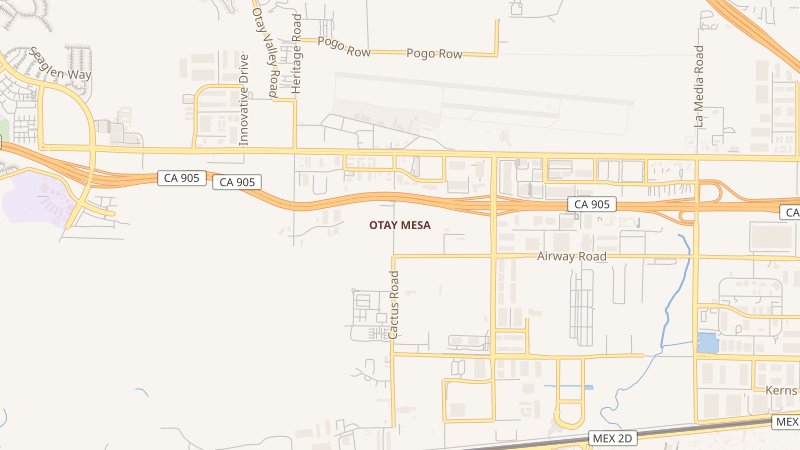
The Sierra Club filed suit in San Diego Superior Court on August 12th challenging the city's approval of Otay Mesa Southwest Village, a roughly 490-acre development near the U.S.-Mexico border that would allow up to 5,130 homes. The project, developed by Irvine-based Tri Pointe Homes, cleared the City Council on a 6-2 vote in July. Its first phase envisions 1,500 to 2,100 units, 92 income-restricted apartments, a new school, 175,000 square feet of commercial space, and approximately 200 acres of open space and parks.
The lawsuit advances two legal arguments. First, the environmental review conducted under the California Environmental Quality Act — CEQA — allegedly failed to fully account for the project's actual impacts. Second, the Sierra Club contends the project directly conflicts with the city's own general plan and climate action plan, both of which call for new housing to be concentrated in urban infill areas served by existing infrastructure and transit, not in greenfield sites that require new roads to connect them to the rest of the city.
That road issue is the sharpest point of contention. Sierra Club Legal Chair Dave Hogan specifically named the planned extension via Beyer Boulevard and Caliente Avenue through protected open space, calling it 'textbook destructive urban sprawl.' The argument is that building housing in an underconnected location and then solving for that connectivity by cutting through protected land violates both the letter and the spirit of the city's own planning commitments.
For Tri Pointe Homes, the legal exposure is material: a successful CEQA challenge can require supplemental environmental review, delaying a project by years. For the city, a ruling that the 6-2 approval was legally deficient would be an institutional embarrassment, given that council members voted for the project knowing environmental litigation was likely. California courts have historically demanded thorough environmental review, and the Sierra Club has a track record in such cases.
The lawsuit puts a fine point on San Diego's central growth tension: a genuine housing shortage — evidenced by that 17 percent affordability figure — is pushing enormous pressure to add units anywhere they can be built, while the city's own policy documents explicitly direct that growth toward transit-served infill. The court will now decide which takes precedence.