166,000 Neurons, Einstein Confirmed at the Quantum Scale, and Nanoparticles Through Your Nose
How this was made Verified AI
Every Intellegix briefing is generated from that day's broadcast and run through automated checks before it publishes — with a human paged on any flag. Here is the trail for this edition.
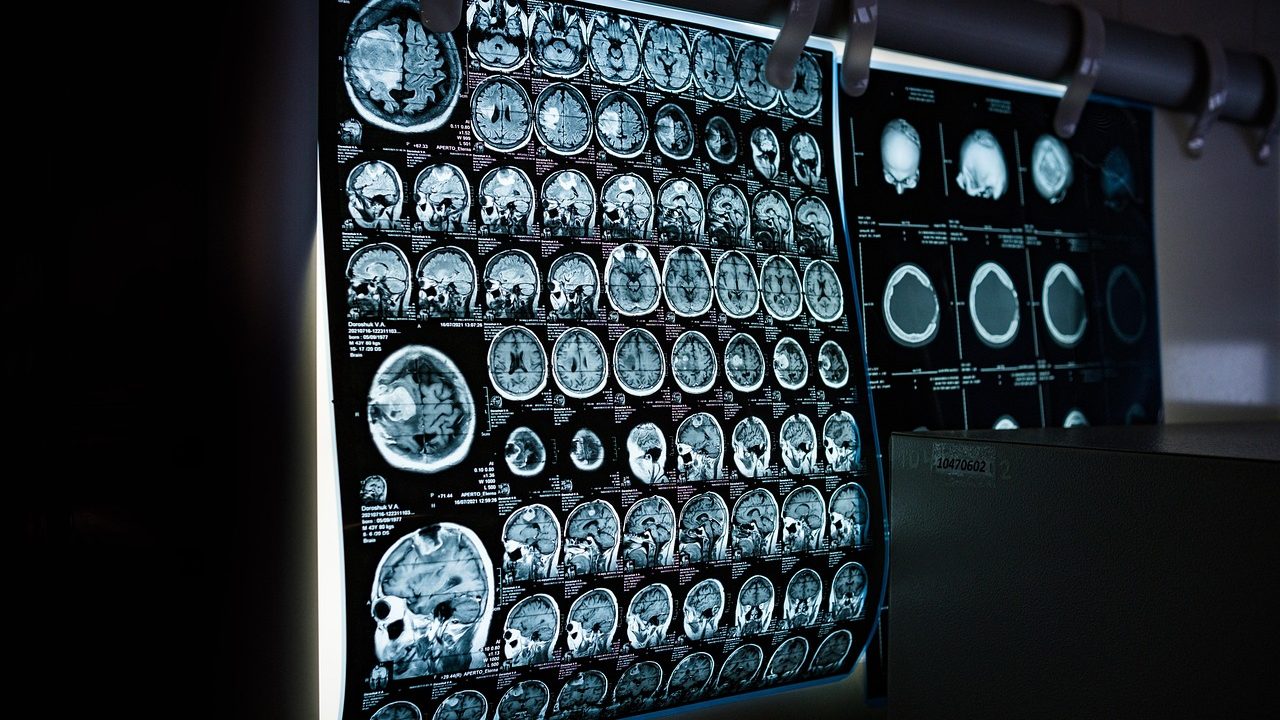
Scientists have published the first complete map of every neuron in a male fruit fly's brain — 166,000 neurons, with every synapse and circuit charted in what neuroscientists call a connectome. The fruit fly has long been the model organism for neuroscience because it is complex enough to be meaningful and small enough to be tractable. This complete male connectome enables direct comparison with the previously mapped female brain, making it the first time in any complex animal that male and female brain architecture can be compared at cellular resolution. The human brain contains roughly 86 billion neurons; the fruit fly's 166,000 is a fraction of that, but the organizational principles that generate behavior are conserved across species in ways that make the fruit fly data genuinely informative about neural computation at larger scales.
Two independent experiments have confirmed that Einstein's equivalence principle — the idea that gravitational acceleration and inertial acceleration are locally indistinguishable — holds at the quantum scale. The result is philosophically significant because general relativity and quantum mechanics remain the two great pillars of modern physics that are stubbornly mathematically incompatible. Each confirmation that general relativity's predictions hold at the quantum scale narrows the space of viable unifying theories. Two independent experiments reaching the same conclusion makes the result substantially more robust than a single measurement.
The James Webb Space Telescope has been detecting massive black holes — billions of solar masses — in the very early universe, earlier than existing formation models predicted they could exist. New theoretical work proposes these black holes formed before the first stars, possibly from the direct collapse of primordial gas clouds, with early black hole mergers accelerating their growth. Multiple research teams are converging on similar conclusions, which in science typically signals proximity to a genuine result.
Ray Kurzweil has joined Subsense, a startup developing a non-surgical brain-computer interface that delivers nanoparticles through the nasal cavity. The nanoparticles travel along the olfactory nerve into the brain and interface with neural activity, positioned as a non-invasive alternative to Neuralink's surgical approach. Kurzweil is among the most prominent proponents of the singularity hypothesis — the merger of human and machine intelligence — making his involvement a directional signal about where he believes the technology is heading. A separate commission has warned that China is outpacing the United States in brain implant technology, citing state-backed investment programs and regulatory permissiveness that enables faster development than American companies operating under FDA oversight. Moderna's mRNA flu vaccine has also joined U.S. options for the 2026-27 season, completing a multi-year regulatory process and bringing the mRNA platform's key advantage — faster strain updates than traditional egg-based manufacturing — to the annual influenza cycle.