Drones Over Moscow, Cocaine in Missouri, and a Trillion-Dollar Number That Doesn't Add Up
From a swarm of 548 Ukrainian drones rattling a diplomatic mission before it could begin, to a Missouri primary candidate charged with planting drugs on his opponent, the week ending September 4, 2026 delivered a cascade of crises across diplomacy, politics, technology, and science.

“Federal Reserve Governor Waller's statement that the U.S. Treasury 'safety premium has vanished' may be the most consequential financial observation of the week, receiving less attention than it deserves.”
How this was made Verified AI
Every Intellegix briefing is generated from that day's broadcast and run through automated checks before it publishes — with a human paged on any flag. Here is the trail for this edition.
A World in Motion, and the People Managing It Visibly Unsure

Ukraine peace diplomacy is teetering, Norway has seized a Russian cruise ship to enforce a $4.22 billion arbitration award, and Vladimir Putin is simultaneously hinting at peace while his foreign minister demands NATO disband. On the domestic front, a Missouri Republican candidate stands charged with plotting to plant cocaine on a rival he defeated by 33 votes. Tucker Carlson has broken with Donald Trump to praise a Michigan Democrat. And Speaker Mike Johnson has canceled the final House votes of September.
In technology, Meta's chief executive reportedly urged Trump on a secret call to block a national AI regulator, Anthropic claims Chinese labs are using the dark web to steal AI technology, and ChatGPT, Claude, and Grok went down simultaneously — a structural warning about how concentrated the infrastructure underpinning artificial intelligence has become. Nvidia announced it will invest one trillion dollars in U.S. AI infrastructure this year, a figure that deserves serious scrutiny. Goldman Sachs is warning that falling AI token prices risk a compute oversupply, and JPMorgan has flagged $103 billion in yen short positions that could unwind dangerously below the 155 dollar-yen threshold.
Scientists have mapped every neuron in a male fruit fly's brain for the first time — all 166,000 of them — two independent experiments have confirmed that Einstein's equivalence principle holds at the quantum scale, and Ray Kurzweil has joined a startup delivering brain-computer interface nanoparticles through the nasal cavity. The week's range is staggering. What follows is the full accounting.
548 Drones and Cold Feet: Ukraine Diplomacy on the Edge
U.S. envoy Steve Witkoff was reportedly scheduled to visit Moscow on Saturday, September 6, and Kyiv on Sunday, September 7, alongside Jared Kushner — their first joint trip to both capitals. A source says Witkoff 'started to get scared.' The proximate cause is not hard to find: 548 Ukrainian drones targeted the Moscow region overnight in one of the largest single attacks in roughly two years, a deliberate demonstration that Kyiv retains significant military leverage regardless of the diplomatic calendar.
Putin offered what might be called a diplomatic fog signal, stating that a peace deal is possible while insisting Ukraine and Russia negotiate directly — a framing that would effectively sideline U.S. mediation and restore what Moscow believes is its structural advantage in any bilateral exchange. Simultaneously, Foreign Minister Lavrov called for NATO to disband, while NATO Secretary General Mark Rutte warned of Russian 'recklessness.' These are not the atmospherics of an imminent settlement.
Norway's decision to impound a Russian cruise vessel at Svalbard — the Arctic archipelago where Russia holds longstanding mining rights — to enforce Ukraine's $4.22 billion arbitration award over Crimea energy assets added a new front to the broader economic conflict. Putin characterized the seizure as 'state terrorism,' language calibrated to justify escalation rather than de-escalation. Wheat prices dropped noticeably following Putin's peace comments, a reminder of how much global commodity pricing currently reflects geopolitical risk premium rather than underlying supply and demand.
Trump is simultaneously demanding that Europe repay the United States for military aid already sent to Ukraine — a debt-collection posture awkwardly superimposed on a peace-brokerage mission. Meanwhile, Danish intelligence has warned that Russia is planning sabotage operations against Denmark's defense industry, and a Russian general charged by international prosecutors with overseeing a missile strike on a Kyiv hospital was reportedly shot in what appears to be an assassination attempt inside Russia — suggesting that international accountability mechanisms are generating real-world consequences even within Russian borders.
Pentagon's Expanding Footprint: Iran Strikes and a Secret Base in Somalia
U.S. forces struck new targets in Iran on Tuesday, resuming operations after a month-long lull and continuing a pattern — strike, pause, diplomatic signal, strike again — that has replaced the restraint of the previous administration with something more aggressive. Israeli Prime Minister Benjamin Netanyahu issued what amounts to a direct threat to Tehran, warning that any Iranian attack would be 'one of their last decisions.' Netanyahu's language is calibrated for domestic audiences as much as for Tehran, but the U.S. strikes represent a separate and independent signal from Washington.
The Pentagon has established a new secretive base in Somalia, with reporting describing the development as signaling 'intensified war.' American military presence in Somalia has expanded and contracted since the 1990s, but the combination of al-Shabaab's resilience, a growing ISIS-Somalia footprint, and broader Sahel destabilization is pushing the Pentagon toward a deeper operational commitment. The Gulf of Aden — one of the world's critical maritime chokepoints — sits adjacent to Somalia, and Chinese naval presence in neighboring Djibouti has been growing. The new base is partly about counter-terrorism and partly about great power competition in a region where U.S. influence has been eroding.
Two smaller Pentagon stories illuminate the gap between how military operations are presented publicly and how they actually function. The Defense Department reportedly told troops to stop using the name 'Operation Epic Fury' months after officially declaring that operation concluded — the name had persisted through force of habit, a window into how messily operations actually wind down. Separately, clinical guidelines for mandatory testosterone screening of troops over 30 were published and retracted within a single day, officially 'to allow for updates' — a rollout and immediate reversal that suggests either the policy was not ready or internal resistance had not been anticipated.
Cocaine Plots, Carlson's Defection, and a Congress That's Gone Home

Thomas Ross, a Missouri Republican who won his primary by 33 votes, has been charged with directing his campaign manager to plant cocaine and Adderall on his opponent. The 33-vote margin is the detail that renders the story almost Shakespearean — a race so close that every ballot mattered, and a candidate who allegedly decided that was still insufficient security. The charges raise broader questions about what the pressure of hypercompetitive local primaries does to the people who compete in them.
Tucker Carlson publicly broke with Trump to praise a Democrat in the Michigan Senate race — a significant rupture given that Carlson's audience represents exactly the voter pool Republicans need in competitive states. Senator Ted Cruz separately reported that Trump 'erupted' over Elon Musk's social media posts related to Jeffrey Epstein, a dispute that reflects the growing incompatibility between Trump's political coalition and Musk's online base, which actively cultivates Epstein-related conspiracy content that Trump's team wants no part of.
Speaker Mike Johnson canceled the final House votes of September, framed as a midterm strategy to keep members in their districts. The practical effect is that Congress will accomplish essentially nothing legislative before the election — deferring outstanding appropriations decisions and ongoing questions about Social Security financing. On that latter front, some Republicans are now openly discussing raising the payroll tax cap on high earners, meaning income above $168,600 would become subject to Social Security taxation. For decades the Republican position has held that any revenue increase for the program is off limits; the fact that the discussion is happening out loud reflects how close the projected trust fund depletion date — around 2033 — has gotten.
A Virginia Democrat claims the FBI wiretapped his calls with a state senator, an allegation that remains unverified but fits a pattern of stories about the health of institutional independence in law enforcement. The Department of Justice's firing of the prosecutor who objected to scaling back civil rights charges against an ICE agent in Minneapolis belongs in the same category. Separately, Florida Governor Ron DeSantis mocked hecklers at a Tampa forum amid an ongoing scandal known as Hope Florida, and the White House launched Arcade.gov featuring MAGA-themed games — two examples of an approach to politics that prioritizes cultural signal over policy substance.
Secret Lobbying, Simultaneous Outages, and the Transformer Deficit Nobody Is Talking About

Mark Zuckerberg reportedly held a secret call with Trump urging him not to create a national AI regulator — a conversation that was subsequently leaked, suggesting someone wanted it known. Meta's regulatory exposure under any coherent AI oversight regime would be significant, making the motivation transparent. The United States currently has no federal AI framework, while the European Union is implementing its AI Act and China enforces its own regulatory structure. The result of continued U.S. inaction, partly attributable to industry lobbying, is a patchwork of state regulations and the ceding of international standard-setting leadership.
Anthropic has claimed that Chinese laboratories are using the dark web to steal AI technology, including frontier model weights and training methodologies. Anthropic is not a disinterested party in how AI security debates are framed, but the underlying claim is consistent with what U.S. intelligence agencies have been saying for roughly two years. The dark web specification adds a layer of sophistication: this is characterized as targeted acquisition of the most valuable intellectual property currently being generated.
ChatGPT, Claude, and Grok went down simultaneously — an event that looks like an inconvenience but functions as a structural warning. Three nominally independent platforms failing at once indicates a shared dependency failing, not three separate incidents. As AI services become embedded in critical business workflows, that concentration represents an infrastructure resilience problem. Claude separately released a capability allowing the AI to control a user's Mac in the background — a direction the entire industry is moving toward — raising unresolved questions about accountability and auditability when an AI agent acts without active human supervision.
The physical constraint on the AI buildout that no software innovation can resolve is power. Wood Mackenzie, an energy research firm, reports that transformer deficits in the United States have reached 15 percent, with AI data centers consuming 40 percent of power equipment supply. Large power transformer lead times run two to four years. Trump's ban on foreign grid equipment narrows sourcing options precisely when demand is at its highest. Google, facing a DRAM shortage, has reportedly begun pulling DDR4 memory modules from retired servers and building custom adapters to connect old chips to new AI machines — a pragmatic improvisation that illustrates the severity of the shortage when a company with Google's procurement power resorts to it.
SpaceX Targets Orbit, Nvidia's Trillion-Dollar Claim Examined, and Robots Take the Sidewalk
Oppenheimer raised its SpaceX price target to $280, citing what analysts called the 'Cursor acquisition' and positioning the company as a genuine AI competitor to Anthropic. The FAA has separately approved the Starship upper-stage catch for Flight 14, with a September 15th mission target now holding both FAA and FCC authorization. The mission is not a test — it is designed to deploy operational Starlink Version 3 satellites for the first time, satellites with significantly higher bandwidth capacity than the existing constellation. A successful Flight 14 would meaningfully intensify competitive pressure on OneWeb, Amazon Kuiper, and traditional satellite operators.
Nvidia's claim of investing one trillion dollars in U.S. AI infrastructure this year warrants examination. Nvidia's total annual revenue is roughly $130 billion. A trillion-dollar investment in a single year from a single company would exceed the GDP of most nations. The more likely explanation is that the figure aggregates downstream ecosystem investment by Nvidia's customers and partners, not Nvidia's own capital expenditure. Vice President Vance has echoed Trump's separate $19 trillion investment claim, which CNN found unsupported; the White House's own website lists $11 trillion in announced investments, a figure analysts describe as itself significantly exaggerated because it counts announcements that are years old, conditional, or overlapping. These numbers function as political and marketing constructs rather than balance sheet items.
The Boring Company is reportedly conditioning participation in a new funding round not only on capital but on strategic contributions — meaning investors must recruit staff and make government introductions. The arrangement uses capital-raising simultaneously as a talent acquisition and relationship-building mechanism, raising questions about fiduciary responsibility for investors who cannot deliver non-financial contributions. Samsung, meanwhile, used AI-generated content to advertise a professional SSD aimed at filmmakers and creative professionals, generating immediate backlash from that community — a brand strategy failure illustrating that AI-generated content can be technically adequate and still be precisely the wrong choice for a specific audience.
A viral video of delivery robots swarming a Chicago sidewalk — multiple autonomous vehicles simultaneously creating congestion in pedestrian space — generated public anger and may push the city toward stricter regulations. The episode echoes earlier debates about e-scooters and dockless bikes: public patience with novel autonomous devices in shared pedestrian infrastructure is limited, and companies that move fast and ignore community feedback tend to encounter unfavorable regulation.
Yen Risk, the Vanishing Treasury Premium, and a Trade War Countdown
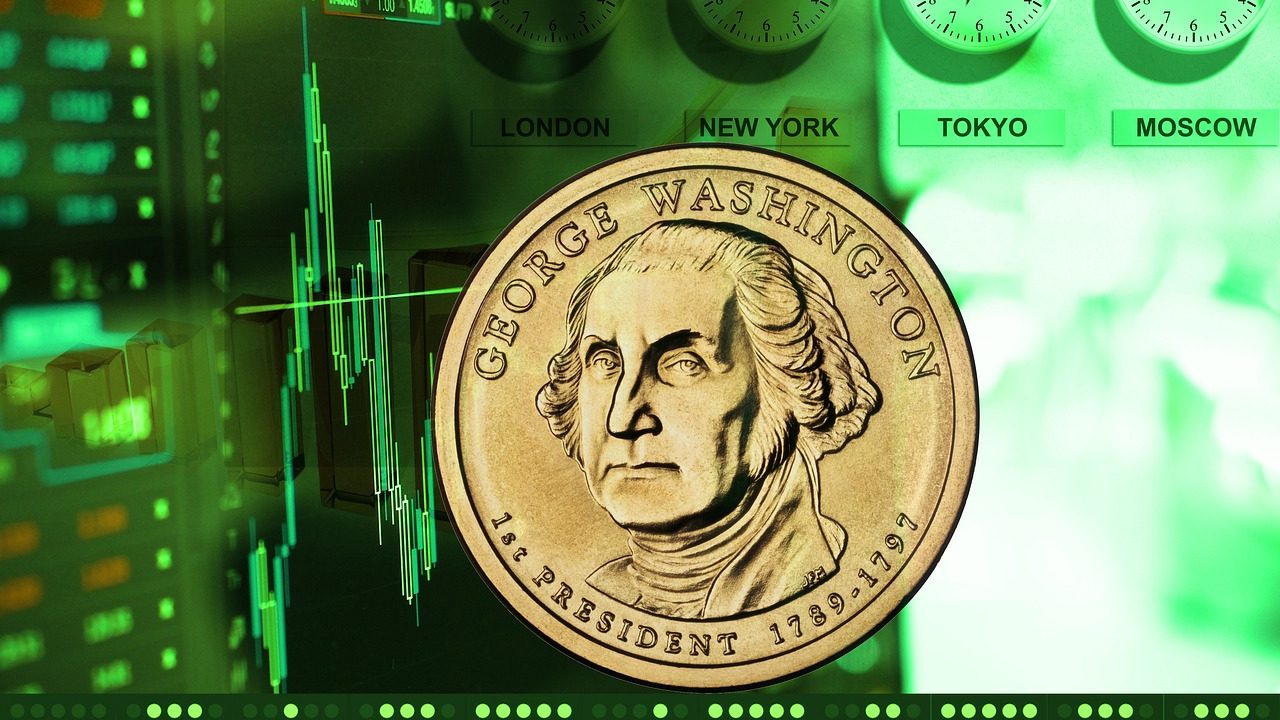
S&P futures sat at roughly 7,762 on Friday morning — essentially flat, up approximately 0.09 percent — reflecting a market in wait-and-see posture ahead of what analysts expect to be a consequential September. The macro backdrop carries multiple pressure points. JPMorgan has flagged $103 billion in yen short positions that become vulnerable to forced unwinding if dollar-yen falls below 155. Yen carry trades — borrowing in low-interest-rate yen to invest in higher-yielding assets — have been a structural feature of global markets for years, and when they unwind, they do so rapidly and across asset classes simultaneously as the same pool of capital exits everywhere at once. A version of this dynamic played out in August 2024.
Federal Reserve Governor Waller's statement that the U.S. Treasury 'safety premium has vanished' may be the most consequential financial observation of the week, receiving less attention than it deserves. The safety premium is the price investors pay to hold U.S. Treasury bonds on the specific basis that they are the safest asset on earth. If that premium has eroded, investors are no longer treating Treasuries as categorically different from other high-quality sovereign debt — a structural shift with significant implications for U.S. borrowing costs and the dollar's global reserve status.
Canada's retaliatory tariffs on more than 700 American products take effect Monday, September 8th. Prime Minister Mark Carney is simultaneously signaling readiness for a U.S. trade deal and preparing to impose those tariffs — a negotiating posture designed to project strength while keeping the door open. Trump has warned that Canada's economy will 'collapse,' the maximum-pressure counter-signal. Neither side has shown flexibility, making September 8th the near-term flashpoint for markets.
Chevron announced a $7 billion expansion in Venezuela, but analysts at UBS and Citi say the deal will not affect U.S. oil prices for years, citing degraded Venezuelan infrastructure, political risk, and the time required to ramp production even under favorable conditions. Meta shares surged after the company's AI chief claimed parity with Anthropic and OpenAI using the Muse Spark 1.3 benchmark, though the claim awaits independent verification — a pattern in which markets reward AI capability announcements before they are confirmed. Goldman Sachs's warning about compute oversupply and Meta's parity claim sit in direct tension: if AI model capabilities are genuinely converging, the competitive moat for any single player narrows, and the infrastructure buildout already committed becomes harder to justify economically.
166,000 Neurons, Einstein Confirmed at the Quantum Scale, and Nanoparticles Through Your Nose
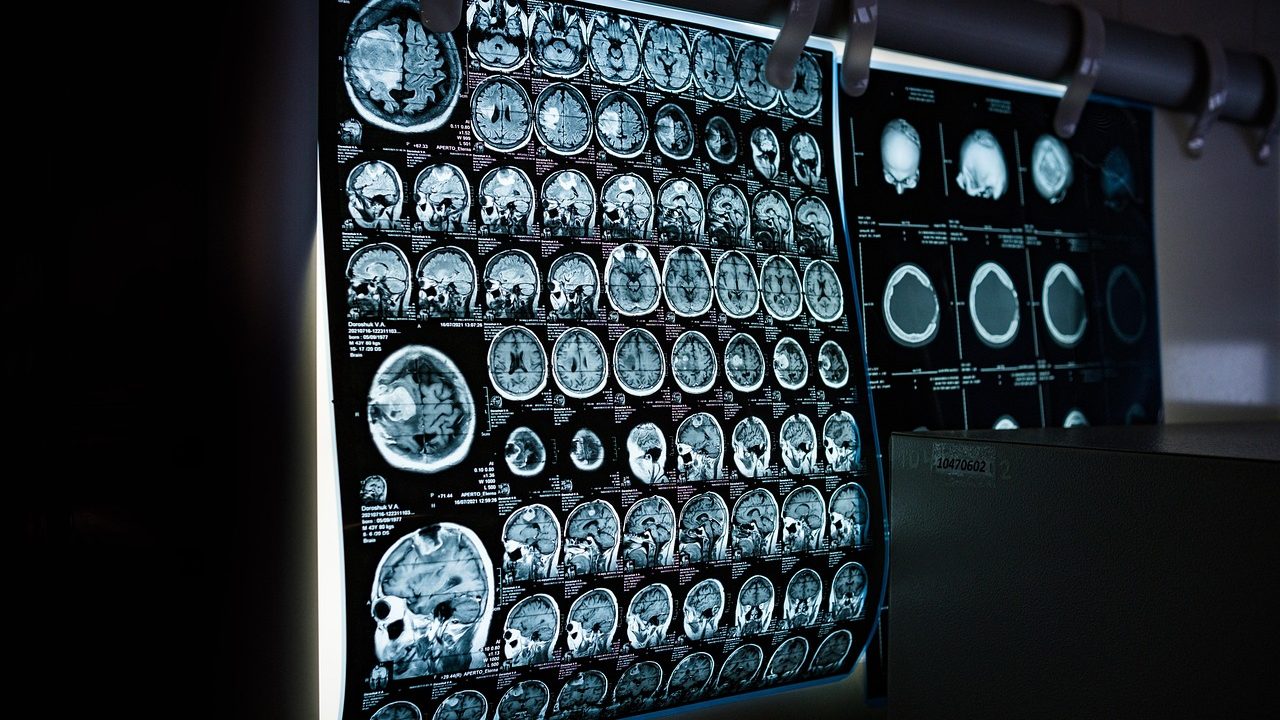
Scientists have published the first complete map of every neuron in a male fruit fly's brain — 166,000 neurons, with every synapse and circuit charted in what neuroscientists call a connectome. The fruit fly has long been the model organism for neuroscience because it is complex enough to be meaningful and small enough to be tractable. This complete male connectome enables direct comparison with the previously mapped female brain, making it the first time in any complex animal that male and female brain architecture can be compared at cellular resolution. The human brain contains roughly 86 billion neurons; the fruit fly's 166,000 is a fraction of that, but the organizational principles that generate behavior are conserved across species in ways that make the fruit fly data genuinely informative about neural computation at larger scales.
Two independent experiments have confirmed that Einstein's equivalence principle — the idea that gravitational acceleration and inertial acceleration are locally indistinguishable — holds at the quantum scale. The result is philosophically significant because general relativity and quantum mechanics remain the two great pillars of modern physics that are stubbornly mathematically incompatible. Each confirmation that general relativity's predictions hold at the quantum scale narrows the space of viable unifying theories. Two independent experiments reaching the same conclusion makes the result substantially more robust than a single measurement.
The James Webb Space Telescope has been detecting massive black holes — billions of solar masses — in the very early universe, earlier than existing formation models predicted they could exist. New theoretical work proposes these black holes formed before the first stars, possibly from the direct collapse of primordial gas clouds, with early black hole mergers accelerating their growth. Multiple research teams are converging on similar conclusions, which in science typically signals proximity to a genuine result.
Ray Kurzweil has joined Subsense, a startup developing a non-surgical brain-computer interface that delivers nanoparticles through the nasal cavity. The nanoparticles travel along the olfactory nerve into the brain and interface with neural activity, positioned as a non-invasive alternative to Neuralink's surgical approach. Kurzweil is among the most prominent proponents of the singularity hypothesis — the merger of human and machine intelligence — making his involvement a directional signal about where he believes the technology is heading. A separate commission has warned that China is outpacing the United States in brain implant technology, citing state-backed investment programs and regulatory permissiveness that enables faster development than American companies operating under FDA oversight. Moderna's mRNA flu vaccine has also joined U.S. options for the 2026-27 season, completing a multi-year regulatory process and bringing the mRNA platform's key advantage — faster strain updates than traditional egg-based manufacturing — to the annual influenza cycle.
What If the AI Boom Looks Like the Fiber Glut? The Case for Doubt

The Lindsay Clancy trial has stretched into a sixth day of jury deliberations, with the defense attorney demanding removal of a holdout juror accused of ignoring reasonable doubt instructions — a demand the judge refused. The case, involving charges connected to the deaths of Clancy's children and centering on claims of postpartum psychosis, has become a painful public reckoning with the limits of legal frameworks for mental illness. Senator Ron Wyden is pressing the NSA to warn Americans about VPN security risks, specifically the concern that some providers with opaque ownership structures may be logging user traffic and sharing it with foreign intelligence services — a reminder that privacy tools can themselves become vectors of compromise. A whistleblower has claimed ICE skipped background checks in its rush to hire thousands of new officers, an institutional failure with direct humanitarian and political implications.
The most confident consensus claim in technology right now — the one most worth stress-testing — is the investment thesis underlying the AI infrastructure buildout: that falling AI token prices will drive explosive usage growth, and that usage growth will eventually justify the massive capital commitments already made. This is the standard technology diffusion model, and Goldman Sachs, multiple market analysts, and the dominant investment narrative all embrace it.
The assumption embedded in this thesis is that AI usage is highly price elastic — that enormous latent demand exists, currently suppressed only by cost. But that assumption may be wrong. Non-users may be non-users for reasons other than price: distrust of AI outputs, workflows that don't benefit from AI assistance, or cognitive overhead of integration that outweighs productivity gains. The historical parallel that warrants attention is the fiber optic buildout of the late 1990s. The investment thesis then was also demand-led: bandwidth will grow exponentially, so lay fiber ahead of that demand. Bandwidth demand did grow exponentially — eventually. But the timing mismatch between infrastructure investment and actual demand drove the dot-com crash, leaving billions of dollars of fiber sitting dark for years before demand caught up.
The counterargument is that the AI adoption curve is structurally different from fiber: every knowledge worker can see right now what AI assistance does for their work, and enterprise software integration is happening in months rather than years, suggesting a steeper adoption curve. The signal to watch — the leading indicator that would indicate the consensus is wrong — is enterprise AI contract renewal data. If companies that purchased AI licenses find that productivity gains do not justify the cost and begin quietly not renewing or downgrading, the usage-growth-justifies-infrastructure thesis starts to crack. Microsoft's Copilot renewal figures, expected in October, represent the clearest near-term window into whether enterprise AI is delivering on its productivity promise.
What to Watch Next Week: Tariffs, a Diplomatic Trip, and a Rocket
As the week closes, three developments will define the days ahead. The Ukraine diplomatic track is the highest-stakes watch: if Witkoff and Kushner complete visits to both Moscow and Kyiv, even a failed trip establishes the parameters of whether direct negotiation is possible. If the visit collapses entirely, a diplomatic reset could take months to rebuild. Wheat markets, European defense stocks, and Ukrainian bond prices will all respond to what happens — or doesn't.
Canada's retaliatory tariffs on more than 700 American products take effect Monday, September 8th. Both sides have deployed maximalist rhetoric — a posture that sometimes precedes a deal and sometimes precedes an escalation. Whether the two governments find a last-minute basis to pause will signal how serious the underlying trade conflict really is.
The FAA authorization for SpaceX Flight 14 targets September 15th. Deploying operational Starlink Version 3 satellites for the first time would meaningfully shift the commercial satellite internet landscape. The broader AI infrastructure story — transformer deficits at 15 percent, power equipment supply consumed by data centers, DRAM shortages forcing Google to pull memory from retired servers — remains the physical constraint on the AI buildout that no benchmark announcement can resolve. The next three months of data on power grid investments and equipment lead times will be more informative about the realistic pace of the AI era than any corporate investment figure.