Drones Rewrite the Rules: Iran Downs an F-15E, Ukraine Defeats U.S. Troops in Germany
How this was made Verified AI
Every Intellegix briefing is generated from that day's broadcast and run through automated checks before it publishes — with a human paged on any flag. Here is the trail for this edition.
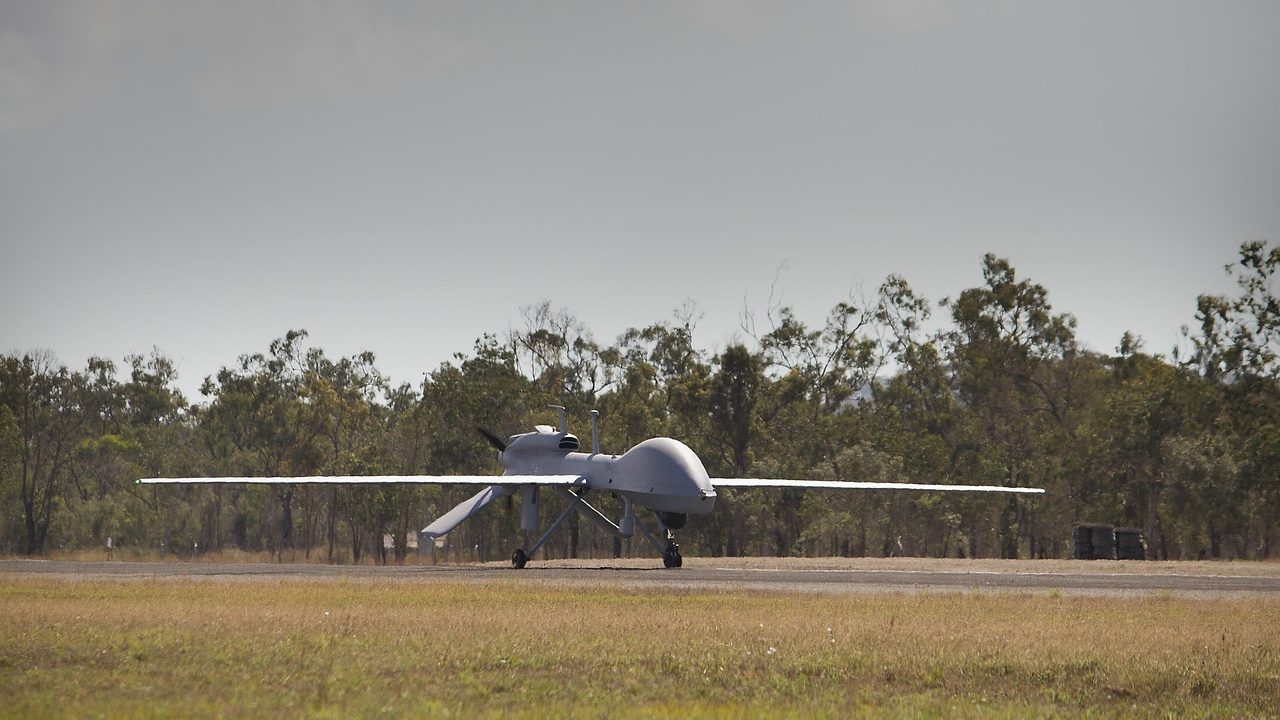
A Pentagon report has concluded that Iran used drone swarms — tactics reportedly inspired by Ukrainian battlefield innovations — to shoot down a U.S. F-15E. The specific operational detail is what makes the finding remarkable: Iranian drones fed the jet's GPS location, speed, and direction to ground commanders in real time, providing the targeting solution for a shoulder-launched missile that then struck the aircraft. The drones were not weapons. They were sensor nodes — a distributed, low-cost intelligence, surveillance, and reconnaissance layer that turned a generations-old handheld missile system into a threat against a high-performance fighter jet.
That represents a genuine doctrinal shift. The man-portable air defense system, or MANPADS, has existed for decades and has always posed a threat to low-flying, slow-moving aircraft. Deploying it successfully against an F-15E — a fast-moving jet not designed to be tracked by cheap commercial drones — required a real-time targeting fidelity previously achievable only through sophisticated radar systems that would themselves be detectable and targetable. The irony that Iran adapted Ukrainian tactics underscores a broader truth: military innovation does not respect political alignments.
A second data point arrived from a training exercise in Germany, where Ukrainian-operated drones defeated U.S. ground forces in a structured simulation. The exercise exposed how large the American capability gap in counter-unmanned aerial systems remains, even after years of stated effort to close it. The asymmetry is financial as much as tactical: a Bayraktar TB2 drone costs approximately five million dollars against an F-15E price tag of roughly sixty million, while a cluster of cheap commercial drones functioning as a sensor network costs a few thousand dollars. The ratio of offense to defense cost is, by some analyses, worse than at any point since the advent of anti-ship missiles made surface fleets genuinely vulnerable in the 1970s.
For U.S. force posture in the Gulf, the implications are pointed. If a dispersed drone swarm can provide a targeting solution capable of downing an F-15E, the aircraft carrier battle groups that have anchored American deterrence in the region for four decades face a materially different threat environment than they were designed to operate in. The Pentagon report stops short of recommending specific posture changes, but the question now being asked in defense planning circles is explicit: if this tactic works against the F-15E, how does it perform against the tankers, B-52s, and surveillance aircraft that entire operational pictures depend upon?