JWST Rewrites Galaxy Formation, Fusion Gets Its First Regulations, and AI's Limits Loom
How this was made Verified AI
Every Intellegix briefing is generated from that day's broadcast and run through automated checks before it publishes — with a human paged on any flag. Here is the trail for this edition.
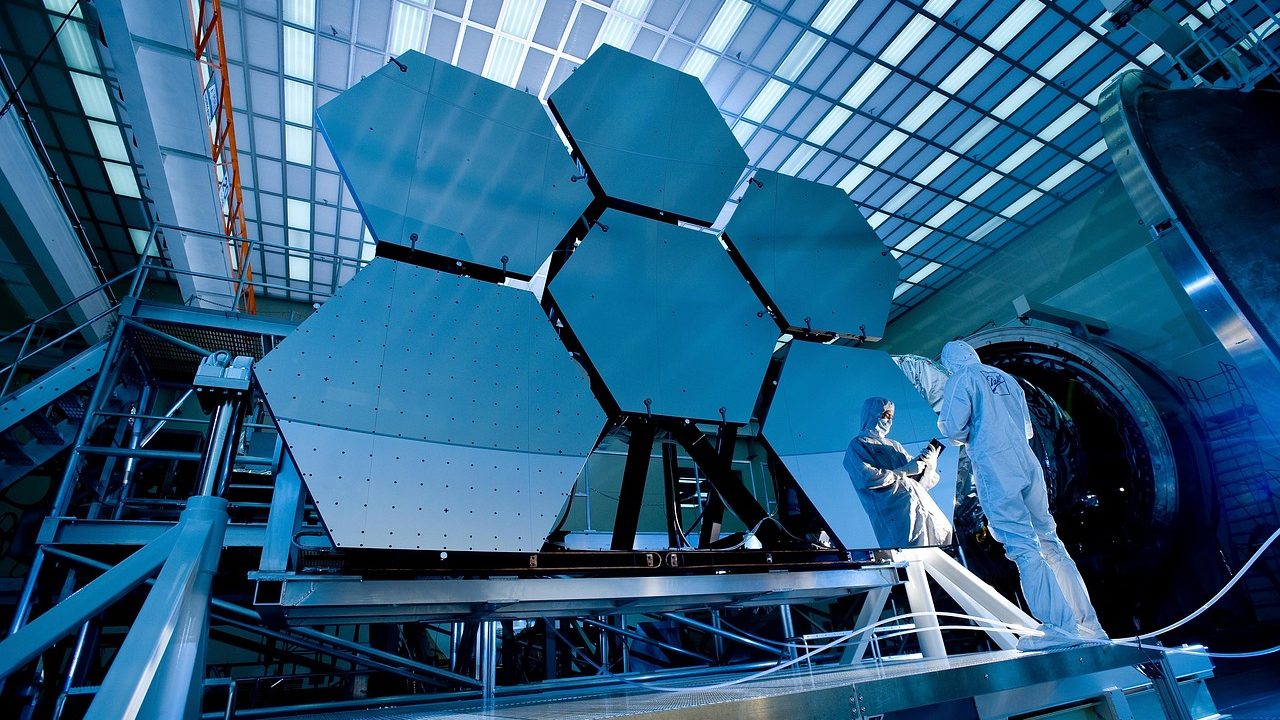
The James Webb Space Telescope identified a Milky Way-sized stellar bar in galaxy GN20 from just 1.5 billion years after the Big Bang — the earliest such structure ever directly observed. The finding challenges existing models of galaxy formation, which had not anticipated structures of that complexity appearing so early in cosmic history, and may require fundamental revisions to cosmological theory.
Astronomers also traced mysterious repeating radio signals, puzzling researchers since 2022, to a white dwarf star shredding its companion. Identifying the source provides new insight into stellar evolution and the extreme physics of stellar death. On Earth, Tennessee became the first U.S. state to enact comprehensive fusion energy regulations, a regulatory first that positions the state to attract fusion energy companies even as large-scale commercial deployment remains years away.
A study found that 55,000 cancer cases went undiagnosed during the first nine months of the COVID pandemic across seven high-income countries, with prostate cancer hit hardest — representing roughly 16% of expected diagnoses. The figures illustrate how healthcare system disruptions produce lasting consequences extending well beyond the immediate crisis.
In an entertainment sector under pressure from streaming, Jimmy Kimmel indicated he is considering leaving late-night television following the cancellation of Stephen Colbert's show, a signal that the traditional broadcast model faces serious structural stress. Content creator PewDiePie, meanwhile, released Odysseus — a free, open-source AI workspace that runs locally on users' hardware — as a privacy-focused alternative to ChatGPT and Claude, illustrating how creators are building their own AI tools rather than depending entirely on major platforms.
Analysts and observers raised a pointed question underlying many of Tuesday's AI developments: whether current large language models carry fundamental limitations that prevent them from achieving the revolutionary productivity gains that justify unprecedented capital deployment. If AI progress stalls at sophisticated pattern matching rather than advancing to genuine reasoning capabilities, the warning signal would be enterprises struggling to demonstrate clear productivity improvements in real deployments — and billions invested in AI infrastructure could risk becoming stranded assets.