El Niño, Hormuz Shadow Escorts, and an AI Arms Race: The Forces Reshaping Global Markets
From an 80% probability El Niño declaration rattling agricultural futures to a covert U.S. operation guiding 70 ships through the Strait of Hormuz, Tuesday's convergence of climate, geopolitical, and technological risks underscores how quickly cascading crises can threaten global economic stability.
“a single miscalculation during a transit could produce immediate market disruption, a risk crude futures traders appear to be pricing into elevated prices”
How this was made Verified AI
Every Intellegix briefing is generated from that day's broadcast and run through automated checks before it publishes — with a human paged on any flag. Here is the trail for this edition.
El Niño Warning Collides With Oil Tensions and a Protein Crunch

The World Meteorological Organization issued a significant warning declaring an 80% chance of El Niño developing this summer, with a greater than 90% probability the pattern persists through November — a forecast carrying enough statistical weight to immediately move agricultural commodity markets.
The timing compounds existing stress in protein markets, where a developing whey protein shortage has sent prices soaring and left some suppliers sold out for the rest of the year. Analysts attribute the crunch partly to surging demand from GLP-1 users and protein-focused food products, though an El Niño-driven disruption to crop yields could significantly deepen the squeeze.
The weather warning intersects directly with the Iran crisis. Moody's chief economist Mark Zandi issued a stark assessment that President Trump has only days to strike a deal with Iran before potential Strait of Hormuz disruptions send oil prices high enough to push the United States into recession within weeks. Agricultural commodity volatility layered atop jittery crude markets presents a compounding inflation threat that the Federal Reserve, still working to maintain price stability, would struggle to absorb.
El Niño events have historically triggered food security crises across Africa and Asia, where subsistence farming dominates, potentially accelerating migration and adding geopolitical instability at a moment when international institutions are already strained by ongoing conflicts. Futures markets are already pricing in elevated risk, with agricultural contracts showing increased overnight volatility following the WMO announcement.
Ukraine Turns the Tide: 40% of Russian Refining Capacity Destroyed, Territorial Gains Reverse

Russia launched what Ukrainian officials described as a massive overnight barrage killing at least 17 people across multiple Ukrainian cities, a significant escalation in intensity that analysts interpreted as Moscow's response to Ukrainian strikes systematically degrading its energy infrastructure.
President Zelenskyy revealed that Ukraine has successfully knocked out 40% of Russia's refining capacity through targeted strikes on energy facilities — a blow to the Kremlin's ability to fund its war through hydrocarbon exports. Compounding that pressure, new territorial data shows Russia's net gains in Ukraine have turned negative for the first time since 2023, suggesting Ukrainian forces are actively reclaiming ground rather than simply holding defensive lines.
Ukrainian intelligence chief Kyrylo Budanov offered a notable departure from Kyiv's typically cautious messaging, calling an end to the war before winter 'realistic.' Such specific framing from a senior intelligence official suggests assessments of Russian capability and limitation that are not fully visible in public reporting.
On the diplomatic front, President Trump reportedly urged Chinese leader Xi Jinping during their May summit to use Beijing's influence to restart stalled peace negotiations with Russia. China's position as Russia's largest energy customer gives Beijing considerable leverage over Moscow's war financing, though supporting a negotiated settlement carries its own strategic costs for the Russia-China partnership.
President Putin, meanwhile, vowed 'inevitable punishment' following the Starobilsk strike that killed 21 students in occupied Luhansk and convened Kremlin meetings to address recent Ukrainian operational successes — a response that analysts say signals genuine concern about the sustainability of Russia's current military posture.
Hormuz in the Shadows: U.S. Quietly Escorts 70 Ships as Recession Clock Ticks

U.S. Central Command has quietly coordinated safe passage for 70 ships through the Strait of Hormuz over just three weeks, averaging roughly three coordinated transits per day, in what amounts to a covert shadow escort operation through one of the world's most consequential shipping lanes.
Most vessels are reportedly going dark — switching off their transponders to avoid Iranian detection — while Iran simultaneously asserts parallel authority over the strait. Roughly 20% of global oil trade flows through the waterway, meaning each successful undetected transit directly counters the oil price spikes that Moody's economist Mark Zandi has warned could trigger a U.S. recession.
The arrangement reflects an uneasy equilibrium in which both parties have economic incentives to keep commercial flows intact. Iran benefits from continued energy exports and shipping revenues; the international community requires functional supply chains. Yet the balance is inherently fragile: a single miscalculation during a transit could produce immediate market disruption, a risk crude futures traders appear to be pricing into elevated prices despite the operation's success so far.
The broader deterrence picture extends well beyond the strait itself. Iran's proxy networks across the Middle East create multiple potential flashpoints where local incidents could escalate into wider conflicts with energy market consequences. The maritime escort program, in this context, is one component of a larger strategy to prevent escalation while diplomatic channels remain open — but without a broader political resolution, analysts say the operational balance cannot hold indefinitely.
AI's Industrial Phase: Billion-Dollar Bets Signal Shift From Research to Deployment
Anthropic announced plans to recruit 1,000 engineers specifically to fine-tune Claude Code, one of the largest single-product hiring initiatives in the AI sector's history and a clear signal that developer productivity tools have become a primary battleground for AI company valuations.
The scale of capital flowing into AI was underscored by Alphabet's record $80 billion fundraising round — the largest equity offering in tech history — with the company's 2026 capital spending approaching $190 billion. The round included a $10 billion stake from Berkshire Hathaway, a move interpreted by markets as institutional validation that AI infrastructure represents a fundamental economic shift rather than a speculative cycle. Salesforce's early bet on Anthropic offers a concrete illustration of the returns on offer: its Series C stake, initiated in 2023, is now worth approximately $5 billion following Anthropic's recent $965 billion valuation.
NVIDIA made a platform strategy move at GTC Taipei, launching an open-source agent toolkit that includes NemoClaw blueprints, OpenShell runtime, and Nemotron models for building enterprise AI agents. Goldman Sachs responded by raising NVIDIA's price target to $285. The open-source approach marks a notable shift for a company historically protective of its most advanced tools, reflecting a bet that widespread adoption of its development stack will drive hardware demand more effectively than restriction.
SoftBank CEO Masayoshi Son claimed the AI boom will be '50 times bigger' than the dotcom era, a statement delivered one day after announcing an $87 billion AI data center investment in France — SoftBank's largest European investment ever. OpenAI's announced robotics push, meanwhile, immediately weighed on Tesla shares, illustrating how quickly perceived competitive threats in emerging technology can move valuations.
JPMorgan issued a note urging clients to sell speculative tech after a 57% rally, but analysts noted a growing bifurcation within the sector: companies with demonstrable AI revenue streams and established enterprise partnerships are increasingly treated as foundational holdings rather than speculative bets, even as enthusiasm for less proven plays cools.
Cook's Last Keynote, China's Stealth Rocket, and the Enterprise AI Crunch

Apple's upcoming WWDC conference carries unusual weight as the final keynote for CEO Tim Cook, who is set to step down September 1st with hardware chief John Ternus named as his successor. The conference is expected to showcase Apple's AI strategy and its approach to integrating machine learning across its ecosystem while preserving the privacy positioning that has become central to the brand.
Enterprise AI adoption is already outpacing internal capacity planning. Walmart announced it is rationing employee access to its AI tool Code Puppy, replacing unlimited access with fixed token allocations per worker — an operational constraint that suggests demand exceeded expectations. OpenAI CEO Sam Altman noted that top AI adopters are hiring rather than cutting staff, a data point that complicates prevailing narratives about AI-driven job displacement. Research from the New York Fed reinforces that framing, finding that remote work — not AI — explains 64% of the increase in unemployment among young college graduates since the pandemic.
ARM Holdings disclosed that ByteDance and Oracle are now using its data center chips, a significant expansion beyond the company's mobile processing roots into enterprise infrastructure driven by AI and cloud computing demand. The move reflects a broader pattern of semiconductor companies adapting product strategies to capture accelerating data center spending.
China surprised industry observers by debuting a Falcon 9 rival rocket with no advance warning, a lack of pre-announcement that analysts interpreted as growing Chinese confidence in domestic space capabilities. SpaceX, meanwhile, faces its own scale challenge: experts have warned that its plan for one million satellites could cost up to $2 trillion to implement, a figure that may require new business models or international frameworks to be viable.
Markets Weigh AI Optimism Against Inflation Risk and Geopolitical Uncertainty

Financial markets are processing a complex mix of corporate signals and macroeconomic uncertainty, with S&P futures down approximately 0.18% in early trading as investors balanced AI-driven optimism against ongoing geopolitical and inflation risks.
Alphabet's $80 billion equity raise — backed in part by Berkshire Hathaway's $10 billion commitment — set a new benchmark for tech capital markets and reflects the unprecedented investment required to compete in AI infrastructure at scale. NVIDIA maintained its dominant position following GTC Taipei, with Goldman Sachs raising its price target to $285 on the strength of the company's expanding platform strategy.
JPMorgan's warning to sell speculative tech after a 57% rally introduced volatility, but analysts noted that companies with clear AI revenue streams are being treated differently from pure-play speculative holdings. Tesla shares fell following OpenAI's robotics announcement, illustrating how swiftly competitive threats in emerging categories can erode perceived technological moats regardless of a company's current financial performance.
Outside technology, General Mills announced the sale of its Häagen-Dazs China operations to a Ningji-led group, a divestiture that reflects growing corporate caution about geopolitical risk exposure in Chinese consumer markets. Strava, preparing for an IPO, moved to restrict developer data access and introduce fees — a monetization shift that echoes lessons from earlier social media companies that failed to capture value from open third-party ecosystems.
In healthcare, Moderna and Merck announced that their cancer vaccine continues to provide melanoma protection at five years, the kind of long-term efficacy data that supports broader clinical application and insurance coverage decisions, and that biotech investors have been waiting for as cancer immunotherapy grows as a share of pharmaceutical pipelines.
Ghost Bat Validated, Iran Weaponizes Consumer AI, and Millions Exposed in Back-to-Back Breaches
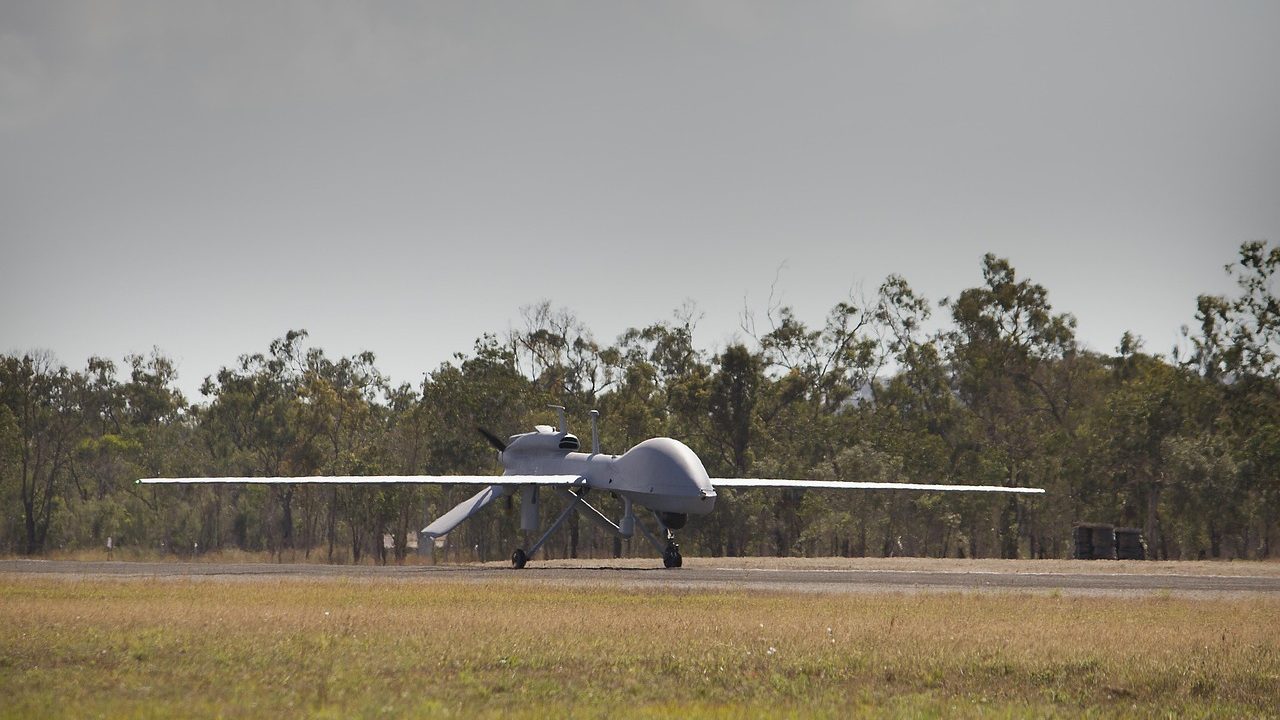
Boeing announced successful validation of stealth performance for its MQ-28 Ghost Bat drone, a milestone in autonomous military aviation development. The Ghost Bat is designed as a 'loyal wingman' system operating alongside manned aircraft — a doctrinal shift in which autonomous platforms augment rather than replace human pilots. Stealth validation means the system can operate in contested airspace environments previously reserved for sophisticated crewed aircraft.
On the cyber front, reports indicated that Iran is using ChatGPT and Gemini to enhance its state-sponsored cyber operations, a development that security experts have long warned about as consumer AI tools become more capable. The open availability and continuous improvement of large language models dramatically lowers the technical barriers for sophisticated attacks, accelerating offensive cyber capability development across multiple threat actors.
The private sector faced its own cyber reckoning. The ShinyHunters group executed back-to-back breaches affecting millions of people, reportedly exploiting employee deception to steal data from nearly 6 million Carnival cruise passengers and millions of Spectrum customers. The incidents highlighted the persistent vulnerability of enterprises to social engineering attacks that circumvent even sophisticated technical defenses — a finding that suggests cybersecurity investment must address human factors with the same rigor applied to software vulnerabilities.
Defense policy debates added further complexity to the sector's picture. Reports indicated Defense Secretary Hegseth removed seven Black and female Navy officers from promotion lists, leaving a one-star admiral slate with no female nominees — a decision raising concerns about merit-based promotion standards and potential effects on military readiness. Separately, an appeals court ruled that the Pentagon's transgender troop ban is illegal, adding another dimension to ongoing debates over personnel policy and force effectiveness.
JWST Rewrites Galaxy Formation, Fusion Gets Its First Regulations, and AI's Limits Loom

The James Webb Space Telescope identified a Milky Way-sized stellar bar in galaxy GN20 from just 1.5 billion years after the Big Bang — the earliest such structure ever directly observed. The finding challenges existing models of galaxy formation, which had not anticipated structures of that complexity appearing so early in cosmic history, and may require fundamental revisions to cosmological theory.
Astronomers also traced mysterious repeating radio signals, puzzling researchers since 2022, to a white dwarf star shredding its companion. Identifying the source provides new insight into stellar evolution and the extreme physics of stellar death. On Earth, Tennessee became the first U.S. state to enact comprehensive fusion energy regulations, a regulatory first that positions the state to attract fusion energy companies even as large-scale commercial deployment remains years away.
A study found that 55,000 cancer cases went undiagnosed during the first nine months of the COVID pandemic across seven high-income countries, with prostate cancer hit hardest — representing roughly 16% of expected diagnoses. The figures illustrate how healthcare system disruptions produce lasting consequences extending well beyond the immediate crisis.
In an entertainment sector under pressure from streaming, Jimmy Kimmel indicated he is considering leaving late-night television following the cancellation of Stephen Colbert's show, a signal that the traditional broadcast model faces serious structural stress. Content creator PewDiePie, meanwhile, released Odysseus — a free, open-source AI workspace that runs locally on users' hardware — as a privacy-focused alternative to ChatGPT and Claude, illustrating how creators are building their own AI tools rather than depending entirely on major platforms.
Analysts and observers raised a pointed question underlying many of Tuesday's AI developments: whether current large language models carry fundamental limitations that prevent them from achieving the revolutionary productivity gains that justify unprecedented capital deployment. If AI progress stalls at sophisticated pattern matching rather than advancing to genuine reasoning capabilities, the warning signal would be enterprises struggling to demonstrate clear productivity improvements in real deployments — and billions invested in AI infrastructure could risk becoming stranded assets.