San Diego Closes Out Summer Under Heat, Pennant Pressure, and Unresolved Governance Fights
With a heat advisory still in effect through Monday night and the Padres in the thick of a playoff race, San Diego heads into Labor Day weekend navigating a layered set of civic, economic, and public safety questions that show no sign of resolving over the long weekend.

“Approximately 60 percent of those arrested had no criminal conviction and no pending criminal charge, a figure shaping daily life in communities across the county.”
How this was made Verified AI
Every Intellegix briefing is generated from that day's broadcast and run through automated checks before it publishes — with a human paged on any flag. Here is the trail for this edition.
A City in Motion: What San Diego Is Tracking This Labor Day

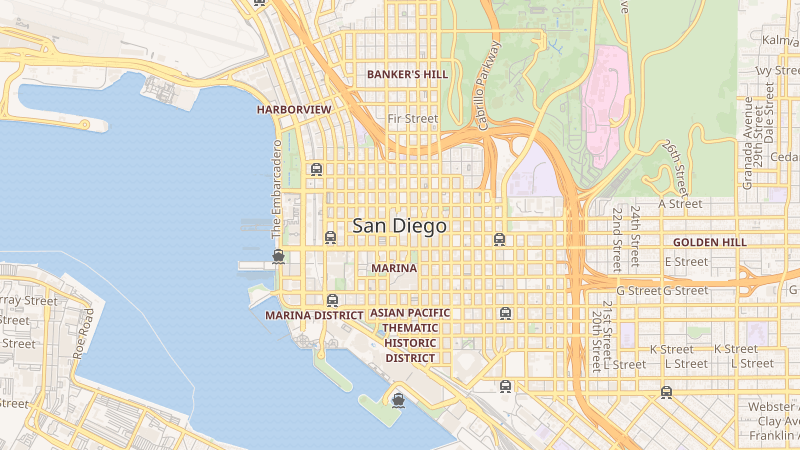
San Diego enters Labor Day weekend 2026 with a full slate of unfinished business: a Padres team fighting for a playoff berth under brand-new ownership, a governance standoff over federal immigration enforcement at county facilities, an arena-and-housing megaproject hanging on a state legislative maneuver, and a landmark craft brewery's 220-position layoff notice casting a shadow over the holiday.
The region is simultaneously grappling with a housing market fracturing along property-type lines, a pending commercial robotaxi launch with a narrowing deadline, and a heat advisory that has kept inland temperatures between 90 and 102 degrees through the weekend — a backdrop that colors everything from high school football practice to backcountry fire risk.
Intellegix San Diego Daily is an independent, AI-curated podcast aggregating public reporting across the region. The show acknowledges the foundational work of local journalists — reporters covering city hall late into the night, attending school board meetings, knocking on doors after fires — as the sourcing that makes regional analysis possible.
Padres in a Pennant Race, Wave on a Roll, and a Fall Sports Calendar Underway

The San Diego Padres carried a 72-62 record into their Labor Day weekend road series at Tropicana Field in St. Petersburg, sitting second in the NL West and facing a Tampa Bay Rays team that came in at 79-54 and leading the AL East. Casey Mize started Friday's opener at 4:10 Pacific. A 72-62 record projects to roughly 90 wins over a full season — historically a comfortable playoff number — but the NL West's grinding competitiveness means second place guarantees nothing, and every series through late September carries weight.
The series unfolds as the franchise adjusts to new ownership. The $3.9 billion sale to José Feliciano and Kwanza Jones — ratified unanimously by MLB owners on August 24th and the largest ownership transfer in Major League Baseball history by sale price — means the incoming group is watching their first meaningful September race play out in real time. Fernando Tatis Jr. was on the active roster heading into Tampa, a significant factor for a lineup whose ceiling rises considerably when he is healthy and engaged.
On the local pitch, the San Diego Wave FC delivered a 4-2 win over Utah, with Trinity Byars contributing two goals and Melanie Barcenas and Ludmila adding to the scoreline. The result keeps the Wave in a strong position in the NWSL table. At the high school level, prep football's opening night on August 21st sent Santana against Morse, Helix to Santa Fe Christian, Steele Canyon hosting San Diego, Grossmont to Madison, and Granite Hills to Oceanside — launching a full fall sports calendar even as temperatures remained ten to fifteen degrees above late-August averages, making heat protocols at practices a matter of genuine safety concern.
The USTA Girls' 18s and 16s National Championships wrapped up at Barnes Tennis Center in Balboa Park, where Bella Payne and Sarah Shoemate won the Girls' 18 doubles title. The tournament is a reminder that San Diego regularly hosts national-caliber competitions at what is described as a world-class facility that receives less local visibility than its stature warrants.
The ICE Fallout, Midway Rising's Uncertain Path, and a Fatal Police Standoff Under Scrutiny

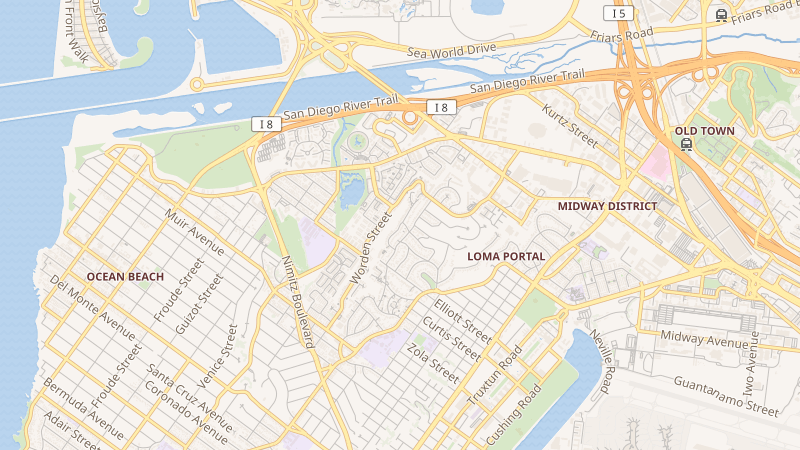
The most consequential ongoing governance story in San Diego County is not a single vote but its messy aftermath. The Board of Supervisors voted 3-2 on August 18th to terminate license agreements allowing ICE and CBP to train at Otay Mesa and Camp Elliott ranges. Sheriff Kelly Martinez responded by using her independent operational authority to carve out an exception — preserving CBP access to Otay Mesa for recertification of roughly 1,700 officers who need the facility to maintain their qualifications, while cutting off ICE entirely. The Sheriff's Department then published a release explicitly confirming the arrangement, a public disclosure that functions as its own political statement. Supervisors on both sides of the original vote got something, and neither got everything.
CBP Commissioner Rodney Scott called the board's original vote 'reckless, irresponsible, and ignorant' — language that signals how federal agencies are reading local resistance. The backdrop is stark: ICE conducted close to 2,000 arrests across San Diego and Imperial counties in July 2026, roughly 50 percent more than the approximately 1,300 arrests in June. Approximately 60 percent of those arrested had no criminal conviction and no pending criminal charge, a figure shaping daily life in communities across the county.
On the Midway Rising front, the City Council formally repealed Measure C on August 25th after a court ordered it. Measure C was the 2021 ballot initiative that removed the 30-foot coastal height limit in the Midway-Pacific Highway corridor; a judge ruled it had been improperly put to voters. What follows is a state legislative maneuver: Senator Akilah Weber Pierson is expected to lead a gut-and-amend process, which began August 13th, that could create specific environmental review exemptions for the arena-and-housing development. If the maneuver succeeds, Midway Rising gets a different regulatory path; if it fails, the entire project faces significant uncertainty. Separately, the City Council passed a resolution at the August 25th meeting condemning federal interference in higher education, affirming support for academic freedom, research, diversity, and the safety of students and staff — a political statement rather than binding policy.
An SDPD officer-involved shooting in Point Loma is generating ongoing questions. A six-hour standoff on Nipoma Street ended August 26th when a man emerged holding a gun and officers fired; he was pronounced dead at 9:40 p.m. Officers had originally responded to a welfare check on a person described as armed with a knife; the situation evolved over six hours, and the man was later described as a burglary suspect. The Sheriff's Homicide Unit is handling the outside investigation under standard protocol, but the sequence of events is expected to face scrutiny as that investigation proceeds.
A city audit of San Diego's eight leased golf courses — covering more than 800 acres of public land — produced numbers that drew sharp attention this week. Operators generated $34 million in gross revenue in fiscal year 2025. The City received $3.5 million in rent for calendar year 2024, roughly ten cents on the dollar for public land. The audit finding is now public; lease renegotiations are the next chapter to watch. Meanwhile, enforcement at Sunset Cliffs has yielded 20 citations and more than 300 warnings since July 26th, along with three rescue operations in three weeks including a low-angle rope rescue near The Arch. Citations and warnings have not demonstrably changed visitor behavior, a gap that points to a design problem rather than a purely enforcement one.
A Housing Market Split in Two, Stone Brewing's Layoff Cloud, and Waymo's Closing Window
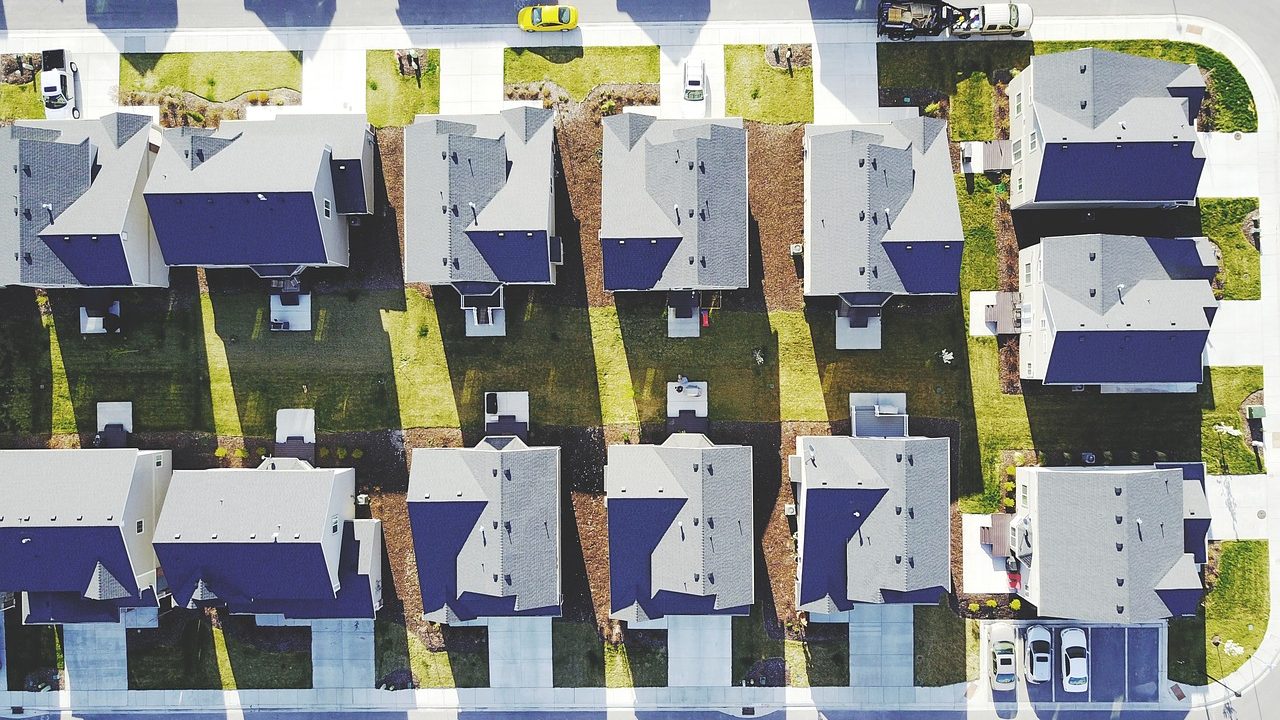
San Diego's housing market is dividing cleanly along property type this summer, and the divergence has direct consequences for buyers, sellers, and renters. Single-family homes countywide are holding a median between $1,074,000 and $1,085,000, up roughly five to six percent year-over-year, with inventory at approximately 8,248 listings and homes moving at a median of 33 days — still a seller's market. Older condos and townhomes tell a different story: down ten to fifteen percent from their 2022 peaks. The driver is structural rather than cyclical: HOA fees have surged sixty to seventy percent in some buildings, and special assessments have hit some units at up to $100,000 per unit, breaking the purchase calculus for most buyers. Redfin's coastal San Diego median for the three months ending in June reached $2 million, a 4.6 percent year-over-year increase, effectively pricing out most of the county's workforce.
Stone Brewing filed a WARN notice covering 220 total positions, with the first layoff phase scheduled for October 19th. The 60-day notice requirement means affected workers have known since roughly late August that the date is approaching. Stone is one of San Diego's flagship craft brewery brands, a company that became part of the regional identity during the craft beer boom of the 2010s. A WARN notice of that scale signals serious restructuring, and spending Labor Day weekend under that cloud is, for those workers, a concrete reality.
The defense and research corridor offered contrasting signals. Northrop Grumman locked in a $3 billion Department of Defense agreement. General Atomics received a $20 million California Competes tax credit for fusion development expansion — the company operates the DIII-D National Fusion Facility, described as the only fusion research device in the western United States running as a Department of Energy national user facility. UC San Diego received an $18 million NSF grant for a quantum materials research center. ServiceNow, meanwhile, is cutting 133 San Diego positions by September 28th, concentrated at senior and director levels. The county added 13,400 jobs year-over-year through May, led by healthcare, with unemployment at 4.7 percent unadjusted in July and 4.3 percent seasonally adjusted.
Waymo's commercial robotaxi launch in San Diego remains pending. The California Public Utilities Commission approved the company's Passenger Safety Plan on August 14th, clearing the last formal regulatory hurdle. The initial service area covers roughly 40 square miles. A public launch had been expected before September 22nd — the end of meteorological summer — but as of Sunday morning no official launch announcement had been made, leaving nine days in the window. The Montage International acquisition of the Pendry San Diego hotel for $147 million — a 317-room property in the Gaslamp Quarter — signals continued hospitality investment confidence in downtown, even as office vacancy holds at 13.4 percent. Industrial real estate showed a modest shift in Q2 2026: vacancy reached 7.06 percent, up from 6.91 percent, with net absorption turning negative at minus 236,000 square feet, reversing a prior quarter's positive 1.1 million square feet.
East County Quiet on Sunday


No new public-record developments emerged from Santee or East County on Sunday, August 30th.
Back to School, a $10.7 Billion Construction Bet, and the Case for Watching Occupancy Rates
San Diego Unified School District is entering the new school year with a set of technology restrictions approved unanimously by its board: YouTube is blocked by default on district Chromebooks unless a teacher enables it, non-instructional gaming is banned, and device carts have been removed entirely from transitional kindergarten classrooms. The policy covers more than 100,000 students across 175 schools, with an early assessment scheduled for January 2027. The district's summer enrollment campaign brought in 3,033 new students — more than double its 1,309-student annual recruitment target — through 52 in-person enrollment hubs, and more than 71 percent of 2026 graduates were deemed college- or career-ready.
Roughly 946 students relocated from Del Sur Elementary to Stone Ranch Elementary for mold and moisture remediation, a process planned to run through September 18th with a proposed return on September 21st. That is a tight timeline for remediation at that scale. SDSU set a new application record this cycle with more than 124,000 applicants; combined with UC San Diego's volume, the two campuses together received about 265,700 fall 2026 admission applications. Local colleges and universities collectively are spending $10.7 billion on construction, with approximately $4.3 billion targeted at housing for nearly 12,000 students. The Teach Lead program, which grew from 22 students at two schools in 2021 to 400 students from 20 schools this year, places high schoolers as paid assistant teachers in elementary classrooms while earning elective credit — functioning simultaneously as a pipeline program, workforce development, and community building.
The $10.7 billion construction commitment invites a pointed question: what if the assumptions behind it have shifted? The strongest skeptical argument is that every major planning decision was made before the current federal policy environment took hold. UC San Diego's grant portfolio includes hundreds of millions in NSF, NIH, and Department of Defense awards; sustained cuts or restrictions on federal research funding would pressure the graduate enrollment that anchors research universities, since graduate students follow funding rather than campus amenities. Construction costs have also run above planning-phase projections, and California's K-12 enrollment has been declining in some regions, compressing the domestic student pipeline over a ten-year horizon.
The counterarguments are also substantial. San Diego's research corridor spans biotech, defense, climate research, quantum computing, and AI — a diversified demand base that insulates the university ecosystem from single-sector softness. Partnerships such as the $40 million West Health and UC San Diego care technology accelerator cross-subsidize academic demand. And the housing investment is arguably corrective rather than speculative: both SDSU and UC San Diego are severely under-housed relative to existing enrollment, meaning new beds are filling a documented gap rather than betting on unproven growth.
The concrete indicator to watch, according to the analysis, is not headline application figures but occupancy rates on completed university housing buildings. Those projects are typically self-funded through student fees and rents; if occupancy falls below roughly 90 to 92 percent sustained over two or more semesters, the financial model begins to stress. Occupancy rates appear in annual financial disclosures as public numbers. The second variable is the federal research funding pipeline — specifically new award rates, not just continuations, at UC San Diego, trackable through federal spending databases. A sustained drop in new awards would be an early signal of structural pressure on the research university model, distinct from political pressure alone. County Treasurer-Tax Collector Larry Cohen also flagged an October 11th deadline for more than $1 million in unclaimed property distributed across approximately 2,200 potential recipients, with the largest single claim at $27,000.
Heat Through Monday, Cool Zones Open, and a Long Weekend's Bigger Picture

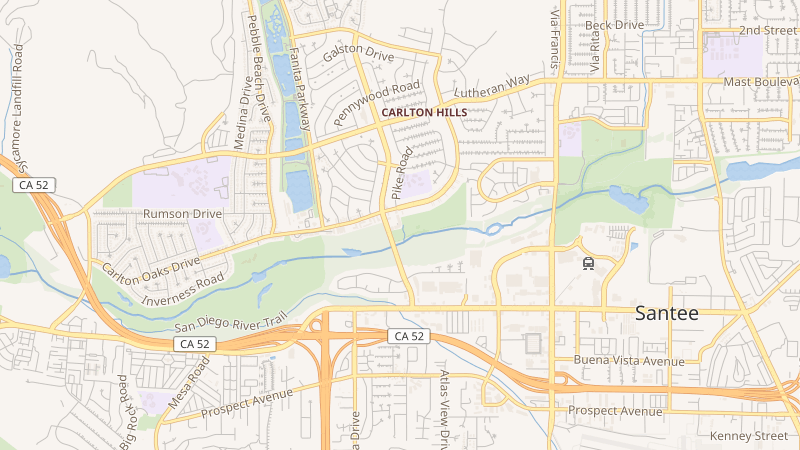
The heat advisory for inland San Diego County remains in effect through 8 p.m. Monday, August 31st. Inland valleys including Santee, El Cajon, and La Mesa have seen highs between 90 and 102 degrees through the weekend. Coastal San Diego is running milder, in the mid-to-upper 80s with a heat index near 90 in some areas. The National Weather Service projects gradual relief for inland areas starting Tuesday, with temperatures retreating toward seasonal norms by midweek; coastal areas are expected to stay in the low-to-mid 80s through Monday. Peak heat typically runs from 11 a.m. to 5 p.m., and the Santee Branch Library is designated as a Cool Zone.
On the community calendar: a blood drive is scheduled at SDCCU's Santee branch at 286 Town Center Parkway on Tuesday, September 1st — Labor Day historically ranks among the hardest stretches for blood supply. Santee Lakes has fall and winter programming coming, including Create on Deck workshops in September, a Trunk-or-Treat and Spooktacular event, a fall market, and a Water Lantern Festival in December. The Walker Preserve trail remains open but narrowed to twelve feet during active sewer rehabilitation work.
The larger frame around this Labor Day weekend is a set of questions San Diego has not yet resolved about who benefits from the wealth the region generates and who decides how it circulates. That question runs through the ICE enforcement numbers, the $2 million coastal median home price, the Midway Rising environmental review fight, and the roughly $34 million in golf course revenue flowing to private operators off public land at a fraction returned to the city. Those debates will not close over a long weekend — but they continue to clarify for those paying attention.