East County Fights Powerlink Routes, TB Gaps Surface, and San Diego's Housing Market Grinds
San Diego County faces a convergence of pressures on Wednesday, August 19, 2026: organized East County opposition to every SDG&E transmission route alternative, a drug-resistant tuberculosis case raising public health alarm, and a housing market locked in suspended tension at a median price of $1.099 million.

“The result is a market that neither corrects nor recovers — it grinds.”
How this was made Verified AI
Every Intellegix briefing is generated from that day's broadcast and run through automated checks before it publishes — with a human paged on any flag. Here is the trail for this edition.
A County at a Crossroads: Infrastructure, Health, and the Cost of Decisions Made in Boardrooms


From transmission corridors to detention center inspections, Wednesday's civic agenda in San Diego County reflects a region navigating the gap between large-scale policy and neighborhood-level consequence. The Board of Supervisors' Land Use session, a contested public health situation in La Jolla, bifurcated commercial real estate, and a nine-day-old school technology policy all share the same underlying tension: decisions made at institutional scale that land with specificity on real communities.
Today's coverage spans the Golden Pacific Powerlink route controversy, drug-resistant tuberculosis at a La Jolla care facility, the county's $9.16 billion budget backdrop, and a critical examination of San Diego Unified's device restriction rollout — including the strongest case that the policy may fail in ways its proponents have not fully accounted for.
East County Pushes Back on Every Powerlink Route as TB Gaps Expose Public Health Blind Spots

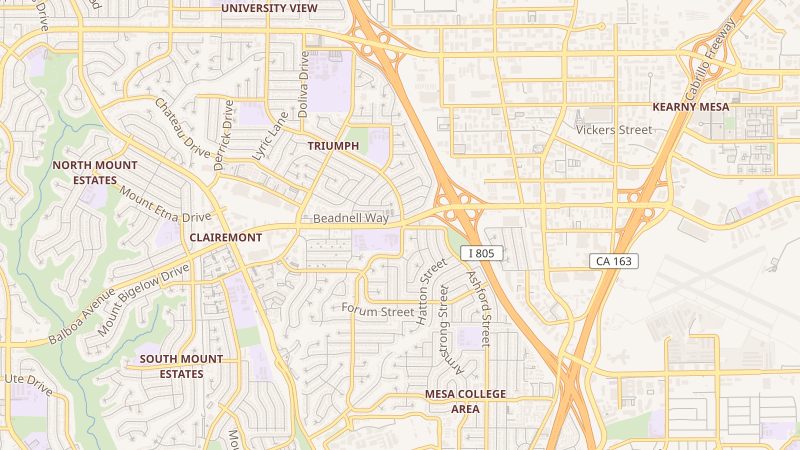
The San Diego County Board of Supervisors convened its Land Use session Wednesday morning with the SDG&E Golden Pacific Powerlink at the center of proceedings. SDG&E released alternative route options ahead of Tuesday's General Legislative Session hearing, and the response from East County communities was, according to East County Magazine, significant organized opposition to every alternative presented. The underlying argument is not about any single corridor: residents describe decades of disproportionate infrastructure burden placed on inland communities — transmission lines, substations, and industrial facilities — and are reading the Powerlink, however it is ultimately routed, through that accumulated grievance.
SDG&E's position is that the infrastructure is necessary for regional energy reliability, a claim grounded in the state's renewable energy transition and San Diego County's geographic constraints. East County advocates, however, are pressing whether route-selection analysis adequately accounts for cumulative community impacts or optimizes primarily for engineering and right-of-way cost. While the California Public Utilities Commission holds final permitting authority over a project of this scale, the Board's formal response carries significant weight in the Sacramento process.
Separately, the Board's Tuesday session also addressed a vote on ending Immigration and Customs Enforcement and Customs and Border Protection access to two county firing ranges at Otay Mesa and Camp Elliott — a decision with direct operational consequences for federal border enforcement training and one that reflects the sustained tension between county government and federal immigration authorities that has defined San Diego politics for much of the past decade.
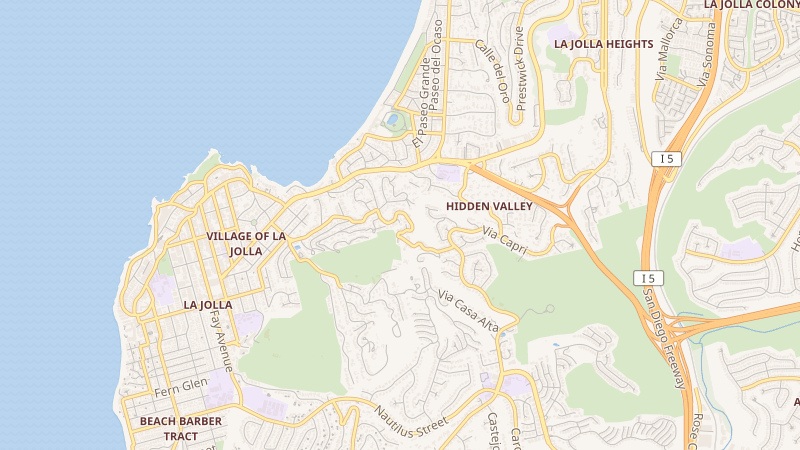
Two geographically distinct but thematically linked public health situations demand attention in parallel. A drug-resistant tuberculosis case has been reported at a La Jolla care center; as of the latest verified reporting, the specific facility, number of cases, exposure timeline, and full public health response have not been detailed publicly. Separately, an inspection report at Otay Mesa Detention Center found shortcomings in the facility's notification procedures around contagious illness, including tuberculosis — a finding the county obtained only after pursuing federal court access to inspect the site. Drug-resistant TB requires more intensive, longer-duration treatment with more limited options than standard TB, and any gap between case identification and public or resident notification carries clinical, not merely procedural, significance. The absence of a detailed county public health statement on the La Jolla case is itself informative.
Bipartisan Navy Alarm, a Cliff Rescue Surge, and a Homicide That Has Gone Quiet

San Diego's full congressional delegation sent a letter earlier this week demanding an independent review of the USS Abraham Lincoln following a series of serious incidents aboard the carrier. The delegation's bipartisan alignment is itself notable — the group does not typically move in unison — and the letter frames the situation as a readiness and accountability issue extending beyond internal Navy process. The Pacific Fleet is the relevant command authority.
Since July 26th, San Diego Police have issued 20 citations and more than 300 warnings at Sunset Cliffs. Three separate jumping incidents have required rescue operations in the past three weeks, including a technically demanding low-angle rope rescue near The Arch at Sunset Cliffs Boulevard and Froude Street. San Diego Fire-Rescue has increased lifeguard staffing at the location while simultaneously deploying more than 30 SDFD personnel to wildfires across four western states — a resource equation with real operational limits.
A federal prosecution under the Marine Mammal Protection Act is now rippling into state coastal policy: Tyler Muehl pleaded guilty in federal court on August 14th to charges related to kicking a protected sea lion at La Jolla Cove, and the California Coastal Commission has opened deliberations on whether to partially close portions of the cove area as a result.
The August 7th double shooting on Summerview Court in Mira Mesa — in which a woman was killed and her husband critically injured — remains open twelve days later with no announced arrests and no public update on the surviving victim's condition. The Palomar Mountain human remains case has reached partial resolution: investigators have definitively ruled out any connection to missing Oceanside nurse Angelica Brophy, identifying the remains as those of an adult man now under separate Sheriff's Homicide Unit investigation.
The Coast Citrus salmonella outbreak stood at 345 illnesses across 27 states with 36 hospitalizations and zero deaths as of August 13th, according to FDA reporting. Coast Citrus has stopped importing from the implicated Sinaloa, Mexico grower, and with the most recent reported illness onset on July 20th, the epidemiological curve suggests the supply-chain intervention is working — though the situation warrants monitoring through the end of August.
A $1.099 Million Housing Market in Suspended Animation and a Defense-Fueled Economic Paradox

San Diego County's median price for existing single-family homes reached $1.099 million in July — up 1.3 percent from June and 5.7 percent year-over-year. The headline figures favor sellers, but the context reframes them sharply: sales volume fell 6.7 percent from June, active listings have been building for months, and the 30-year fixed mortgage rate stands at 6.69 percent. Many owners locked into low-rate mortgages from 2020 and 2021 have little incentive to sell; buyers facing current rates on a $1.1 million home encounter monthly payments that price out most dual-income households. The result is a market that neither corrects nor recovers — it grinds.
Commercial real estate is more visibly bifurcated. Industrial vacancy sits at 7.3 percent, with leasing hitting 1.8 million square feet in the second quarter — up 37 percent from the prior quarter and 38 percent above the five-year quarterly average. Office vacancy countywide is 15.4 percent, though the Eastgate submarket near UC San Diego has led office absorption for two consecutive quarters, reflecting the concentration of life-science and health-technology tenants. Overall life-science vacancy is running around 26 percent, reflecting the sector's post-2022 correction.
Defense and deep-technology investment continues at a scale that receives limited day-to-day attention. Northrop Grumman secured a $3 billion Department of Defense agreement. 3D Systems received a $9 million Air Force contract for advanced metal printing. General Atomics is receiving a $20 million California Competes tax credit for its fusion development expansion — the company operates the DIII-D National Fusion Facility, described as the only fusion research device in the western United States running as a Department of Energy national user facility. UC San Diego received an $18 million NSF grant to establish a quantum materials research center, part of a $108 million NSF initiative funding six centers nationally, with Professor Michael Sailor leading the effort out of the Jacobs School of Engineering.
West Health and UC San Diego Health launched a $40 million care technology accelerator. Jazz Pharmaceuticals acquired Carmel Valley-based Actio Biosciences for $820 million, signaling continued pharmaceutical confidence in San Diego's biotech pipeline despite elevated sector vacancy. AI vehicle inspection startup Self Inspection raised $10 million backed by a venture fund connected to Sheryl Sandberg. Developer Lowe has committed $201.5 million to the Plaza Bonita redevelopment in National City, a mall-to-mixed-use conversion near the 805 and 54 interchange, though full program details have not yet been made public.
The counter-narrative to job growth is ServiceNow, which is cutting 133 positions at its San Diego office by September 28th. The company posted $3.877 billion in Q2 revenue — a 23 percent year-over-year increase — while eliminating more than half of its San Diego headcount at senior and director levels. The pattern: a company reorganizing toward automation even as revenue accelerates. California FAIR Plan rates rise 29 percent effective October 1st, hitting hardest in Alpine, Lakeside, and Spring Valley — communities in East County already paying a premium for wildfire-exposure areas and now facing a near-30 percent jump in what is, for many, their only available insurer.
Quiet Day in Santee and East County


No new public-record developments emerged from Santee or East County on Wednesday. Coverage will resume as new information becomes available.
Nine Days In: San Diego Unified's Device Policy Faces Its Hardest Test — and a Serious Counterargument

San Diego Unified's technology restriction policy — approved 5-0 by the board — has been in effect for nine days across more than 100,000 students at 175 schools. The policy blocks YouTube by default on all district-issued Chromebooks unless a teacher explicitly enables it, bans non-instructional gaming, removes computer carts from transitional kindergarten classrooms, and schedules device on-and-off hours. Superintendent Fabi Bagula has been the public face of the rollout.
The district's summer enrollment figures offer a surface-level encouraging backdrop: roughly 3,033 new enrollments against an annual recruitment target of 1,309 students, arriving as 1,083 in June and 1,950 in July. The district has itself flagged the caveat that these numbers do not account for students lost to graduation or transfers, and California's official census day falls on October 7th. The headline figure lands against an eight-year backdrop in which the district has lost roughly 33,000 students — one strong summer does not reverse a structural trend.
The strongest challenge to the technology policy's framing is more substantive than critics have generally been credited for in coverage to date. The policy's core assumption is that the technology itself — YouTube, gaming — is the distraction, and that removing access removes the problem. But research on device restrictions in schools is more mixed than the policy framing suggests, with some of the most rigorous studies finding modest and inconsistent effects. Some find that overly restrictive technology environments can reduce engagement for students who rely on digital media as a primary learning modality, particularly English learners and students with certain learning differences. The district has carved out exceptions for students with IEPs, 504 plans, and language-learning needs — an important acknowledgment of this risk.
The more vulnerable assumption concerns implementation. The policy grants teachers discretion to explicitly enable YouTube for instructional use, but this mechanism's effectiveness depends on whether teachers across 175 schools — with widely varying levels of technology training and administrative support — actually deploy it. Teachers in under-resourced schools who find the enabling process complicated, or who internalize the district's overall message as a blanket prohibition, may leave YouTube blocked even when it would be the right instructional tool. The risk is not that students find workarounds — they typically do — but that the restriction lands hardest on students in schools with the least capacity for nuanced implementation, widening a resource gap the policy is meant to be neutral about.
Three indicators will determine whether the policy is working as intended: the January 2027 early assessment the board scheduled, specifically whether it reports technology-access equity data broken out by school site rather than district-wide averages; teacher survey data from high-need schools on whether the YouTube-enable function is being used in practice; and the October 7th enrollment census, which will reveal whether the summer surge reflects genuine net gains or is partially offset by attrition. San Diego County's 31 Catholic diocesan preschools, 39 elementary schools, and six high schools — serving roughly 15,600 students and staggering opening dates between August 11th and August 26th — will provide a comparative enrollment data point as the fall picture becomes clearer.
On the community front, HarborFest returns to Chula Vista's Bayside Park on Saturday, August 22nd, from 10 a.m. to 6 p.m., with free admission after a seven-year hiatus — live music, food vendors, Lucha Libre, a car show, and water activities. The Tijuana Municipal Little League opens play at the Little League World Series in Williamsport, Pennsylvania on August 20th against Australia. And more than a million dollars in unclaimed county funds — available to approximately 2,200 potential recipients, with a largest single claim of $27,000 — remains searchable through the county Treasurer-Tax Collector's office under Larry Cohen through October 11th.
What to Watch Next: Six Weeks to Insurance Deadlines, 48 Hours on TB, and a Census Day That Tells the Real Enrollment Story

Wednesday's Board of Supervisors Land Use session on the Golden Pacific Powerlink is the most immediate civic moment of the day. The county's formal response will shape the California Public Utilities Commission process, and residents in any of the alternative route corridors should follow the proceedings closely.
The La Jolla drug-resistant tuberculosis situation warrants close attention over the next 48 hours. The absence of a detailed public health statement from San Diego County is itself a signal; a more specific response from county health officials in that window will indicate whether the public health infrastructure is responding with appropriate speed. The October 7th enrollment census will determine whether San Diego Unified's summer gains are real in net terms.
For homeowners in Alpine, Lakeside, Spring Valley, and neighboring East County wildfire-exposure communities: the California FAIR Plan rate increase of 29 percent takes effect October 1st — six weeks from now. Reviewing current coverage and exploring whether any standard-market options have become available is a time-sensitive financial decision.
The National Weather Service outlook for the next 48 hours shows coastal areas with morning clouds and afternoon sun, highs in the mid-to-upper 60s at the beach. Inland valleys face highs in the low-to-mid 90s Wednesday, moderating slightly Thursday. Mountain areas remain under a residual monsoonal moisture pattern with isolated afternoon thunderstorm risk above 4,000 feet through at least Wednesday afternoon. Flash flood risk in burn scars — including areas near the Church 2 Fire near Campo and the Grade Fire corridor near Lake Henshaw — remains elevated with any storm activity. A Coastal Flood Advisory that ran through Wednesday night has expired, though minor beach parking lot overflow remains possible during evening high tides.