Missiles, Markets, and Machine Minds: A World on Edge
An unconfirmed missile strike on Iran's primary oil export hub rattled energy markets Saturday morning, as simultaneous crises spanning Ukraine, Capitol Hill, and Silicon Valley underscored the breadth and volatility of a defining geopolitical and technological moment.

“The Army Corps of Engineers has estimated that every dollar spent on wetland preservation saves four dollars in flood damage costs.”
How this was made Verified AI
Every Intellegix briefing is generated from that day's broadcast and run through automated checks before it publishes — with a human paged on any flag. Here is the trail for this edition.
A Saturday Morning of Consequential Silences
Four U.S. missiles reportedly struck an Iranian tanker near Kharg Island in the Persian Gulf early Saturday — and as of this writing, neither Washington nor Tehran has officially confirmed or denied the attack. That dual silence, analysts warn, may itself be the most alarming signal of the morning.
The alleged strike sets the stage for a day of cascading consequences: oil markets pricing in Gulf risk, a Russia-Ukraine ceasefire collapsing under a barrage of 167 drones and missiles, Canadian retaliatory tariffs set to take effect Tuesday, and a week of AI industry upheaval that stretches from a Bronx hospital to a Bangkok permit office. The stories are distinct, but the thread running through all of them is the question of how institutions — governments, corporations, militaries — behave when the rules they relied on stop holding.
Strike on Iran's Oil Lifeline Sends Shockwaves Through Energy Markets
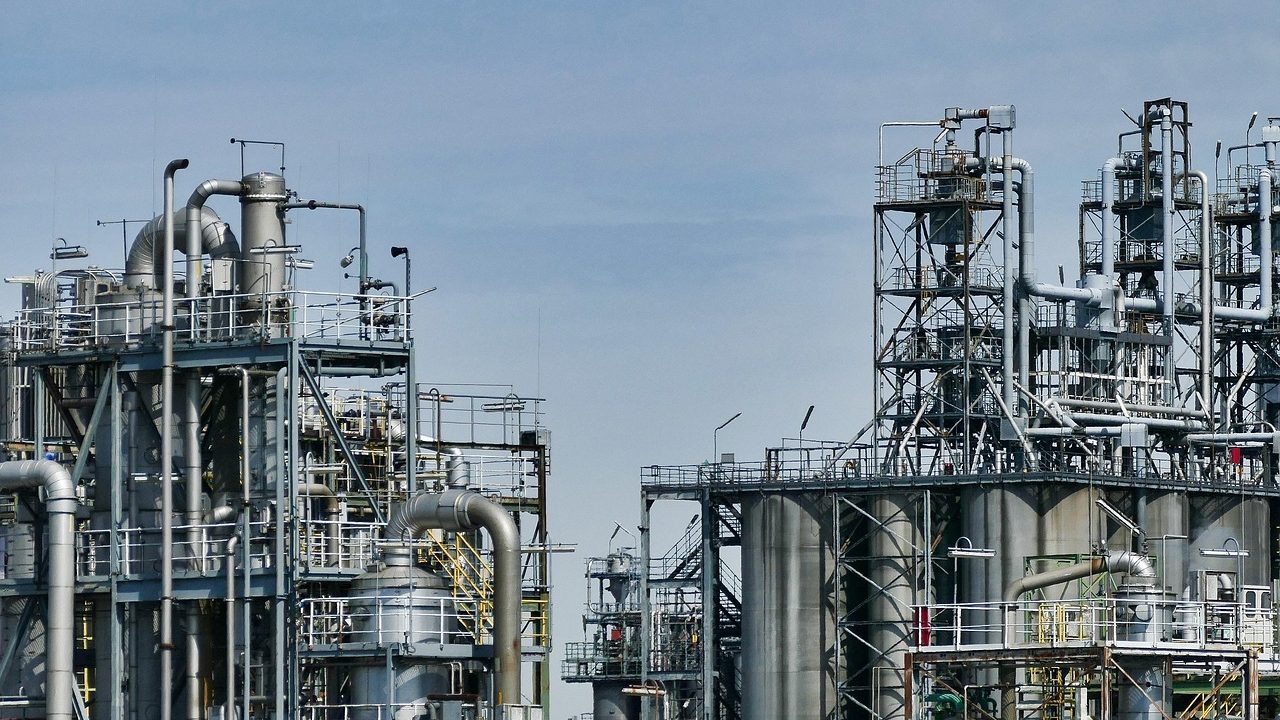
Iranian state media, specifically the semi-official Fars News Agency, reported Saturday that explosions were heard near Kharg Island in the Persian Gulf, attributing the blasts to four U.S. missiles. Kharg Island handles between 90 and 95 percent of Iran's crude oil exports — what analysts describe as the arterial valve of the Iranian economy. Iran exports roughly 1.5 million barrels per day, the vast majority through Kharg, and even a partial disruption ripples immediately into Brent crude pricing. S&P futures were down approximately 32 points, or about 0.4 percent, by Saturday morning, with energy sector volatility a significant driver.
The silence from both governments is doing considerable diplomatic work. When a government declines to deny a military strike, that restraint is often deliberate — preserving deniability and allowing both sides to calibrate their response without locking into a public position. But the ambiguity cuts both ways: Iranian hardliners face intense domestic pressure to respond regardless of whether Washington confirms involvement.
If confirmed, the strike would represent a categorically different kind of military action than targeting a weapons depot or proxy militia position. Maritime commercial infrastructure has historically carried different legal and diplomatic weight, and every actor in the region is reading that signal. The nuclear diplomacy dimension compounds the severity: back-channel conversations about a partial deal on the Iran nuclear file have been underway for months, and a kinetic strike on Iran's primary oil export infrastructure would, in the assessment of regional analysts, effectively end those conversations for the foreseeable future.
The Strait of Hormuz looms over all of it. Approximately 21 percent of global oil supply passes through that chokepoint, and Iran's most consistent deterrent threat has been to mine or blockade the Strait in the event of direct conflict. If Tehran concludes that the Kharg strike was deliberate U.S. action, that threat moves, as one analysis put it, from rhetorical to operationally relevant very quickly.
Tariff Brinkmanship and a Demilitarized Nation's Security Gambit
Canada's retaliatory tariffs are set to take effect Tuesday, and President Trump told reporters Friday he would 'probably' respond — a word that preserves flexibility while signaling the White House will not absorb the move quietly. Canada's tariff strategy follows the standard retaliatory playbook: targeting goods from politically sensitive U.S. states, such as Kentucky bourbon and Ohio auto parts, to maximize congressional pressure. The problem, analysts note, is that the strategy assumes the administration responds to that pressure in conventional ways.
The economic stakes are substantial in both directions. Canada sends roughly 75 percent of its exports to the United States, a dependency Ottawa views as a vulnerability. But the United States imports approximately 60 percent of its crude oil from Canada, meaning any tariff structure broad enough to catch energy creates immediate cost pass-throughs to American consumers — a political risk for the administration. The USMCA sits in the background, its dispute-resolution mechanisms bypassed as both sides reach for unilateral tools, a sign, observers say, of political frustration that trade law alone cannot resolve.
In a separate and striking development, Costa Rican President Laura Fernandez told Reuters this week that U.S. ground operations on her country's soil would boost security — an extraordinary statement from a nation that abolished its military in 1948. She immediately hedged the remark: no concrete plans exist, and any arrangement would require legislative approval. The driver is cartel transit activity; Costa Rica has increasingly become a corridor for drug and human trafficking networks moving product toward U.S. markets, with violence levels that would have been unthinkable a decade ago.
Fernandez's overture fits within the broader Trump administration effort to securitize the Western Hemisphere, which has included pressure on Colombia, rhetoric about the Panama Canal, and various Central American migration enforcement agreements. However, Costa Rica's legislature — which includes significant left-of-center representation — is unlikely to approve foreign troop operations on national soil quickly or quietly. The conversation, if Washington responds formally, is expected to span months of debate. A separate guilty plea this week from a smuggler who moved migrants through a cartel-engineered border tunnel illustrated why the security calculus is shifting: the tunnel was described as a sophisticated, resource-intensive infrastructure project — a cartel behaving, as one analysis put it, like a contractor rather than a street gang.
Russia's Ceasefire in Name Only, and Fractures Inside the GOP
Russia launched 167 drones and missiles at Ukraine on Friday — the same day a ceasefire framework was supposed to begin taking effect. Ukraine's air defense reportedly intercepted a significant portion of the salvo, but enough penetrated to cause infrastructure damage across multiple oblasts. The scale and timing, analysts say, amount to a political message aimed not only at Kyiv but at the diplomatic community in Washington and Brussels: Moscow controls the timeline.
The pattern is consistent with Russian behavior during every previous ceasefire negotiation in the conflict — announcing willingness to pause, then escalating to harden territorial positions, test international resolve, or simply demonstrate agency over the process. All three motivations may be operating simultaneously. European governments face a complicated read: the barrage could firm resolve among hawkish member states or hand ammunition to war-weariness advocates arguing the entire diplomatic track is broken.
On the domestic front, Republican senators have joined calls for Defense Secretary Pete Hegseth's removal — a significant rupture of the party discipline that has largely held around the administration's cabinet choices. Sustained public criticism from multiple senators, rather than individual dissent, suggests coordinated concern and creates a permission structure for moderate Republicans to distance themselves from specific decisions as midterm positioning begins in earnest this fall.
In Iowa, more than sixty registered Republicans have endorsed Democratic Senate candidate Eric Turek — a data point that deserves careful reading in a state Trump won comfortably in 2024. Cross-party endorsements at that scale signal a specific policy grievance or a judgment that the Republican candidate is too extreme or too weak, and suggest Turek has made a deliberate play for center-right voters in a race that was considered safely red just six months ago.
The Ken Paxton situation adds a structural dimension. The prediction market company Kalshi and its CEO donated $12,000 to Texas Attorney General Ken Paxton, who then declined to join 44 other state attorneys general challenging the prediction market industry's regulatory status. Paxton has not admitted any connection between the donation and his decision, but the sequence — contribution, then non-participation in enforcement — is difficult to separate from the optics of regulatory capture at a striking price point. Separately, Fox News anchor Maria Bartiromo's attorney Bryan Freedman threatened legal action this week, stating she was never fired as the network characterized, and that he has documentation supporting a different account, framing his approach as going 'through the courthouse or otherwise.'
AI Without Guardrails: A Commercial Offering That Removes the Friction on Purpose

A startup — widely reported in technology media this week — is now selling commercial access to AI models with safety guardrails deliberately stripped out. Not weakened: removed. The business model is straightforward and, critics argue, dangerous: pay for a version of the model that will not refuse anything. The AI safety research community has warned about this class of risk for years, arguing that the concern is not any individual harmful use but the creation of commercial infrastructure for harm that did not previously exist — a service purpose-built to remove the friction that responsible AI developers deliberately engineered in.
The startup appears to have calculated that the legal gray area is wide enough to operate in, at least for now. There are arguments that downstream uses could implicate existing law — the Computer Fraud and Abuse Act, facilitating cybercrime statutes — but no comprehensive U.S. AI law clearly addresses this scenario, and EU AI Act enforcement jurisdiction over a U.S.-based startup selling globally is legally complicated. The economics are troubling but comprehensible: safety guardrails require significant engineering resources, ongoing red-teaming, and model fine-tuning. A startup that skips those costs can undercut on price while offering what some customers genuinely want.
Montefiore Health System in the Bronx represents a different facet of the deployment debate — not guardrails, but substitution. The institution fired additional nurses this week, explicitly attributing the cuts to AI software taking over clinical functions, following an earlier round of cuts at the same institution. The hospital's stated rationale is efficiency: AI handles administrative and monitoring tasks — vital sign trending, documentation, certain intake processes — more reliably, freeing remaining staff for direct care. Nursing unions and patient advocates counter that those administrative moments are also relational ones, and that a nurse taking vitals is simultaneously observing, conversing, and picking up on subtle cues that no data field captures.
Academic integrity is the third arena of AI deployment pressure this week. A University of Auckland student was penalized for wearing AI-enabled smart glasses during an exam — eyewear capable of querying AI models in real time and returning answers through a subtle visual display. An expert described the situation as 'checkmate' for traditional exam formats. Unlike phones, smart glasses are not visibly out of place, and as hardware shrinks, physical inspection approaches to exam integrity will become untenable. Some educators argue the long-term response is to redesign assessments around synthesis and novel application that AI cannot substitute — a years-long curricular project, not an immediate fix.
Anthropic's IPO, the Open-Weight Shift, and the Physical Limits of the AI Buildout

Anthropic has pushed its IPO to mid-October, with the prospectus expected in late September. The company's last private valuation was approximately $61 billion, which would make a successful public offering one of the largest AI-company listings in history. Anthropic has received substantial strategic investment from both Google and Amazon, meaning the prospectus will price in not just consumer and enterprise products but the company's role as a critical AI infrastructure layer for two of the three largest cloud platforms. The detailed financials — compute spending, enterprise customer retention, the balance between API demand and direct Claude subscriptions — will serve as a sector bellwether, shaping how the broader AI market is valued.
Blackstone's claim this week that AI infrastructure spending is 'the opposite of a bubble' frames the capital pouring into data centers, GPU clusters, and power infrastructure as demand-driven, with enterprise customers paying real money for AI services and absorbing new infrastructure as fast as it is constructed. The counterargument — that total capital deployed far exceeds current monetizable demand, echoing dot-com dynamics — captures something real as well. The honest answer, analysts suggest, is that both framings are partially correct, and whether the gap between infrastructure investment and AI service monetization closes before the capital runs out is the central unresolved question. Blackstone's substantial holdings in data center real estate globally give the firm a clear incentive in how it answers.
Major U.S. corporations are meanwhile replacing premium frontier AI models with cheaper open-weight alternatives — Llama variants, Mistral derivatives, and other models that can be self-hosted or accessed through lower-cost APIs. In some cases, open-weight models cost a tenth as much to run for equivalent tasks. For frontier AI companies whose business model assumes a durable quality gap, the pricing pressure is a genuine revenue challenge. Whether that gap is actually closing on the tasks enterprises care most about — as opposed to benchmark tasks that favor verifiable answers — is the subject of the week's most substantive analytical debate.
Thailand halted permits for 49 data centers this week, joining Louisville and Tucson in imposing new controls over energy, water, and land use by data facilities. Bangkok's specific concern is power grid stability: Thailand's electricity infrastructure was not built to absorb the simultaneous load of 49 large-scale data centers. Tucson's intervention cited water consumption — hyperscale facilities can consume millions of gallons per day for cooling, placing them in direct competition with agriculture and municipal supply in a water-stressed region. The pattern reflects a broader reckoning: the AI infrastructure buildout is running into physical-world constraints that software optimism did not fully account for. Antitrust scrutiny is also building around the concentration of compute in the hands of a few major cloud platforms, with the FTC reportedly examining questions about the Amazon and Google investment structures in companies like Anthropic — strategic investment in a competitor occupies, as legal analysts note, a genuinely ambiguous space in antitrust doctrine.
Wetlands at Risk and Markets on Watch

The EPA has proposed stripping federal Clean Water Act protections from approximately 94 percent of U.S. wetlands — a figure that is not a typographical error. The proposal implements the 2023 Supreme Court ruling in Sackett v. EPA in its most expansive deregulatory form, removing federal oversight from the vast majority of wetlands not directly adjacent to navigable waterways. Wetlands perform ecological functions that are difficult to replicate artificially: filtering water, absorbing flood surges, and providing habitat for a significant percentage of North American bird and fish species.
The economic implications run in both directions. For development interests — agriculture, real estate, energy infrastructure — the proposal reduces permitting burden and opens land that was previously off-limits. For water utilities and coastal communities, wetland loss translates into higher water treatment costs and greater flood risk. The Army Corps of Engineers has estimated that every dollar spent on wetland preservation saves four dollars in flood damage costs. State law will partially fill the regulatory gap: California, New York, and Massachusetts maintain more stringent independent regimes. But approximately 30 states rely primarily on federal standards, and in those states the practical effect of the proposed rule would be immediate. Environmental groups are expected to challenge it in court; that litigation will take years, while development decisions are already being made in anticipation of the new framework.
Saturday morning's financial market picture reflects layered anxiety. S&P futures were trading around 7,722 — down from a prior close of roughly 7,757, a decline of about 0.4 percent. The Iran-Kharg Island situation is the primary driver, with energy price uncertainty the fastest-moving variable. The Canada tariff timeline adds a trade war dimension, and AI infrastructure valuations are contributing to tech sector movement. Oil will be the leading indicator when regular trading opens Monday: a significant jump in Brent crude on confirmed news about Kharg Island would be the trigger for a broader risk-off move. Supply chains in auto manufacturing — where a vehicle built in Michigan often crosses the Canadian border multiple times before completion — face cost shocks from new tariffs that will show up in earnings guidance over the next quarter.
Webb Telescope Witnesses a Frozen World Come Alive

The James Webb Space Telescope captured this week what astronomers describe as the first real-time observation of an icy body transforming into an active comet. The object — a distant Kuiper Belt or trans-Neptunian body — is undergoing sublimation as it moves closer to the sun: ice converting directly to gas, carrying dust outward and forming the characteristic coma and tail associated with comets. The process has been theoretically modeled for decades but never directly observed in progress. Webb's infrared sensitivity made the observation possible at a distance where ground-based telescopes lack the necessary resolution.
The scientific value extends beyond spectacle. Comets are considered among the most pristine material in the solar system — essentially frozen samples of the conditions present when the planets were forming, approximately 4.6 billion years ago. Understanding the activation process yields data about early solar system chemistry and potentially about how volatiles like water reached the inner planets. There is, researchers note, a direct line from Webb's observation of a distant icy body to questions about the origin of Earth's oceans.
Webb has been operating beyond its original mission parameters, its propellant budget stretched significantly beyond the initial 10-year estimate by the precision of its launch trajectory. The telescope may remain operational well into the 2030s, and it continues delivering observations its designers did not anticipate being possible. At a development cost of roughly $10 billion, Webb represents the kind of basic scientific infrastructure whose returns compound in ways no quarterly earnings report can capture — a point that carries weight in a moment when federal science budgets are under sustained pressure and the return-on-investment calculus for basic research is being actively challenged.
The data center water consumption story discussed elsewhere in the week's news connects here as an infrastructure counterpoint. Where Webb exemplifies the long-term payoff of patient public investment, the energy and water demands of hyperscale AI facilities illustrate the immediate physical costs of rapid private buildout — costs that are landing on municipal grids and water systems in Louisville, Tucson, and Bangkok simultaneously.
Wheel of Fortune, Presidential Pardons, and the Limits of AI Conventional Wisdom

Sony fired Jim Thornton this week — the longtime announcer for Wheel of Fortune, a program that has aired in its current form since 1983. The departure was abrupt enough to generate significant trending coverage, a measure of how deeply viewers' emotional attachment to long-running entertainment institutions extends to supporting figures most could not name without prompting. Sony has not offered a detailed public explanation; Thornton has not spoken at length publicly. The firing arrives as the show navigates a post-Pat-Sajak transition, having brought in Ryan Seacrest as host last year, and analysts of the format note that for a program trading on stability and nostalgia for four decades, personnel flux carries genuine brand risk.
President Trump issued a 30-person clemency round this week that included Emory Jones, an associate of Jay-Z whose case has been publicly discussed; a Philadelphia union boss; a former Navy sailor; and two federal prisoners serving time for marijuana convictions. The diversity of the list is considered deliberate — a political communication designed to reach constituencies across entertainment media, labor, the military community, and the growing bipartisan majority that supports marijuana legalization. Trump has been consistently strategic about deploying celebrity adjacency in clemency decisions.
The week's most substantive analytical self-examination concerns the near-consensus view that open-weight AI models are definitively closing the quality gap with frontier proprietary models, rendering the premium model business model unsustainable. The data supporting that narrative — benchmark performance, enterprise adoption of cheaper alternatives, the measurable cost differential — is real. But benchmarks consistently over-represent tasks with verifiable answers: coding, math, standardized question formats. Where frontier models may maintain a more durable advantage is in long-context reasoning, multi-step planning, handling genuinely novel problems, and tasks requiring subtle judgment rather than retrieval. Those capabilities are harder to benchmark and easier to underestimate.
There is also a deployment dynamic the benchmark story misses. Enterprise AI adoption is an ongoing integration with evolving quality thresholds: a company might adopt a cheaper open-weight model for simple classification and find, as use cases deepen, that error rates cost more in human review time than the model savings generated. The training data advantage may also prove more durable than the compute advantage — frontier model companies hold proprietary feedback loops from millions of daily users and red-teaming infrastructure that open-weight developers cannot easily replicate. The falsifiable test, analysts suggest, is enterprise churn: whether companies that switched to open-weight models in 2025 and 2026 are switching back — or layering frontier subscriptions on top — by 2027. Anthropic's enterprise retention numbers in its forthcoming IPO prospectus will be the most direct near-term evidence.
The Week in Sum: From a Gulf Strike to a Frozen Comet

The reported missile strike near Kharg Island leads a Saturday defined by consequential uncertainty. If confirmed, it represents direct military action against Iran's primary oil export infrastructure, with immediate implications for Strait of Hormuz risk, the stalled nuclear diplomacy file, and global oil supply. The official silence from both governments is itself a data point — and energy markets are not waiting for confirmation before pricing in the risk.
Russia's 167-drone-and-missile barrage on the day a Ukraine ceasefire was supposed to begin offers a specific and legible signal about Moscow's negotiating posture: the pause was never intended as a genuine pause. European governments will have to decide whether to treat it as a tactical maneuver or as evidence that the ceasefire framework was never viable.
Domestically, the week's political news — Republican senators calling for Hegseth's removal, sixty Iowa Republicans endorsing a Democratic Senate candidate, the Paxton-Kalshi donation sequence — sketches a coalition managing internal stress that is increasingly difficult to contain. On AI, the week is a reminder that the deployment debate is not abstract: it is nurses losing jobs in the Bronx, students caught cheating in Auckland, a startup selling unrestricted model access as a product category, and a $61 billion company timing its public offering against a volatile geopolitical backdrop.
A correction is also owed. In a May broadcast, it was incorrectly stated that Ukraine had struck Russian ships in the Caspian Sea — a landlocked body of water hundreds of miles from any Ukrainian military position. That strike never happened and could not have. The error traces to reliance on a source that should not have been treated as authoritative, and a claim was stated as fact that should have been flagged or withheld. The standard going forward, as before, is specificity: claims that can be checked, predictions that can be falsified, corrections that are named rather than papered over.
Against the heavier news, the James Webb Space Telescope's real-time observation of a frozen body becoming a comet stands as a counterweight — a reminder that a $10 billion investment in scientific infrastructure, built over decades, can deliver returns that compound in ways no earnings report measures. The telescope may remain operational into the 2030s, and it keeps producing observations its designers did not anticipate. That is, in its own way, the week's most durable story.