Oil Chokepoints, Nuclear Gambits, and AI Economics: The Week the World Held Its Breath
From a tanker idling in the Persian Gulf to a Federal Reserve chair rewriting economic theory at Jackson Hole, the final week of August 2026 laid bare a single defining question: who holds leverage, and who is bluffing about it.

How this was made Verified AI
Every Intellegix briefing is generated from that day's broadcast and run through automated checks before it publishes — with a human paged on any flag. Here is the trail for this edition.
A World on Pause: Hormuz, Drones, and the Thread Connecting Everything
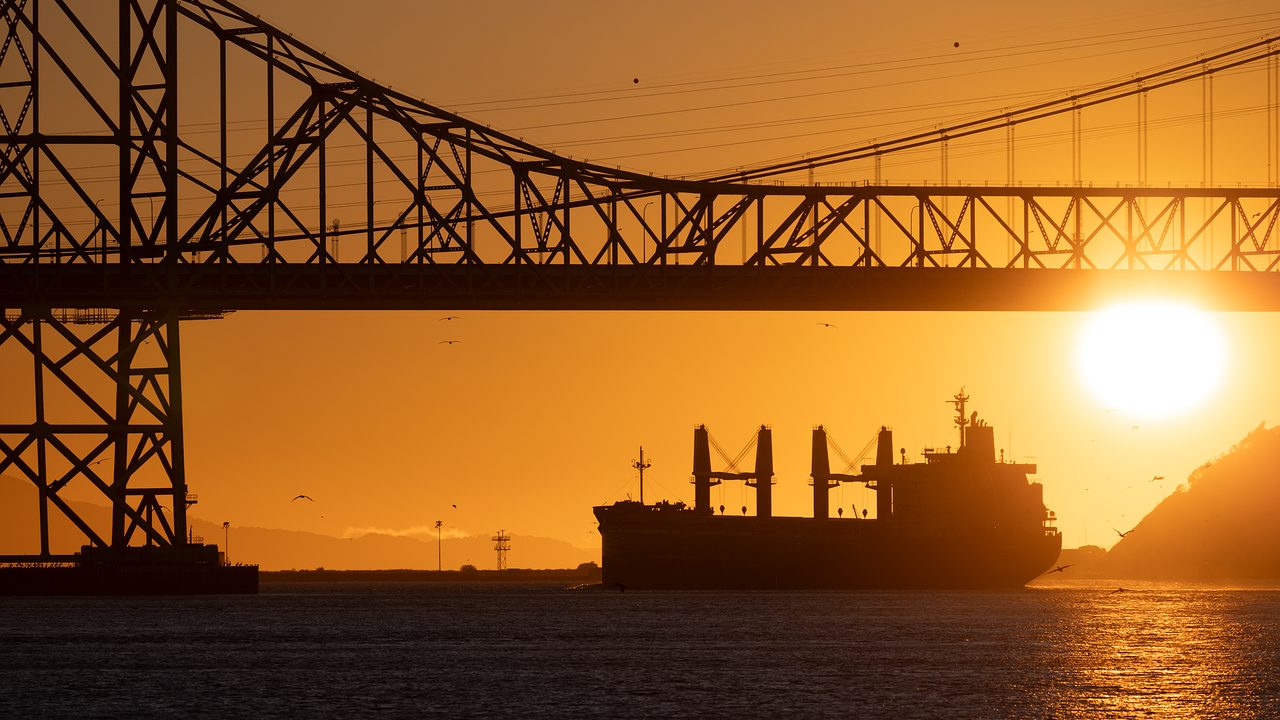
The image that best captures the summer of 2026 may be a crude-oil tanker idling in the Persian Gulf, engines running, captain awaiting clearance that may never arrive. Across nearly every major story of the moment — energy markets, battlefield diplomacy, monetary policy, and domestic politics — the operative question is the same: who holds leverage, who is bluffing, and who is about to lose it.
Iran is conditioning any Hormuz transit agreement on Washington lifting sanctions first. Turkey has summoned Ukraine's ambassador after drone strikes hit Turkish cargo vessels. Estonia's intelligence chief is warning that Russia could fracture faster than anyone in Brussels is planning for. And the 2028 presidential race — which no one officially admits has already begun — is reshaping the 2026 midterm landscape in real time.
On the economic front, Federal Reserve Chair Kevin Warsh used his first Jackson Hole keynote to suggest artificial intelligence could become a fourth factor of production, a proposition with enormous implications for interest rate policy. Meanwhile, investor Michael Burry warned that the entire AI trade rests on the shoulders of two private, financially opaque companies. And Google's quiet expansion of AI-generated search summaries is accelerating a collapse in publisher traffic that many in the media industry describe not as erosion but as obliteration.
Twenty-One Miles, Two Chokepoints: Iran's Conditional Gambit at Hormuz
The Strait of Hormuz is twenty-one miles wide at its narrowest point, and roughly twenty percent of the world's traded oil passes through it — a statistic that explains why Iran's decision to condition any transit agreement on prior U.S. concessions is reverberating simultaneously in energy markets and foreign ministries. Iran reached a transit understanding with Oman, one of the few Gulf states that maintains functional back-channel diplomacy with Tehran, but Iranian officials have made clear the arrangement will not take effect until Washington lifts sanctions and honors what Tehran describes as prior commitments.
The phrase 'prior commitments' carries enormous legal and diplomatic weight. Iranian officials almost certainly reference the 2015 Joint Comprehensive Plan of Action and potentially informal understandings reached in subsequent backchannel exchanges. The United States would argue its JCPOA obligations were superseded when Iran violated enrichment caps; Iran would counter that American unilateral withdrawal was itself the original breach. Two parties who genuinely disagree about which obligation came first are using a twenty-one-mile chokepoint as collateral.
Brent crude has been trading with a significant risk premium since the closure began, and shipping insurance rates for Gulf transit have climbed sharply. The asymmetry of pain, however, is not what a 1973 playbook would predict. American shale production insulates U.S. consumers from the worst effects; it is Asian economies — Japan, South Korea, India, and China — that collectively account for the vast majority of Gulf oil transit and bear the sharpest exposure. Tehran's leverage is less 'hurt America' and more 'hurt America's rivals and partners simultaneously,' which analysts describe as a more sophisticated pressure point than the Arab embargo offered.
A parallel financial chokepoint operates alongside the physical one. The UAE ordered an urgent investigation after reports emerged that Banque Misr, one of Egypt's largest state-owned banks, faced potential threats to its U.S. dollar clearing access — the invisible infrastructure that allows any institution to process international transactions. The UAE's urgency signals broader anxiety: dollar access can be weaponized against any bank doing business with U.S.-sanctioned entities, a category that in the current environment encompasses partners of Iran, Russia, or their affiliates. The physical and financial chokepoints are, in effect, operating in tandem.
Supreme Leader Khamenei, who has not been seen publicly since U.S.-Israeli airstrikes reportedly injured him approximately six months ago, issued a written message this week calling on Gulf rulers to confront what he termed the real enemy — a call for Muslim solidarity that simultaneously reminds Gulf states that siding openly with Washington carries domestic political costs within their own populations. That the Oman transit deal was negotiated and then publicly conditioned on unachievable terms has led some analysts to a more unsettling interpretation: the closure may not be a unified leverage play at all, but a factional argument inside Tehran, with the unachievable condition providing political cover for hardliners who want the strait to stay shut.
War Without Borders: Turkish Ships, NATO Fault Lines, and Russia's Fracture Risk
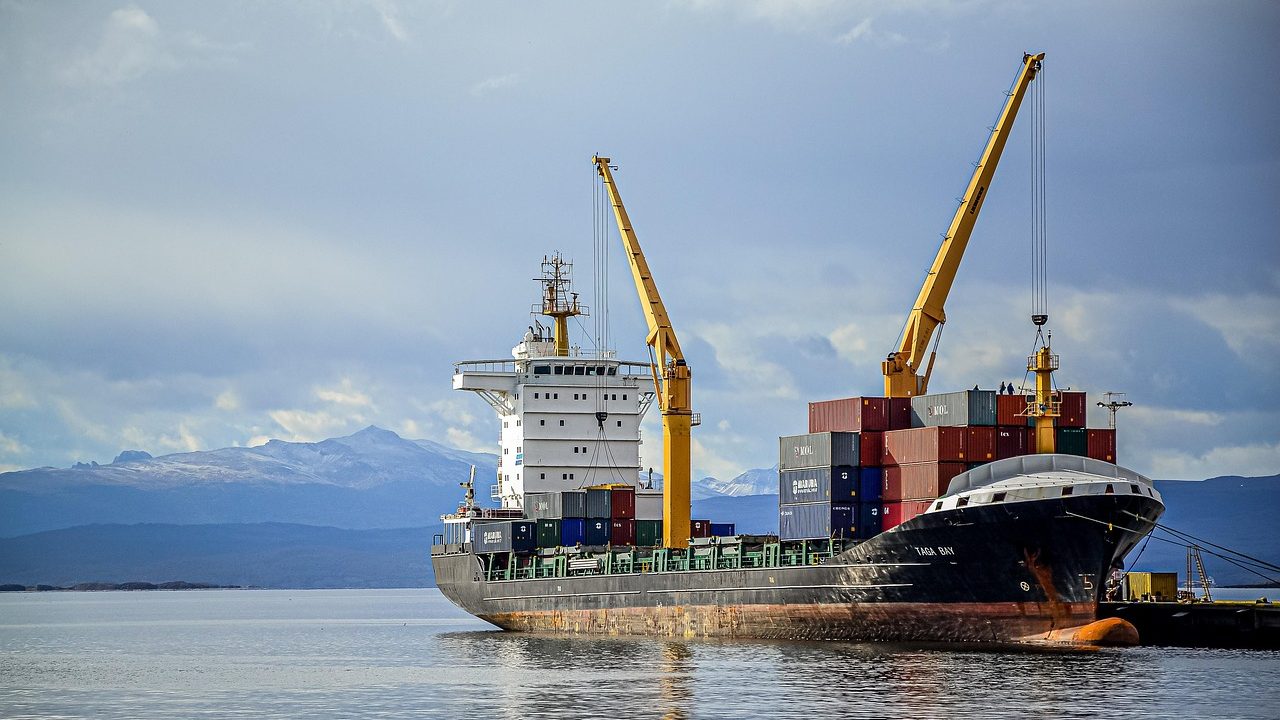
The war in Ukraine opened an uncomfortable new front this week when Turkey summoned Ukraine's ambassador after drone strikes hit Turkish cargo ships. The incident carries implications far beyond a bilateral diplomatic row: Turkey is a NATO member, Ukraine is a NATO aspirant, and a Ukrainian strike on Turkish vessels — Kyiv has not formally acknowledged the strikes — represents either a serious targeting error in an increasingly autonomous drone environment or a deliberate calculation that Turkish shipping was supporting Russian logistics. Neither explanation is comfortable for an alliance nominally united behind Kyiv.
The incident lands at a moment when Turkey's foreign relationships are under simultaneous strain. Ankara this week officially compared Israel to a Nazi propaganda machine, a characterization that goes beyond diplomatic grumbling to evoke the Shoah directly — language that European NATO members with Holocaust memory laws cannot absorb quietly. Turkey simultaneously maintains trade relations with Russia, has supplied Bayraktar drones to Ukraine, and has positioned itself as an indispensable mediator. A Ukrainian strike on Turkish ships ruptures all three postures at once, raising the unspoken question of whether Turkey's position within NATO is becoming structurally untenable or whether alliance partners will once again decide that Ankara's geographic position — controlling the Bosphorus, bordering Syria, Georgia, and Iraq — is too valuable to risk over rhetoric.
A separate and arguably more consequential warning arrived from Estonia. Kaupo Rosin, who heads one of Europe's most credible signals-intelligence agencies — credible precisely because Estonia has spent decades studying its former occupier — said Russia could collapse overnight. His framing was specific: discontent with the war is growing at every level of Russian society, from ordinary citizens to oligarchs. Western analysts have been wrong about Russian instability timelines before, but Rosin's emphasis on elite defection distinguishes this assessment from earlier collapse predictions. Popular protest the Kremlin has proven adept at suppressing; elite defection, among the people who benefit most from the existing order, is structurally harder to police.
Against this backdrop, Putin chose to characterize the war in Ukraine this week using an orca-versus-polar-bear metaphor — orcas being apex predators that hunt in coordinated packs and attack seemingly larger prey at vulnerable points. The choice projects internal confidence about the conflict's trajectory. Whether it reflects genuine confidence or is calibrated for a domestic audience that no longer fully believes the official narrative, the gap between Putin's public metaphor and what Rosin describes happening privately within Russian society is, historically, exactly the kind of gap that precedes rapid and destabilizing change.
The Nuclear Normalization Trap: What a Trump-Kim Deal Would Actually Concede

The prospect of a Trump-Kim summit later this year is generating alarm among former U.S. officials and nuclear policy analysts — not alarm that talks are happening, but alarm about what any realistic agreement would have to concede. North Korea currently has an estimated 40 to 50 nuclear warheads and is believed to be producing fissile material for approximately six to eight more per year. A deal that freezes production at current levels — the most Washington could plausibly obtain — would not reduce the arsenal or roll back existing weapons. It would accept a nuclear North Korea and attempt to cap the program in place, which former officials are being unusually direct in describing as implicit acknowledgment of Pyongyang as a permanent nuclear-armed state.
The previous Trump-Kim summits in Singapore in 2018 and Hanoi in 2019 traced an arc from handshake to collapse. Hanoi fell apart precisely because Kim wanted broad sanctions relief in exchange for partial dismantlement of the Yongbyon facility while leaving the rest of his nuclear infrastructure intact. Trump walked away. If the administration is now reportedly willing to revisit a version of that framework, it signals a shift in Washington's diplomatic calculus from 'complete denuclearization as a prerequisite' to 'freeze and coexist.'
The geopolitical implications radiate in three directions. South Korea and Japan, both operating under American security guarantees, would face immediate pressure to reassess those guarantees if the United States implicitly normalized North Korean nuclear status — the credibility of extended deterrence becomes an open question the moment Washington signs a document acknowledging Pyongyang's arsenal. China's calculus shifts as well: a nuclear-acknowledged North Korea reduces Beijing's leverage over Pyongyang while validating the proposition that nuclear weapons are the ultimate sovereignty guarantee. And the signal sent to every other would-be proliferator — that developing sufficient weapons and holding on long enough eventually compels American accommodation — may prove the most consequential consequence over a twenty-year horizon.
Analysts note that Iran is watching. Tehran's entire strategy in the Hormuz standoff depends on the United States eventually deciding the cost of confrontation exceeds the cost of accommodation. If Pyongyang has now demonstrated that the strategy works at the nuclear level, Iranian hardliners have a clean data point.
AI as a Factor of Production: Jackson Hole, Claude's Fine Print, and Burry's Warning

Federal Reserve Chair Kevin Warsh delivered his first Jackson Hole keynote this weekend, and the sentence generating the most sustained analysis was his suggestion that artificial intelligence could join labor, capital, and land as a factor of production in the models the Fed uses to gauge economic capacity. The implication is significant: if AI genuinely expands productive capacity in the way Warsh indicated, the economy could grow faster and longer without generating inflation than current models predict — a conclusion with direct and substantial implications for interest rate policy.
Warsh appeared to signal that the Fed is at least open to adjusting its models rather than waiting for lagging indicators to confirm productivity gains already visible in firm-level data — addressing what economists call the productivity paradox, the historical tendency for technology gains to take years to surface in aggregate statistics. For markets and tech investors, it validated arguments that AI productivity gains are real and large enough to change the macroeconomic math.
The timing coincided with a product announcement from Anthropic that illustrated the gap between AI's theorized future and its present operational reality. Anthropic announced that Claude Code users are receiving a permanent twenty-five percent increase in their weekly usage limits. What the fine print reveals is that the announcement coincides with the expiration of a summer promotion, meaning users operating on higher summer limits will see their available capacity drop seventeen percent on September fourteenth. It is mathematically accurate to describe the new baseline as a twenty-five percent increase over the pre-summer limit while simultaneously reducing what users had grown accustomed to. The reaction from the developer community was, predictably, pointed — and it illustrated the tension at the heart of the AI business model: compute costs are high enough that the companies building these systems are constantly managing supply against demand in ways that create friction with the very developer ecosystems they need.
Investor Michael Burry — who called the 2007 mortgage collapse when virtually every institutional investor was positioned on the other side of the trade — issued a warning this week that the AI investment thesis is dangerously concentrated. His argument: the entire trade depends on two private companies, OpenAI and Anthropic, delivering on their implied promises. Neither is publicly traded; neither has transparent financials. Billions of dollars in AI infrastructure investment — semiconductors, data centers, power generation — is predicated on a revenue model these two companies have not yet proven at scale. The counterargument holds that even if either lab stumbled, infrastructure capacity would be absorbed by Google, Meta, Amazon, or Chinese competitors, and that demand for AI capability is not dependent on any two specific labs. Burry's more targeted concern, however, is about the models themselves — the intellectual property, the training runs, the alignment research — and the switching costs and transition chaos a disruption to either lab would create for the enterprise software market that has built integrations around their products.
Google added its own layer to the ecosystem story by auto-expanding AI Overview summaries in search results, meaning users increasingly see AI-generated answers at the top of search pages with links to original sources buried further down or omitted entirely. The Search Engine Journal reported traffic drops of double-digit percentages from sites that had previously held stable search rankings. The legal framework governing this behavior — the Sherman Antitrust Act of 1890 — prohibits not simply having a dominant market share but using monopoly power to harm competition through exclusionary conduct. Regulators are arguing that Google is using its search monopoly to advantage its AI products over competitors; the legal question is not whether Google is large but whether it used search dominance to unfairly entrench its AI products in an adjacent market. That legal process is moving slowly while the market reality is moving fast.
The Midterm Chessboard: Ossoff's Gamble, Fetterman's Broadside, and Ramaswamy's Ceiling

With just over two months until election day, the 2026 midterm landscape is defying several assumptions political operatives built their strategies around at the start of the year. Jon Ossoff is running an explicitly anti-Trump message in Georgia — a state Trump carried — and polling ahead. His theory of the race inverts conventional wisdom for vulnerable Senate incumbents in red-leaning states, which typically counsels distance from the national party, emphasis on constituent services, and avoidance of culture war flashpoints. Ossoff appears to be betting that Georgia's electorate is more movable against Trump than presidential numbers suggest, and that cautious centrist posture reads as weakness to the voters he needs. What is strategically notable is that he appears to be holding two positions simultaneously: combative on Trump nationally, aggressively bipartisan on constituent services locally — a balance that is harder to maintain but also harder for Republicans to attack cleanly.
The contrast with Michigan is sharp. John Fetterman — Pennsylvania's senior senator and one of the more unpredictable figures in the Democratic caucus — this week called Abdul El-Sayed, the party's Michigan Senate nominee, garbage. In public. Using that word specifically. Fetterman's critique is rooted in El-Sayed's positions on Gaza, where El-Sayed has been sharply critical of Israeli military operations. 'Garbage,' however, is not a policy disagreement — it is a personal attack on the party's own nominee in a competitive race the party needs to win for Senate control. The Michigan race matters because the Arab-American and Muslim communities around Dearborn represent a genuine electoral bloc with significant grievances about the party's Gaza positioning, and prominent intraparty attacks amplify the division at exactly the wrong moment.
Vivek Ramaswamy's Ohio governor's race offers a different cautionary data point. He has outspent his opponent seven to one in the Republican primary and remains in a dead heat — a spending ratio that conventional campaign finance models suggest should produce a double-digit lead when name recognition is otherwise comparable. The failure of that advantage to materialize suggests either that Ohio Republican primary voters hold specific reservations about Ramaswamy, or that there is a ceiling on what paid media can accomplish when a candidate carries biographical and ideological traits that activate skepticism in the base. Gubernatorial primaries tend to reward a different candidate profile than presidential primaries, and Ramaswamy's political identity — built largely on online commentary and cable news hits — may be poorly matched to the instincts of Ohio's Republican electorate.
Democrats are meanwhile demanding resignations over the Hope Florida scandal, a controversy centered on allegations that hurricane relief funds were diverted through nonprofit structures with political connections to the DeSantis administration. The specifics are still developing, but relief fund scandals historically have a way of expanding once prosecutors begin pulling the thread. DeSantis is simultaneously navigating a separate controversy of his own making: he this week ordered Flock Safety's automated license plate reader cameras removed from Florida state roads, citing privacy concerns. Civil liberties advocates have long raised alarms about Flock's system, which logs vehicle movements across thousands of municipalities and has created, in aggregate, a real-time database that was never the subject of comprehensive democratic deliberation. Whatever the political motivation, the order is substantively a civil liberties action — and it may prompt similar reviews in other states.
Hegseth's Denial and the 2028 Race Nobody Admits Is Underway

Defense Secretary Pete Hegseth this weekend called an NBC News report claiming he is laying groundwork for a 2028 presidential run 'one hundred percent false.' The denial is categorical. The fact that NBC ran the story at all — citing sources describing conversations Hegseth has had about his political future — suggests there is smoke somewhere, even if the fire is not visible from the outside.
The political logic for exploring a 2028 run is not difficult to construct. Hegseth enters any potential field with higher name recognition than almost any Republican outside the Trump family, a media platform, and a military credential that plays well with the MAGA base. His tenure at Defense has built a distinct political identity through some of the most charged changes in Pentagon history: removing diversity programs, restructuring the chain of command to maximize civilian control, and overseeing the military's expanded role in immigration enforcement. Whatever one's view of those decisions, they have differentiated him sharply from any other potential candidate.
The liability is equally well-defined. Questions about personal conduct and fitness for office that dogged his confirmation never fully went away, and they represent opposition research in a box waiting to be reopened in any competitive primary. The categorical denial is the tactically correct move — a sitting Cabinet secretary visibly running for president invites the kind of scrutiny that makes the day job harder. But it does not settle the underlying question of whether Hegseth is positioning himself for a post-Cabinet political future.
The broader 2028 Republican field is genuinely open and genuinely crowded. Vice President J.D. Vance holds the most structurally advantaged position of anyone in the potential field. The Democrats' own 2028 positioning remains complicated by the intraparty tensions on display in Michigan — El-Sayed's nomination signals that the progressive wing has real organizing strength in some states even as the party's establishment remains skeptical, and the question of whether that tension resolves before 2028 or carries over into another national campaign is one the party has not yet answered.
Trading With Allies: The Dubious Legal Ground Under Trump's Canada Tariffs

The legal scrutiny building around Trump's tariffs on Canada touches constitutional questions that have not been seriously litigated in nearly a century. The administration is relying on the Trading with the Enemy Act — a statute from 1917, substantially revised in 1977 — as authority for tariffs on Canadian goods, arguing that the president holds broad emergency powers to impose trade restrictions when national security is implicated. Trade law scholars are increasingly direct in their criticism: using a wartime statute designed for genuine enemy nations to impose tariffs on Canada — a NATO ally, a NORAD partner, and the United States' largest trading partner — stretches the statute well beyond any reasonable reading of its intent.
Canada-U.S. trade exceeds 900 billion dollars annually. The tariffs are creating real friction in automotive supply chains, which are deeply integrated across the border, as well as in energy, agriculture, and lumber. Ottawa has responded with retaliatory tariffs on American goods — dairy, aluminum, and consumer products — calibrated to inflict economic pain in politically sensitive American states rather than simply matching U.S. tariff levels dollar for dollar. Canadian provinces most exposed have also begun lobbying American state governments directly, pursuing subnational diplomacy that is unusual but not without historical precedent.
The courts present an unusual doctrinal problem. Judges have historically been reluctant to second-guess executive branch national security determinations, and the constitutional structure gives the president enormous latitude in foreign affairs and trade. But the Canadian tariffs present facts that may give courts a hook to look harder: the target is a country with which the United States has a comprehensive free trade agreement — CUSMA, the successor to NAFTA, negotiated by the Trump administration itself in its first term. Using wartime emergency authority against a country you simultaneously have a trade treaty with creates a tension that some legal scholars believe could prove decisive in the federal challenges working their way through the courts.
S&P futures on the morning of this broadcast were down approximately twenty points at around 7,722 — a decline of roughly 0.26 percent from Friday's close at 7,739. Markets appear to be pricing tariff friction with Canada not as an acute crisis but as a persistent structural feature of the economic environment, which analysts describe as the more worrying interpretation: it suggests investors have concluded the disruption is here to stay.
Surveillance, Self-Immolation, and the Courage to Question the Consensus
A deeply disturbing incident at a Lower Manhattan building housing Google offices and an NYPD facility on Friday deserves more attention than it received amid the week's larger stories. John Butch, 63, allegedly used lighter fluid to set himself on fire in the lobby. He survived and has been charged with arson. No details about his motivations have yet emerged, but the act of self-immolation has historically carried specific political or protest meaning — from Mohamed Bouazizi in Tunisia in 2010, whose act triggered the Arab Spring, to multiple instances of protest self-immolation in democratic countries in recent years. The fact that the building houses both a major technology company and a law enforcement facility adds symbolic ambiguity that investigators are presumably working to understand. The mental health dimension is real and demands sensitivity; Butch's specific motivations may be entirely personal. What can be acknowledged is a detectable pattern of heightened frustration directed at large technology companies in recent years, ranging from Congressional testimony confrontations to physical incidents at offices.
The DeSantis order removing Flock Safety license plate reader cameras from Florida state roads connects to a broader surveillance conversation becoming genuinely important in American political life. Flock's network has grown to cover thousands of municipalities, creating in aggregate a real-time database of vehicle movements across large portions of the country. Individual camera deployments are typically approved at the local level with minimal public debate; the cumulative result is a surveillance infrastructure that did not exist a decade ago and that was never the subject of comprehensive democratic deliberation. Whatever the political motivation behind DeSantis's order, it is substantively a civil liberties action that may prompt similar reviews in other states.
The week's most consensus-laden claim — that Iran's Hormuz closure represents a winning leverage play for Tehran — deserves stress-testing before it hardens into conventional wisdom. The standard analysis holds that the pain of closure falls disproportionately on U.S. partners and rivals in Asia, giving Iran asymmetric pressure without exposing Washington's domestic consumers. The key assumption underlying this framing is that Iran's leadership is making the closure decision with a unified internal calculus — that hardliners, moderates, and the supreme leader's circle are all reading the same leverage play.
That assumption may be wrong. The Oman transit deal — negotiated quietly and then publicly conditioned on demands Washington is almost certainly not going to meet wholesale — follows an unusual sequence: negotiate first, attach unachievable conditions second. If there is significant internal division within Tehran, and if the maximalist conditions are deliberately unachievable because some factions want the strait to stay closed and need political cover for that preference, then what looks from the outside like a sophisticated three-party leverage operation may actually be an internal Iranian factional fight playing out through a geopolitical instrument. The signals to watch: divergence between statements from Iran's foreign ministry, which tends toward pragmatism, and statements from the Revolutionary Guard, which tends toward maximalism. If those two voices begin saying different things about the conditions for reopening Hormuz, the apparent unity is fracturing — and a deal may come faster, and on different terms, than the current standoff implies.
What to Watch Next: The Signals That Will Define September

As August closes, several threads carry the most consequential near-term implications. The Hormuz situation holds the fastest-moving market stakes — any movement on the Oman transit framework is most likely to surface midweek, when diplomatic channels are historically most active and a coming weekend can provide political cover for both sides to consolidate a position. The Trump-Kim summit speculation will intensify as the fall calendar fills in; the signal to watch is whether the State Department quietly restores diplomatic channel staffing that was drawn down after previous failed talks.
On the domestic political side, Jon Ossoff's Georgia strategy is the experiment worth tracking most closely. If an anti-Trump Democrat can win a Trump-carried state by running directly at the president rather than away from him, it rewrites the Democratic playbook for 2028. Ramaswamy's spending problem in Ohio offers the inverse lesson: money does not substitute for candidate fit, and Republicans who drew the wrong lessons from Trump's success will keep running into that ceiling. The Hope Florida investigation is worth following because relief fund scandals historically expand once prosecutors start pulling the thread.
Kevin Warsh's Jackson Hole framing — AI as a factor of production — will generate the most sustained economic debate in the months ahead. If the Federal Reserve's committee begins incorporating AI productivity assumptions into its models, the practical result is a dovish shift in rate-cut calculus dressed in academic language. Michael Burry's warning about concentration risk in the AI trade is worth keeping as a standing caveat: not as a prediction of imminent disaster, but as a reminder that the assumptions underlying the current infrastructure buildout are less stress-tested than most participants believe.
One correction deserves explicit acknowledgment. A prior episode of this podcast described Ukraine hitting Russian ships in the Caspian Sea as evidence of Kyiv's expanding long-range strike capabilities. That claim was wrong: the Caspian Sea is a landlocked body of water thousands of kilometers from Ukrainian-controlled territory, and no such strikes occurred. Stating something unverifiable without catching it is an error that only explicit acknowledgment can begin to repair. Epistemic accountability is not comfortable, but it is the only foundation on which trust is built.