From the Strait of Hormuz to Silicon Valley: A World of Contested Control
Iran formalized a maritime threat over one of the world's most critical oil chokepoints, China massed more than 200 vessels near Philippine waters, and Ukraine struck deep into Russia's commercial interior — all on a Monday morning that also produced a candid admission from the CEO of OpenAI that the AI revolution is arriving more slowly than he predicted.

“They are not abandoning dollar exposure or dismissing American corporate earnings potential. They are specifically exiting sovereign debt instruments, particularly short-term ones most sensitive to interest rate policy.”
How this was made Verified AI
Every Intellegix briefing is generated from that day's broadcast and run through automated checks before it publishes — with a human paged on any flag. Here is the trail for this edition.
A Morning of Maximum Simultaneity

Iran threatened to seize ships in the Strait of Hormuz as sweeping new U.S. sanctions landed. Ukraine burned Ozon warehouses for the third consecutive night. Two hundred Chinese vessels massed near a Philippine reef while Beijing announced live-fire drills. And Sam Altman stepped forward to say he had been wrong about how fast artificial intelligence would reshape the economy. By any measure, it was a morning that compressed months of geopolitical and technological tension into a single news cycle.
The stories share a common thread: contested control. Governments, militaries, and corporations are simultaneously asserting — or losing — authority over shipping lanes, digital markets, sovereign territory, and the economic architecture that underpins daily life. Each story, taken alone, would dominate a week of coverage. Together, they define the shape of a world in which multiple crises no longer queue politely.
Iran's Paper Navy: How Tehran Weaponized Maritime Bureaucracy
Iran's newly formalized Persian Gulf Strait Authority posted a warning on X early Monday morning that was blunt in its terms: vessels transiting the Strait of Hormuz that fail to comply with Tehran's announced rules face fines, detention, or outright confiscation. The announcement is not merely rhetorical. It represents a formalized legal framework designed to assert what amounts to an administrative sovereignty claim over international waters through which roughly twenty percent of globally traded oil and approximately a third of all liquefied natural gas passes.
The timing relative to Washington's sweeping new sanctions package — covering Iranian financial institutions, energy sector transactions, and potentially third-country entities that do business with Tehran — is almost certainly deliberate. By routing the threat through a bureaucratic body rather than through the Revolutionary Guard Corps or a government ministry, Iran attempts to dress up coercion in the language of maritime administration, echoing the same logic that China applies when it deploys coast guard vessels rather than PLA naval units to disputed waters.
The history behind the warning lends it credibility. In 2019 and 2020, Iran seized vessels including the Stena Impero, demonstrating willingness to follow through on similar threats. Lloyd's of London war-risk premiums for Hormuz-adjacent routes were already elevated before Monday's announcement. Insurers watching those routes should expect further increases before markets fully open.
The political trap for Washington is a familiar one: tighter sanctions on an oil-producing adversary can inadvertently push global crude prices higher, creating domestic inflation pressure at home while simultaneously delivering something Iran wants. Gulf Cooperation Council states — Saudi Arabia, the UAE, Kuwait — all have significant shipping interests transiting Hormuz, and any actual vessel detention would pressure them to respond in ways that are difficult to predict. S&P futures were down roughly eighteen and three-quarter points Monday morning, a decline attributed in part to the Hormuz news.
China's 200-Vessel Gambit Tests the Limits of a U.S. Alliance
More than 200 Chinese vessels — a mix of People's Liberation Army Navy ships, coast guard cutters, and maritime militia boats — have massed near Scarborough Shoal and reefs in the Spratly chain close to Philippine-administered waters, with Beijing simultaneously announcing live-fire naval drills. The deployment is calibrated precisely below the threshold that would trigger automatic mutual defense obligations under the U.S.-Philippines treaty, but only just barely.
The specific area around Whitsun Reef — which Filipino authorities call Julian Felipe Reef — was the site of a similar massing of roughly 300 Chinese vessels in early 2021. The current deployment is somewhat smaller, but carries a new element the 2021 incident lacked: explicitly announced live-fire exercises. In 2021, Beijing could claim the vessels were fishing boats sheltering from weather. That cover story is unavailable when artillery practice is simultaneously publicized.
Philippine President Ferdinand Marcos Jr. has been more assertive against Chinese encroachment than his predecessor Rodrigo Duterte, filing formal diplomatic protests and allowing the U.S. military expanded access under the Enhanced Defense Cooperation Agreement. The question now is whether Manila makes a formal request for consultations under Article Four of the mutual defense treaty — the step just before invoking the collective defense obligation of Article Five — a move that would force Washington to either publicly commit to defending Philippine forces or reveal limits in the alliance that Beijing has been probing.
The commercial stakes are enormous. Estimates put the value of trade transiting the South China Sea at roughly three trillion dollars annually. Even a moderate maritime incident could send supply-chain disruptions through every sector dependent on Asia-Pacific manufacturing. China, analysts note, may currently judge that the cost-benefit calculation of asserting facts on the water favors further pressure: every week an assertion goes unchallenged, reversing it becomes harder.
Ukraine Strikes Russia's Consumer Economy While Europe Writes a $7 Billion Check

Ukraine's drone campaign against Ozon warehouses — Russia's largest e-commerce platform, sometimes compared to Amazon — entered its third consecutive night of strikes, representing a deliberate shift in targeting logic. This is not a campaign against military hardware. It is a sustained effort to disrupt civilian supply chains deep in the Russian economic rear, raising costs and creating visible consumer shortages of the kind that authoritarian governments most fear.
The strategy carries a secondary military benefit: every air defense asset Russia repositions to protect Moscow-area distribution centers is one fewer battery available for front-line use. Forcing the adversary to spread its integrated air defense architecture across a wider set of civilian targets is a form of attrition warfare applied at the system level.
The European Union's approval of 7.1 billion dollars in additional defense aid for Ukraine through the European Peace Facility — roughly equivalent to Portugal's entire annual defense budget — arrived alongside the strikes in what appears to be a coordinated strategic signal. Ukraine demonstrates military reach at the precise moment its backers formalize the next tranche of long-term support, communicating to Moscow that the conflict cannot simply be waited out.
Key variables to watch include whether the EU authorization translates into timely delivery of the capabilities Ukrainian commanders have most urgently requested: longer-range precision munitions, air defense interceptors, and armored vehicles depleted by two-plus years of intense combined-arms fighting. The gap between authorized funds and delivered hardware has historically frustrated Kyiv's military planning. Politically, the package cleared despite coalition pressures in Germany, fiscal strain in France, and Hungary's chronic role as a veto threat — a meaningful signal of where European consensus stands.
Polls, Bunkers, a Sailor's Father, and the Social Security Question

A new poll showing President Trump's approval rating underwater in 47 of 50 states arrives with the familiar caveat that polling has carried structural problems for several cycles. The more politically meaningful data, analysts argue, lies in the competitive states — Michigan, Pennsylvania, Wisconsin, Georgia, Arizona, and Nevada — where widening disapproval margins would carry real consequences for midterm elections that Bishop William Barber is already mobilizing to influence. Barber launched a national voter mobilization tour at Big Bethel AME Church in Atlanta, targeting infrequent Black voters ahead of November. The AME Church network's geographic reach gives him institutional infrastructure that most political operations would pay hundreds of millions to replicate; Atlanta's competitive Senate race and multiple House seats make it the logical starting point.
A separate and politically pointed controversy surrounds a reported 400-million-dollar bunker project. Former officials told the Washington Post that a classified Obama-era continuity-of-government facility already provides the presidential nuclear protection cited as the project's rationale. If that account is accurate, the public justification for spending 400 million dollars on a project at a property the president personally benefits from does not hold up — a framing that tends to travel across partisan lines in ways that conventional attacks do not.
The case of a USS Lincoln sailor whose father was arrested by ICE during the sailor's nine-month deployment captures, in a single family's story, the collision between two things the Republican coalition simultaneously valorizes: military service and strict immigration enforcement. The Trump administration's position — that immigration law applies regardless of family relationship to service members — is legally defensible. Whether it is politically sustainable heading into a midterm environment is a different question, one that puts military readiness advocates and immigration hardliners within the same coalition into direct tension.
On policy, Trump is reportedly studying Australia's superannuation model as a potential framework for Social Security reform. Australia's mandatory defined-contribution system requires employers to contribute — currently eleven percent of wages — into individual retirement accounts, producing high savings rates and reduced fiscal dependence on the state pension. Every serious economist who has modeled a U.S. equivalent acknowledges the same central obstacle: funding current Social Security benefits while simultaneously redirecting worker contributions into new private accounts would create a multi-trillion-dollar financing gap. Social Security's trust fund is on track for depletion in the early 2030s, which means the political window for any reform is closing regardless of which model is chosen.
AI's Reality Check: Altman Admits Error as Spending Data Tells Its Own Story

Sam Altman publicly acknowledged that he was wrong about the pace of AI adoption following GPT-4's 2023 launch, saying he expected far more economic disruption by now. His admission landed at the same moment that spending data from Ramp — which processes corporate card transactions, making it behavioral rather than survey-based — showed Anthropic's flagship model, labeled in the data as Fable 5, capturing only eleven percent of enterprise AI spending more than two months after launch.
The eleven percent figure requires context. Enterprise AI spending as a whole has grown dramatically, making eleven percent of a large pool still meaningful revenue. The issue is what the number implies about Anthropic's market position ahead of what appears to be an anticipated IPO: enterprises are choosing cheaper alternatives at roughly nine-to-one over Fable 5. The capability gap between frontier models and lower-cost alternatives has narrowed faster than the pricing gap has, undermining the core value proposition that frontier capability commands frontier pricing.
The competitive dynamics in the AI model market illustrate, in real time, how difficult monopoly power is to sustain in software markets with low switching costs and multiple well-funded competitors. Anthropic cannot simply raise Fable 5 prices because enterprises would shift to OpenAI, Google's Gemini Pro, or open-source alternatives like Llama. That competitive discipline is precisely what antitrust law is designed to preserve. Whatever regulatory concern exists about AI concentration has focused more on infrastructure — compute access, data, distribution — than on the model layer itself, which the Ramp data suggests is genuinely and effectively competitive.
On the political front, an Axios survey of likely 2028 Democratic presidential candidates — including figures such as Gavin Newsom, Gretchen Whitmer, and Josh Shapiro — found essentially none willing to either endorse or criticize Bernie Sanders' call to pause AI development. The calculation is evident: AI is a major employer and a significant source of campaign contributions in coalition-building states. The result is a policy debate of genuine consequence met, across an entire prospective presidential field, with studied silence.
Apple's Accidental Camera Reveal and Harvard's $699 AI Professors

Apple appears to have leaked its own upcoming AirPods camera product through a code merge error — a self-inflicted disclosure in which a video demonstrating what appears to be a camera integrated into AirPods was inadvertently pushed to a public-facing repository before anyone caught it. The leak is particularly notable because Apple's product secrecy is among the most rigorously maintained in consumer electronics; an internally generated software leak is categorically more embarrassing than the supply-chain or regulatory-filing leaks that more commonly surface Apple's unreleased hardware.
The product itself raises questions that go beyond the technical. AirPods are worn for hours daily by millions of people, and a camera sensor embedded in that form factor would be essentially invisible to anyone nearby — a fundamentally different privacy dynamic than Google Glass, whose conspicuous appearance made it socially radioactive. Apple has staked significant marketing capital on its privacy positioning, which means any AirPods camera will need to be accompanied by genuinely robust privacy architecture rather than privacy-adjacent marketing language.
Harvard's launch of a 699-dollar bootcamp taught by AI systems trained to replicate specific professors' teaching styles and knowledge operates in a different register but signals something significant about where credentialed education is heading. The economic logic is straightforward: a human professor can instruct perhaps 200 students per semester; an effective AI clone of that professor, once developed, can teach 200,000 at marginal cost approaching zero. The revenue potential is considerable.
The harder questions are institutional. If a Harvard professor's AI equivalent can deliver course content for 699 dollars, what precisely is full tuition purchasing — credentialing, social network, intellectual community? Those things have real value, but this product makes their value more explicit and more contestable than it has ever been. If Harvard can commercialize its faculty this way, so can any institution with recognizable scholars, raising the prospect of either a democratization of elite-level instruction or a new commodified educational tier sitting beneath the fully credentialed experience — or, plausibly, both simultaneously.
Treasury Tensions: Foreign Investors Flee T-Bills While Eyeing Equities

S&P futures opened Monday down roughly eighteen and three-quarter points, with market softness attributed partly to the Hormuz news and partly to South China Sea tensions. Beneath the headline futures number, a more structural financial story is unfolding in Treasury markets that analysts say deserves wider attention.
A prominent economist — not named in the available reporting — has characterized the Treasury Department's recent bond buyback program as financial repression: the use of regulatory or administrative mechanisms to keep interest rates below the inflation rate, effectively transferring wealth from savers to the sovereign borrower. The post-World War II period, when the Federal Reserve maintained interest rate caps that allowed the U.S. government to inflate away a portion of its wartime debt, is the canonical historical precedent. Whether the current buyback program rises to that definition depends on assumptions about intent and on the empirical effect on real yields.
The Treasury International Capital data adds a concrete dimension to the debate. Foreign investors sold 29 billion dollars in short-term Treasury bills in June alone while simultaneously purchasing 181 billion dollars in U.S. equities — a rotation that is nuanced in its implications. They are not abandoning dollar exposure or dismissing American corporate earnings potential. They are specifically exiting sovereign debt instruments, particularly short-term ones most sensitive to interest rate policy. That is a vote of no-confidence in U.S. fiscal management rather than in the American economy broadly.
Into that gap, some voices in Washington are reportedly examining stablecoins as a mechanism for maintaining dollar dominance. The argument holds that dollar-pegged stablecoins in wide global circulation would create synthetic demand for U.S. dollar assets, since every stablecoin requires backing in dollar-denominated instruments. The theory is coherent, but rests on at least three contestable assumptions: that stablecoin regulation resolves in a way that mandates high-quality backing, that adoption reaches fiscal scale, and that foreign governments do not treat dollar stablecoin proliferation as a financial sovereignty threat warranting countermeasures. Meanwhile, Toyota's decision to drop gas-only RAV4 models as plug-in sales surge illustrates how energy market anxieties — sharpened each time oil prices spike on news from the Strait of Hormuz — continue to accelerate the shift away from internal combustion at the mass-market level.
America's Data Center Hunger — and One Overdue Sequel
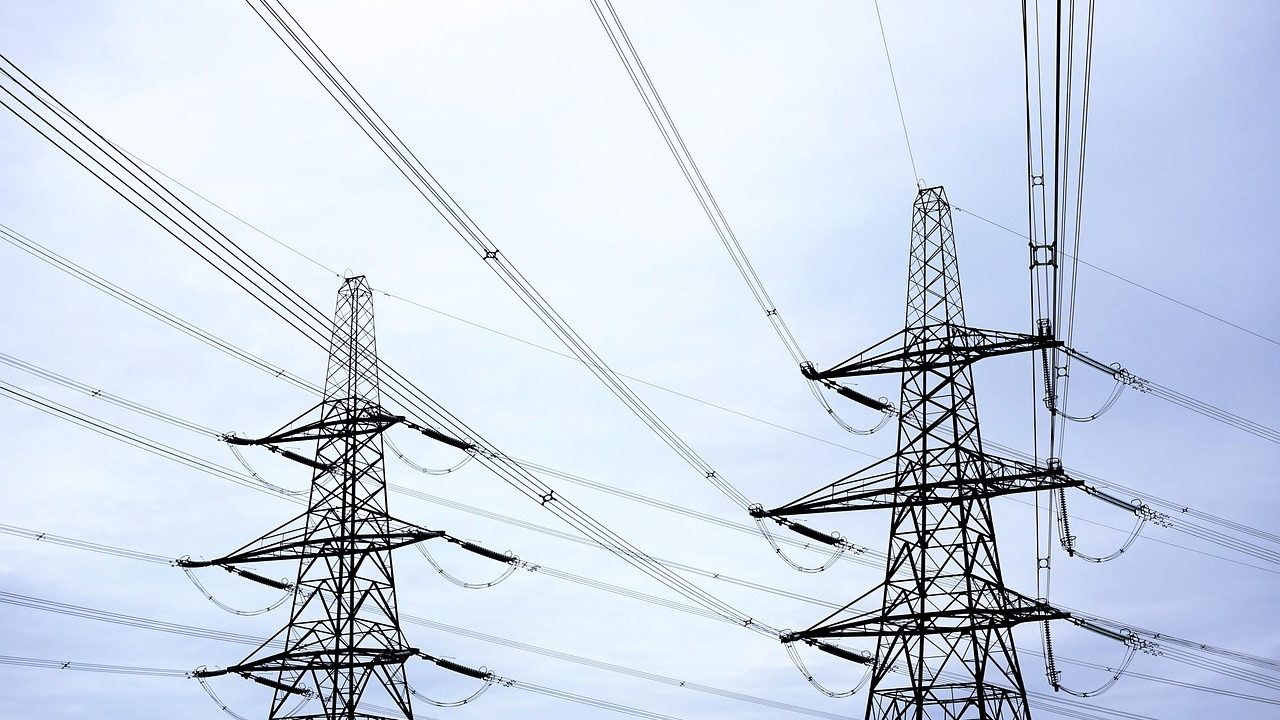
The United States now consumes nearly forty percent of global data center electricity, a figure that becomes concrete when set against the International Energy Agency's projection that worldwide data center power consumption could double by 2030. The primary growth driver is AI inference workloads: every large-language-model query, every AI-generated image, every document analysis consumes meaningful electricity, and the volume of those workloads is rising sharply.
The grid consequences are already visible geographically. Northern Virginia hosts what is estimated to be the world's largest concentration of data centers, and some counties there have effectively halted new data center approvals because local grid capacity cannot support additional load without transmission upgrades that take years to complete. Major operators — Microsoft, Google, Amazon, and others — have committed to hundreds of gigawatts of new renewable capacity through power purchase agreements, but renewable intermittency means the gap between clean-energy commitments and reliable baseload power is, in many cases, being filled with natural gas, creating tension with the sustainability pledges those same companies have made publicly.
On a lighter note, author Harlan Coben has broken his publicly stated rule against sequels to agree to a continuation of Netflix's Myron Bolitar series. Coben's adaptations have been among Netflix's most reliable international performers, and the reversal suggests the platform's internal data showed audience demand strong enough to make a creative case that overrode a longstanding authorial commitment — a small signal about how streaming platforms are weighing franchise continuity against anthology structure.
Stepping back from the day's events, the most honest assessment of the AI productivity question — whether the technology is genuinely transforming the economy or arriving more slowly than predicted — is that current measurement tools are too blunt to give a definitive answer. Economic history, including the decades-long lag before electrification showed up in productivity statistics, suggests transformative technologies can be invisible to standard metrics until they suddenly are not. The signal to watch: sector-specific productivity data from the Bureau of Labor Statistics for professional services — law, consulting, finance, software development — over the next four to six quarters. A divergence from historical trend in those sectors would be strong evidence that real gains are running ahead of the measurement. And if Anthropic's IPO, should it occur, prices above a hundred billion dollars despite today's eleven percent market share figure, that too would tell a story — that sophisticated institutional investors are pricing long-term trajectory, not current reality.