Drones, Tariffs, and a Quantum Leap: The Forces Reshaping the World on August 22, 2026
From a deadly double-tap drone strike on a Ukrainian shopping complex to a 50 percent tariff wall thrown up against America's largest trading partner, Saturday, August 22nd, 2026 brought a collision of global conflict, domestic political turbulence, and quiet technological milestones that together signal an era of accelerating instability.

“users who have had bad experiences stop assigning the system complex tasks, which means the usage data needed to improve the model never gets generated”
How this was made Verified AI
Every Intellegix briefing is generated from that day's broadcast and run through automated checks before it publishes — with a human paged on any flag. Here is the trail for this edition.
Rescuers Dig Through Rubble in Zelenskyy's Hometown After Deliberate Double-Tap Strike
Sixteen people are dead and nine remain missing in Kryvyi Rih — the industrial Ukrainian city of roughly 600,000 that is President Volodymyr Zelenskyy's birthplace — after Russian drones struck the Fabrika shopping complex, described as Ukraine's largest, in what international humanitarian law treats with particular severity: a double-tap attack. A first drone wave hit the complex on Friday; a second struck while first responders were already on scene, an operation that suggests real-time reconnaissance and a deliberate intent to kill rescuers.
The death toll is almost certainly not final. In comparable strikes on Ukrainian civilian infrastructure — the Mariupol sieges, the Kharkiv market attacks — initial counts have risen significantly once debris was cleared. Rescue teams worked through the night pulling rubble by hand in hopes of finding survivors among the nine still unaccounted for.
Military analysts noted the deliberateness of the target selection: a civilian commercial complex on a Friday, a peak shopping day, in the president's hometown. Ukraine's air defense systems have been stretched thinner as the war enters its fourth year, and Russia has refined drone saturation tactics precisely to exploit those gaps. The double-tap timing points to someone monitoring when first responders arrived.
While drones struck Kryvyi Rih, Ukrainian long-range drones were hitting Samara, a Russian city roughly 1,000 kilometers from the front line. The target was an Ozon warehouse — the e-commerce platform described as Russia's equivalent of Amazon — in what appears to be the first strike on an Ozon facility and a signal of deliberate expansion toward Russian commercial and logistics infrastructure. The logic mirrors Russia's own campaign against Ukrainian economic systems: degrade what sustains civilian normalcy. The Kremlin, analysts noted, will use images of a civilian warehouse in flames in its own information operations. The broader pattern confirms a war in which neither side is anywhere near a negotiated pause, and in which the line between military and civilian infrastructure has been progressively erased on both sides.
'American Territory': Trump's Hormuz Declaration and the Naval Blockade's Growing Blast Radius

At a campaign-style rally in Myrtle Beach, South Carolina, President Trump declared the Strait of Hormuz — the narrow waterway through which approximately 20 percent of global oil supply passes — 'American territory.' The White House had not walked back the statement as of Saturday morning. The claim has no basis in international law: the navigational channel falls under transit passage rights governed by the United Nations Convention on the Law of the Sea, with Iran and Oman holding sovereignty over the territorial waters on either side.
The declaration landed against the backdrop of a U.S. naval blockade of the region now in its fifth month, initiated following Iran's acceleration of its uranium enrichment program. The sustained military posture has already raised global shipping insurance costs and contributed to oil price volatility feeding inflation in Europe and Asia. New sanctions announced at the South Carolina rally would target Iranian crude oil buyers, primarily in Asia — a significant escalation directed at Chinese purchasers who have been buying Iranian oil at a discount throughout the blockade.
Iran cannot hold the Strait of Hormuz closed indefinitely against U.S. naval power, but its operational capacity to create chaos through mines, fast attack craft, and shore-based anti-ship missiles is real. Analysts note that weeks or months of disruption could send oil prices sharply higher. The question is whether Trump's rhetoric is pushing Tehran toward that threshold or whether Iranian leadership calculates that the blockade is more damaging to U.S. alliances than to Iran directly.
That calculus matters because Saudi Arabia, the UAE, and Qatar — historically aligned with U.S. security interests — are watching nervously. Their sovereign wealth funds and development plans depend on oil revenue flowing freely, and a prolonged standoff disrupts the entire region's economic planning. Analysts with regional contacts describe a quiet but growing frustration in Riyadh and Abu Dhabi over the absence of any diplomatic off-ramp being offered to Tehran. Expanding secondary sanctions on Chinese crude buyers adds a further dimension: Beijing's response will extend well beyond the Gulf, giving this confrontation a blast radius that reaches deep into U.S.-China relations.
Pope Leo the Fourteenth, speaking during a visit to San Marino where he praised the microstate as a 'laboratory of good politics,' offered what observers read as a veiled call for resolving disputes through law and dialogue rather than coercion. The Vatican has been described as one of the quiet diplomatic backchannels in the U.S.-Iran standoff, maintaining relationships with Tehran that Washington does not possess. Whether that back-channel yields anything in the coming weeks remains genuinely unclear.
50 Percent Tariffs, a Racist Video, and a Press Secretary's Exit: One Friday in American Politics
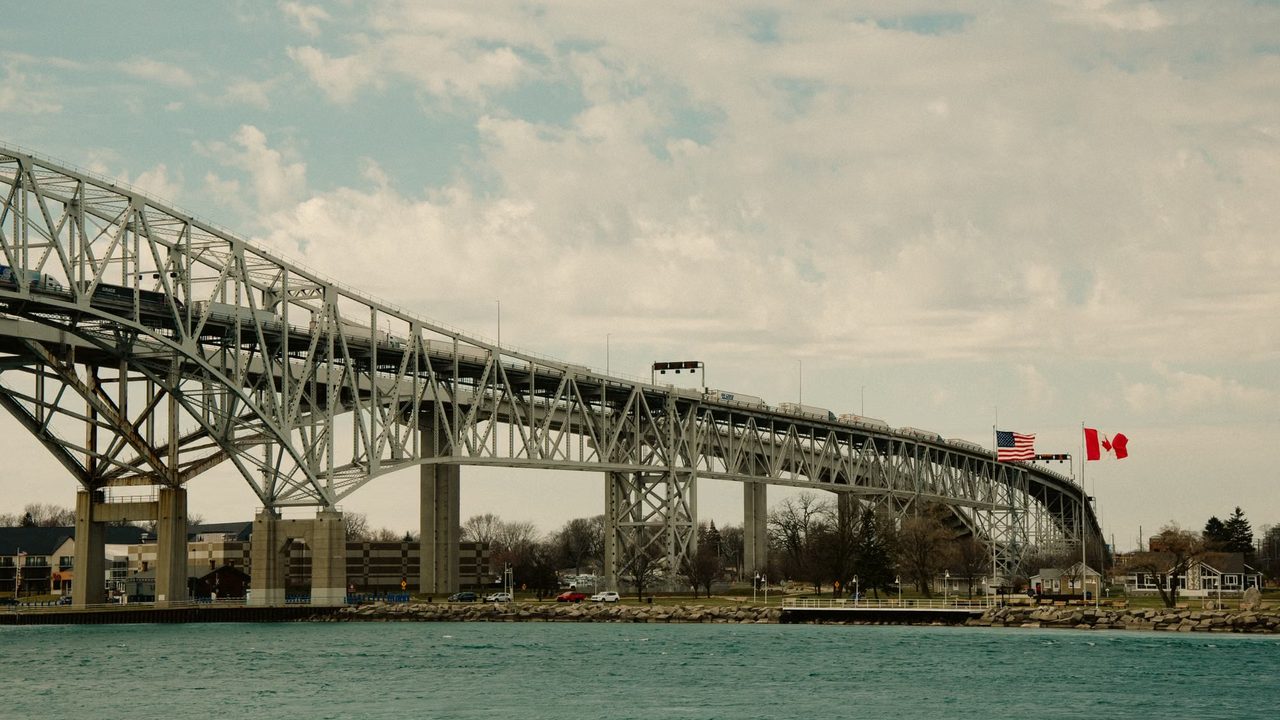
The Trump administration imposed 50 percent tariffs on Canada on Friday after trade talks collapsed — a move that struck Canadian officials as abrupt, given that negotiations had been characterized as ongoing as recently as Wednesday. The two countries exchange over 900 billion dollars in goods and services annually, and the tariff rate is categorically different from the 10 and 25 percent figures of earlier trade disputes. American manufacturers dependent on Canadian inputs — particularly in automotive, aerospace, aluminum, and agriculture — face immediate cost increases. The U.S.-Canada-Mexico auto manufacturing ecosystem was built over three decades to function as a single integrated production network; a 50 percent tariff on Canadian components does not merely raise prices but renders existing production planning models unworkable unless supply chains are relocated, a process requiring years and billions in capital.
Separately, Natalie Harp, a White House aide, was identified through metadata as the person who posted a video using racist imagery targeting former President Obama. The White House had not commented on whether she retains her position as of Saturday's broadcast. That an official holding a government position posted such material, and that the administration's response was silence, drew sharp attention at a moment when racial politics remain a live fault line inside the administration.
Karoline Leavitt, the press secretary, announced her departure and her return to MAGA Inc. — the political operation closely aligned with the Trump movement. Her exit, combined with the Harp story, suggested internal friction. Press secretaries who announce their next move before leaving mid-term typically reflect a calculation that the next chapter is more politically valuable than the current one.
On the bond markets, Treasury Secretary Bessent reportedly expanded the buyback program for long-dated Treasury bonds — a mechanism that reduces upward pressure on long-term interest rates. Trump said publicly that Bessent acted independently; Bessent's office neither confirmed nor denied that characterization. Trump then added that 'the military is the ultimate intervention,' a statement no White House official explained. Markets are now pricing in uncertainty about which official actually controls which policy tools.
In Ohio, the state Supreme Court unanimously dismissed — without a written opinion — a Republican judge's lawsuit challenging the abortion rights amendment that Ohio voters passed in 2023. A dismissal without opinion signals that the challenge failed to clear even the threshold of legal merit requiring a written response. The amendment protecting abortion access up to fetal viability faces other ongoing legal challenges, but a unanimous state Supreme Court dismissal is a strong signal about the durability of a voter-approved constitutional measure.
Section 230 Goes to the Supreme Court as Meta's Teen Harm Trial Opens in Oakland
Meta has petitioned the United States Supreme Court to rule that Section 230 of the Communications Decency Act shields addictive platform design decisions from state tort liability — a request that, if granted, would immunize every social media company from product liability suits regardless of what internal research shows about the harms those design choices cause. The petition arrives as a federal trial against the company opened its first week in Oakland, where the core allegation is that Instagram and Facebook were deliberately engineered with features known to harm adolescent mental health, and that Meta's internal research demonstrated that knowledge before the products continued to ship.
Section 230, passed in 1996, grants online platforms immunity from being treated as publishers of third-party content. Meta's argument extends that protection to the recommendation algorithms, engagement optimization systems, and notification architectures the company built — contending those design choices are similarly shielded. Massachusetts courts ruled that state product liability law can reach those design decisions regardless of Section 230; Meta is asking the Supreme Court to resolve the question definitively before the Oakland trial sets a precedent through jury verdict.
The legal stakes divide cleanly into two scenarios. If the Supreme Court rules that Section 230 protects platform design decisions, the entire social media industry is effectively immunized from state-level product liability claims forever. If the court declines to hear the case or rules against Meta, platforms face exposure analogous to what pharmaceutical companies, automobile manufacturers, and tobacco companies have confronted — a structural shift in the legal and financial landscape of American tech.
On a related front, federal investigators arrested eleven cruise ship workers in Boston on charges of possessing and distributing child sexual abuse material, in what appears to be the result of a coordinated multi-month investigation. Investigators noted that some communications among the arrested workers occurred on mainstream social media platforms. The arrests will accelerate calls for more rigorous background screening and device monitoring protocols across the cruise industry, which already faces regulatory pressure on multiple fronts.
OpenAI's Sales Leadership Hollows Out Ahead of IPO as Smart Home AI Fails the Reality Test
OpenAI's commercial organization is showing signs of structural fragility at the worst possible moment. Kaylin Voss, Vice President of Sales, resigned this week — one week after her direct supervisor, Chief Revenue Officer Denise Dresser, departed. When a VP exits a week after her boss, analysts note, it is rarely coincidence: it reflects a team built around a particular leader's vision that follows that leader out the door. Other members of the sales organization are reportedly considering their own departures.
The timing is the central problem. OpenAI is reportedly in the late stages of IPO preparation, and institutional investors on any roadshow will ask pointed questions about sales leadership continuity, pipeline stability, and whether departures reflect compensation disputes, strategic disagreements, or concerns about the company's direction under CEO Sam Altman. OpenAI's commercial revenue flows from enterprise API contracts and ChatGPT subscription tiers — relationships that are deeply personal and account-managed at senior levels. When the executive who closed a major enterprise contract leaves, the relationship risk is concrete. Competitors including Anthropic, Google DeepMind, and Meta AI are actively pursuing the same enterprise customers, and an OpenAI that appears internally chaotic hands them an opening.
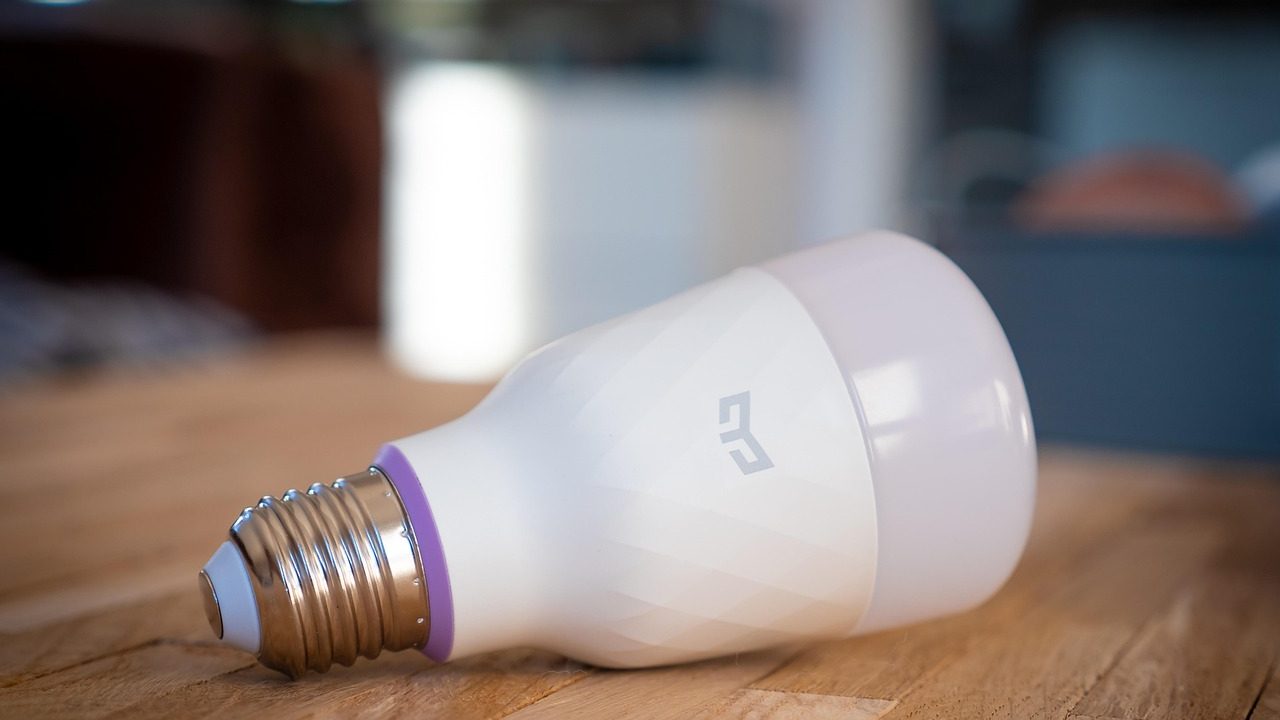
A comprehensive assessment published this week offered a sobering counterpoint to the industry's AI hype cycle: smart home assistants, across major platforms, remain unreliable in meaningful ways a full year after launch. The specific failure modes are instructive. Context retention breaks down across multi-turn conversations. Complex multi-step home automation sequences — the kind demonstrated in marketing materials — fail at rates users find unacceptable. Roughly 34 percent of complex multi-step requests resulted in partial completion or failure, according to the assessment.
The failure is partly computational — the tension between edge device inference capability and cloud latency — and partly a training data problem. Real home environments are acoustically messy and conversationally contextual in ways that clean training datasets do not capture. Industry sources acknowledge that another 18 to 24 months of iteration is needed before reliability matches the promise made at launch. The consumer trust deficit created by early failures is compounding: users who have had bad experiences stop assigning the system complex tasks, which means the usage data needed to improve the model never gets generated — a feedback loop that punishes premature deployment.
AMD Posts Record Revenue, Stock Falls Anyway — and Boeing's Engineers Authorize a Strike

AMD reported record quarterly revenue this week, beating analyst estimates by a meaningful margin on strong demand for its MI series AI accelerators in the data center market. The stock fell. The explanation was a single social media post: Elon Musk, writing on his own platform X, stated that Nvidia remains his preferred chip supplier for AI infrastructure and characterized AMD's offerings as a tier below. Musk controls xAI and Tesla, and his chip purchasing decisions at scale represent material information for the market. One informal post outweighed a formal earnings beat — a demonstration of how market-moving information functions when one individual combines concentrated economic influence with platform reach.
The underlying competitive dynamic is structural. Nvidia's CUDA software ecosystem, built over more than a decade, creates switching costs that are enormous even when AMD's hardware specifications are competitive. Migrating workflows away from CUDA represents months of engineering risk that enterprise AI teams are reluctant to absorb. AMD's ROCm platform has improved substantially, but the ecosystem gap is real.
Boeing's situation is more immediately human. The company's engineering workforce — the designers of aircraft, not the assembly line — rejected management's contract offer and authorized a strike. The authorization gives union leadership significant leverage, though it does not make a work stoppage imminent; negotiations can resume. The dispute involves pay increases the union found inadequate relative to three years of inflation, and benefit structure changes viewed as a step backward. Boeing's financial position remains strained after billions in charges and delivery slowdowns, limiting how much it can offer without affecting its debt service capacity. Engineering excellence is the only path back from Boeing's quality control crises of recent years; conducting that recovery while design engineers are either on strike or demoralized is an acute strategic problem.
SpaceX's secondary-market stock has fallen below its IPO reference price, and a shareholder disclosure of the company's investor roster is drawing counterintelligence scrutiny. SpaceX holds government contracts, operates national security satellite infrastructure, and provides the only current U.S. crewed launch capability. When a company of that strategic significance has foreign sovereign wealth funds at significant shareholder positions, intelligence community attention follows. S&P Futures stood at 7,691 Saturday morning, up roughly 28 points — a 0.37 percent gain suggesting markets were not in panic despite the Canada tariff announcement, Iran rhetoric, and bond intervention questions, partly reflecting what analysts describe as a learned habit of watching implementation pace rather than announcement volume. Meanwhile, a class-action lawsuit against Oura alleges that the company's specific sleep-tracking accuracy claims — including REM and deep sleep measurement — are not supported by the underlying sensor hardware, which consists of the same accelerometer and photoplethysmography components found in standard fitness trackers. If successful, the case would set a precedent for accuracy claims across the entire health-wearables category.
A 13-Mile Quantum Link Goes Live — and Rewrites What Comes Next for Secure Communications

Researchers at a U.S. federal laboratory have demonstrated a 13-mile open-air quantum network link, transmitting quantum entanglement states through the atmosphere rather than through fiber optic cables. In quantum networking terms, the distance represents a substantial advance in free-space quantum communication. The distinction between open-air and fiber is not merely technical: fiber is expensive to lay, requires physical infrastructure, and is geographically constrained. Open-air quantum links, once reliable, can be deployed with far less infrastructure and serve as a stepping stone toward satellite-based quantum networking — a capability that scales toward transcontinental and eventually global distances.
The security implications are what the cryptography world is watching most closely. Quantum networks enable quantum key distribution, a method of encrypting communications in which any eavesdropping attempt physically disturbs the quantum states being transmitted, making interception detectable in real time. The security rests not on computational difficulty but on physics — meaning even a quantum computer cannot crack it.
The timing of the demonstration is directly connected to a known threat horizon. Both the U.S. intelligence community and the National Institute of Standards and Technology have assessed that within roughly a decade, possibly sooner, quantum computers may become capable of breaking current RSA and elliptic-curve encryption. Adversary intelligence services are already reportedly capturing encrypted data today against the expectation of being able to decrypt it later — the 'harvest now, decrypt later' threat. Quantum networks provide one of the few theoretically robust defensive responses.
China has been the most aggressive nation in deploying quantum communication infrastructure, operating a ground-based quantum network spanning thousands of kilometers and conducting quantum satellite experiments. A U.S. open-air demonstration at 13 miles represents a meaningful public data point in that competitive landscape. The intersection with SpaceX is notable: scaling quantum networks to planetary distances will likely require satellite-based relay systems, and Starlink is the current leading low-earth-orbit satellite constellation. Who owns SpaceX and what infrastructure-access decisions they make carries national security implications that extend well beyond launch services.
Ruffalo vs. Paramount, and the OpenAI Narrative That Might Be Wrong

Mark Ruffalo — the actor best known for playing Bruce Banner in the Marvel films — publicly criticized the proposed merger between Paramount and Warner Bros. Discovery, linking the Ellison family's financial role in the deal to Oracle's business ties in Israel and connecting those ties to Israeli military operations in Gaza. Paramount's response characterized the argument as antisemitic. Whether that characterization is accurate is itself a matter of legitimate debate, but the effect of deploying the label in Hollywood's current cultural environment is clear: it functions as a silencing mechanism that carries real career consequences. Ruffalo has not backed down.
The underlying question about the merger deserves scrutiny regardless of who is making the argument and how. A combined Paramount-Warner Bros. entity would control massive content libraries, theatrical distribution, and streaming infrastructure simultaneously. Antitrust analysis of such a combination — conducted by the Justice Department's antitrust division — focuses not on size alone but on whether the merged company could exclude competitors from accessing content, talent, or distribution channels. The Sherman Antitrust Act requires evidence of anticompetitive conduct, not merely market dominance, but a company that can simultaneously control what gets made, how it is distributed, and where it is streamed presents a factual pattern that regulators will examine carefully.
Among the day's most confident media and financial consensus calls is the claim that OpenAI's executive exodus represents a serious, structural threat to its IPO prospects. The narrative is tidy — departing sales leadership plus IPO timing equals red flag. But a rigorous challenge to that claim is worth taking seriously. OpenAI's revenue model has been shifting: the largest and fastest-growing revenue streams increasingly come from direct API usage by developers and consumer subscriptions rather than from the traditional enterprise sales relationships that a Chief Revenue Officer and VP of Sales manage. If the company is pivoting toward product-led and developer-ecosystem growth, the departure of classic enterprise sales leadership could reflect a deliberate strategic restructuring rather than organizational chaos.
What would need to be true for the benign interpretation to hold? The replacement CRO, if and when one is named, would need a background in product-led growth — experience at companies like Stripe or Twilio rather than in traditional top-down enterprise sales. If the role sits empty for six months heading into the IPO, the chaos interpretation strengthens. And if enterprise contract renewal rates — not publicly disclosed but traceable through analyst and industry channels — hold steady, the restructuring story looks more plausible. If major customers quietly reduce contract scope, the red-flag interpretation gets stronger. Concrete signals over the next thirty to sixty days will distinguish the two interpretations; the confident consensus deserves to be held conditional on those signals, not treated as settled.