UN's Top Job Hangs on a Single Vote as Security Council Reform Pressure Mounts
With António Guterres departing on December 31st, a genuinely competitive race to lead the United Nations has narrowed to a one-vote margin in an informal Security Council poll, unfolding against a simultaneous and increasingly urgent debate over the body's own legitimacy.

“being broadly tolerable across competing blocs may matter more than being any one bloc's champion”
How this was made Verified AI
Every Intellegix briefing is generated from that day's broadcast and run through automated checks before it publishes — with a human paged on any flag. Here is the trail for this edition.
The World's Most Complicated Job Opens Up
Friday's Intellegix briefing devoted its full attention to the machinery of global governance: who succeeds António Guterres as United Nations Secretary-General, why Africa has become the race's most coveted constituency, and what a simultaneous Security Council debate over veto reform reveals about the deeper fault lines inside the world's foremost multilateral body.
Markets provided a secondary backdrop. S&P futures stood at 7,687.5 as Friday's session opened, up roughly a third of a percent overnight, while the dollar was on track for a weekly loss — a pairing that, taken together, signals something less than investor conviction about U.S. policy direction heading into the weekend.
The episode also built in a primer on U.S. antitrust law — the Sherman Act's distinction between lawful market dominance and illegal exclusionary conduct — and closed with a candid correction: a May claim that Ukraine had struck Russian naval assets in the Caspian Sea, a landlocked body of water inaccessible to any realistic Ukrainian strike capacity.
A One-Vote Lead and Three Candidates Who Could Win

The United Nations Secretary-General selection has never produced a woman or a Latin American, and the informal regional rotation system in place for decades says this cycle belongs to Latin America. Those facts suggest a tidy outcome. The July 30th straw poll suggests otherwise.
Rebeca Grynspan of Costa Rica led the informal Security Council ballot with 10 'encourage' votes. Carolyn Rodrigues-Birkett of Guyana came in second with 9, and Rafael Grossi — the current Director General of the International Atomic Energy Agency — placed third with 7. The remaining field includes former Chilean President Michelle Bachelet, former Ecuadorean Foreign Minister Maria Fernanda Espinosa, former Senegalese President Macky Sall, and a Ugandan diplomat, though serious competitive momentum is concentrated in those top three.
Grynspan, who has led UNCTAD since 2021, is described by Western diplomats as the 'continuity candidate' with the tacit backing of Guterres himself — a label that carries weight in some quarters and skepticism in others. Among member states seeking a more assertive departure from current institutional culture, particularly across the Global South, 'continuity' is not an unambiguous asset.
Rodrigues-Birkett's appeal rests partly on what she is not: nobody's top pick, and therefore nobody's enemy. In a race where a single P5 'discourage' vote can effectively veto a candidate at the formal stage, being broadly tolerable across competing blocs may matter more than being any one bloc's champion. Grossi's case is different in kind — he argues that running the IAEA through the Zaporizhzhia crisis, the Iran nuclear negotiations, and a wave of compliance disputes constitutes preparation for the Secretary-General's role that no career diplomat can replicate.
Why Every Candidate Is Campaigning in African Capitals
Africa's 54-member bloc in the General Assembly makes it the largest single regional grouping in the United Nations system. While the General Assembly formally ratifies rather than selects the Secretary-General, African states' relationships with Security Council members — including holders of rotating non-permanent seats — give the continent informal leverage that far exceeds its formal role in the process. Every serious candidate has taken note.
Bachelet has reportedly been particularly active in African outreach, drawing on credibility built during her tenure as UN High Commissioner for Human Rights. The courtship reflects a structural reality: France's enduring relationships with francophone Africa, China's decade of Belt and Road infrastructure investment across the continent, and Russia's expanding military and political presence in the Sahel through Wagner-affiliated operations mean that African governments serve as pivotal brokers whose signals are read carefully by all five permanent members.
Macky Sall's candidacy is the most explicit expression of African ambition for the role. He chaired the African Union during a turbulent period for the continent and brings head-of-state credibility that few candidates in any cycle can claim. His structural obstacle is equally explicit: he is technically out of cycle under the rotation convention. His campaign appears to be operating on the premise that a deadlock among Latin American candidates could create an opening — and that sub-Saharan Africa, which has not held the Secretary-General position since Kofi Annan's departure in 2006, has a legitimate claim to renewed representation.
Espinosa, for her part, brings a credential no other candidate holds: she was the first Latin American woman to serve as President of the UN General Assembly, giving her direct experience managing the deliberative politics of the full 193-member body. That she has not broken through in the straw poll numbers despite that résumé reflects how intensely competitive the top of the field has become.
121 Countries Back Veto Reform — and the P5 Still Holds the Keys
Simultaneously with the Secretary-General race, the Security Council held a daylong formal debate on its own reform — a conversation that has acquired new urgency as documented failures on Ukraine, Syria, and Gaza have sharpened the global membership's frustration with the veto's blocking power.
The initiative drawing the most traction is a France-Mexico proposal, launched in 2015, calling on the P5 to voluntarily and collectively suspend their veto in cases involving credibly documented mass atrocities. As of this week, 121 states have formally endorsed the initiative — a majority of UN membership. France and the United Kingdom have signed on. Russia, China, and the United States have not.
The proposal's framing as a political declaration rather than a treaty obligation is deliberate: it allows the coalition of signatories to grow without triggering a formal Charter amendment process that would require P5 consent and is therefore dead on arrival. But the same architecture that makes the initiative diplomatically navigable also makes it structurally unenforceable. Each of the three non-signatory permanent members has noted, in effect, that the categories that appear obvious from the outside — what constitutes a mass atrocity requiring suspension — look considerably more contested from inside a P5 seat.
Vietnam's Deputy Permanent Representative, Nguyen Hai Luu, raised a separate but related critique during the debate: non-permanent members need better conditions to lead and contribute to drafting Council documents. The ten rotating seats, the argument goes, function more as observers than genuine co-deliberators in a body whose working methods are dominated by the five permanent members. A coordinated statement from the elected ten — described as unusual — suggested that the Council's legitimacy deficit is reaching a point where broader membership is seeking a more unified response.
The structural tension the reform debate cannot resolve is that the veto architecture, for all its documented dysfunction, has arguably prevented great-power conflicts from escalating by giving each permanent member a formal stake in the international system. The moment a P5 member perceives that system as no longer protecting its vital interests, its incentive to operate within it diminishes. That calculation is not a defense of the veto's current use, but it explains why voluntary suspension — rather than structural elimination — is the only proposal with any realistic political traction.
The Dollar Wobbles, and What That Signals Beyond Friday's Close
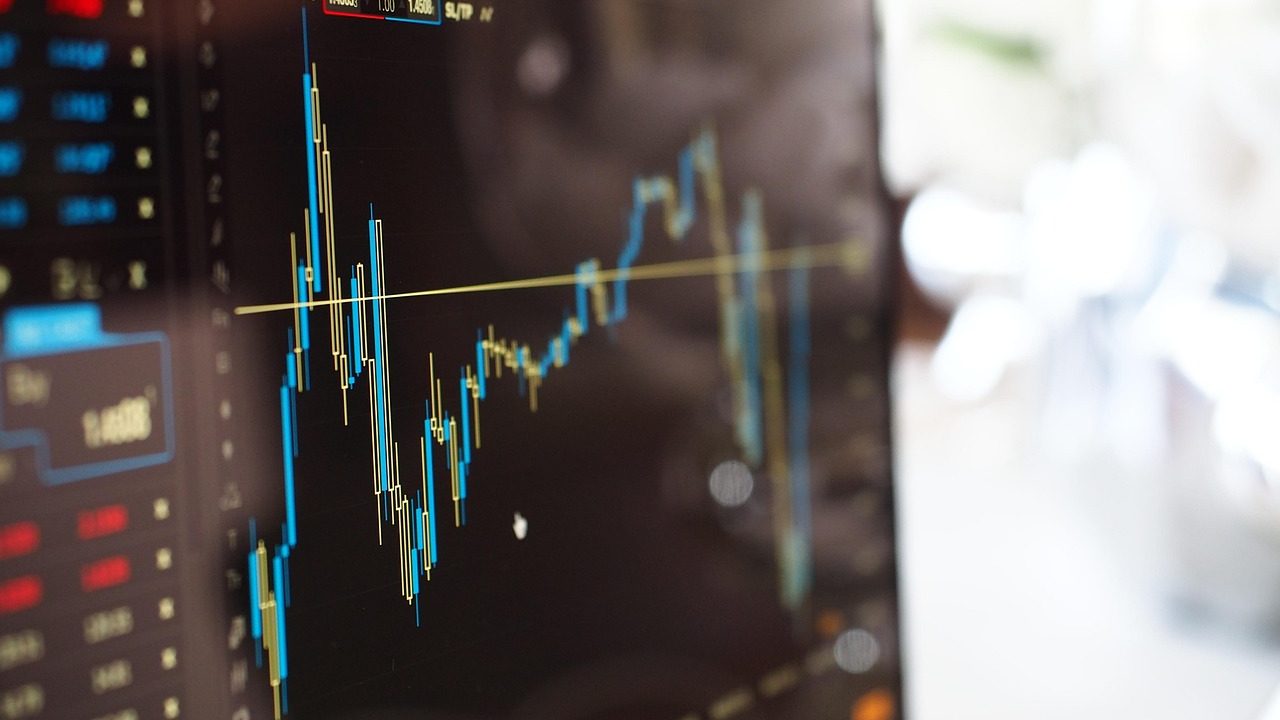
S&P futures opened Friday at 7,687.5, up roughly 25 points or 0.33 percent from the prior session, after trading in a tight overnight band — between approximately 7,664 and 7,671 for most of the session — before a morning move higher. That pattern, a constricted overnight range followed by a moderate pre-market pop, is characteristic of thin pre-weekend trading driven by retail flows and algorithmic adjustment rather than institutional conviction.
The dollar's story is more consequential. Reuters framed its positioning as investors balking at the U.S. Treasury's 'rescue efforts' — language implying that active interventions or policy signals aimed at supporting dollar strength have met market skepticism. When markets treat Treasury actions as noise rather than signal, it typically indicates that the underlying conditions driving weakness are perceived as structural rather than correctable by short-term intervention.
A weaker dollar is not automatically negative for U.S. equities — for multinationals it can function as a revenue tailwind — but it does raise questions about global confidence in U.S. policy direction that extend beyond any single Friday's trading session. The dollar's role as the world's reserve currency depends ultimately on the perceived credibility of U.S. fiscal and monetary policy, and a sustained weekly loss is one data point in that larger credibility calculation.
The currency dimension connects, obliquely, to the UN race. Grynspan's years leading UNCTAD have given her a substantive record on the dollar's structural advantages in global trade finance and the burdens those advantages create for developing economies. Whoever leads the UN in 2027 will operate in an international economic environment where dollar hegemony is being actively questioned — not only by Russia and China but by a broader coalition of emerging market economies seeking alternatives in settlement and reserve holdings.
What the Candidates Would Actually Do on Day One
Michelle Bachelet's résumé may be the most formally complete in the field: two non-consecutive presidential terms in Chile, the founding leadership of UN Women from 2010 to 2013, and the UN High Commissionership for Human Rights from 2018 to 2022. If the job description were assembled from scratch, it would look closely like her career. That she has not converted this background into straw poll leadership reflects both the 'continuity' perception that follows candidates with deep institutional ties and, reportedly, some private reservations among Security Council members about the domestic controversy that marked her second presidential term.
Grossi's argument for the role is different in kind from any other candidate's. His IAEA tenure has placed him at the operational center of the three crises most likely to define the next five years of international security: the nuclear dimensions of the Russia-Ukraine war, the Iran compliance negotiations, and the emerging governance debates around nuclear energy as a climate solution. His campaign has reportedly framed this not as technical niche expertise but as comprehensive preparation for a Secretary-General's mandate in an era defined precisely by those intersections.
The incoming Secretary-General will take office on January 1st, 2027, inheriting the full inventory of current international disorder: the ongoing conflict in Ukraine, the unresolved situation in Gaza, climate finance architecture that remains deeply inadequate, and AI governance frameworks that do not yet exist at the multilateral level. A Secretary-General from a human rights background would presumably prioritize moral clarity in public statements; one from a technical verification background might prioritize precision and evidence; one from a development economics background might focus on the structural inequality that underlies many of the conflicts the institution struggles to address. These are not style differences — they would produce materially different allocations of institutional attention and political capital.
How the Veto Math Actually Decides This Race
The straw poll totals — Grynspan 10, Rodrigues-Birkett 9, Grossi 7 — are important but widely misread. The informal poll, conducted among all 15 Security Council members via color-coded ballots of 'encourage,' 'discourage,' or 'abstain,' functions primarily as a veto-detection mechanism rather than a popularity contest. A candidate who receives a 'discourage' from any permanent member faces a latent formal veto at the final recommendation stage. The meaningful bar is not simply a plurality of 'encourage' votes — it is a majority of 'encourage' votes combined with zero P5 'discourage' votes.
Because the polls are secret, the precise P5 breakdown of Grynspan's 10-vote total is not publicly known. If all five permanent members are in her 'encourage' column, her position is structurally strong. If even one P5 member is abstaining or privately signaling reservation, the race is considerably more open than the headline number suggests. Diplomatic reporting indicates candidates are actively attempting to identify and address any P5 concerns before the next round.
Russia and China's positions are particularly difficult to read publicly. Both have historically favored candidates who emphasize non-interference principles and do not signal an adversarial posture toward permanent-member prerogatives. Rodrigues-Birkett's Guyana connection introduces a complicating variable: Guyana holds a territorial dispute with Venezuela — a Russian partner — over the Essequibo region, a dispute that has involved Western backing for Guyana's position. Whether that colors Russian private assessments of her candidacy is unclear, but it is the kind of bilateral factor that surfaces in informal consultations.
The formal process, once the straw polls conclude, requires a simple Security Council majority vote plus the absence of any negative P5 vote, after which the recommendation proceeds to the General Assembly for approval. The General Assembly has never rejected a Security Council recommendation for Secretary-General — not because it lacks the power to do so, but because by the time a recommendation arrives, diplomatic consensus has been built broadly enough that rejection would damage the rejecting country's relationships more than the outcome it opposes. The early October recommendation deadline is six weeks away.
An 81-Year-Old Architecture Under Maximum Stress

The Secretary-General race is unfolding inside an institution whose core architecture — Security Council, General Assembly, Secretariat — was designed in 1945 for a world that no longer exists. The UN turns 81 this year, and the reform conversation underway is fundamentally about whether a structure built for a bipolar world can adapt to govern a multipolar one.
The Security Council's veto paralysis on Russia's invasion of Ukraine — where the P5 member conducting the invasion simultaneously held blocking power over any collective security response — exposed a structural vulnerability the Charter's designers acknowledged but believed would be managed through great-power political will. That assumption, as events have demonstrated, carried limits.
The Secretary-General's role in that environment is constrained but not negligible. The position carries no enforcement capacity and no independent military force. What it does carry is the pulpit: the power to convene, to speak publicly, to shape international debate, and to build political momentum for initiatives that may not survive the Security Council's formal process. Dag Hammarskjöld described the role as 'the most impossible job on earth' in 1953, before the Cold War peaked and before the proliferation of crises the institution now manages simultaneously.
Guterres has drawn criticism for what some describe as excessive caution in using that pulpit — particularly on Ukraine, where he was seen by some observers as prioritizing access and mediation over moral clarity. Others credit him with keeping communication channels open in ways that limited certain escalations. The next Secretary-General will face immediate pressure to define a posture, and the candidates' different backgrounds signal genuinely different dispositions toward that choice. If the veto suspension initiative still carries 121 endorsements when the new leadership takes office, the incoming Secretary-General will face an early and revealing decision about whether to be its visible champion or treat it as a political liability with the P5 partners they must work with daily.
Grynspan's Lead Is Real — and Fragile
The case for Rebeca Grynspan is coherent and well-evidenced: she led the July 30th straw poll, holds Guterres's tacit backing, fits the Latin American rotation, has genuine multilateral institutional experience, and appears to have no powerful P5 enemies. Confidence in her position is not baseless. It may, however, be running somewhat ahead of the actual uncertainty in a race decided by a one-vote margin across 15 ballots.
Precedent is instructive. The 2016 selection of António Guterres went through multiple straw poll rounds with significant vote shifts; Guterres was not the original frontrunner and emerged as the consensus candidate through a process that looked genuinely uncertain in its early stages. If the 2026 process follows a similar trajectory, the July 30th results may look quite different by round three or four in September.
Three scenarios could displace Grynspan from the frontrunner position. First, a P5 member currently in her 'encourage' column could develop a private reservation tied to bilateral dynamics or public statements between now and the formal vote. Second, Rodrigues-Birkett could consolidate additional 'encourage' votes while Grynspan stalls — a one-vote lead requires very few defections to flip. Third, Grossi could position himself as the genuine compromise candidate if the top two generate gridlock, drawing on his status as an existing UN system head and his unique profile at the intersection of nuclear security, climate, and great-power competition.
The specific indicator to watch is the second straw poll, expected before the end of August. If Rodrigues-Birkett gains votes rather than losing them — moving from 9 toward 11 while Grynspan holds at 10 or retreats — the race is genuinely open. Equally revealing will be whether any 'discourage' votes appear next to Grynspan's name from a P5 member not previously signaling opposition. The institutional conservatism that makes breaking the rotation convention costly is a real constraint on the field, but it is not an absolute one. This race may confirm the frontrunner. It may also surprise.
What to Watch Before the September Rounds

Six takeaways define where the race and the broader institutional moment stand heading into the weekend. Grynspan leads by a single vote in an informal poll of 15 Security Council members, and the second straw poll expected before August's end will clarify whether that lead is hardening or softening. Rodrigues-Birkett and Grossi are both making substantive arguments — not merely hopeful ones — for why their profiles fit the moment better than a continuity reading of institutional seniority would suggest.
The Security Council reform debate is the essential context for everything else. One hundred twenty-one countries now formally back the France-Mexico voluntary veto suspension proposal. That number is politically meaningful even though it is structurally insufficient to compel any P5 change without consent. The next Secretary-General will inherit that pressure and will face an early, defining choice about what to do with it.
In the markets, the dollar's weekly loss and the S&P futures' modest overnight gain tell a story of genuine uncertainty about U.S. policy credibility. The overnight trading band showed no real conviction; next week's dollar positioning will offer a cleaner signal than Friday's thin pre-weekend movement.
Finally, a correction stands on the record: an earlier claim that Ukraine had struck Russian naval assets in the Caspian Sea was wrong. The Caspian is a landlocked body of water deep inside Russian territory, with no connection to any realistic Ukrainian strike capacity. The error was flagged by listeners, and a geography check before publication would have caught it — a standard that applies going forward to all claims about military operations.