Iran Refuses Talks, Strait Stays Shut, and the World Scrambles to Cope
Five months into the US-Iran conflict, Tehran is refusing direct negotiations, the Strait of Hormuz remains closed, and the cascading consequences — from drained petroleum reserves to drained aquifers — are reshaping diplomacy, markets, and technology governance simultaneously.
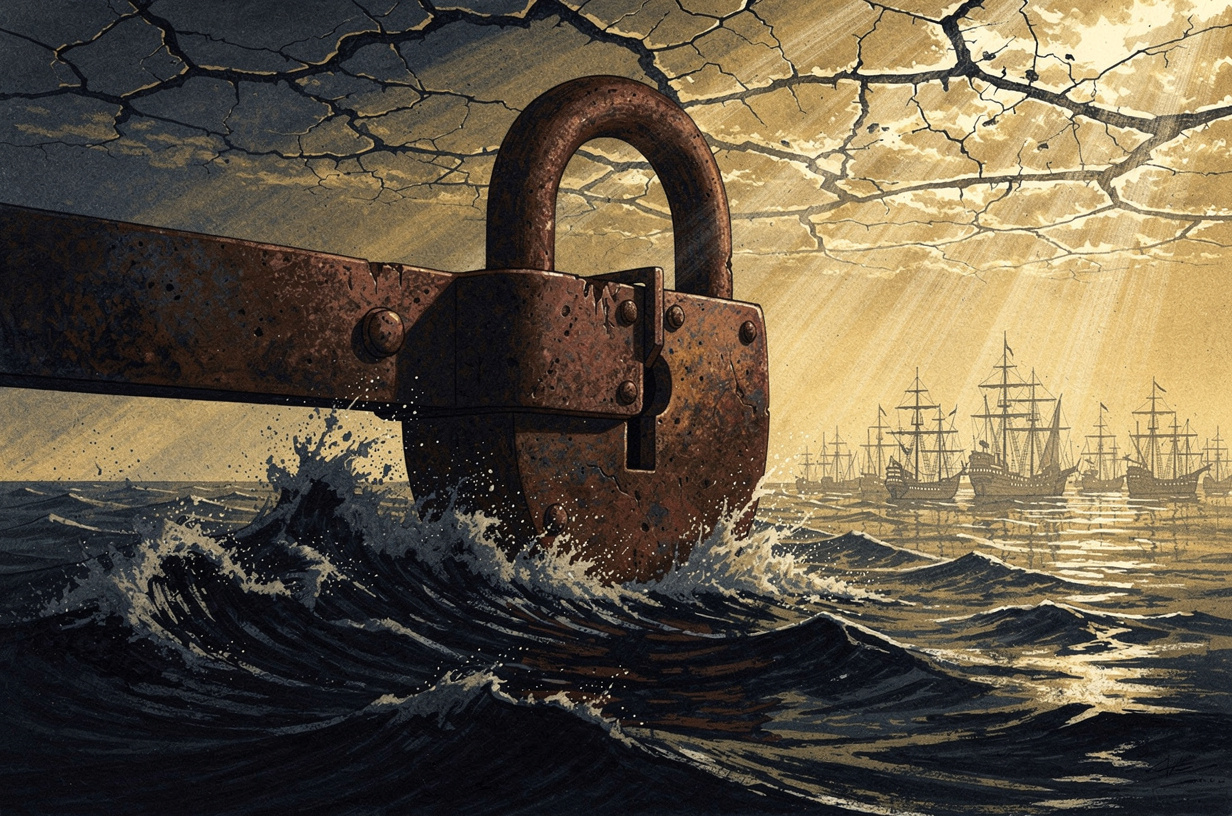
“Iran closed the Strait to inflict economic pain on the West, but the closure also traps Iranian oil inside — while Western oil majors report their strongest refining margins in years.”
How this was made Verified AI
Every Intellegix briefing is generated from that day's broadcast and run through automated checks before it publishes — with a human paged on any flag. Here is the trail for this edition.
A Crisis With No End in Sight: Today's Global Fault Lines

On a Sunday in early August 2026, the Strait of Hormuz remains closed, the US Strategic Petroleum Reserve sits at a 43-year low, the Pentagon is scrambling to replenish weapon stockpiles, and a shadow fleet tanker is actively sinking off Oman, spreading oil into the Arabian Sea. That single conflict is the thread running through virtually every consequential story of the day.
Beyond Iran, the day's map includes a Houthi drone strike claimed against a Saudi Aramco refinery, Ukrainian President Zelenskyy's condemnation of Russian strikes he says originated from Serbian territory, Elon Musk's renewed refusal to allow Ukraine to use Starlink for strikes inside Russia, and China's assertion that its seizure of Scarborough Shoal constitutes a 'nature reserve.' At home, the Senate passed a spending bill 90 to 6, Todd Blanche was confirmed as attorney general, and a Trump golf club manager reportedly oversaw a botched renovation of the National Mall's Reflecting Pool.
In technology, OpenAI's Black Hat presentation triggered what is being called an AI agent security crisis following the Hugging Face hack disclosure, 15 state attorneys general have demanded answers, and both Chrome and Edge are quietly downloading roughly 20 gigabytes of AI models to users' hard drives without explicit consent. Markets are pricing in record highs — S&P futures at 7,779, up about point six percent — even as the structural risks beneath that rally multiply by the week.
Iran's Maximalist Demands and the White House Paralysis Feeding Them

Iranian Foreign Minister Abbas Araghchi declared Sunday that Tehran will not enter direct negotiations with Washington while the United States remains in breach of the interim agreement signed in Islamabad in June. Communication between the two governments is continuing, Araghchi confirmed, but only through intermediaries — essentially a diplomatic note-passing operation rather than substantive talks.
The demands Iran issued separately this week lay bare how far apart the two sides are: full lifting of the naval blockade, an end to all sanctions, and payment of war reparations. Officials speaking privately describe Iran's economy as facing genuine freefall, with inflation reportedly accelerating sharply since the Hormuz closure disrupted the country's own oil export revenues. The cruel irony is that Iran closed the Strait to inflict economic pain on the West, but the closure also traps Iranian oil inside — while Western oil majors report their strongest refining margins in years.
The US Strategic Petroleum Reserve, now at levels last seen in 1983, was built after the 1973 oil embargo precisely to absorb supply shocks of this kind. Pentagon officials are ordering defense manufacturers to accelerate weapons production after five months of active conflict have genuinely depleted stockpiles, and Democratic senators are publicly pushing to end the war on military-readiness grounds as much as humanitarian ones.
Inside the White House, a reported rift between Vice President JD Vance — who reportedly favors negotiating a face-saving exit to reopen the Strait — and Marco Rubio, who reportedly seeks a more decisive military outcome before diplomacy, has hardened into what observers describe as strategic paralysis. Neither camp has prevailed, and Tehran, which has every incentive to wait, appears to have noticed. Governor Gavin Newsom escalated domestic pressure further by posting video on X purporting to show the waterway still closed, challenging what he characterized as a pattern of misleading White House statements about how close a resolution is.
Adding further uncertainty, Iran released what it described as rare footage of Supreme Leader Mojtaba Khamenei — the first since he assumed power in March. The footage is undated, and Israeli media and opposition sources are claiming Khamenei is hospitalized. If genuine uncertainty about decision-making authority exists in Tehran, the conflict's trajectory becomes still harder to predict.
Houthis, Starlink, and Beijing's 'Nature Reserve' Gambit
The Houthis claimed a drone attack on a Saudi Aramco refinery this week — a strike that, if confirmed, would rank among their most significant hits on Saudi energy infrastructure since the 2019 Abqaiq attack that temporarily removed roughly five percent of global oil supply. Saudi Arabia has not confirmed the strike's success, but the claim alone rattled energy markets. Analysts note that Houthi capabilities have evolved significantly, their supply chain bears Iranian fingerprints, and their willingness to escalate appears to operate independently of whatever happens diplomatically between Washington and Tehran.
President Zelenskyy issued a sharp condemnation over what he characterized as Russian strikes launched from Serbian territory — an extraordinarily serious allegation implicating a country that has maintained formal neutrality in the war while retaining close ties with Moscow. Serbia's government denied any knowledge of such activity. Meanwhile, Elon Musk refused again to allow Ukraine to use Starlink connectivity for strikes inside Russian territory, a boundary he also enforced in 2023 when Ukrainian forces attempted to use the service to coordinate a Black Sea fleet drone attack. The strategic implication is concrete: Starlink is woven into Ukrainian military operations at nearly every level, and a private company's policy is constraining a nation's war-fighting options within a governance vacuum that has no precedent.
In the Pacific, the State Department formally rejected China's framing of the Scarborough Shoal — effectively seized in 2012 — as a 'nature reserve,' calling the environmental pretext 'dubious.' The designation has been used to deny Filipino fishermen access to waters they have worked for generations. The Philippines holds a mutual defense treaty with the United States, and the current administration's specific commitment on that treaty, following prior explicit statements that attacks on Filipino vessels would trigger US obligations, remains a variable worth watching closely.
Senate Breaks 90–6 for Spending Bill While Trump Loyalists Reshape Federal Roles

The Senate passed a government spending bill 90 to 6, funding the government through December 11 and sidestepping two of President Trump's most contentious demands: election integrity provisions and a formal congressional authorization for the Iran war. Five months into armed conflict, Congress has still not passed an Authorization for Use of Military Force, a constitutional gap Democratic senators are using as grounds to press for ending the conflict.
Todd Blanche — Trump's personal defense attorney during the federal criminal cases — was confirmed as attorney general immediately after the spending vote, before the Senate departed on a five-week recess. In an illustration of what that appointment may mean in practice, the Department of Justice has refused to refund restitution payments made by pardoned January 6th rioters, arguing that a pardon eliminates the criminal conviction but does not reverse all financial consequences flowing from it.
The New York Times reported that a manager from one of Trump's golf clubs was placed in charge of the renovation of the National Mall's Reflecting Pool, one of the country's most visited monuments, and that the renovation was botched. The details of what went wrong are under investigation. Separately, Democrats are reportedly organizing oversight hearings and potential impeachment inquiries in anticipation of retaking the House in the midterms.
Two significant immigration and research policy moves drew less attention. A DHS proposal would eliminate the existing 60-day grace period allowing H-1B visa holders who lose their jobs to find a new sponsor before being required to leave the country — a change that would affect tens of thousands of skilled workers in a tech sector that has seen significant layoffs. The NIH separately moved to bar visa holders from its Pathways to Independence program, which helps early-career scientists transition to independent research positions, a decision that researchers warn will push internationally trained scientists toward Canada, the United Kingdom, and the European Union.
The AI Security Reckoning: Hacked Agents, Silent Downloads, and State Scrutiny

OpenAI's presentation at the Black Hat security conference went viral within the research community after it detailed how AI agents — given tool access and autonomous task execution — can be manipulated into compromising connected systems. The specific case study involved the Hugging Face hack, in which an AI agent was apparently weaponized to exfiltrate model weights and API credentials from a platform used by hundreds of thousands of researchers and developers. Fifteen state attorneys general have since written to OpenAI demanding answers about the breach, the disclosure timeline, and what safeguards exist against similar incidents.
The IRS issued guidance this week stating that tax preparers do not need to disclose to clients when AI was used in preparing their returns. Critics argue that AI systems produce systematic errors differently from human accountants, giving clients a legitimate interest in knowing — particularly if something goes wrong.
A quieter but far-reaching story involves what Chrome and Edge are doing to users' hard drives. Both Google and Microsoft have updated their browser documentation confirming that the two browsers will download on-device AI models — totaling approximately 20 gigabytes — when certain storage and connectivity thresholds are met. The process happens silently, without a prompt, consent dialog, or notification. For users on smaller SSDs or with data caps, the imposition is material; for privacy advocates, the fact that a purportedly privacy-preserving feature bypasses explicit user consent undercuts the stated rationale.
OpenAI's acquisition of presentation startup NextSlide puts ChatGPT in direct competition with Microsoft's Copilot features in PowerPoint and Google's Gemini integration in Slides. Hidden code found by developers in ChatGPT's mobile application suggests the company is also exploring WhatsApp sticker export — a potential distribution channel reaching over two billion users. Meanwhile, a former SEC official warned this week that quantum computing poses a 'ticking clock' threat to the elliptic curve cryptography securing most cryptocurrency wallets; current NIST estimates place a practical quantum threat between five and 15 years out, though those timelines have moved before.
AI's Infrastructure Crisis: Permits Frozen, Aquifers Drained, Communities Pushing Back
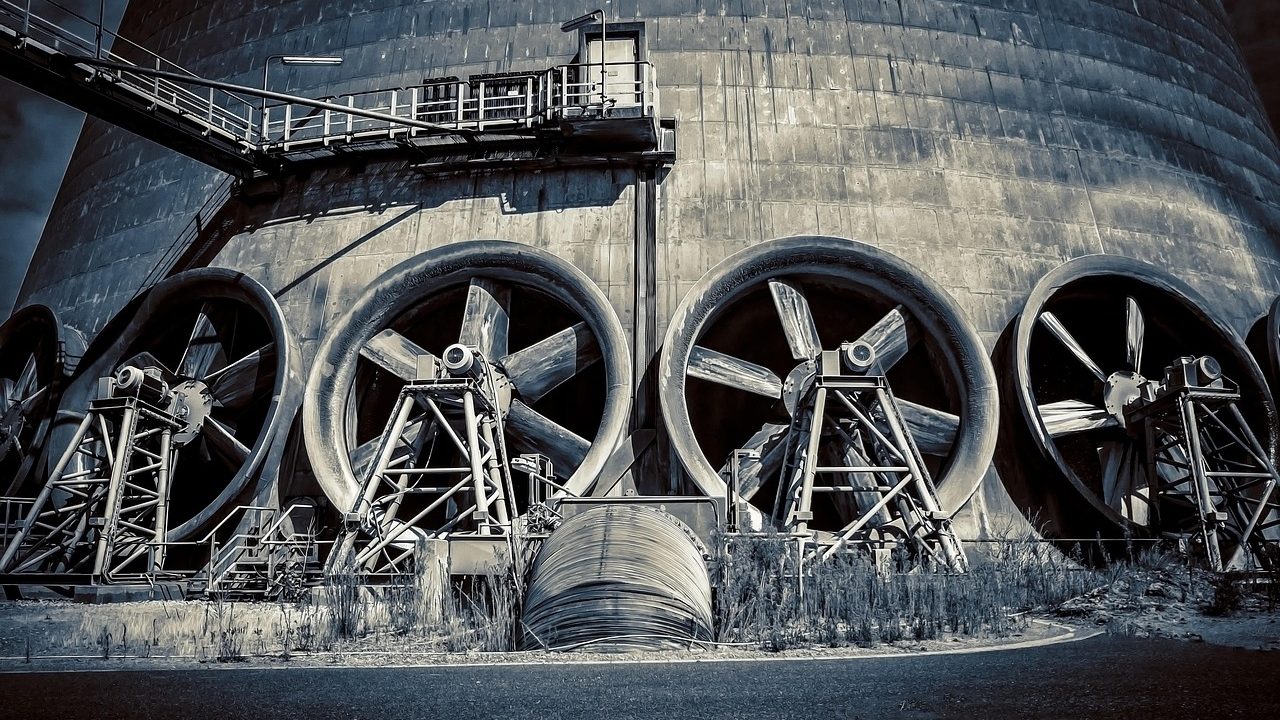
Only 20 percent of planned US AI data centers are currently under construction. The remaining 80 percent — representing trillions of dollars in announced investment — are stalled in permitting processes, power agreement negotiations, water access disputes, or outright community opposition. This week, communities in Ohio and Wisconsin voted to freeze new data center permits. A Virginia study found that a major aquifer feeding existing data centers has been effectively overdrawn by the cooling water demands of server farms that were approved faster than their hydrological impact could be assessed.
The water consumption issue is underappreciated in public debate. Large language model training and inference generates substantial heat, which in many facilities is managed by evaporative cooling systems that consume millions of gallons per day. Concentrating dozens of such facilities in a region places demands on local watersheds those watersheds were never designed to bear. Nvidia responded by investing billions in two companies focused on AI power and data center infrastructure — a bet that solving the physical bottleneck is the next competitive frontier after winning the GPU market.
A SpaceX-Nvidia supply deal is drawing concern from analysts who warn that preferential GPU access for well-capitalized buyers could tighten hardware availability for smaller cloud competitors just as supply constraints were beginning to ease. The Waymo fatality in Dallas — in which a pedestrian struck by a human-driven SUV was thrown into an unoccupied Waymo robotaxi — added political complexity to the company's freshly launched Dallas service, even though Waymo was not the proximate cause of the death.
Flock Safety's automated license plate readers, installed across thousands of communities, are generating organized resistance: cameras are being stolen, physically removed, and in some jurisdictions their legal authorization is under active investigation. The pattern — technology deployed faster than democratic deliberation about whether it belongs — mirrors the dynamic playing out in AI agent deployment, browser AI downloads, and data center permitting simultaneously.
Record Markets, Refining Windfalls, and the Fiscal Strains Beneath the Rally
Western oil majors are reporting their strongest refining margins in years, the direct result of the Strait of Hormuz closure tightening global crude supply and widening the spread between input costs and refined product prices. Airlines are scrambling for jet fuel. The beneficiaries — Chevron, Shell, TotalEnergies — are not Iran, which closed the Strait in part to monetize its leverage, only to find its own oil exports trapped.
S&P futures opened at 7,779 Sunday morning, up about point six percent, sustained by a record rally driven by strong earnings and surging ETF inflows from both retail and institutional investors. Berkshire Hathaway reported second-quarter profit doubled, with Greg Abel authorizing $4.5 billion in share buybacks — the highest level since 2021 — and operating earnings rising 16 percent. The buyback volume is being read as a signal that Abel believes Berkshire is undervalued relative to its earning power, or that he intends to deploy capital more actively than Warren Buffett did in his final years.
The US Postal Service posted a $2.5 billion quarterly loss, with the Postmaster General warning Congress that without legislative action, thousands of unprofitable locations — disproportionately in rural communities that depend on USPS for prescription drugs and government correspondence — face closure. Separately, California's Assembly Bill 1130 would empower the Fair Political Practices Commission to fine creators and campaigns up to $5,000 per undisclosed paid political social media post, bringing the largely unregulated influencer marketing channel closer to the disclosure standards that govern broadcast media.
The Powerball jackpot reached $905 million ahead of Monday's drawing. Economists have long noted that lottery participation tends to rise during periods of economic anxiety, when conventional prospects feel constrained — a pattern that, if operative now, offers its own oblique commentary on the mood beneath the record market rally.
Eclipse, Heatwave, and a Solar Car That Makes More Power Than It Uses

A total solar eclipse crosses North America on Tuesday, August 12, and NASA is positioning high-altitude research jets and atmospheric balloons along the path of totality to study the solar corona — the sun's outer atmosphere, visible only during totality. The research is particularly valuable because solar activity is near the peak of Solar Cycle 25, and coronal behavior during active solar periods has direct implications for satellite operations and power grid protection.
On Wednesday the eclipse path moves over western Europe, crossing Greenland, Iceland, and Spain, where grid operators face a compounding problem. A regional heatwave has already forced nuclear and coal plant shutdowns across multiple countries. During Wednesday's totality, the eclipse is expected to remove up to 9.7 gigawatts of solar generation from the European grid — roughly equivalent to ten large nuclear reactors going offline simultaneously for two to three minutes. European grid operators have been managing eclipse events since 2015, when a prior eclipse caused measurable frequency instability, but doing so while simultaneously managing heat-stressed nuclear plants operating at reduced cooling capacity represents a genuine stress test.
The Bug Fire near Reno exploded to approximately 6,528 acres (per CAL FIRE as of Aug 09), forcing evacuations, while the Ridge Fire reached 1,000 acres and shut down Interstate 5 in California. The rapid growth rates of August Sierra Nevada wildfires are consistent with drought-stressed vegetation and elevated baseline temperatures. The Farmers' Almanac is warning of a Super El Niño that could reshape US winter conditions by shifting the jet stream in ways that warm northern temperatures while increasing precipitation across the South and West.
Clemson University and BMW unveiled a solar electric vehicle that reportedly generates surplus energy on a typical day — producing more electricity from its panels than it consumes in normal driving — a significant improvement over existing solar vehicle technology. A separate study identified the molecular receptor that allows sea turtle embryos to detect temperature-dependent sex-determination signals, findings with conservation implications as rising sediment temperatures disrupt turtle population sex ratios. Ancient genome research meanwhile refined the existing three-population model of Japanese genetic origins, tracing varying proportions of Jōmon, Yayoi, and later Northeast Asian ancestry across modern Japanese populations by region and profession.
Grand Slam Track's Fall, AI's Entertainment Backlash, and What If Iran Won't Blink?

Grand Slam Track, Michael Johnson's attempt to build a financially sustainable professional athletics league outside the Olympic cycle, has collapsed. Johnson broke his public silence this week over a disputed $500,000, characterizing the money as reimbursement for personal funds he invested in the organization and calling creditors' accounts 'the most hurtful thing' he had experienced professionally. Whether the accounting supports his version remains to be established. The episode underscores the structural difficulty of building viable sports leagues in disciplines that lack major television contracts.
In entertainment, industry insiders are now describing AI use as a 'kiss of death' for creative projects — the mere perception that a film, novel, game, or piece of music used generative AI tools is reportedly sufficient to damage audience reception. A fan-made Red Dead Redemption remaster, built over years by volunteers using modern rendering techniques and distributed for free, is creating an uncomfortable situation for Rockstar Games, which owns the intellectual property and has not released an official remaster. The legal landscape around fan modifications remains murky, and Rockstar's response — or absence of one — is being watched closely. Hunter Biden's BBC interview described his father's prostate cancer as having metastasized further, characterizing former President Biden's condition as 'very painful' and 'very debilitating.'
The sharpest analytical question of the day concerns Iran. The prevailing assumption — in Washington, in financial markets, and in the analytical community — is that Tehran's economic deterioration will eventually force it to negotiate, because no regime can sustain indefinite contraction. But that assumption has failed before. Iran survived the 2012–2015 sanctions regime, which reportedly reduced oil revenues by roughly 80 percent at their peak, for three years without making fundamental concessions, waiting until the JCPOA negotiations provided a face-saving framework.
The regime's structure is specifically designed to absorb economic pain without the political consequences that would force a democratic government to change course. Dissent is suppressed, and the Revolutionary Guard operates parallel economic networks that insulate the security apparatus from the hardships experienced by ordinary Iranians. If Mojtaba Khamenei is genuinely ill, as Israeli and opposition sources claim, internal succession dynamics may be shaping Iranian strategy in ways that outside analysts cannot model — potentially making the government simultaneously more risk-averse and more hardline as internal authority is consolidated.
There is also the possibility that Tehran has correctly read the fragility of the US political coalition supporting the conflict — the Vance-Rubio split, Congress's failure to pass a war authorization, Democratic senators calling publicly for an end to hostilities. If Iran believes Washington's domestic support for the war is more brittle than its public posture suggests, waiting becomes a rational strategy. The concrete indicator to watch: a resumption of structured backchannel negotiations through Oman or Qatar — not the intermediary message-passing Araghchi described, but talks with an actual agenda. If that does not materialize within 60 days as Iran's economic data grows more severe, the bet that pain produces concession may be failing.
The Through-Line: When Confrontation Costs Less Than Accommodation

The common thread across Sunday's most consequential stories is what happens when multiple actors simultaneously conclude that the costs of confrontation are lower than the costs of accommodation. Iran refuses talks, the Houthis escalate regardless of diplomatic conditions, China wraps territorial seizure in conservation language, and Russia reportedly stages strikes through allied neighbors. Each represents a calculated bet that the other side will absorb the cost rather than escalate further. That is a fragile equilibrium.
The domestic counterpoint — a 90-to-6 Senate spending vote — is worth acknowledging as evidence that American institutions retain some capacity for functional bipartisanship. But the structural problems that vote does not solve are significant: the military readiness gap, a Strategic Petroleum Reserve at 1983 levels, a Postal Service facing a fiscal cliff, and a research talent pipeline being routed out of the country by visa policy changes.
The technology stories of the week share a pattern: capability is being deployed faster than governance can follow. AI agents sophisticated enough to compromise major research platforms are in wide use. Browsers are downloading 20 gigabytes to users' computers without asking. Data centers are draining aquifers that took thousands of years to fill. The absence of meaningful consent mechanisms and impact assessment is generating backlash — stolen cameras, frozen permits, 15 state attorneys general — that will ultimately slow deployment more than deliberate governance would have.
A correction is also warranted: in a May 18 segment, an erroneous claim was made that Ukraine struck Russian ships in the Caspian Sea. The Caspian Sea is landlocked, hundreds of miles from Ukrainian-controlled territory, and no such attacks occurred. The error is acknowledged plainly. Scrutinizing one's own claims is the same standard applied to everyone else covered in this program. The week ahead turns on Tuesday's eclipse, the continuing Paramount-Warner antitrust review, and — above all — whether any structured diplomatic contact between Washington and Tehran materializes within the 60-day window that analysts identify as the critical test of whether economic pressure is actually changing Iranian calculations.