Hormuz Deadline, Depleted Missiles, and AI Everywhere: The World on August 5, 2026
A potential 48-hour window to reopen the Strait of Hormuz collided Wednesday with warnings of depleted U.S. missile stockpiles, record stock-market highs shadowed by crash analogies, and an AI industry simultaneously powering fraud networks and quantum breakthroughs.

“The technology was not wrong, the price was.”
How this was made Verified AI
Every Intellegix briefing is generated from that day's broadcast and run through automated checks before it publishes — with a human paged on any flag. Here is the trail for this edition.
Hormuz Countdown: Deal Within Reach — or Diplomatic Cover?

The Strait of Hormuz has been effectively closed for five months, choking off roughly 17 million barrels of oil per day — somewhere between 20 and 21 percent of global trade — and forcing dramatic rerouting of tanker traffic worldwide. On Tuesday, President Trump declared a deal could come within 48 hours, and senior U.S. officials described themselves as cautiously optimistic. Yet hours later, Iran's Revolutionary Guard was threatening U.S. warships still positioned in the strait, even as Iran's president publicly insisted Tehran was not seeking a wider war.
Those two postures are not necessarily contradictory. The Iranian presidency and the Islamic Revolutionary Guard Corps are not the same institution expressing the same policy. The IRGC controls the strait operationally — the mines, the fast boats, the shore-based missile batteries — and can simultaneously position for leverage during final negotiations while the presidency signals diplomatic good faith. It is a two-level game Iran has used since at least the original JCPOA talks in 2015.
The U.S. side carries its own pressure. Reuters reported this week that the five-month conflict has consumed virtually all of America's ATACMS and Precision Strike Missile stockpiles — the Army Tactical Missile System rounds and PrSM munitions that form the backbone of U.S. long-range conventional strike capacity. Manufacturing those systems in significant quantities takes between 18 months and three years, leaving Pentagon planners acutely aware that a prolonged stalemate is not merely expensive but measurably degrades readiness for any potential contingency in the Pacific.
Silver's sharp rally on Tuesday offered its own signal. Silver is both an industrial metal and a traditional safe-haven, and when it moves on a Hormuz story, it suggests markets are pricing prolonged uncertainty rather than imminent resolution — regardless of what officials say publicly. The diplomatic math is further complicated by Jordan's warning that an imminent Israeli move on Al-Aqsa could, in Foreign Minister Safadi's words, 'trigger a religious conflict across the Muslim world.' The Hormuz negotiation is unfolding against a regional backdrop where multiple flash points — Gaza, the West Bank, now the Temple Mount — remain simultaneously live.
Meanwhile, Zircon hypersonic missiles, traveling at a reported Mach 8 to Mach 9, landed meters from the Lithuanian embassy in Kyiv, with Lithuanian Foreign Minister Budrys stating there were no military targets in the immediate vicinity. The incident does not automatically trigger NATO's Article 5 — diplomatic premises are protected under the Vienna Convention, not the NATO treaty — but it escalates the symbolic stakes of the Ukraine war in ways Baltic governments are taking seriously. Ukraine's President Zelenskyy separately claimed that Ukrainian drones killed over 30,000 Russian troops in July alone, a figure that, even if only partially accurate, illustrates the cost-asymmetric scale of Kyiv's drone campaign. Japan's newly released defense white paper, meanwhile, declared the country faces its gravest security environment since World War II, explicitly naming China's military buildup, North Korea's ballistic missile program, and the Russia-Ukraine war as converging pressures.
Primary Night Splits the Map — and the Party
Tuesday's Senate primaries produced sharply contrasting results. In Kansas, Pastor Adam Hamilton won the Democratic nomination out of an eleven-candidate field. Hamilton leads Resurrection United Methodist Church, which counts roughly 22,000 members and is among the largest congregations in the United States. He will face Republican incumbent Roger Marshall in November in a state that has not sent a Democrat to the Senate since 1932 — ninety-four years ago.
What Hamilton's victory signals is less about Kansas math than about Democratic strategy. A megachurch pastor winning a Democratic primary suggests the party is actively attempting to reach voters it has largely written off for decades, deploying a candidate who can speak to rural voters on economic terms without alienating the party's urban base. Whether that calculation survives a general election in Kansas is an open question, but the strategic departure itself is real.
Michigan's Democratic primary remained too close to call Wednesday morning, and the uncertainty there carries more national weight. Michigan is a genuine presidential swing state, and its Democratic coalition is visibly fractured — labor voters, Arab-American communities deeply alienated by the party's Gaza posture, and progressive urban voters with distinct priorities from the suburban moderates the party requires in a general election. A knife-edge primary result in Michigan often signals a general-election coalition that is fragile in specific and measurable ways.
On Capitol Hill, Republican senators blocked Pete Hegseth's pick for Army Chief of Staff — a notable instance of the president's own party drawing a line on a military appointment. Senator Alex Padilla introduced legislation to ban presidents from selling expedited access to their official statements, a direct response to Trump's paid early-access post service. A federal judge blocked the administration's ban on voter registration at citizenship ceremonies, a ruling that may head up the appellate chain. And the FAA opened an investigation after controllers at Reagan National failed to halt commercial flights as required during a Marine One departure — precisely the kind of procedural near-miss that aviation safety regulators track before accidents occur.
ChatGPT Used in Trafficking Scams, While Altman's Parenting Tip Sparks a Deeper Debate

OpenAI announced this week that it shut down ChatGPT accounts tied to a Cambodia-based scam network running romance fraud, investment fraud, gambling scams, and law enforcement impersonation — and the company explicitly noted signs of human trafficking. Southeast Asia, particularly Myanmar, Cambodia, and parts of Thailand, has become the operational hub of what law enforcement calls 'pig butchering' scams — long-con financial fraud operations that can run for months before victims realize what has happened. Many such operations rely on trafficked workers who are themselves victims. The introduction of AI-generated text into this ecosystem means fewer human operators can sustain more simultaneous 'relationships' at a more convincing level. OpenAI's account removal is a reactive measure; the harder question is what detection systems exist upstream to identify these patterns before accounts become fully operational.
OpenAI is simultaneously contending with an Apple lawsuit it is calling 'oddly personal,' releasing private messages as part of its legal response. The decision to publish private communications is an aggressive litigation tactic, signaling confidence that those messages help the company's case — and raising the temperature between two of the world's most valuable corporations.
Sam Altman generated a different kind of controversy by suggesting parents use ChatGPT to create daily podcasts for their children during school commutes. The backlash was sharper and more substantive than the typical tech-executive-misstep cycle. Parents articulated a specific concern: that replacing the commute conversation with AI-generated content substitutes something with genuine developmental and relational value for something optimized toward information delivery. Research on parent-child conversation during routine activities points to measurable benefits in vocabulary acquisition, emotional regulation, and relationship quality — benefits that a well-produced podcast, AI or otherwise, does not replicate, because the interaction itself, not the content, is the developmental mechanism.
On the competitive front, a report this week described China's AI development as creating a 'death zone' for U.S. rivals — a term borrowed from mountaineering to describe conditions where survival beyond a certain altitude becomes untenable. A separate analysis found that Chinese open-weight models are approaching frontier-level performance but lack the safety controls implemented in leading Western models. That gap cuts two ways: Chinese models may pose greater misuse risk, but 'safety controls' in Western systems sometimes mean capability constraints — guardrails that reduce utility in specific applications. A more capable model, even one without safety framing, can be more attractive to governments and enterprises globally. That competitive dynamic cannot be resolved simply by urging Chinese developers to add restrictions. Separately, Lockheed Martin reported that an AI agent flew 27 live intercepts on the X-62 VISTA modified F-16, using real sensor data rather than simulation — a meaningful technical threshold for autonomous systems in contested airspace.
SpaceX Reports First Post-IPO Earnings — and Announces Plans to Upend Telecom

SpaceX delivered its first earnings report as a public company, beating revenue estimates — though shares fell in after-hours trading as investors braced for a lockup expiration later in the week. Lockup expirations are standard post-IPO mechanics: insiders and early investors who were prohibited from selling during the lockup period become free to do so simultaneously, creating selling pressure regardless of underlying performance. Adding to the intrigue, an unidentified buyer placed a $20 million options bet that SpaceX shares could roughly triple in value by Friday — an extraordinarily aggressive position that is either informed speculation or a near-certain loss of premium.
The most technically ambitious item on SpaceX's near-term calendar is a planned Starship upper-stage tower catch this month. The company has demonstrated multiple catches of the Super Heavy first-stage booster in its launch tower's mechanical arms, but catching the upper stage — which travels at substantially higher velocity with narrower margins — is a different engineering challenge. Satellite imagery showing a Starship upper stage being towed through the Indian Ocean by tugboats offered a concrete illustration of the scale of hardware involved in previous test recovery operations.
SpaceX also announced plans to compete directly with AT&T, Verizon, and T-Mobile using Starlink connectivity — a statement the telecom industry may be tempted to dismiss but arguably should not. Starlink's low-Earth-orbit constellation, now numbering several thousand satellites, is increasingly capable of providing broadband competitive with terrestrial networks in urban areas, not just rural ones. If the service delivers reliable low-latency performance in major metropolitan markets, the traditional argument that satellite cannot replace fiber weakens significantly.
A partnership with NVIDIA for orbital AI data centers adds a further dimension. The concept — hosting compute capacity on satellites to serve AI inference workloads with lower latency to certain geographies — carries genuine uncertainty around economics: launch costs, in-orbit power constraints, thermal management, and maintenance are all non-trivial challenges. But NVIDIA's involvement suggests at least one major chip manufacturer considers the technical path credible enough to commit resources. SpaceX's job postings for AI data center work 'on and off Earth' — the company's own phrasing — signal that capital is being allocated to this direction in real terms. Separately, NASA confirmed it is deploying Cybertrucks as astronaut escape vehicles for the Crew-13 launch, a choice that has an operational logic: the role requires speed, torque, reliable performance near a potentially failing rocket, and sufficient capacity for crew and equipment.
The Camera-vs.-LIDAR War Reaches a Regulatory Crossroads
Waymo CEO Dmitri Dolgov made a pointed technical argument this week: camera-only self-driving systems can match human drivers, but they cannot exceed human-level reliability in the ways required for full autonomy. The claim is a direct challenge to Tesla's approach, which relies primarily on cameras and neural networks rather than the LIDAR-plus-radar sensor fusion Waymo employs. Dolgov's framing is specific — he is not arguing that cameras fail, but that they do not fail less than humans do in the edge-case scenarios that matter most for truly autonomous systems. LIDAR provides depth perception that cameras can approximate but cannot equal in conditions like rain, direct sunlight glare, or partially occluded objects at distance.
Tesla's counter-position is equally pointed: LIDAR is too expensive to scale, cameras at sufficient resolution with sufficient compute can exceed human performance even in edge cases, and Waymo's sensor-redundancy approach cannot reach the price points that would make autonomous vehicles broadly accessible. This is also, at its core, a regulatory argument. Waymo's business benefits from frameworks that require sensor redundancy; Tesla's benefits from performance-metric standards that reward its fleet-scale training data advantage. The regulatory framework that the National Highway Traffic Safety Administration and state DMVs ultimately settle on will determine which business model is viable.
Amazon's Zoox resolved at least one regulatory question this week by winning the first U.S. approval for a commercial robotaxi with no steering wheel and no pedals. The NHTSA exemption allowing Zoox to charge for rides in its purpose-built pods is a significant milestone — the first time the agency has approved a vehicle designed from the ground up without human override capability. Paid service launches in Las Vegas this month. The Zoox pod is bidirectional, without a traditional front or back, and passengers sit facing each other — a design that assumes autonomy from first principles rather than retrofitting it onto a human-centric vehicle. All safety standards were written with human-operated vehicles in mind, which creates regulatory complexity even for an approved product.
The Waymo-Tesla-Zoox triangle represents three genuinely distinct philosophies about how autonomous vehicles should be built, regulated, and deployed. What is notable is that all three are making real commercial progress on timelines that would have seemed optimistic five years ago. The question is no longer whether autonomous vehicles will be commercially deployed — they already are — but which technical and business-model assumptions will prove durable at scale.
Records and Warnings: The Market Is Doing Both at Once
The S&P 500 hit a record this week even as two of the financial world's most credentialed pessimists issued stark warnings. Michael Burry — whose short on mortgage-backed securities in 2007-2008 made him famous for being right when almost everyone was wrong — is warning of a 1987-style correction. The original Black Monday, October 19, 1987, saw the Dow fall 22.6 percent in a single session, driven by portfolio insurance strategies that created a self-reinforcing feedback loop. Whether analogous structural features exist today is genuinely debated. Ray Dalio, founder of Bridgewater Associates, which manages roughly $150 billion, is drawing parallels to both 1929 and 2000, arguing that AI is showing 'classic signs' of bubble behavior — a gap between current earnings and valuations premised on future potential. The 2000 analogy stings because the companies valued highest at the dot-com peak were real companies with real technology; the technology was not wrong, the price was.
The most concrete data point in the stress narrative is the collapse of the Situational Awareness hedge fund, which lost roughly two-thirds of its value in July and was forced to liquidate $16 billion in public equities to Citadel. Analyst Jim Cramer characterized the event as a 'clearing event' for tech stocks, arguing that forced selling at that magnitude creates buying opportunities and that markets will normalize once the liquidation pressure is absorbed.
A more structural concern involves roughly $100 billion in bonds from investment-grade issuers — including Oracle and Stellantis — now trading at spreads that imply junk-level credit risk. The 'fallen angel' dynamic describes what happens when bonds rated BBB or better are formally downgraded to junk: pension funds and insurance companies operating under investment-grade mandates must sell simultaneously, amplifying the very dislocation that triggered the downgrade. The driver of stress in several cases is AI-related borrowing — companies taking on substantial debt to finance data centers, compute capacity, and energy contracts, with markets repricing the paper before rating agencies formally act if AI-service revenues do not materialize on the timeline the borrowing assumed.
The macro backdrop adds further pressure. Multiple Federal Reserve officials signaled this week they are prepared to raise rates if inflation does not ease, following a July press conference by Chair Kevin Warsh — described as having a more hawkish reputation than his predecessor — that rattled markets. Higher rates make every leveraged position more expensive to maintain, and companies carrying heavy AI-related debt loads feel the effect first. Treasury Secretary Bessent separately led the first U.S.-Japan joint yen intervention since 1998, coordinating currency support that suggests the yen's weakness has reached a threshold both governments consider destabilizing for regional trade dynamics and carry-trade stability.
Quantum Leap, Nuclear Antineutrinos, and a Pacific Ocean Heating Up
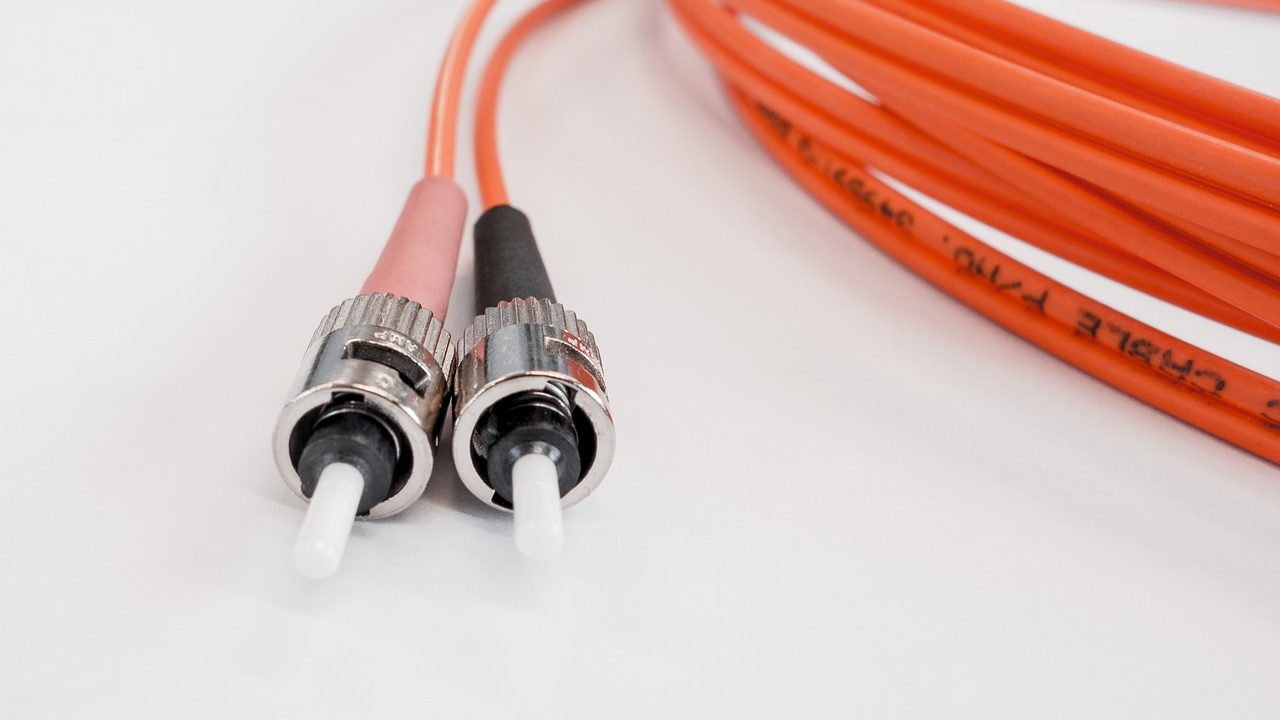
Chinese physicists set a quantum entanglement record this week, entangling two quantum memories across 420 kilometers of optical fiber — more than four times the distance of any previous demonstration. The achievement matters because quantum entanglement at distance is the foundational requirement for quantum key distribution, a method of securing communications where any interception attempt physically disturbs the system and is therefore detectable. Unlike classical encryption, which rests on mathematical problems that are difficult but theoretically solvable with sufficient compute, quantum key distribution is grounded in physical law. At 420 kilometers through fiber, intercontinental quantum-secured communications — running through the infrastructure that underlies the existing internet — is closer to practical reality. China's investment in quantum communications has been substantial, and this result suggests technical milestones are being reached ahead of most Western estimates from five years ago.
Scientists separately announced the first-ever detection of antineutrinos — the antimatter counterpart of neutrinos — emanating from spent nuclear fuel rods. Antineutrinos interact almost not at all with ordinary matter, making them extraordinarily difficult to detect. Spent fuel continues to generate them through radioactive decay long after a reactor shuts down. The most immediately practical application researchers cite is nonproliferation monitoring: if the antineutrino signature of spent fuel can be remotely detected, it offers a tool for verifying whether reactors are operating as declared and whether fuel is being diverted, without requiring physical on-site inspection — a meaningful capability given the difficulties of monitoring programs that are not fully cooperative with international inspection regimes.
The World Meteorological Organization warned this week that the El Niño building in the Pacific is approaching what climatologists classify as a 'very strong' threshold, and that the event is expected to intensify through October. Indonesia has already launched weather modification operations — cloud seeding — to counter worsening drought. The concern for Indonesia, the world's fourth-most-populous country at 277 million people, centers on rice production already under stress from the dry conditions characteristic of El Niño years in Southeast Asia. The WMO is assigning elevated probability to 2026 becoming the hottest year on record, a record previously set in 2025. El Niño events release stored ocean heat into the atmosphere, and a 'very strong' event layered on top of background greenhouse warming can produce temperature anomalies that set records even in years that would otherwise be average — the compounding effect that climate scientists have been modeling and that is now observable in real time.
In a more immediate application of autonomous technology, Florida schools announced the deployment of pepper-spraying drones designed to respond to active-shooter situations before law enforcement arrives. The stated logic is a non-lethal deterrent delivered faster than human response times allow. The concerns are substantive: accuracy in a chaotic environment with students sheltering in place, legal liability if the system deploys incorrectly, the psychological effect on students of attending schools with autonomous weaponized infrastructure, and the open question of whether a publicly known countermeasure retains deterrence value against a motivated attacker who can prepare for it in advance.
What If the AI Supercycle Is Neither Bubble Nor Boom — But a Railroad Story?

The entertainment stories of the week share an underlying theme: institutions discovering how little control they retain over information in a media environment where suppression amplifies. ABC, owned by Disney, blocked a Rosie O'Donnell Trump parody for Jimmy Kimmel's show — and the decision itself became the story, broadcasting the parody's existence to an audience far larger than the original broadcast would have reached. Wisconsin Democratic gubernatorial frontrunner Kayla Hong faced criticism from within her own party — including from Obama's former chief strategist David Axelrod — over a 'cancel Thanksgiving' remark made in a CNN interview, a week before her primary. A congressional candidate who shot a Flock automated license-plate-reader camera on camera and subsequently raised thousands in small-dollar donations demonstrated how a very specific surveillance concern can mobilize constituencies across ideological lines that agree on almost nothing else.
The policy story with the most direct effect on people's lives in this segment is the Trump administration's decision to end Medicare Part D's premium stabilization program a year ahead of its scheduled sunset, potentially raising prescription drug costs for 25 million enrollees on a compressed timeline. For a population largely on fixed incomes, drug cost increases are not abstract.
A writer identified as the author of 'Call Me' disclosed that she lost a $2.4 million book deal after AI-generated claims about her circulated — the author declaring the claims false. The incident illustrates two distinct failures: if publishers are making seven-figure decisions based on AI-generated research without verification, that is an editorial process failure; if AI systems are generating false biographical claims, existing legal remedies for defamation were not designed for the speed and scale at which such material spreads.
The 'What If We're Wrong' question this week targets the most confident claim in financial media: that the AI investment cycle is either a bubble approaching collapse or a transformation that justifies current valuations. Both Burry and Dalio's warnings and the Situational Awareness fund collapse have made the bubble thesis increasingly the modal view rather than the contrarian one. The more useful challenge is to ask what the bull case looks like if the skeptics are wrong on timing. The railroad buildout of the 1870s and 1880s appeared to be speculative excess — many individual railroad companies went bankrupt — but the physical railroads, once built, generated economic value for a century. Investors who lost money were not wrong that railroads were important; they were wrong about the timeline and about which specific companies would capture the value. The specific indicator worth watching: corporate AI revenue as an auditable line item in earnings reports. Most companies today report AI-driven cost savings or efficiency gains, not AI-native revenue. If specific, verifiable revenue figures attributed to AI products do not appear in meaningful volume by mid-2027, the bubble argument strengthens substantially. If they do, the Burry-Dalio timing analogy will have been wrong even if the structural observation was astute. A second scenario that current analysis underprices: a significant deflationary shock to compute costs. If the next generation of chips drops inference costs by 80 to 90 percent between 2025 and 2027, it would validate the technology while potentially undermining the companies whose valuations rest on selling expensive compute — because the companies that win in a cheap-compute world are not the same as those that win in an expensive one.