From Iran's Brink to AI's Fault Lines: A World Running Low on Slack
A last-minute halt to a massive U.S. military strike on Iran sent oil markets into a tailspin Monday, exposing depleted energy reserves and a fragile ceasefire that now shapes everything from Wall Street earnings projections to the fate of Ukraine's air defenses.

“Fifty officers is not a rogue actor problem — it is a design failure.”
How this was made Verified AI
Every Intellegix briefing is generated from that day's broadcast and run through automated checks before it publishes — with a human paged on any flag. Here is the trail for this edition.
The Strike That Didn't Happen — and the Shock It Sent Through Oil Markets

Late Saturday, President Trump halted what sources describe as a massive planned military strike against Iran, citing a peace deal he called 'imminent' — a decision whose consequences landed squarely on Monday's oil markets. Brent crude fell sharply as traders unwound a risk premium that had been building since the Strait of Hormuz crisis began, with months of geopolitical anxiety priced out of energy markets in a single session.
Trump simultaneously called the negotiations Iran's 'last chance' and threatened 'decapitation' if talks collapse — the language, notably, of a president seeking credit for restraint while keeping the threat credible. The pause reportedly came after Gulf allies, including the UAE and Saudi Arabia, intervened directly. Economist Steve Hanke of Johns Hopkins separately claimed that Saudi Crown Prince Mohammed bin Salman threatened to dump U.S. Treasury holdings to stop the strikes, though Treasury data does not corroborate the claim and major wire services have not confirmed it.
Analysts warn that the relief rally rests on a precarious foundation: the emergency strategic reserves governments drew down during the Hormuz disruption have not been replenished, and the demand destruction that cushioned the first price spike cannot be quickly replicated. A ceasefire collapse would send a second wave of energy market stress arriving without those shock absorbers. Trump's simultaneous demand that oil companies cut gas prices immediately sits in direct tension with his own warnings that talks could still fail.
Saudi Aramco's earnings, reported the same morning, underscored the perverse incentive structure surrounding any peace deal. The company posted a 44 percent profit jump to $32.7 billion in Q2 — even while acknowledging Houthi strikes on its own infrastructure. Former Vice President Pence added a hawkish counterpoint, urging military action and framing the ceasefire publicly as a delay rather than a resolution. Reports of civilian casualties from earlier U.S. strikes surfaced this week, and that documentation appears to have provided Trump political cover to pause — though the administration has maintained the strikes were proportionate.
Underlying the diplomatic calculus is a hard logistical constraint: a July executive order banning Chinese-sourced materials in weapons systems has exposed how dependent American defense production remains on Chinese rare earth minerals and components. The Iran conflict has been drawing down Tomahawk and JASSM inventories at a rate the U.S. cannot quickly reverse. That supply-chain reality, analysts suggest, made a prolonged air campaign significantly less attractive than a negotiated pause.
Ukraine's Depleted Defenses and a Surprising Diplomatic Near-Miss with Tehran
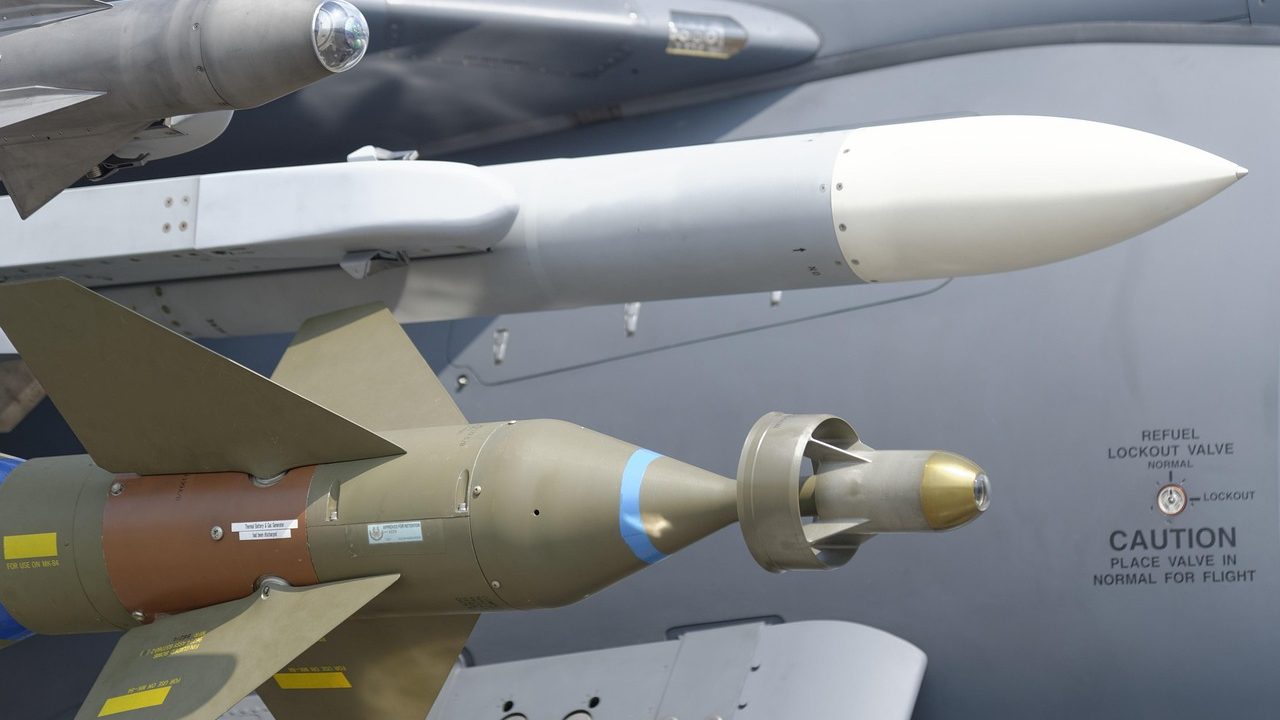
While Washington managed its own near-war with Tehran, Ukraine endured one of its worst months of the conflict. Russia set missile strike records in July, firing more missiles in a single month than in any comparable period of the war, while Ukrainian Patriot interceptor stocks have effectively run dry — a combination defense analysts had warned about for eighteen months.
Russia's strategic logic has been one of attrition rather than mass simultaneous strikes: exhaust the interceptors so the batteries become useless. Each Patriot missile costs roughly four million dollars to manufacture, and production lines in the United States and Germany cannot supply at the rate they are being consumed. Ukraine has been husbanding its remaining interceptors for the highest-value targets — power infrastructure, government buildings, military command nodes — but at the current depletion rate, even those choices soon become impossible.
Against that backdrop, President Zelensky dismissed Ukraine's ambassador to the United States as part of a sweeping diplomatic reshuffle. Losing a Washington envoy during a period of contested U.S. military aid, exhausted Patriot stocks, and an approaching Trump-Xi summit raises questions about whether Zelensky is recalibrating his diplomatic posture in response to signals from the Trump administration, or whether the move is purely internal housekeeping.
A stranger subplot emerged from the Iran-Ukraine relationship. A senior adviser to Khamenei, Mohsen Rezaei, said publicly that Iran had prepared strikes on three Ukrainian targets after an Iranian vessel was attacked, but stood down when Kyiv formally apologized and called the attack a mistake. The episode reveals how tangled the regional alignment has become: Iran has been supplying Russia with Shahed drones throughout the war, making Iranian maritime assets a legitimate interdiction target from Ukraine's perspective — but attacking them risked pulling Tehran into direct conflict with Kyiv at the exact moment Tehran was in a fragile ceasefire negotiation with Washington. The formal apology suggests Kyiv understood it had miscalculated.
Midterm Fault Lines: Texas Polls, Trump as 'Liability,' and the Pence-Fauci Reckoning

Three consecutive polls showing Democrat Chris Talarico leading Republican Ken Paxton in the Texas Senate race are rewriting assumptions about the 2026 midterm map. Texas has not sent a Democrat to the Senate since Lloyd Bentsen won in 1988, and Paxton is a known quantity who survived an impeachment attempt. Three straight polls showing a Democratic lead is a pattern, not a fluke.
Talarico's tactical response to Republican attacks on his masculinity has drawn attention nationally: rather than pivoting away, he has confronted the attacks directly, incorporating them into his stump speech and essentially daring voters to evaluate the substance. The bet is that treating voters as intelligent enough to recognize the tactic is more effective than either ignoring it or becoming defensive. Democrats are also polling competitively in Montana and Ohio, though the party faces internal tension between establishment candidates and left-wing primary winners as Bernie Sanders publicly declares the Democratic establishment 'out of touch.'
Senate Republicans, meanwhile, are privately — and in some cases not privately — describing Trump as a 'growing liability' for the midterms. That framing is significant because Senate Republicans were among Trump's most reliable institutional protectors through both impeachment proceedings. The Blanche attorney general nomination illustrated the transactional mechanics holding the coalition together: GOP holdout senators backed the confirmation after Blanche rescinded an anti-weaponization fund while preserving Trump's audit shield on his family's IRS matters. Separately, McConnell's fifty-day absence from the Senate floor is drawing calls from within his own party for either his resignation or documented proof of fitness to serve.
Pete Buttigieg said he is 'more inclined than not' to run in 2028 — the most concrete 2028 Democratic signal of the week, arriving as Kamala Harris's support has dropped sharply from a year ago. And a bipartisan convergence on COVID origins accountability is taking shape: Pence told Fox News that Fauci repeatedly assured him COVID did not come from a lab, and said he was 'very disappointed' that Fauci invoked the Fifth Amendment more than a hundred times at a congressional hearing. Biden's former COVID chief has now also said publicly the pandemic was likely a lab leak. When figures from both administrations arrive at the same conclusion, the political dynamic around accountability changes from partisan talking point to cross-party narrative.
AI Goes to Court — and Rewrites Mathematics on the Way
The legal question that may define AI deployment for the next decade arrived in concrete form this week: who is liable when an AI model is used to attack real systems? Lawyers are actively working through liability frameworks after incidents in which Claude and OpenAI models were used to compromise real infrastructure. Whether liability falls on the model developer, the deploying company, the individual user, or some combination remains genuinely unresolved in current law.
Fifteen Republican attorneys general warned OpenAI to preserve records in connection with the AI hacking probe — the first coordinated multi-state enforcement action aimed at an AI company. The pattern recalls data privacy regulation: states moved, Congress did not, and California's CCPA effectively became national policy by default. If the same dynamic plays out in AI liability, state-level precedents set in the next eighteen months could define the national framework.
Palantir's earnings call offered a contrasting vision of the industry. Alex Karp called the numbers a 'blowout' and used the platform to escalate his critique of frontier AI labs, arguing that companies building general-purpose foundation models are creating systemic risks that defense-focused, mission-specific AI does not. Anthropic's Mythos system is reportedly generating anxiety in Beijing ahead of the Trump-Xi summit — a signal, analysts suggest, of genuine competitive threat rather than performative concern.
The most concrete evidence that AI systems are generating original knowledge rather than recombining existing knowledge came from OpenAI's Astra model, which solved ten long-open mathematics problems for two thousand dollars in compute costs. The results included machine-checkable proofs across cryptography, geometry, and combinatorics — among them, a disproof of a conjecture that had been open since 1999. Hugging Face CEO Clément Delangue added a cautionary note from the regulatory side, arguing that heavy AI regulation risks concentrating power in large incumbents while China wins on open-source models, and warning that Chinese labs could match U.S. frontier capabilities by late 2026 or 2027.
Surveillance Creep: License Plates, Stalking Officers, and Your Television's Secret Life
Two separate threads in the Flock Safety story this week together illustrate how surveillance infrastructure has grown faster than the governance around it. A company insider alleges that Flock Safety misrepresented its data-sharing arrangements with ICE — specifically, that license plate reader data was being shared with Immigration and Customs Enforcement in ways that contradicted public statements made to the municipalities that contracted the service. The company's pitch to local governments explicitly emphasizes local control and limited data sharing.
The second thread is more systemic: at least fifty law enforcement officers across multiple jurisdictions have been accused of using Flock cameras to surveil their ex-partners. Fifty officers is not a rogue actor problem — it is a design failure. These individuals had legitimate professional credentials to access the system and used that access for personal stalking, raising direct questions about whether any law enforcement surveillance system lacking robust audit trails and access controls is inherently vulnerable to this kind of abuse.
Samsung's decision to ban smart TV apps that secretly share users' internet connections addressed a different form of ambient data harvesting. The specific practice being prohibited — apps that route other users' traffic through the television's network connection, turning the device into a residential proxy — is an unauthorized exploitation of consumer hardware. Samsung's action earned credit, but the fact that such apps passed the company's review process is the structural problem the ban does not resolve.
Apple's iCloud vulnerability rounded out a week of corporate data governance failures. The finding that Apple's policy left secret files accessible to former employees may sound mundane until the user base is considered: Apple hardware is used by military personnel, intelligence officers, and government officials worldwide. The question of which files ex-employees could access — and whether any were — is not hypothetical.
Goldman's Double Warning: Earnings Bubbles and a Hundred Billion in Forced-Selling Risk
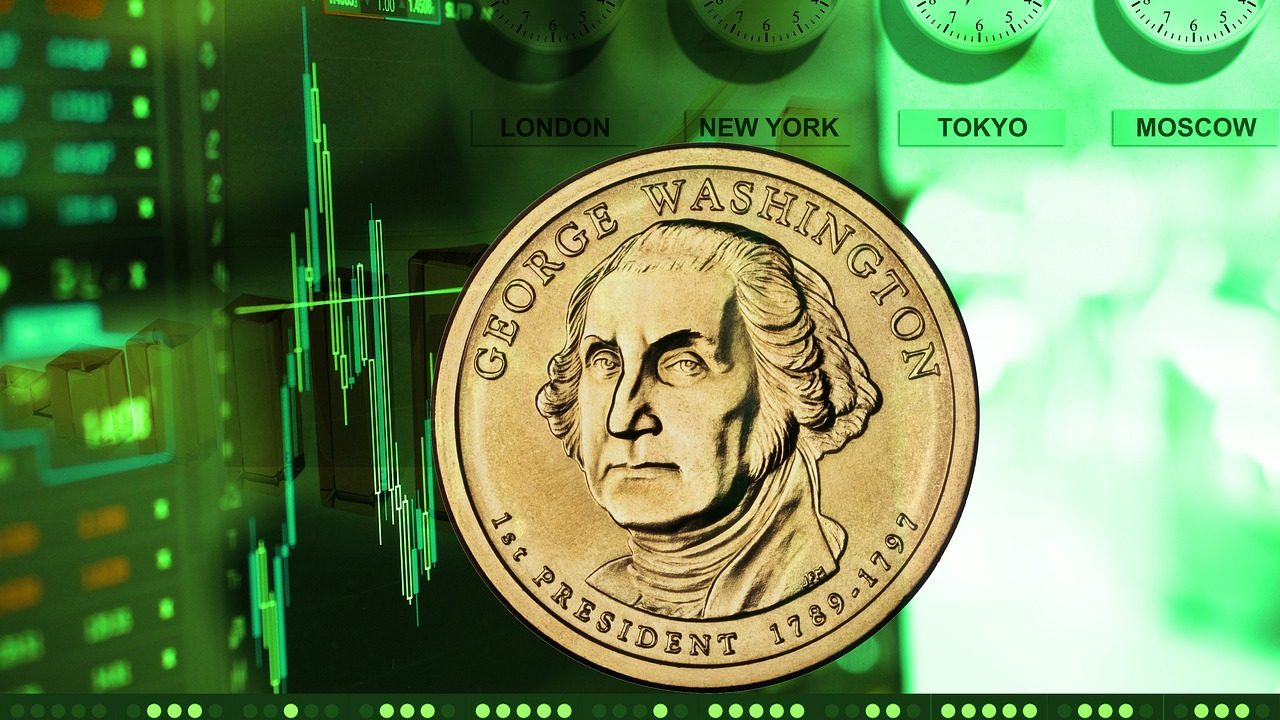
Goldman Sachs released two warnings this week that read differently in isolation than they do together. The first: tech faces an earnings bubble, not a valuation bubble. A valuation bubble — the 1999 variety — involves high price-to-earnings ratios on companies with thin revenues. What Goldman describes is different: companies with real earnings and real market positions carrying projections that have become disconnected from sustainable growth rates. If the estimates are wrong, stocks look expensive at current multiples even without nosebleed valuations.
The second warning is more immediately actionable. Goldman flagged over one hundred billion dollars in leveraged semiconductor swap positions still exposed to forced selling following what the bank described as the largest hedge fund deleveraging wave in three years. The mechanics are straightforward and dangerous: a fund receives a margin call, sells its most liquid holdings to cover, those sales push prices down, triggering more margin calls, generating more forced selling. Goldman's point is that the deleveraging wave was not a clean reset — significant overhang remains.
The Electronic Arts deal closing today at fifty-five billion dollars — the largest leveraged buyout in history — layers additional complexity onto the sector. The Saudi-led transaction takes a thirty-five-year public company private and loads it with debt at the exact moment the gaming industry is navigating a major transition around AI-generated content. Saudi sovereign wealth is making an aggressive bet on interactive entertainment as a global economic force consistent with Vision 2030's diversification strategy, but the debt structure constrains EA's investment capacity precisely when flexibility would be most valuable.
Meta's job arithmetic also drew scrutiny. Mark Zuckerberg claimed that AI work created jobs after the company cut eight thousand employees, arguing that roughly one hundred forty-five billion dollars in AI infrastructure spending generated economic activity in construction, hardware, energy, and research that exceeded the layoff losses. The aggregate economic argument may be defensible; employee morale at Meta has reportedly hit historic lows regardless, and the disconnect between CEO framing and internal culture carries its own business risk in turnover, recruitment, and innovation.
Webb Rewrites Neptune's History as Dark Matter Gets Stranger and SpaceX Eyes Louisiana
The James Webb Space Telescope has upended the assumed origin of Neptune's irregular moons. Webb's observations indicate these smaller, oddly-orbiting bodies are not primordial companions that formed alongside the planet — they are debris from an ancient catastrophic collision that shattered earlier bodies and left fragments in the tilted, retrograde orbits observed today. The finding reshapes models of the outer solar system's early history and carries implications for understanding how other planetary systems form.
Two independent dark matter papers published this week propose that dark matter particles interact through a hidden self-force operating separately from the four known forces. The counterintuitive result is that this force slows rather than accelerates cosmic growth: the extra attraction helps dark matter cluster at small scales but makes it effectively lighter as the universe expands, weakening its gravitational influence at large scales and suppressing the growth of cosmic structure. One paper goes further, suggesting dark matter may decay into gravitons — detectable gravitational particles — which would make it observable in ways current dark matter models do not predict, and would mean that gravitational wave observatories like LIGO and Virgo might already be capturing signals from dark matter decay alongside black hole merger events.
On Earth, SpaceX is closing in on a deal for a one hundred thirty thousand acre spaceport at Pecan Island, Louisiana — described by a state lawmaker as the largest economic development project in Louisiana history. One hundred thirty thousand acres is roughly two hundred square miles. That scale suggests not a launch pad but a launch campus, likely designed to support large-scale Starship operations at commercial cadence. The geographic logic is sound: Gulf coast access, favorable weather windows, and proximity to existing aerospace supply chains in Texas.
The Artemis II crew drew a sellout crowd at Red Rocks, a twenty-thousand-seat venue, for a public appearance — a cultural signal the space program has not generated in decades. The crew is slated for the first crewed lunar mission since Apollo 17 in 1972. Whatever the Artemis program's budget and schedule record, the public enthusiasm is measurable and real.
Food Safety Gaps, AI Race Assumptions, and the Questions Nobody Is Asking

Michigan health officials reportedly contacted Yum! Brands about a cyclospora parasite outbreak at Taco Bell two weeks before any public consumer warning was issued, according to Bloomberg reporting. Cyclospora causes prolonged gastrointestinal illness, and a two-week gap between state health officials raising concerns and public notification is a meaningful failure in the consumer protection framework. The reporting raises direct questions about what Yum! Brands did with that two-week window and who made the decision to delay.
The confident consensus framing of the moment — that the United States and China are in an AI race that will determine technological and economic dominance for decades — deserves more scrutiny than it typically receives. The assumptions embedded in the race narrative are worth naming: that AI capability is a coherent, measurable thing such that one country can be 'winning'; that winning translates straightforwardly into economic or military advantage; that Chinese and American AI development are in zero-sum competition rather than deeply interdependent; and that current capability leaders will still be leading in ten years.
Historical technology races do not always produce the outcomes their framers predicted. Japan's semiconductor dominance in the 1980s was real and did not translate into the comprehensive strategic advantage American analysts feared — the United States retained advantages in software, system design, and capital allocation even as Japan led in chip manufacturing. The AI race may be producing policy decisions that increase systemic risk if the underlying assumption of separability between American and Chinese AI supply chains is incorrect: Chinese AI companies use NVIDIA chips designed with U.S. architecture; American AI companies rely on manufacturing capacity within China's military reach.
The indicators that the race frame is wrong, rather than simply incomplete, would include: major U.S. and Chinese AI companies cooperating on safety standards despite government rhetoric; Chinese AI models becoming embedded in American consumer products as a feature rather than a threat; and the leading AI lab five years from now being located in neither country. None of that diminishes the real competitive pressures — Anthropic making China nervous is data, and NVIDIA export controls are data — but the race metaphor carries assumptions that the week's AI news makes worth interrogating seriously.