Drones Over Moscow, Airspace Closures in the Gulf, and a Supreme Court Ruling That Reshapes Presidential Power: July 18, 2026
Ukraine launched its largest drone barrage on record against the Moscow region as Iran's conflict with the United States shuttered Gulf airspace and the U.S. Supreme Court handed the White House sweeping new authority over independent federal agencies — a convergence of crises that defined the morning of Saturday, July 18th, 2026.
How this was made Verified AI
Every Intellegix briefing is generated from that day's broadcast and run through automated checks before it publishes — with a human paged on any flag. Here is the trail for this edition.
Ukraine's Record 370-Drone Barrage Reaches Deep Into Russia
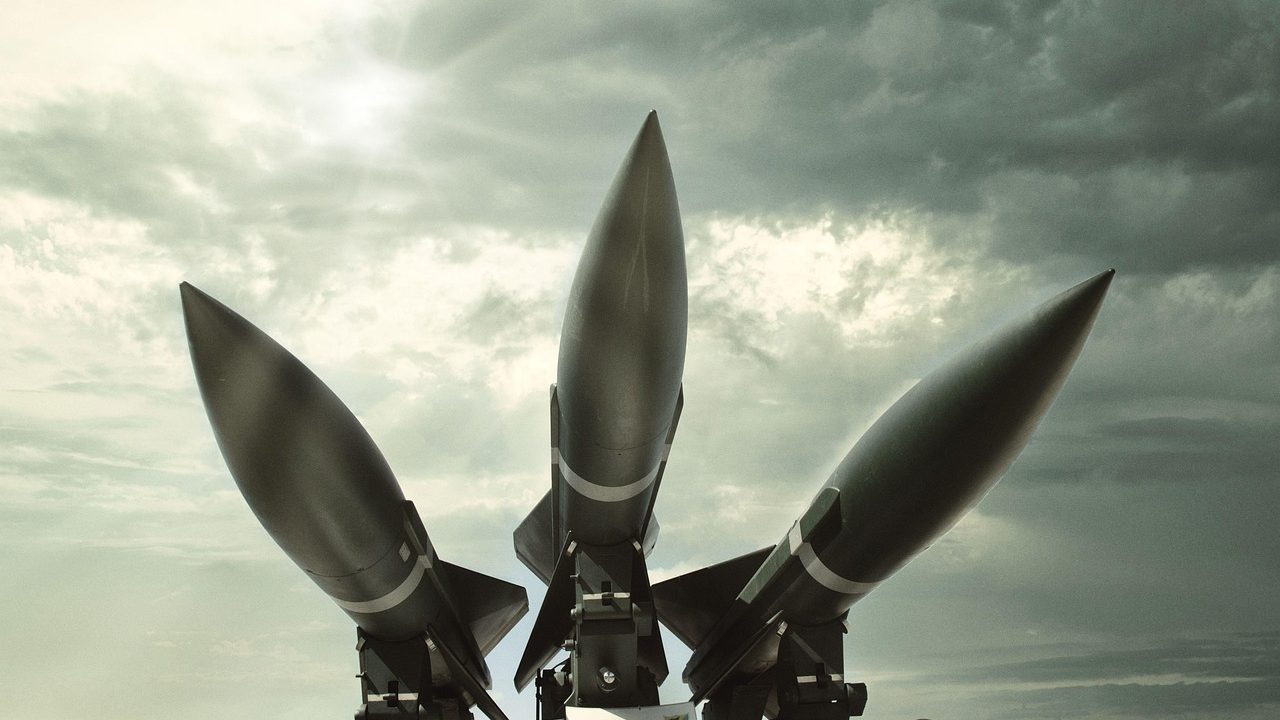
On the night of July 17th, Ukraine launched approximately 370 drones simultaneously toward the Moscow region and surrounding oblasts — the largest single-night barrage Ukraine has conducted, surpassing a previous record of around 250 drones in early 2026. Seven workers were killed when one struck a Wildberries warehouse in Tambov Oblast, roughly 480 kilometers southeast of Moscow. Wildberries is Russia's largest e-commerce platform. Fires also broke out at a second warehouse and at a nearby oil depot.
The targeting logic reflects a deliberate dual-purpose strategy: hitting logistics infrastructure — warehouses and fuel depots — disrupts Russian economic activity, generates damage visible to Russian civilians, and forces Moscow to divert air defense resources away from the front lines in eastern Ukraine. The fact that drones penetrated defenses within a few hundred kilometers of the Kremlin, despite Russia's concentric rings of S-400 systems, Pantsir batteries, and electronic warfare equipment, represents a significant embarrassment for the Russian military establishment and suggests Ukraine has identified exploitable gaps in timing or corridor coverage.
Russia's response came in the Black Sea theater, with a fresh strike on Odesa's port targeting grain trade infrastructure — a continuation of the pattern that has run since Moscow withdrew from the Black Sea Grain Initiative in 2023. Disruption at Odesa, a critical export point for global wheat and sunflower oil shipments, typically reverberates to food prices in North Africa and the Middle East within weeks.
A separate but strategically significant development came with President Zelensky's announcement that Ukraine will open its intelligence archives on the 1943 Volhynia massacre — the killing of between 50,000 and 100,000 ethnic Poles by Ukrainian nationalist forces during World War Two. The gesture toward Poland, one of Ukraine's most critical military and political supporters, is timed deliberately ahead of Polish parliamentary elections in the fall, offering Warsaw a diplomatic concession to bring home to voters at a politically sensitive moment.
Gulf Airspace Closes as Iran Escalation Warnings Intensify

Kuwait halted flights at its international airport after Iranian strikes disrupted Gulf airspace, sending ripple effects through passenger and cargo routes connecting South Asia to Europe. The closure crystallized the breadth of regional disruption the Iran-U.S. conflict is generating, with insurance premiums for Gulf shipping spiking and Gulf Cooperation Council governments — many of which host major U.S. military installations — facing acute pressure to push for de-escalation.
Senator Chris Murphy of Connecticut called the conflict the greatest foreign policy disaster in twenty years, a framing that explicitly invokes the 2003 Iraq invasion and argues the current administration abandoned diplomatic off-ramps prematurely. The administration's defenders counter that Iranian nuclear progress required a military response and that the diplomatic track had been exhausted.
Tehran's position hardened further when a senior adviser to Supreme Leader Khamenei stated publicly that if U.S. strikes continue, Iran will shift from retaliatory strikes to what he described as a full-scale invasion — a departure, if genuine, from Iran's long-standing doctrine of strategic patience through proxies and asymmetric means. Analysts are divided on whether the statement reflects a real shift in Tehran's internal calculus or is designed to deter further U.S. action by raising the perceived cost.
Iran is a fundamentally different adversary from Saddam Hussein's Iraq: it possesses a sophisticated ballistic missile program, a network of proxy forces stretching from Lebanon to Yemen to Iraq, and a domestic political structure capable of mobilizing nationalist sentiment. Those factors make the dynamics of any prolonged conflict substantially more complex than the Iraq comparison implies, providing internal logic to the administration's argument that the window for action was closing — even for observers who disagree with the conclusion.
Supreme Court Ends 91 Years of Independent Agency Protections
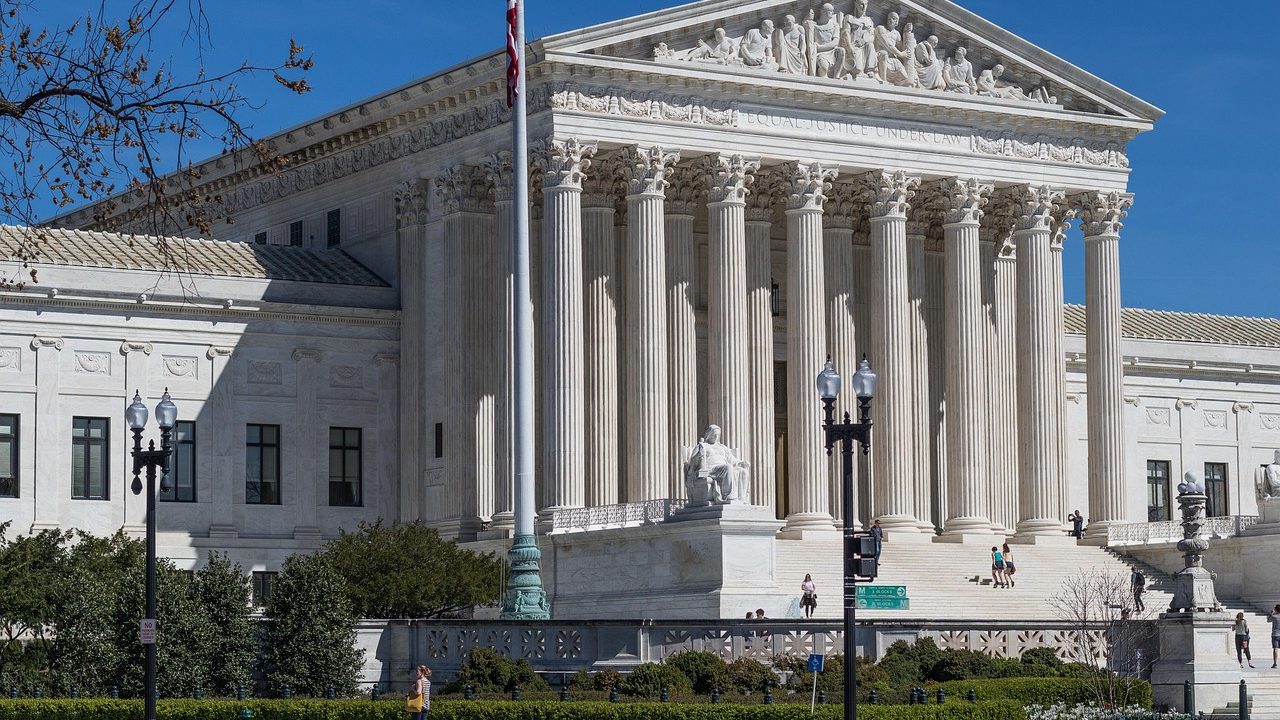
The Supreme Court's ruling in Trump v. Slaughter overturned the 1935 Humphrey's Executor precedent, eliminating the legal protections that had for ninety-one years insulated leaders of independent federal agencies — the FTC, FCC, NLRB, Federal Reserve, and SEC among them — from presidential removal without cause. Officials who had been fighting their dismissals in court began dropping their lawsuits almost immediately after the ruling, recognizing that the legal foundation beneath them had been removed.
The practical consequences are immediate and far-reaching. The FCC's remaining Democratic commissioner publicly accused the Trump administration of using broadcast license threats as what she called a 'naked attempt to bully broadcasters.' That accusation carries new weight now that commissioners can be dismissed at will: the threat implicit in any policy disagreement is no longer theoretical, altering the internal dynamics of every independent regulatory body in Washington.
Secretary of State Rubio separately announced visa restrictions targeting what the administration characterized as far-left groups, a move that fits a broader pattern of deploying executive tools — where the administration holds broad statutory authority — against organizations it disfavors. An appeals court revival of a U.S. Postal Service mail-ballot rule and Senator Hawley's expanded probe accusing Postmaster General Steiner of dodging congressional oversight added further friction to the machinery of elections ahead of the midterms.
In Maine, the Democratic Party is holding county delegate meetings this weekend to replace Senate nominee Platner, with 500 delegates set to vote on a new nominee on July 25th — a race with potential implications for Senate control in November. In California, a new poll shows Xavier Becerra leading Steve Hilton by 25 points in the governor's race. Jennifer Siebel Newsom, in her first interview about the DOJ's tax investigation into her finances, called it a fishing expedition designed to silence her husband, while a Brooklyn federal prosecutor handling the Adani fraud case publicly stated he was 'not the decisionmaker' on the DOJ's move to dismiss charges — pointedly declining to endorse the decision and signaling significant internal disagreement.
AI Industry at a Pivot: New Metrics, Access Controls, and a $10 Billion Compute Deal

OpenAI's chief financial officer proposed this week that the AI industry adopt a new standard called 'useful intelligence per dollar' as the primary measure of model value — a shift away from capability benchmarks like coding and reasoning tests toward what enterprises actually care about: return on spending. The proposal is shrewd positioning ahead of an anticipated IPO; defining the measurement standard is a way of shaping how investors and enterprise buyers evaluate a competitive landscape that OpenAI believes it can win on cost-efficiency grounds.
The Trump administration is reportedly moving to gate access to frontier AI models, a policy the Palantir CTO publicly justified by accusing China of conducting 'distillation attacks' — systematically collecting American AI model outputs to train competing Chinese models. Distillation allows a competitor to approximate the behavior of a larger model using collected input-output pairs, without accessing the underlying weights or training data, capturing significant value at a fraction of the cost. Google's Gemini 3.5 Pro was delayed after reportedly falling short of internal benchmarks, underscoring how quickly the capability bar is moving and the strategic liability of any timeline slip in a market where competitors are actively building switching costs.
Mira Murati's startup, founded after her departure from OpenAI in late 2024, released an open-weight model aimed at enterprises concerned about proprietary data entering closed systems they cannot audit. The model can be deployed on a company's own infrastructure and its weights inspected — a direct response to enterprise trust concerns that Murati has positioned her company around.
The largest business story in AI this week is a reported arrangement in which Meta would lease AI compute capacity to Anthropic through a new division called Meta Compute, in a deal valued at approximately ten billion dollars. For Meta, the deal monetizes enormous capital already invested in data centers and custom chips. For Anthropic, it provides a path to scale compute without the capital expenditure of building independent infrastructure — the primary constraint on frontier model training. The arrangement would also create a notable competitive tension: Meta's Llama series and Anthropic's Claude series are direct rivals in the enterprise market, and antitrust regulators are certain to examine a compute-leasing arrangement between competing AI model providers.
xAI's Grok added automation features allowing it to run recurring scheduled tasks and respond to incoming emails, with the email-trigger capability reserved for SuperGrok subscribers. The move shifts Grok from a conversational interface toward an autonomous agent capable of handling ongoing workflows — a meaningful product differentiation play in a market where email remains the backbone of enterprise communication.
Ransomware Breach Leaks Apple's Variable Aperture Plans; Critical Infrastructure Vulnerabilities Exposed

Engineering documentation exposed in a ransomware breach at Tata Electronics — an Apple component manufacturer in India — reportedly contains references to a new Sony image sensor and Apple's first-ever variable aperture system, expected in the iPhone 18 Pro Max. Variable aperture allows independent control of how much light enters a lens, enabling depth-of-field effects and simultaneous performance in bright and low-light conditions that fixed-aperture smartphone cameras cannot achieve. If the leaked documents are accurate, it would represent a genuine hardware leap in mobile photography rather than incremental improvement.
The Tata breach illustrates a structural vulnerability in Apple's supply chain diversification strategy. The company has been shifting manufacturing to India partly to reduce geopolitical dependence on China, but the incident demonstrates that geographic risk diversification does not automatically confer cybersecurity protection — a company's security posture is only as strong as its weakest supplier's.
Separately, security researchers identified three chained zero-day vulnerabilities in Siemens RUGGEDCOM ROX II industrial network switches, used in power grids, water treatment facilities, and other critical infrastructure. Exploited together, the chain grants an attacker persistent root access — the ability not just to read data but to modify operational parameters and potentially cause real-world physical damage. The disclosure coincided with news of an accused Russian cyber spy previously employed at Kaspersky Lab, reinforcing longstanding Western intelligence concerns about the firm's ties to Russian state intelligence after the U.S. government banned Kaspersky software from federal systems in 2017.
TikTok is testing a deepfake detection tool that alerts creators when their likeness has been used in fabricated video without consent — a response to the growing use of creator deepfakes in fraudulent investment schemes targeting their audiences. Financial technology giant FIS announced it is joining Anthropic's Project Glasswing, deploying the Mythos 5 model to scan its own systems for cybersecurity vulnerabilities — part of a broader industry shift toward AI-assisted red-teaming designed to identify weaknesses before adversaries do.
Chip Selloff Drags Nasdaq to Worst Week in a Month; Antitrust Questions Loom Over Semiconductor Dominance

The Nasdaq fell nearly 3% for the week ending July 18th — its worst seven-day stretch in over a month — as investors rotated out of semiconductor and AI-adjacent stocks into sectors like banking that had underperformed during the AI rally. S&P futures on Saturday morning were sitting around 7,497, down roughly 80 points, suggesting selling pressure had not yet exhausted itself. Elon Musk's net worth fell below 800 billion dollars after a failed Starship launch drove SpaceX shares to a post-IPO low; his peak fortune was approximately 1.45 trillion dollars weeks earlier, implying a decline of more than 650 billion dollars from peak.
Nvidia CEO Jensen Huang predicted this week that semiconductors will become the world's largest industry, driven by AI compute demand scaling to a degree that would surpass oil and gas and financial services in economic magnitude. The prediction arrives against a backdrop of growing antitrust scrutiny: Nvidia controls an estimated 80% of the AI chip market by some measures, though under the Sherman Antitrust Act's Section Two, market share alone does not establish liability. What regulators would need to prove is that Nvidia achieved or maintained dominance through anticompetitive conduct — exclusive dealing, predatory pricing — rather than through superior products, an evidentiary standard substantially harder to meet than simply demonstrating concentration.
The SEC voted to advance a rule allowing public companies to report financial results semiannually rather than quarterly, despite receiving more than 200,000 opposition comments — the largest comment volume in the agency's history. Proponents argue quarterly reporting drives short-termism in corporate management; opponents counter that moving to six-month reporting windows gives insiders a sustained information advantage over retail investors, undermining the disclosure principles the SEC exists to enforce.
Morgan Stanley executives sold millions in dollars of stock following a record quarter, a move that while consistent with planned diversification strategies raised natural questions about whether insiders view the record results as a high-water mark given geopolitical uncertainty in investment banking pipelines. GameStop's Ryan Cohen publicly vowed to pursue eBay 'one way or another,' signaling acquisition ambitions in e-commerce platforms despite the significant gap between the two companies' market capitalizations. Hyundai completed its acquisition of Boston Dynamics' remaining shares from SoftBank in a 325-million-dollar deal that valued the robotics firm at approximately 3.4 billion dollars — more than triple SoftBank's roughly one-billion-dollar acquisition valuation in 2021.
7.4 Earthquake, Wildfire Smoke Alerts, and a Lunar Communications Deal
A magnitude 7.4 earthquake struck Mexico's Chiapas coast Saturday morning, triggering Pacific tsunami warnings. Chiapas is one of Mexico's poorest states with limited emergency response infrastructure, raising concerns that the human impact could be severe even as international attention remains concentrated on conflicts in Eastern Europe and the Middle East. The Pacific Tsunami Warning Center's alerts extended to Hawaii and the U.S. West Coast, though wave data was expected to clarify actual tsunami potential and allow downgrading of those warnings.
Canadian wildfire smoke forced Code Purple air quality alerts — the second-highest designation on the air quality index, at which even healthy adults are advised to avoid extended outdoor activity — across Richmond, Virginia this weekend. The scale of smoke transport affecting mid-Atlantic populations hundreds of miles from the source fires was described as a recurring summer condition that historical records show was relatively rare until recent years.
NASA selected SpaceX Starlink to provide communications for the Artemis III mission, the planned first crewed lunar landing since Apollo 17 in 1972, which targets the Moon's south pole. The contract extends Starlink's NASA relationship from crew launch services into mission communications for an extraordinarily high-stakes operation, deepening the agency's interdependence with Elon Musk's company at a moment when Musk's political relationships with the current administration are simultaneously a subject of public controversy.
A Stanford study found that blocking a specific receptor involved in cellular stress response slows aging markers in mice. Researchers cautioned that translation rates from mouse longevity studies to human interventions have historically been low, but the identification of a specific receptor creates a defined drug-development target if the pathway proves to exist in humans. The Dark Energy Camera, operated by the National Science Foundation at the Cerro Tololo observatory in Chile, captured an image of a nearby star nursery that researchers described as van Gogh-like in visual texture — providing data on stellar formation that helps astronomers model how the solar system formed approximately 4.5 billion years ago.
California Attorney General Bonta filed a second legal challenge to a $111 million Interior Department deal with a company called Invenergy to cancel an offshore wind lease off the Central California coast. The state argues the federal government cannot unilaterally cancel energy leases that California's clean energy transition depends on — a federalism dispute about offshore energy development authority with direct implications for the state's ability to meet its renewable energy targets.
Trump Claims FIFA Pressure, College Sports Bill Nears Filibuster Threshold

During a White House reception celebrating the ongoing World Cup — co-hosted by the United States, Canada, and Mexico — President Trump boasted about personally pressuring FIFA over a red card issued to U.S. striker Folarin Balogun, who plays for Monaco but is eligible for the national team. FIFA's statutes explicitly prohibit government interference in soccer governance, a rule enforced by suspending countries whose politicians control national federations. Whether FIFA takes formal action remains uncertain; the organization has historically shown flexibility toward powerful host nations, but the public boast itself constitutes precisely the kind of political interference its rules exist to prevent.
Federal legislation establishing a framework for college athlete compensation reportedly has sixty Senate votes — enough to clear a filibuster — according to discussions this week. The bill would potentially supersede the patchwork of state NIL laws and rapidly evolving NCAA rules that have reshaped college sports since the Supreme Court's 2021 Alston decision. The remaining obstacle is winning over Southeastern Conference and Big Ten athletic conferences, which have raised concerns about revenue-sharing mechanics under a federal structure. The legislation faces a tight timeline before the August congressional recess.
Marvel's release of a Wolverine film trailer — expected to be a major media event — was largely overshadowed by fan anger over Sony's decisions regarding physical media formats and disc releases. The intensity of the backlash suggested that for a significant portion of the entertainment fanbase, physical media ownership has become a perceived rights issue rather than simply a format preference.
Examining the most confident claim circulating in markets this week — that the AI semiconductor supercycle will continue at rates justifying current valuations — the bear case rests on three credible risks: AI model efficiency is improving faster than expected, potentially reducing raw compute demand below current buildout levels; enterprise AI adoption has been slower than initial projections, raising questions about whether infrastructure investment will generate expected returns; and U.S. export controls combined with Chinese domestic chip development could fragment the global market in ways that reduce the total addressable demand for American semiconductor companies. None of those scenarios has clearly materialized, but the Nasdaq's difficult week suggests some investors are beginning to price in the possibility. The honest assessment is that Jensen Huang's very long-run prediction may prove correct while near-term valuations remain vulnerable to variables — model efficiency progress, enterprise adoption pace, geopolitical friction — that are genuinely difficult to forecast.