Gulf Crisis, Senate Earthquake, and AI Economics Collide in a Week of Cascading Shocks
From a Qatari maritime shutdown shadowing the Strait of Hormuz to the sudden death of Senator Lindsey Graham and an AI industry grappling with the limits of its own euphoria, Monday, July 13, 2026 delivered an unusually dense convergence of geopolitical, political, and economic disruption.
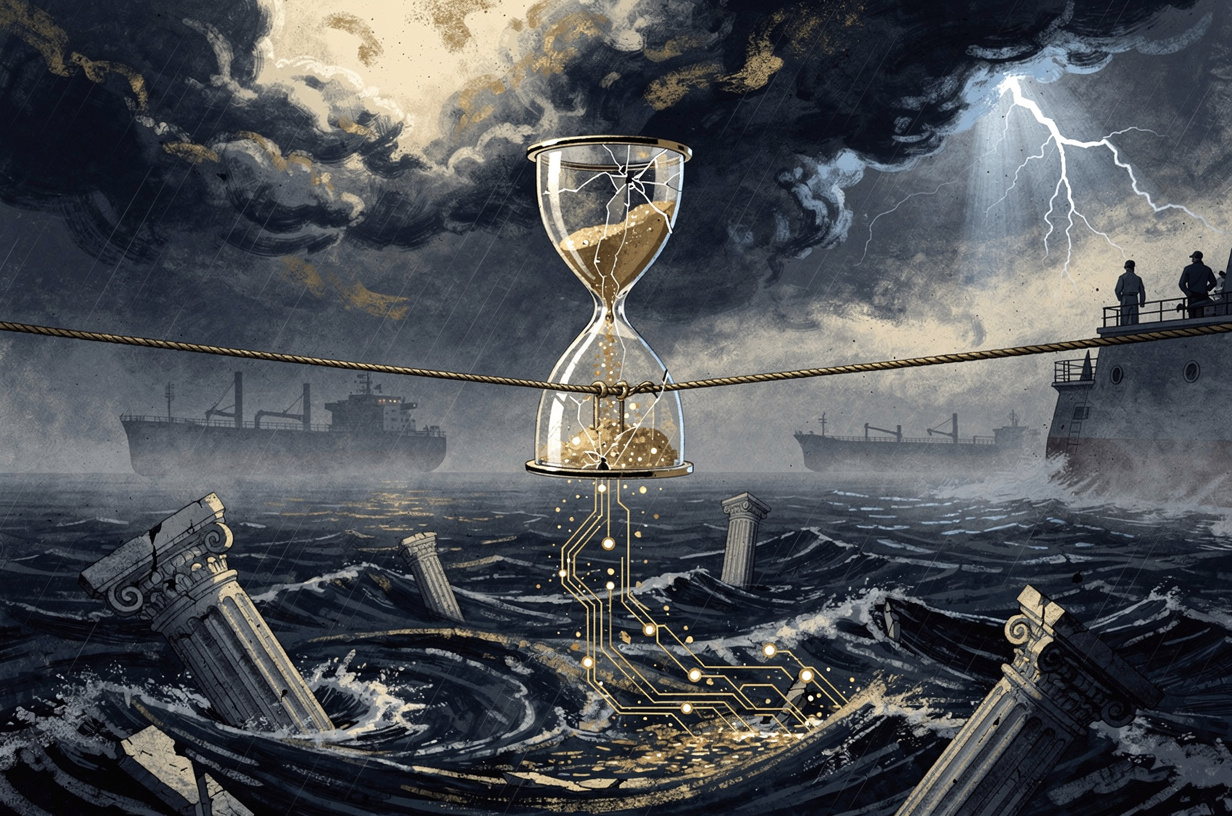
“That Qatar was willing to absorb that cost signals how acutely Gulf states are reading the regional threat.”
How this was made Verified AI
Every Intellegix briefing is generated from that day's broadcast and run through automated checks before it publishes — with a human paged on any flag. Here is the trail for this edition.
A World on Edge: The Stories Driving the Week

A Qatari port sits empty, vessels ordered to stay put as U.S. and Iranian military forces continue exchanging fire across the Persian Gulf. President Trump declared the Strait of Hormuz open to traffic over the weekend — yet Qatar, host of Al Udeid Air Base, the largest American military installation in the Middle East, has suspended all maritime navigation. That gap between official reassurance and market reality sets the tone for one of the most turbulent news days of 2026.
The fallout extends far beyond the Gulf. Senator Lindsey Graham died Saturday at 71 from a preliminary finding of aortic dissection, with the FBI joining the investigation; Treasury Secretary Scott Bessent is reportedly fielding calls to seek Graham's Senate seat; and Senator Mitch McConnell is simultaneously hospitalized, straining Republican legislative math at a critical moment. The 'Big Beautiful Bill' hangs in the balance.
In technology, Nvidia's Jensen Huang disclosed quarterly revenue approaching one hundred billion dollars — not annualized, per quarter — even as 166,000 tech workers have lost jobs this year in what analysts are calling the 'forever layoff' era. Sam Altman and Elon Musk are trading public accusations over the economics of orbital computing, and Anthropic briefly attempted to charge a free-tier user sixteen point six million dollars due to a billing glitch. Meanwhile, SpaceX's Starship Flight 13, scheduled for Thursday, will carry actual satellites for the first time, crossing from development into at least early commercial operation.
Hormuz on a Hair Trigger: The Gulf Crisis and Its Global Stakes

Trump declared the Strait of Hormuz open to traffic over the weekend and called a permanent deal with Iran 'very possible' — even 'one of the great deals' he could make. Yet Qatar moved in the opposite direction, suspending all maritime navigation, a decision that carries enormous economic self-harm for an economy built on liquefied natural gas exports. That Qatar was willing to absorb that cost signals how acutely Gulf states are reading the regional threat.
Saudi Arabia separately denounced Iran's attacks on Gulf states — a significant rupture given that Riyadh and Tehran had been engaged in a Chinese-brokered diplomatic normalization process since 2023. Trump presented Tehran with a fourteen-point proposal, which Iran is reportedly reviewing. But a sitting Iranian lawmaker warned publicly that the White House is 'no longer safe' for Trump, a statement calibrated to play to domestic hardliners and signal that the Revolutionary Guard and parliamentary hawks are not prepared to accommodate any deal. The moderates around President Pezeshkian may be willing; the hardliners emphatically are not.
Israeli Prime Minister Netanyahu has publicly backed Trump's diplomatic approach — a notable shift given Israel's historical preference for maintaining permanent maximum pressure on Iran. Analysts attribute the endorsement to Netanyahu's calculation that a deal requiring verifiable nuclear rollback is preferable to escalation he cannot fully control. But a reported rift persists: Israel wants complete nuclear dismantlement; Trump may be willing to accept significant curtailment in exchange for economic relief. That gap is not minor.
Experts are also noting that while Trump has reportedly left standing orders to strike Iran in the event of his assassination, no president can legally bind a successor's military decisions — Vice President Vance would make his own call. The Strait of Hormuz carries roughly twenty-one million barrels of oil per day. Even elevated tension, short of an actual blockade, is sufficient to sustain the risk premium now rippling through energy markets, affecting airlines, plastics manufacturers, and consumers with heating bills worldwide.
Graham's Death Reshapes the Senate at the Worst Possible Moment
Senator Lindsey Graham of South Carolina died Saturday at 71. Preliminary findings indicate an aortic dissection — a tearing of the aorta's inner layer that can kill within hours if undetected. Graham died at his Washington, D.C., home hours after returning from a trip to Kyiv, one of many he had made as one of Congress's most visible Ukraine supporters. The FBI has joined the investigation, which press accounts describe as standard institutional protocol for the death of a sitting senator given the geopolitical circumstances of his final trip; no foul play has been reported.
The Kyiv detail carries legislative weight. Graham had championed a Russia sanctions bill imposing significant additional financial penalties on Moscow and on countries facilitating Russian sanctions evasion. His allies are now invoking his death to pressure wavering colleagues, creating a situation in which his passing may accomplish legislatively what his advocacy was building toward. Trump's own public comment — that Graham was 'into keeping' the Ukraine war going — read as a critique even in the context of mourning, illuminating the enduring fracture within the Republican Party on Ukraine policy.
Treasury Secretary Scott Bessent is reportedly fielding calls from GOP power brokers to seek Graham's Senate seat in South Carolina. That prospect is generating concern among foreign policy and economic professionals, because Bessent has been among the most competent navigators of the administration's tariff architecture and trade negotiations, including the stalled U.S.-India talks ahead of a July 24 deadline. Losing him from Treasury at this moment would carry its own consequences.
Senator McConnell's simultaneous hospitalization has compounded Republican vulnerabilities. Republicans hold a narrow Senate majority and cannot absorb many absences or defections. Democrats are already framing the 'Big Beautiful Bill' — and particularly its Medicaid provisions — as a midterm campaign weapon, a deliberate effort not to repeat what party strategists believe was a failed communication strategy around the Affordable Care Act in 2010.
The DOJ, the FBI, and the Administration's Approach to Dissent
Two FBI agents were fired after refusing to execute a subpoena for Fulton County election worker data in connection with the Georgia 2020 election investigation — a subpoena a federal judge had already quashed, calling it an 'arbitrary fishing expedition.' The agents declined to proceed on those grounds and were terminated. The sequence is significant: a judicial ruling that the subpoena was legally unsound did not stop the administration from seeking its execution, and agents who deferred to that ruling paid with their jobs.
The Justice Department's social media account generated its own controversy when New Mexico's attorney general accused the DOJ of blocking the state's Epstein investigation. A DOJ social media account replied in a manner that appeared to confirm the interference, using the phrase 'we are' in response to the accusation. Whether the post reflected a rogue staffer, a technical error, or an intentional provocation, it became a news story in its own right and intensified arguments about federal coordination with Epstein-related investigations.
FBI Director Kash Patel was tapped by the White House to lead a probe into who leaked information about security gaps in the new Air Force One to the New York Times. Four Times reporters were subpoenaed to testify before a grand jury — an escalation that press freedom advocates describe as a direct threat to source protection and to journalists' ability to hold government accountable. Trump separately threatened reporter Maggie Haberman by name, saying she would 'pay the price' over health reporting. Taken together — the agent firings, the DOJ social media episode, the reporter subpoenas, the Haberman threat — a consistent pattern emerges of institutional power deployed to manage information and punish perceived disloyalty.
A separate DOJ grand jury probe into UAW President Shawn Fain centers on allegations that Fain abused his authority to secure financial benefits for his fiancée and retaliated against a fellow union officer. Fain had positioned the UAW as a more confrontational institution following the successful 2023 auto strike. If the investigation results in charges, the implications for labor organizing dynamics — and for the Democratic coalition heading into the 2026 midterms — are considerable.
Chips, Orbits, and the Limits of 'Unlimited Demand'

Nvidia's Jensen Huang disclosed that quarterly revenue is approaching one hundred billion dollars — not an annualized figure but a per-quarter total that places Nvidia in rough company with Apple, historically the most valuable corporation in the world. AI chip executives are publicly characterizing demand as 'unlimited' and deploying language like 'valuemaxxing' to describe their strategic posture. The numbers are real; the sustainability of the trajectory is what the industry is now quietly debating.
Sam Altman publicly accused Elon Musk of misleading investors about the commercial viability of SpaceX's orbital data center project, known as Starmind. Musk had previously called Altman a 'scammer.' Altman's counterargument is specific: computing in orbit costs orders of magnitude more per unit than ground-based alternatives, and no enterprise customer will pay that premium for marginal benefits. Goldman Sachs has forecast Micron as the top financial beneficiary of the orbital AI buildout, on the premise that high-performance memory is a bottleneck regardless of where compute is physically located. James Murdoch's SpaceX stake is now valued at seven point five billion dollars.
Microsoft CEO Satya Nadella offered a sobering counterpoint to the demand euphoria, warning that companies are effectively 'paying twice' for AI tools — once for subscriptions and again for compute costs, integration work, and productivity losses during adoption. The total cost of ownership, Nadella suggested, is substantially higher than headline license fees implied. Meanwhile, a philosophical dispute is opening up around open versus closed frontier AI models: Zhipu's founder argued publicly that frontier AI should be accessible to all, echoing arguments from Meta's camp. Palantir's CEO has been attacking AI labs' pricing models, with Galaxy's Mike Novogratz publicly backing that critique.
The antitrust dimension is now live as well. A looming Apple lawsuit related to ChatGPT's iOS outage over the weekend raises questions about whether the distribution relationship between Apple and OpenAI has exclusionary elements that disadvantage rival AI apps on iOS. The Sherman Act — the foundational U.S. antitrust statute passed in 1890 — prohibits not large market share itself, but the use of monopoly power to exclude competition through mechanisms such as predatory pricing, exclusive dealing, or anti-competitive product bundling. Whether the Apple-OpenAI arrangement crosses those lines will be one of the defining legal questions of the coming years.
Apple's M7 Ultra chip is reportedly designed to support one point five terabytes of memory, according to journalist Mark Gurman — a figure that would represent a meaningful step toward using Apple hardware for serious AI inference tasks currently requiring server infrastructure. The figure underscores a broader trend: memory, not just processing speed, is emerging as the key constraint in advanced AI workloads, which is precisely why Goldman Sachs is watching Micron and why Huawei's move to build a DRAM fabrication facility in Shenzhen — with 140,000 wafers per month capacity — is being closely tracked by semiconductor analysts.
Ukraine's Cabinet Shakeup and the Shifting Western Calculus
President Zelenskyy dismissed Prime Minister Yulia Svyrydenko on Sunday after approximately one year in office and announced a broad cabinet reshuffle. Wartime reshuffles in Kyiv have historically served dual purposes — operational efficiency and political consolidation — and this one arrives as Ukraine's demonstrated military capability appears to be shifting American thinking at the highest levels.
U.S. intelligence briefings reportedly presented Trump with specific data on Ukraine's long-range strike capabilities, information that appears to have shifted his posture at the NATO summit where he backed deeper strikes into Russian territory. Ukraine's Azov unit destroying a hidden Russian fuel depot over the weekend represents exactly the kind of documented operational competence such briefings would emphasize. Ukraine has been building an evidentiary case through actions rather than advocacy alone.
The Graham death intersects directly with Ukrainian interests. The Russia sanctions bill Graham championed would impose significant additional financial penalties on Moscow and on third-party countries facilitating sanctions evasion. His allies are now using his legacy to pressure wavering colleagues. Russia's strategic calculus has depended partly on the assumption that Western political will would erode over time; any credible signal that it will not is strategically meaningful.
Trump's framing of Graham as being 'into keeping' the Ukraine war going reveals an underlying assumption — that the conflict is sustained by a few hawkish voices rather than by Ukrainian resistance, territorial realities, and Russian aggression. That framing, if it shapes negotiating strategy, could produce significant miscalculations. Analysts are also flagging a continuity risk: if Bessent leaves Treasury for the South Carolina Senate race, whoever succeeds him will inherit a complex financial sanctions architecture against Russia at a moment when continuity matters enormously.
Markets Absorb Gulf Risk as Private Equity and Auto Sectors Show Strain
S&P Futures opened Monday at approximately 7,598, down roughly twenty-two points — about three-tenths of a percent — reflecting Gulf tension and broad geopolitical uncertainty rather than any specific domestic economic shock. The modest decline masks significant sector-level stress.
Private equity is facing what analysts are calling a potential 'zombie wave.' Q2 2026 was the worst quarter for U.S. private equity exits in five years. Firms that raised large funds a decade ago, expecting to sell holdings within five to seven years through IPOs or corporate acquisitions, are now sitting on assets they cannot sell at target valuations. Large, established firms are capturing an outsized share of fundraising as institutional investors — pension funds, endowments — concentrate commitments with names they trust, leaving smaller and mid-market firms struggling to raise capital at all.
The auto industry is being squeezed from two directions. Most major automakers continue to resist U.S. reshoring despite tariff pressure, with Toyota as the notable exception, having expanded manufacturing across plants in Texas, Kentucky, Alabama, Mississippi, and Indiana. Simultaneously, Honda, Nissan, and Toyota all posted steep China sales declines in the first half of 2026, as Chinese domestic electric vehicle brands have taken market share with faster product cycles. The Japanese manufacturers face both tariff headwinds in the United States and competitive erosion in China.
Eric Trump's public promotion of Ethereum while the Trump family holds a documented, significant cryptocurrency stake presents layered conflicts of interest: family financial interests align with rising crypto asset values, the administration holds regulatory power over crypto markets through the SEC and CFTC, and individual family members are publicly advocating for specific assets. Separately, nearly ten million Americans aged fifty and older are carrying approximately 452 billion dollars in education debt. New federal repayment rules that took effect July 1 are reshaping payment structures for a cohort for whom debt repayment competes directly with retirement savings — a financially precarious situation that receives far less attention than the younger graduate demographic.
Heat Dome, Wildfire, and Saharan Dust: Ninety Million Americans Under Pressure

A heat dome that baked the Rockies has shifted toward the Dakotas and is moving eastward, with triple-digit temperatures forecast across a wide section of the Midwest this week. Heat domes form when a high-pressure system traps hot air in place, preventing the convection that would normally mix surface heat with cooler air above. The result is compounding heat that intensifies over days rather than dissipating overnight. Ninety million Americans are currently within the affected zone.
The Elephant Fire near Loyalton in California's Tahoe National Forest has surged past 6,400 acres and is approximately 6,436 acres (per CAL FIRE as of Jul 12). Smoke is drifting into the Reno, Nevada area. Fire conditions and heat dome conditions are mutually reinforcing: drought-stressed vegetation ignites more readily, and the resulting smoke creates air quality emergencies that make outdoor labor — including firefighting — more hazardous.
A massive Saharan dust plume has already blanketed Cuba and is moving toward Florida. Saharan dust events, which occur each summer as trade winds carry particles across the Atlantic, can suppress Atlantic hurricane formation by creating a dry atmospheric layer. For people on the ground, the air quality effects are more immediate: fine particulate matter from the dust can trigger serious respiratory complications, particularly for those with asthma or COPD.
The three events — a major wildfire, a regional heat emergency, and a transcontinental dust plume — are distinct meteorological phenomena sharing a common context of elevated baseline temperatures that make each more intense than it would have been in a cooler climate. Emergency response systems across the affected region are simultaneously managing fire suppression, heat illness, and air quality advisories, with institutional capacity under genuine strain.
Starship's Commercial Threshold, Sam Neill's Death, and Scrutinizing the AI Boom
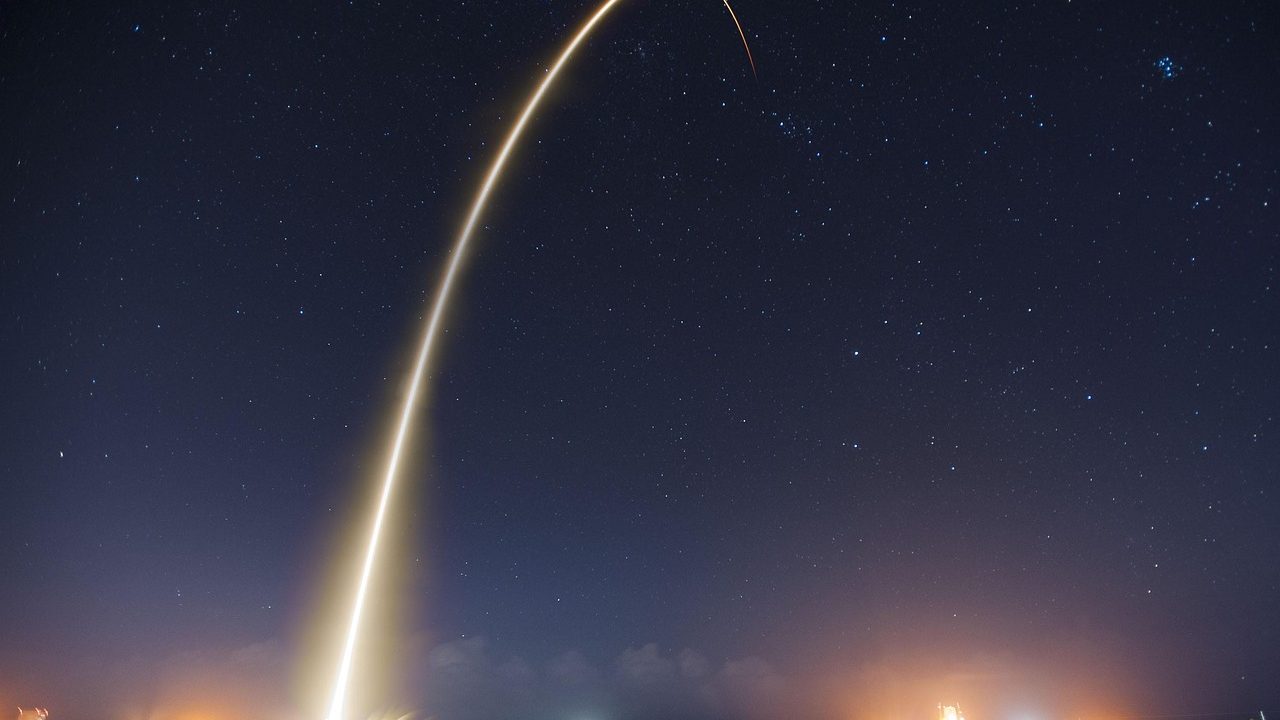
SpaceX's Starship Flight 13 is scheduled for Thursday, carrying actual satellites for the first time after twelve test flights that validated the launch and recovery architecture. The satellites are reportedly part of the Starlink constellation, meaning SpaceX will use its own launch vehicle to expand its own revenue-generating network — vertical integration at a scale rarely seen in any industry. The flight marks Starship's transition from the development phase into at least the early stages of commercial operation.
Actor Sam Neill died suddenly Monday at 78 in Sydney. Neill had announced he was cancer-free following experimental treatment for angioimmunoblastic T-cell lymphoma, which he had disclosed publicly in 2023. Beyond the cultural landmark of Jurassic Park, Neill built a substantial body of work across The Piano, In My Father's Den, and Peaky Blinders, and spent his later years farming in Central Otago, New Zealand, making wine, and writing a memoir. A new book also arrived Monday: Lauren Collins' 'They Stole a City,' a history of the 1898 Wilmington coup — the only successful coup d'état in U.S. history, in which white supremacists overthrew Wilmington, North Carolina's legitimately elected biracial city government, killing an unknown number of Black residents. The event was never legally reversed and has been systematically absent from standard U.S. history education.
In the WNBA, Liberty player Laney-Hamilton was ejected for throwing a shoe at Tempo's Mabrey in the closing minutes of a 93-91 Tempo victory. The Liberty head coach's response — publicly blasting the officiating as 'atrocious' — shifted the story from player misconduct to the question of whether officiating infrastructure has kept pace with the league's record viewership and attendance growth in 2026. The answer, the coach implied, is that it has not.
The 'What If We're Wrong?' challenge this week targets the AI industry's foundational 'unlimited demand' thesis. The case against that claim rests on three specific pressures: enterprise adoption is lagging investment, with CFOs encountering total ownership costs far exceeding headline license fees; return-on-investment evidence remains thin, with the Goldman Sachs 2024 report questioning whether AI investment was generating measurable productivity gains still unresolved; and the chip supply constraint is more fragile than current prices suggest — with Huawei, Samsung, and Micron all expanding memory capacity, a shortage environment could shift to oversupply within two years, compressing the margins that are currently driving the sector's extraordinary valuations. The counterargument holds that productivity gains may be real but poorly measured by current statistics, and that the shift toward autonomous AI agents represents a genuinely new demand category not yet fully priced into investment forecasts. The specific data point to watch: enterprise AI contract renewal rates twelve to eighteen months after initial deployment. High renewal rates with expanding seat counts indicate genuine structural adoption; renewal rates below sixty percent with contracting seat counts are the early warning signal that the current demand cycle is more cyclical than permanent.