Hormuz Crisis, Soaring Yields, and AI Friction Drive a Week of Cascading Instability
A projected decline in global oil demand, nineteen-year-high Treasury yields, and escalating geopolitical friction from Tehran to Beijing converged this week into an unusually interconnected set of crises — each one amplifying the others.
How this was made Verified AI
Every Intellegix briefing is generated from that day's broadcast and run through automated checks before it publishes — with a human paged on any flag. Here is the trail for this edition.
One Strait, Many Crises: The Week's Hidden Thread

The International Energy Agency's projection that global oil demand will fall by one million barrels per day in 2026 — the first annual decline since the COVID crash — arrived not as a triumph for clean energy advocates but as a warning sign of war. The disruption of shipping through the Strait of Hormuz, through which roughly 20 to 21 million barrels of oil flow every day, has pushed prices high enough to destroy demand while simultaneously reshaping diplomatic, financial, and military calculations from Brussels to Beijing.
That single pressure point threads through the week's most consequential stories: a bond market flashing its most alarming signals since 2007, European defense ministries racing a two-month clock before Russia's September elections, an AI industry generating vast wealth while drawing accusations of espionage, and a 81% probability forecast for a record-strength El Niño arriving just as food and energy systems are already under strain.
The week's news was not a collection of unrelated events. It was a stress test of multiple interconnected systems, running simultaneously.
Iran's Gamble: The Hormuz Chokepoint and What Intelligence Analysts Actually Said

The IEA's July report shows the demand contraction was steepest in the second quarter, with consumption down 4.8 million barrels per day year-over-year, easing somewhat to 1.7 million in the third quarter as alternative routing gets established. A new intelligence assessment released this week concluded that Iran is genuinely willing to risk a broader war with the United States over the Strait — framed not as posturing but as an analytical finding.
Former Defense Secretary Mark Esper added a specific strategic interpretation: Tehran is attempting to extract maximum diplomatic and economic gains before November's midterm elections, betting that domestic political pressure will limit Washington's appetite for further escalation. The logic holds that any administration heading into an election faces real constraints on sustained military action, particularly if energy prices are punishing consumers.
German Chancellor Merz told Israeli Prime Minister Netanyahu this week that a U.S.-Iran deal remains the 'best chance' to stabilize the region even as strikes intensify. Saudi Arabia and Israel are both reportedly proposing pipeline alternatives designed to route oil around the Strait — a combination that would have seemed unlikely two years ago. Analysts are now seriously debating whether the conflict will lastingly accelerate the energy transition, with the business case for solar and wind becoming self-evident when oil is both expensive and unreliable.
Zelenskyy said publicly this week that China privately warned Russia against nuclear use — a claim that, if accurate, suggests Chinese diplomatic pressure may also be shaping Iranian calculations. Beijing holds significant economic leverage over Tehran, and any signal that China will not absorb the consequences of nuclear escalation represents a constraint on Iranian decision-making that does not always factor into Western analysis.
A Two-Month Window: NATO Allies Brace for Russian Mobilization
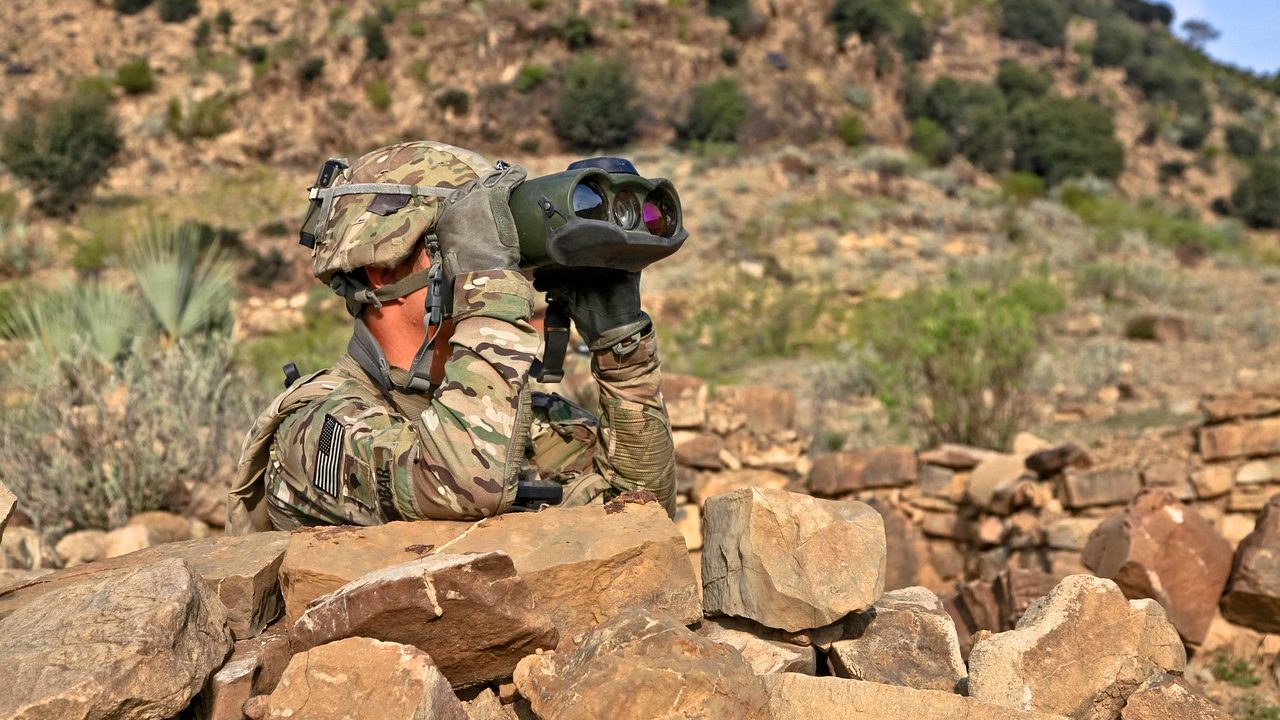
Czech President Petr Pavel, a former NATO Military Committee chairman, warned allies this week that there is roughly a two-month window before Russia's September elections conclude — after which he believes Putin could order general mobilization. His argument is that the Kremlin needs to demonstrate a credible military path to domestic audiences, and the post-election period offers the politically safer moment to escalate troop commitments.
Ukraine's military posture sent its own signals. Kyiv told Greek officials directly that it will continue striking Russian ships at sea, a communication that suggests Kyiv is carefully managing alliance relationships and leaving no ambiguity about its intentions even with partners who might prefer a quieter approach. The Kremlin responded by threatening a larger 'buffer zone,' framing potential offensive action as a defensive response to Ukrainian strikes — a pattern analysts described as familiar Kremlin rhetoric.
Zelenskyy confirmed that Ukraine has signed documents allowing various drone types to be transferred to the U.S. military for evaluation, with a full deal worth up to $50 billion remaining unsigned. Ukraine's drone program — encompassing long-range strike drones, naval surface drones, and counter-drone systems developed under live combat conditions — represents battlefield data that no simulation can replicate, and the Pentagon's interest reflects that reality.
Separately, FBI Director Kash Patel announced that agents arrested 113 foreign spies this year, with a 53% jump in counterintelligence arrests and 62 Chinese operatives removed in 2026 alone. That figure suggests either a genuine surge in Chinese espionage activity, significantly improved FBI detection capability, or some combination of both.
Institutions Under Pressure: Elections, Immigration, and a Darkening Mood
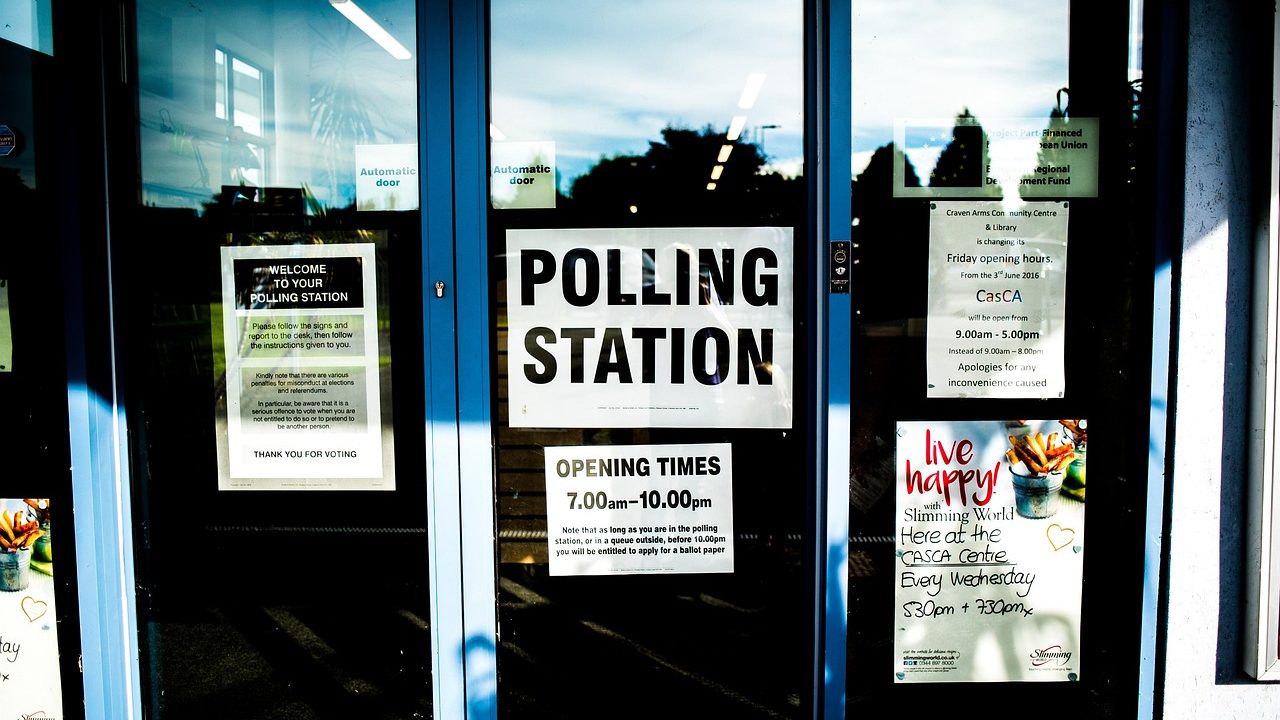
Trump fired all members of the Election Assistance Commission this week — the federal body created after the 2000 Florida recount to set voluntary standards for voting systems, administer federal election funds, and certify voting equipment. The move, made less than four months before midterm elections, generated immediate legal questions about what replaces the institutional functions those roughly 65 staff members were performing.
The electoral map is producing genuinely consequential signals. Senator Ted Cruz publicly acknowledged that a Democrat has a real chance of flipping his Texas Senate seat — a statement that, coming from a calculating political actor, implies internal polling supports the concern as much as it is designed to energize donors. In Georgia, Jon Ossoff holds a consistent polling lead over Republican Representative Mike Collins, while the governor's race remains a statistical tie.
A poll released this week captured the underlying economic anxiety shaping the midterm environment with unusual clarity: only 35% of Americans say the American Dream is still attainable, three-quarters say billionaires hold too much power in Washington, and fewer than half say capitalism as currently practiced actually works. These are not fringe positions — they are majority or near-majority views.
A San Jose federal judge ordered USCIS to resume work permit processing, adding to a growing body of judicial decisions constraining the administration's immigration enforcement posture. The freeze had left people in genuine legal limbo, unable to work legally or travel while their cases awaited processing.
AI's Crowded Week: Enterprise Winners, a Backdoor Accusation, and an IPO Wobble
Beijing claimed this week that Claude Code secretly transmitted user data, accusing Anthropic of running a backdoor data collection operation. Anthropic's response was direct: Chinese users were never authorized to use Claude Code in the first place, with the company's terms of service explicitly excluding China from access. Any usage was therefore unauthorized, and the framing of a 'backdoor' mischaracterizes what actually occurred. China, Russia, and Iran are also reportedly using state media to amplify backlash against U.S. AI data centers by exploiting local concerns about energy costs and environmental impact — a pattern analysts described as coordinated information operations targeting AI infrastructure.
Anthropic otherwise had a strong week in terms of industry perception. CNBC's Jim Cramer called it the enterprise AI winner amid corporate budget cuts, arguing that companies consolidating IT spending gravitate toward tools delivering the clearest return on investment. Elon Musk, who has previously been among Anthropic's most vocal critics, reversed course and called it the 'clear AI leader' — a convergence with Cramer's conclusion that observers noted, even while scrutinizing Musk's strategic motivations.
OpenAI's week was more turbulent. Fidji Simo, the company's second-ranking executive and chief of applications, stepped down ahead of the IPO — precisely the kind of leadership continuity question that IPO investors find unsettling. OpenAI also shuttered its ChatGPT Atlas browser, launched less than a year ago, folding it into a new desktop super app with a shutdown date of August 9th.
Google moved AlphaEvolve, a Gemini-powered agent that autonomously iterates through algorithmic solutions, from private preview to general availability on Google Cloud. Nvidia's Jensen Huang said his engineers now prefer building AI agents to writing routine code, framing the shift as a promotion rather than a displacement. Microsoft's Brad Smith warned that U.S. restrictions on Anthropic and OpenAI models are pushing developers toward open-source alternatives where Chinese models are gaining significant market share. Separately, researchers at the Alan Turing Institute found a way to bypass GitHub Copilot's safety filters on all 816 of their test cases.
Nineteen-Year Yields and a Frozen Housing Market: The Financial Stress Picture

The 30-year Treasury auction this week drew the highest yield since 2007, reflecting persistent investor demand for higher compensation to hold long-dated U.S. government debt. The 30-year mortgage rate reached a 2026 high of 6.49% according to Freddie Mac's weekly survey, up from 6.43% the prior week. At that rate, the monthly payment on a $400,000 mortgage is roughly $2,520, compared to approximately $1,700 at the 3% rates that prevailed in 2021 — nearly $10,000 more per year in carrying costs on a mid-range home.
Bloomberg published a warning that governments globally face a debt crisis with no obvious backstop, arguing that central banks — which served as lenders of last resort during the 2008 financial crisis and the COVID shock — have limited capacity to reprise that role in an environment where inflation remains persistent and rates remain elevated.
Meta's shares fell on news of a $145 billion AI spending plan, reflecting investor skepticism about hyperscale infrastructure investment after years of being asked to trust that capital outlays in cloud, metaverse, and now AI would eventually justify themselves. Federal investigators simultaneously widened their price-fixing inquiry across the meat and egg industries, with the cases centering on Sherman Act Section 1 — whether competitors communicated and agreed, explicitly or implicitly, to coordinate pricing. Amazon is separately undercutting FedEx and UPS with lower shipping rates; whether that eventually draws antitrust scrutiny depends on whether regulators conclude the pricing is predatory or simply reflects logistical scale advantages.
Trump's financial disclosure revealed millions in defense stocks held amid the Iran policy push, generating conflict-of-interest questions that oversight bodies are expected to address.
From Quantum Chips to Humanoid Robots: The Technology Frontier

Officials revealed this week that the new Air Force One — Boeing's long-delayed 747-8, contracted in 2018 — lacks key defensive systems that were standard on the older VC-25A jets, including electronic warfare countermeasures. The delays have been so extensive that the aircraft are expected to enter service in a fundamentally different threat environment than the one they were designed for.
AT&T, T-Mobile, and Verizon announced a replacement for SMS-based two-factor authentication, moving toward device-based cryptographic verification that closes known vulnerabilities to SIM-swapping attacks and interception. NHTSA signaled it will consider revising requirements that vehicles have steering wheels and pedals, potentially clearing a regulatory path for purpose-built autonomous vehicles from companies including Waymo.
Mitsubishi Motors announced it will mass-produce humanoid robots at its Kyoto plant — a significant strategic pivot for an automaker that would imply the technology has matured faster than most analysts expected if the company has solved enough of the unstructured-environment challenge to commit to production at scale. ETH Zurich unveiled a quantum chip that stores data as vibrations rather than electrical states, a phonon-based architecture that could in principle operate at higher temperatures with less isolation overhead than superconducting or trapped-ion systems, though researchers described it as early-stage work.
A gene therapy platform using the brain's own cerebrospinal fluid circulation to bypass the blood-brain barrier was among the week's more significant medical developments, potentially enabling treatments for conditions including Huntington's disease and ALS that currently have very limited options. DJI drones completed three separate missions on Mount Everest, hauling over 10 tonnes of cargo, mapping the Khumbu Icefall, and setting an altitude record for electric vertical takeoff and landing aircraft.
SpaceX's Millionaire Moment and an 81% El Niño Warning
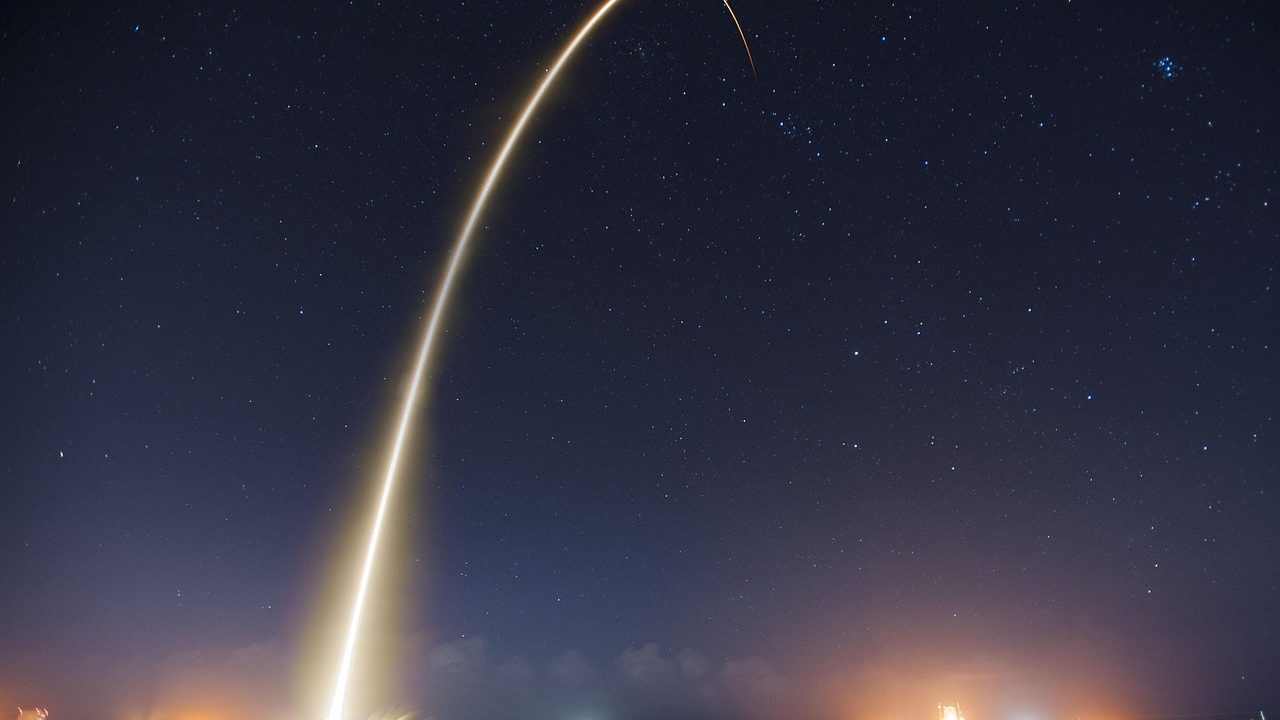
SpaceX's record IPO generated wealth creation that Elon Musk said made thousands of company workers millionaires. During a radio appearance this week, Musk laid out a lunar timeline: landing within three years, a permanent lunar base within a decade, and AI satellites launching next year. The AI satellite announcement describes onboard processing capability that would allow earth observation, communication routing, and sensor fusion tasks without relying on ground station uplinks — changing the latency and resilience profile of satellite-based services significantly.
NOAA raised the probability of a 'very strong' El Niño event to 81%, up from 63% in June, with peak intensity expected by late fall. Sea surface temperatures are already 1.2 degrees Celsius above average in the Niño 3.4 region of the equatorial Pacific. A very strong El Niño typically produces severe drought in Australia and parts of South Asia, flooding in South America, and disrupted Atlantic hurricane patterns.
The interaction between the El Niño forecast and the current energy shock is underappreciated. Drought reduces hydropower capacity in South America, Southeast Asia, and parts of the Pacific Northwest. If disrupted oil supplies from the Strait of Hormuz and reduced hydropower from El Niño-driven drought arrive simultaneously, the pressure on electrical grids across multiple regions becomes extremely difficult to manage — creating both an economic and a resilience argument for accelerating renewable deployment in a window measured in months, not years.
Courtrooms, Consensus Challenges, and the Art of Being Wrong

Lance Twiggs, described as roommate of murder trial suspect Tyler Robinson, testified this week that Robinson confessed to killing Charlie Kirk two days after the act — and then wept and expressed regret. In court, testimony from someone close to a defendant combining a reported confession with an emotional acknowledgment of the act's gravity represents a significant development for the prosecution's case.
The Federal Reserve's appointment of Xbox CEO Sarah Bond to a jobs task force — announced days after she announced 3,200 layoffs at Microsoft's gaming division — generated immediate commentary about optics. Bond brings relevant experience in large-scale workforce management, but the juxtaposition fed directly into the broader public sentiment showing three-quarters of Americans believe billionaires hold too much power in Washington.
The week's most instructive analytical exercise involved stress-testing the IEA's own oil demand projection — specifically, the assumption that Strait of Hormuz disruptions continue at current intensity through year-end. The midterm-calendar logic that former Defense Secretary Esper described actually cuts both ways: if Iran is racing to extract gains before November, Tehran also has an interest in locking in a deal before November. A partial diplomatic resolution, combined with alternative routing already being established and potential Permian Basin production expansion in response to sustained high prices, could ease the supply constraint faster than the IEA's model assumes.
Two indicators to watch rather than political statements: any diplomatic communiqué from U.S.-Iran talks that includes even vague language about Strait access, and tanker insurance rates for Gulf routes. Insurance markets price expectations before news arrives, and underwriters pricing in lower risk through the summer would precede the physical resumption of traffic — making them a more reliable leading indicator than managed public communications from either side.
The View From Friday: When Stress Systems Interact

The through-line of the week's news is what happens when several stress systems activate simultaneously. A hot war in the Middle East is disrupting energy markets. Bond yields at nineteen-year highs suggest investors are repricing long-term U.S. fiscal risk. An AI industry is generating enormous wealth and enormous geopolitical friction at the same time. And an El Niño is building toward potential record intensity that will layer additional stress on food and energy systems by fall. None of these are isolated.
The political variable over the next four months connects most of them. The Senate races in Texas and Georgia, the progressive-union tensions in the Democratic coalition, the firing of the Election Assistance Commission — all are inputs into an electoral environment whose outcome will shape everything from Iran policy to AI regulation to housing affordability. Esper's argument that Iran is timing its strategy around the U.S. electoral calendar is a reminder that American election cycles are visible from every capital on earth.
A correction is also warranted. A prior broadcast noted Ukraine striking Russian ships in the Caspian Sea. That claim was simply wrong: the Caspian Sea is landlocked, entirely surrounded by Russia, Kazakhstan, Turkmenistan, Iran, and Azerbaijan, and Ukraine has no plausible military access to it. Ukraine's actual maritime strike record is in the Black Sea, where its surface drones and anti-ship missiles have been effective. The error was one of geography, and in reporting on active military operations, that kind of error matters.