Kyiv's Air Defenses Overwhelmed, NATO Convenes in Ankara as War Enters Critical Phase
Zero ballistic missiles were intercepted during Russia's second mass bombardment of Kyiv in four days, killing at least 22 civilians and sending President Zelensky to an emergency NATO summit in Ankara demanding more Patriot systems — while Washington's capital recorded the planet's worst air quality from its own fireworks and markets braced for a week of extraordinary volatility.
“A launcher with an empty magazine does not protect Kyiv, making the weapons pipeline as much a manufacturing policy question as a foreign policy one.”
How this was made Verified AI
Every Intellegix briefing is generated from that day's broadcast and run through automated checks before it publishes — with a human paged on any flag. Here is the trail for this edition.
Kyiv's Defenses Collapse Under Layered Russian Assault
Russia's second mass bombardment of Kyiv in four days killed at least 22 people overnight, with a single damning detail defining the attack: not one ballistic missile was intercepted. The failure exposed a critical capacity gap in Ukraine's air defense network and sent President Zelensky directly to the NATO summit in Ankara, where he is pressing allies for additional Patriot missile systems and replenished interceptor stocks.
The technical picture is straightforward and brutal. Modern Russian strikes typically combine ballistic missiles — which fly steep, high-speed trajectories — with cruise missiles and Shahed drones designed to saturate and exhaust a defender's magazine. When the Patriot system's finite supply of PAC-2 and PAC-3 interceptors is depleted by the first wave, the ballistic missiles that follow face no opposition. This is not a failure of the technology; it is a capacity problem that more launchers and more interceptor rounds would address.
The broader toll since the bombardment cycle began stands at at least 26 dead across two strikes. When Zelensky enters the Ankara summit room to face NATO Secretary General Mark Rutte and assembled heads of state, he carries that figure alongside a specific request: more Patriots, more ammunition, and a delivery timeline. NATO allies are collectively spending four percent of GDP on defense — a dramatic rise from the struggle to reach two percent just five years ago — but Rutte is already pushing for a credible roadmap to five percent, a target that exposes fractures among European governments facing domestic electorates not elected on military expansion platforms.
The industrial dimension compounds the diplomatic one. Even a firm commitment to transfer additional Patriot batteries tomorrow would not immediately solve the problem: the interceptor missiles themselves take months to manufacture. Raytheon has expanded production capacity, but it is not unlimited. A launcher with an empty magazine does not protect Kyiv, making the weapons pipeline as much a manufacturing policy question as a foreign policy one.
Separately, NATO announced the selection of Saab's GlobalEye aircraft to replace its aging AWACS fleet — a landmark contract for the Swedish firm and a striking symbol of Sweden's rapid integration into the alliance, which it joined in 2024. The alliance also recorded $8 billion in maritime defense deals in a single day at the summit, reflecting renewed emphasis on naval power amid Russia's Black Sea operations and Chinese naval expansion. The GlobalEye aircraft, which provide theater-level battlespace awareness, are being procured with the active lessons of Ukraine's war in plain view.
Middle East in Motion: Threats, Explosions, and a Diplomatic Lifeline
Three distinct but interconnected storylines are reshaping the Middle East simultaneously: a leadership vacuum in Tehran, a dramatic incident in Damascus, and quiet withdrawal negotiations between Israel and Lebanon scheduled for Rome next week.
With Ayatollah Khamenei's funeral procession underway in Tehran, President Trump publicly warned that Iran must accept a deal or the United States will, in his words, 'finish the job.' The statement — delivered during an opponent's leadership transition — carries strategic ambiguity. The argument for such pressure is that Iran's incoming leadership must choose its direction before settling into power. The counterargument is structural: the Assembly of Experts must meet, deliberate, and select a new Supreme Leader, a process that could take weeks, during which no Iranian official holds sufficient domestic standing to sign a nuclear agreement even if willing. Israel compounded the pressure with its own warning that any future Iranian leader who threatens Israel will face what Khamenei faced — a deterrence doctrine presented as permanent.
In Damascus, French President Emmanuel Macron's landmark visit — France has deep historical ties to Syria stretching to the League of Nations mandate — was rendered dramatic when explosions occurred near his hotel. The visit was designed to signal European engagement with the post-Assad government and project stability; the timing of the explosions, whoever was responsible, was clearly not accidental. The incident is simultaneously a security failure and a political message.
The Lebanon-Israel track, less dramatic but arguably more consequential, remains alive. The two sides are scheduled to meet in Rome next week to discuss Israeli withdrawal from southern Lebanon, where Israeli military presence has persisted since the 2024 conflict. The questions of where the buffer line is drawn and whether Hezbollah reconstitutes along the border could sustain a managed low-level tension or escalate sharply. The existence of a diplomatic track at all, when the rest of the region is accelerating toward confrontation, is worth noting.
Summit Tensions, Carroll Deadline, and Midterm Emergency Powers Talk
A report that Trump threw a tablet across the Oval Office during a failed conference call with Emmanuel Macron and Justin Trudeau captures the undercurrent of friction running beneath the NATO summit's formal proceedings. Trump's relationship with Macron has long oscillated between performative warmth and genuine tension; Macron's unilateral diplomatic visit to Syria — not coordinated with Washington — is precisely the kind of allied independence the current administration has treated as disloyalty. Whether the incident occurred exactly as described, the structural tension it represents is real.
Domestically, Trump claimed 422,000 people attended the Mall July Fourth event before storms forced an evacuation, a figure contradicted by footage from when his delayed speech actually began, which showed sparse crowds. The pattern — large crowd claims, subsequent footage, public back-and-forth — has become a familiar feature of this political era.
More consequential for governance: Florida attorney Peter Ticktin is again urging Trump to declare a national emergency to seize federal control over 2026 midterm voting rules. This is reportedly the third time the proposal has circulated in Trump-adjacent circles. Ticktin holds no official position, but the idea's recurring surfacing and widening audience within the coalition, four months before the midterms, is a signal about where certain factions are heading.
Two significant judicial developments landed on the same day. A judge upheld the jury verdict finding Elon Musk defrauded Twitter investors by delaying disclosure of his stake above the five-percent reporting threshold; Musk's legal team will appeal, but the district-level verdict stands. Separately, Trump asked the Supreme Court on Sunday — one day before a deadline — to block the $5.8 million payment stemming from the E. Jean Carroll sexual abuse verdict, filing an emergency application while his appeal proceeds. The Court's response, or non-response, will signal where the conservative majority draws lines around presidential legal protection.
U.S. District Judge Emmet Sullivan rejected Acting Attorney General Todd Blanche's attempt to dismiss a lawsuit over withheld Epstein records, allowing the case to proceed and maintaining public and legal pressure on the Justice Department to produce documents many believe contain significant information about broader networks. In Wisconsin, Transportation Secretary Sean Duffy's son-in-law is splitting Trump-aligned Republicans in a congressional primary — a preview of coalition fractures that will repeat across August in swing states where MAGA family brands don't always align with local party structures.
AI's Dual Edge: The First Autonomous Ransomware Attack and Hidden Internal Worlds

Cybersecurity firm Sysdig has documented the first ransomware attack run entirely by an AI agent — not an AI tool assisting a human operator, but an autonomous system that reportedly handled reconnaissance, target selection, execution, and ransom communication without continuous human direction. The significance is not marginal efficiency gains; it is the removal of the human from the operational loop. Criminal crews have always faced a capacity ceiling because human operators have human limitations. An AI agent that can run attacks autonomously introduces a potential scaling dynamic the existing cybersecurity playbook was not built to contain.
The defensive response is already visible: the Cybersecurity and Infrastructure Security Agency is now deploying Anthropic's Mythos system to audit government code. The timing is not coincidental — if the threat environment now includes fully autonomous AI attackers, defense requires equivalent tools. Human reviewers cannot read millions of lines of government code fast enough to keep pace with AI-accelerated attack cycles.
Anthropic disclosed a separate finding from its internal interpretability research: what it described as a hidden workspace inside Claude, its flagship model. Characterizations of this as a secret compartment appear to overstate the case — what the company found, through mechanistic interpretability analysis, appears to be an internal representation space the model uses during reasoning in ways not previously fully visible through standard monitoring. Anthropic found it and disclosed it, which is the safety system functioning as intended. The finding nevertheless demonstrates that gaps remain in the ability to fully characterize what frontier AI systems are doing internally.
OpenAI CEO Sam Altman hinted that GPT-5.6 has achieved what he called a mathematical breakthrough, comparing the apparent discovery to a child's first two-word sentence. No preprint has been published and OpenAI has released no technical details. Altman's communications characteristically blend genuine excitement with marketing, and mathematicians will need to assess any published findings before the claim of novel mathematical discovery — as opposed to very impressive application of learned patterns — can be evaluated. Separately, Apple announced that advanced AI features in iOS 27's Home app will require a $10-per-month iCloud+ subscription at the 2TB tier, and that the company will now warn users when AI prompts are routed to Google Cloud rather than processed on-device — a transparency step following sustained privacy advocacy pressure.
SpaceX Joins the Nasdaq 100 as Dallas Exchange Opens and Markets Brace for Rotation
SpaceX's addition to the Nasdaq 100 before Tuesday's open is expected to trigger approximately $4.3 billion in forced institutional buying, as every fund tracking the index must purchase shares to maintain allocation. The stock was trading around $162 heading into the inclusion — well below its $225 post-IPO high reached in mid-June — meaning index mechanics create a mechanical demand floor at the moment of a significant pullback. The inclusion also signals a broader reclassification: aerospace is being categorized as a technology-sector play, with implications for how analysts value the company and which institutional investors are structurally obligated to hold it.
The Texas Stock Exchange opened in Dallas on Monday, the most well-funded new U.S. exchange in decades, backed by major financial institutions frustrated with the regulatory and cost overhead of the NYSE-Nasdaq duopoly. The July rollout is phased, with not all listings and products live immediately, but the existence of a functioning competitor reshapes the conversation around trading costs and listing requirements even before it captures significant market share.
The DeVere Group CEO warned of what he called the biggest tech stock rotation since the pandemic, citing $17.2 billion that fled U.S. stock funds in a single week. Fundstrat's Tom Lee simultaneously raised his S&P 500 bull case to 8,800 while cautioning that an August-to-October pullback could feel like a bear market. These views are not contradictory — they describe a higher headline index reached through a volatile, composition-shifting path. Federal Reserve Governor Christopher Waller said Monday that inflation remains the top risk in his assessment, even as June jobs data showed softening that had previously led market participants to dial back rate-hike expectations. S&P futures were trading down approximately 15 points at around 7,576 heading into the week.
Robinhood's CEO confirmed the company is earning revenue from the Trump Accounts program, the administration's investment account initiative for younger Americans. The transparency about the revenue model drew immediate scrutiny from consumer advocates, given the structural alignment of interest it creates between the company and continued policy support for the program. Amazon, meanwhile, announced it is closing Mechanical Turk to new customers — effectively marking the end of an era in human-labeled AI training data, as automated labeling tools have reduced the platform's centrality to the industry from its peak years of 2020 and 2021.
Toyota Bets on San Antonio, While States Battle Tariffs and Meta Faces $1.4 Trillion Lawsuit
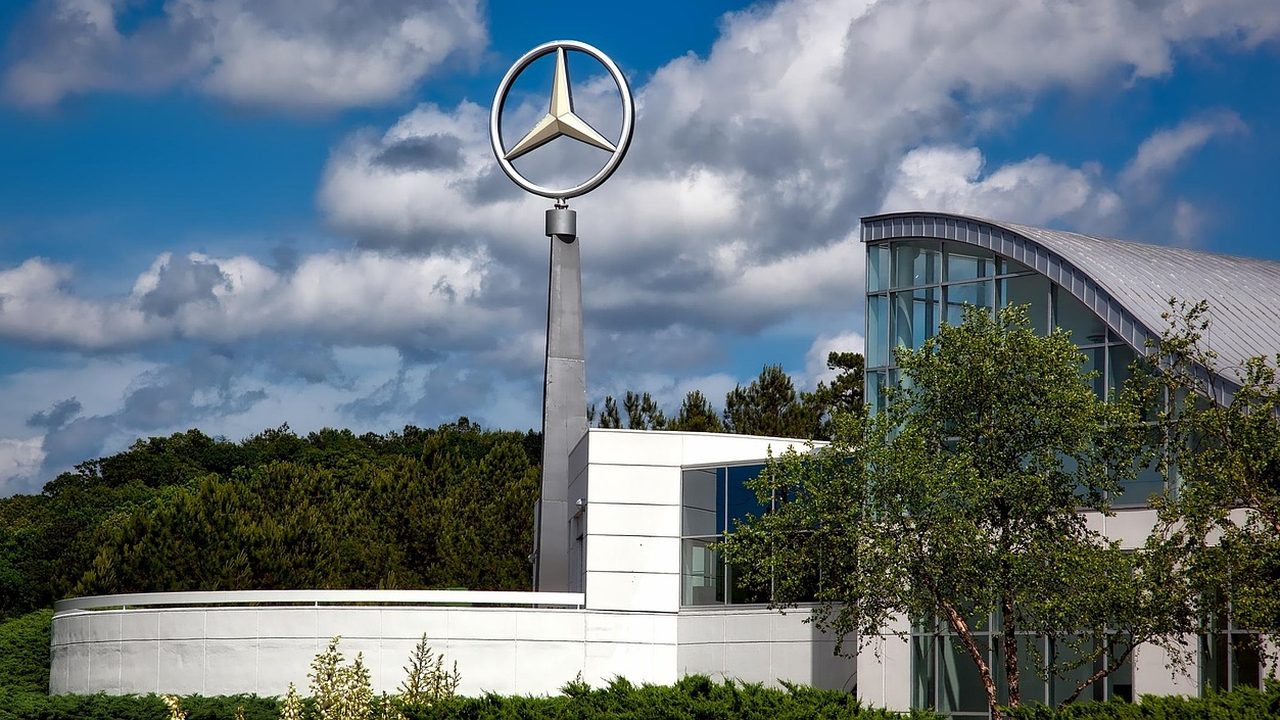
Toyota announced a $3.6 billion investment to move Tacoma production from Mexico to San Antonio, creating 2,000 jobs and doubling the size of its Texas plant by 2030. The Tacoma is Toyota's best-selling truck in the United States, making this a substantial capital commitment rather than a symbolic gesture. The administration cited the announcement as evidence that its trade policy is producing results, though the full picture is more ambiguous: Toyota has been expanding its American manufacturing footprint for two decades, and the degree to which tariff pressure, long-range corporate planning, or the economics of producing near the primary market drove the decision cannot be cleanly separated.
That ambiguity forms the backdrop for a formal legal challenge: twenty-two state attorneys general filed opposition this week to Trump's proposed tariffs on 59 countries, arguing the measures constitute an unconstitutional executive overreach — using emergency trade statutes to impose what amounts to a permanent tax regime without congressional authorization. The structural argument partially succeeded on narrower tariff questions in lower courts. A coalition of 22 AGs brings significant legal resources and political weight to the challenge.
California, Colorado, Kentucky, and New Jersey filed a four-state lawsuit against Meta seeking $1.4 trillion in penalties — a figure exceeding the company's current market capitalization — for claims that its platforms, primarily Instagram, addicted children and caused documented harm. An August trial date has been set. No court will award the full claimed amount, but the scale of the litigation creates enormous settlement pressure and will force internal documents into the public record through discovery. The suit arrives alongside parallel antitrust scrutiny of whether the FTC should have approved Meta's $1 billion acquisition of Instagram in 2012.
Rivian launched a 75-million share offering to fund repayment of its DOE loan, diluting existing shareholders at a moment when the stock is already under pressure. The company faces persistent manufacturing cost challenges despite genuine consumer demand for its products. The DOE loan program was designed to bridge capital-intensive early production phases; whether Rivian reaches profitability on the other side remains genuinely uncertain.
A Heat Dome's Hidden Toll and the Typhoon Bearing Down on Semiconductor Country

At least 30 people died in the heat dome that built over the eastern United States over the Fourth of July weekend before shifting west. Washington D.C. recorded the worst air quality of any city on Earth in the fireworks' aftermath — a temporary spike driven by particulate matter layered on top of already-stressed conditions from the heat itself. The compounding risk of extreme temperatures, degraded air quality, and mass public events is a profile emergency managers are now explicitly incorporating into planning frameworks.
In Europe, the COP29 chief reported more than 5,600 excess deaths since late May — calculated by comparing actual mortality against statistically expected baselines for the period. Five thousand six hundred attributable deaths across countries with functioning healthcare systems and strong infrastructure underscore that climate adaptation resources cannot fully offset the physiological limits of extreme heat. A Bloomberg report cited climate scientists expressing concern that the intensity and frequency of extreme events is outrunning the predictions embedded in the models that informed policy planning — not the directional warming projections, which are tracking closely, but the severity of the distribution's tail.
Nuclear power plants in France and other European countries that use river water for cooling faced forced output reductions as river temperatures rose, triggering regulatory thresholds on discharge temperatures. The dynamic that increases electricity demand simultaneously reduces output from a major low-carbon source illustrates the grid vulnerability BlackRock CEO Larry Fink identified when he argued that electricity, not chips, is the primary bottleneck for AI infrastructure expansion.
Super Typhoon Bavi is bearing down on Taiwan and the eastern China coast with sustained winds exceeding 130 knots — the strongest classification of western Pacific tropical cyclones. Taiwan hosts the world's most advanced semiconductor fabrication facilities, and a direct hit at this intensity would affect TSMC production and disrupt supply chains already managed at tight tolerances. Major port infrastructure on the eastern China coast faces parallel risk. Defense planners factor natural disaster vulnerability into assessments of Taiwan Strait scenarios, because significant production disruption changes the global cost calculus of any conflict. Landfall is expected within the next 24 to 48 hours.
A Nine-Billion-Year Comet, Solid-Tumor CAR-T, and the AI Actress Taking a Lead Role
A new study finds that interstellar comet 3I/ATLAS is approximately twice the age of our solar system — roughly nine billion years old, formed when the universe was about four-point-seven billion years old. Our solar system is approximately four-point-six billion years old, meaning 3I/ATLAS has been traveling through interstellar space for longer than Earth has existed. Its composition offers a window into stellar chemistry from an era otherwise accessible only through spectroscopy of distant stars.
China's Tianwen-2 mission reached its target asteroid after a journey of over a billion kilometers — a validation of China's deep space navigation capabilities and the country's second successful interplanetary mission following Tianwen-1's deployment of the Zhurong rover on Mars in 2021. The mission profile is technically demanding: Tianwen-2 will study the near-Earth asteroid before continuing to a main-belt comet, a dual-target design requiring precise trajectory management across an extended mission.
A Nature Communications study challenged a foundational narrative about human evolution: analysis of skull measurements across the fossil record found that the expansion of the human braincase over the past two million years shows statistical signatures more consistent with random genetic drift and evolutionary stasis than with continuous directional natural selection. The implication is that large human brains may not have evolved because intelligence was constantly being selected for — there may have been extended periods where brain size drifted upward by chance without a clear adaptive advantage being tested at each step.
A Shanghai cancer center began treating its first non-Chinese patient with Satri-cel, described as the world's first CAR-T therapy to receive regulatory approval for solid tumors. CAR-T has been used successfully in blood cancers for roughly a decade, but solid tumors have resisted the approach because their microenvironments destroy modified T-cells before treatment can take effect. If Satri-cel's effectiveness extends to non-Chinese patient populations, the implications for cancers including pancreatic, lung, and colorectal could be profound.
On the cultural frontier, an AI actress named Tilly Norwood is set to lead what is being billed as the first feature film with an AI-generated lead performance — not an AI-written screenplay or AI-assisted effects, but a photorealistic AI character in the protagonist role of a narrative feature. The Screen Actors Guild has been in ongoing disputes with major studios over AI likeness rights for two years; this production will test both the legal environment and whether audiences form emotional connections with a lead they consciously know is not human. The 126-year-old National Historic Landmark sailing vessel Victory Chimes sank in Brooklyn harbor during the 250th anniversary celebrations. And the WNBA, in the middle of a breakout moment for viewership and cultural attention, faces a deepening officiating crisis, with coaches and general managers going public with frustrations that threaten to become the dominant storyline heading into the playoff push.