A Heat Dome's Hidden Toll and the Typhoon Bearing Down on Semiconductor Country
How this was made Verified AI
Every Intellegix briefing is generated from that day's broadcast and run through automated checks before it publishes — with a human paged on any flag. Here is the trail for this edition.
At least 30 people died in the heat dome that built over the eastern United States over the Fourth of July weekend before shifting west. Washington D.C. recorded the worst air quality of any city on Earth in the fireworks' aftermath — a temporary spike driven by particulate matter layered on top of already-stressed conditions from the heat itself. The compounding risk of extreme temperatures, degraded air quality, and mass public events is a profile emergency managers are now explicitly incorporating into planning frameworks.
In Europe, the COP29 chief reported more than 5,600 excess deaths since late May — calculated by comparing actual mortality against statistically expected baselines for the period. Five thousand six hundred attributable deaths across countries with functioning healthcare systems and strong infrastructure underscore that climate adaptation resources cannot fully offset the physiological limits of extreme heat. A Bloomberg report cited climate scientists expressing concern that the intensity and frequency of extreme events is outrunning the predictions embedded in the models that informed policy planning — not the directional warming projections, which are tracking closely, but the severity of the distribution's tail.
Nuclear power plants in France and other European countries that use river water for cooling faced forced output reductions as river temperatures rose, triggering regulatory thresholds on discharge temperatures. The dynamic that increases electricity demand simultaneously reduces output from a major low-carbon source illustrates the grid vulnerability BlackRock CEO Larry Fink identified when he argued that electricity, not chips, is the primary bottleneck for AI infrastructure expansion.
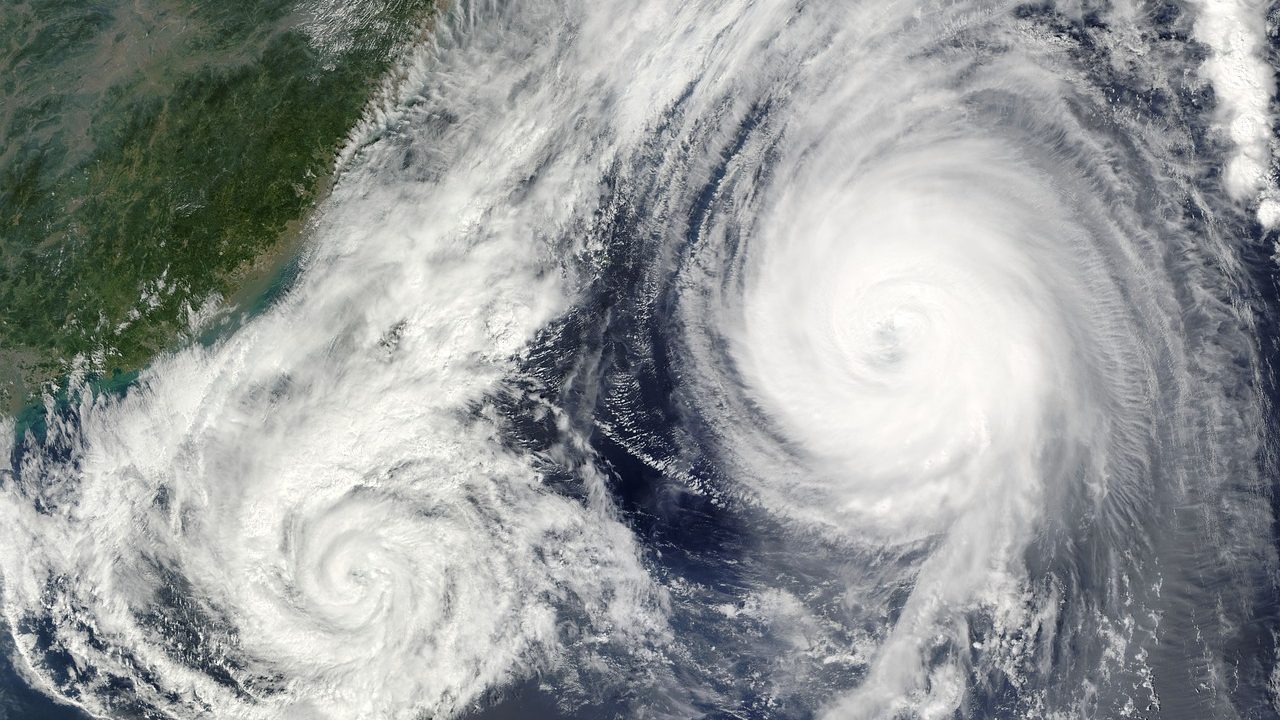
Super Typhoon Bavi is bearing down on Taiwan and the eastern China coast with sustained winds exceeding 130 knots — the strongest classification of western Pacific tropical cyclones. Taiwan hosts the world's most advanced semiconductor fabrication facilities, and a direct hit at this intensity would affect TSMC production and disrupt supply chains already managed at tight tolerances. Major port infrastructure on the eastern China coast faces parallel risk. Defense planners factor natural disaster vulnerability into assessments of Taiwan Strait scenarios, because significant production disruption changes the global cost calculus of any conflict. Landfall is expected within the next 24 to 48 hours.