America at 250: Fireworks, War, AI Milestones, and a World That Would Not Wait
On the United States' 250th birthday, a presidential speech ended after midnight, Iran's new supreme leader hid from his own father's funeral, and a White House phone call stood between the world's most powerful AI model and the public. It was, by almost any measure, an extraordinary few hours.
“A new supreme leader whose effective coronation is taking place in an undisclosed security location faces a structural credibility problem that will not resolve quickly.”
How this was made Verified AI
Every Intellegix briefing is generated from that day's broadcast and run through automated checks before it publishes — with a human paged on any flag. Here is the trail for this edition.
Happy Birthday, America — Now Back to the Crisis

The Brooklyn Bridge caught fire during the Fourth of July fireworks display. Eighty thousand people were evacuated from the National Mall in a severe thunderstorm. A president delivered his semiquincentennial address after eleven at night. And a geomagnetic storm painted the aurora borealis across the skies of 26 states. If any single tableau could stand as a metaphor for the United States in July 2026 — spectacular, chaotic, and somehow still standing — the nation's 250th birthday provided it.
The holiday generated more political content than perhaps any Independence Day since the founding era itself, as the sitting president, the vice president, California's governor, and an 84-year-old Vermont senator all used the occasion to advance competing political visions simultaneously. Meanwhile, the world declined to pause. Iran's succession crisis played out in real time. Donald Trump spent 85 minutes on the phone with Vladimir Putin. Ukraine struck a major oil terminal in St. Petersburg. And somewhere in the distance, a White House phone call was being scheduled that would determine when the world's most powerful commercial AI model goes public.
Iran's Hidden Supreme Leader and the Legitimacy Vacuum
The funeral of Ayatollah Ali Khamenei — Iran's supreme leader, killed in an Israeli strike — proceeded without the presence of his designated successor. Three of Khamenei's sons attended, but Mojtaba Khamenei, now Iran's supreme leader, was absent. The stated reason: fear of Israeli assassination. The admission is an extraordinary concession of vulnerability from a government that has long projected revolutionary invulnerability.
Iran claimed that Secretary of State Rubio pressured thirteen countries to skip the funeral — a significant diplomatic operation if accurate, designed to isolate the new Iranian leadership at its most exposed moment. The office of supreme leader derives its authority not merely from administrative appointment but from visible religious legitimacy. A new supreme leader whose effective coronation is taking place in an undisclosed security location faces a structural credibility problem that will not resolve quickly.
Trump compounded the pressure by stating publicly that the United States could 'take out' Iran's leaders but needs them for nuclear talks — a statement that simultaneously functions as threat and diplomatic overture. The framing puts Mojtaba Khamenei in an impossible position: any concession to Washington risks appearing as capitulation to the government that killed his father. Trump also remarked that Israeli Prime Minister Netanyahu 'knows who the boss is,' a statement that implies direct American endorsement of, or credit for, the strike on the elder Khamenei.
The broader regional picture offers little relief. The Saudi coalition vowed what it called unprecedented force against Houthi threats to oil hubs — but Saudi air defense stockpiles of Patriot interceptors are reportedly nearly exhausted after months of sustained drone and missile attacks, with replacement deliveries years away. The gap between stated posture and actual capability is a dangerous one. Meanwhile, CMA CGM, one of the world's largest container shipping companies, is reportedly considering dismantling the San Antonio, a vessel so severely damaged in a Hormuz missile strike in May that the CEO has suggested scrapping may be more practical than repair — a signal that recalibrates the risk profile of the entire Strait of Hormuz corridor for global insurers and shippers.
In a quieter diplomatic development, the United States dropped its demand that Hamas disarm as a precondition for Gaza rebuilding discussions — a substantial policy shift that may reflect recognition that the sequencing was blocking any progress, but one that will draw sharp criticism from Israeli hardliners. Iran, separately, offered Europe air conditioners through its embassy in Turkey if sanctions are lifted, a tactically timed gesture exploiting a historic continental heatwave. Sanctions relief is unlikely to follow, but the offer keeps European public pressure on their governments as a live variable in Tehran's diplomatic calculus.
Trump Calls Putin on the Fourth of July — NATO Watches Ankara
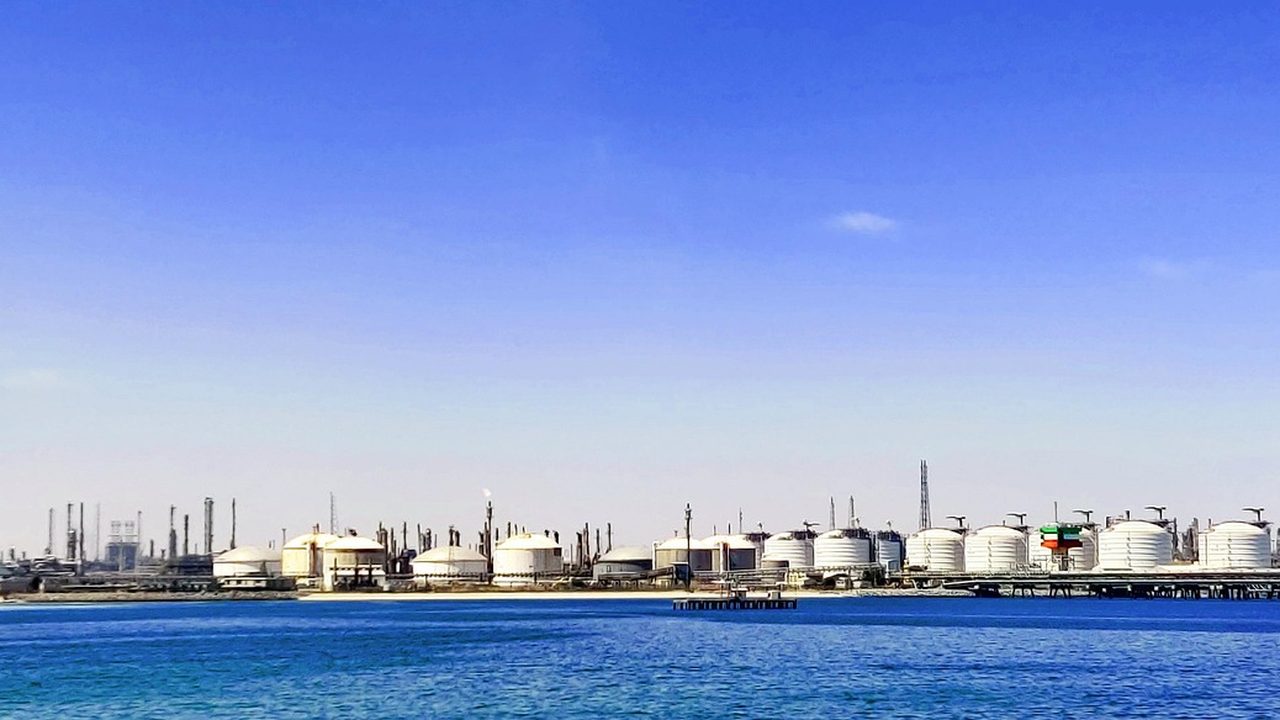
Ukraine struck a major oil terminal in St. Petersburg on the same day Donald Trump and Vladimir Putin spoke for 85 minutes by phone, with the two leaders discussing ending the war ahead of the NATO summit in Ankara. The St. Petersburg strike — a deep-strike operation targeting one of Russia's key fuel distribution nodes on the Baltic coast — signals Kyiv's continued capability and willingness to hit targets far behind Russian lines, even as diplomatic pressure mounts for a negotiated pause.
Russian fuel supply was already strained by sanctions, earlier Ukrainian strikes on refineries, and wartime economic dislocation. Hitting a St. Petersburg terminal deepens that pressure in Russia's second-largest city. Ukrainian President Zelensky simultaneously denied Russian claims of capturing Kostiantynivka, a strategic logistics hub in Donetsk, and pressed German Chancellor Merz for additional Patriot missile systems — a request that connects directly to the global Patriot supply shortage playing out simultaneously in Saudi Arabia.
The Trump-Putin call is the piece that will dominate diplomatic analysis heading into the week. Eighty-five minutes is a substantial conversation; the choice of July 4th as the date for that call is either coincidental or deliberate staging. Trump has consistently signaled his desire for a Ukraine deal, and the Ankara summit represents the first major multilateral venue where the shape of such a deal might be articulated publicly. European NATO members are watching with particular anxiety, because a deal that trades Ukrainian territory for a ceasefire would establish precedents affecting every member's security calculus.
The version of events that concerns European capitals most is not that negotiations fail, but that they succeed on terms set bilaterally before allies are consulted. If Trump and Putin sketched a framework during their 85-minute call, the Ankara summit may present NATO members with a fait accompli rather than a genuine consultation. That distinction — being informed versus being consulted — matters enormously for the long-term cohesion of the alliance.
The 250th Birthday as Political Battlefield
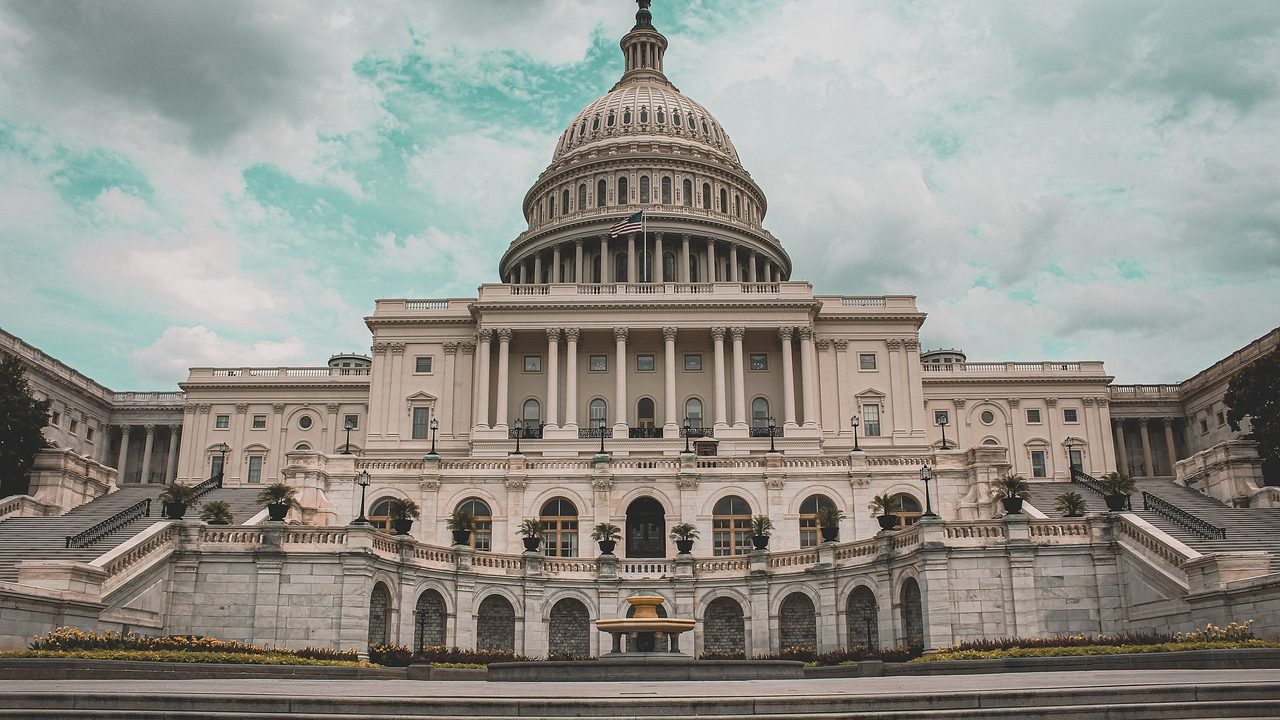
Trump's semiquincentennial address, delayed past eleven at night by the severe storms that forced evacuation of the National Mall, centered on the SAVE America Act — voting legislation Trump claims would keep Republicans winning elections for a century. The bill remains stalled in the Senate. Using the 250th birthday as a stage to advance a specific legislative agenda is a choice that reveals priorities, and the framing of electoral dominance as a national birthday present will generate as much opposition as support.
Hours earlier, California Governor Gavin Newsom used his own Fourth of July address to propose a felony ballot-seizure law explicitly aimed at preventing what he characterized as federal interference in state elections. The proposal drew immediate response from the administration. Newsom's use of the 250th anniversary to draw a constitutional line — and to do so in language that positions him as a defender of democratic norms — looks increasingly like a 2028 presidential campaign in operational terms.
Vice President J.D. Vance offered a more traditional address urging Americans to embrace the nation's greatness. Bernie Sanders, at 84, released a video declaring a political revolution, citing democratic socialist primary victories in New York and Colorado as evidence that his movement's agenda has entered the mainstream. The Democratic Socialists of America separately said they would be 'thrilled' if Alexandria Ocasio-Cortez runs for president in 2028. The sitting president, sitting vice president, California's governor, and Vermont's senator were all simultaneously reinforcing or launching competing political projects on the same national holiday.
The Atlantic's decision to republish Vance's 2016 essay — in which he described Trump's appeal as 'cultural heroin' — on July 4th, 2026, while Vance serves as vice president, is an editorial decision that was not accidental. The essay, written before Vance's political reinvention, describes Trump's pull on working-class communities as addictive but ultimately destructive. Its republication on the 250th birthday is a pointed reminder of how dramatically stated convictions can migrate when political ambition enters the picture.
The administration also launched Trump Accounts on July 4th — a program providing a thousand-dollar investment account for every American newborn, explicitly timed for symbolic resonance with the national birthday. Separately, Trump issued eleven pardons over the holiday, nine of them for individuals convicted of Clean Air Act violations. Pardoning that many Clean Air Act cases simultaneously, during a historic heatwave, is a statement about regulatory enforcement priorities that received less attention than it might on a quieter news day.
AI Governance, the Scaling War, and a Product Launch Awaiting a Phone Call
Anthropic, Amazon, Microsoft, and Google jointly published a standardized framework for rating the severity of AI jailbreaks — a five-tier scale running from informational to critical. Major competing AI companies agreeing on shared safety vocabulary before regulators mandate it is almost always a preemptive move: it shapes what eventual regulation will look like and establishes a compliance baseline that benefits those already operating at that level. The fact that all four companies are signing onto the same framework signals a shared belief that government AI regulation is coming and that industry would rather help write the rules.
Huawei's publication of mass production data backing the Tau Scaling Law is a different kind of news. The Tau framework challenges the Chinchilla scaling assumptions that have governed much Western AI research and capital spending. By publishing manufacturing-level data supporting an alternative scaling model, Huawei is claiming that its approach produces efficiency gains the conventional wisdom missed — a claim with direct implications for how hundreds of billions of dollars of AI infrastructure investment is being deployed.
GPT-5.6's broad public release is reportedly contingent on a White House call scheduled for July 7th. A commercial AI product launch requiring what amounts to government sign-off would have been unthinkable three years ago. Whether the call constitutes a security review, an export control negotiation, or a broader policy conversation is not fully clear — but the fact that a conversation between OpenAI and the White House is the pivot point for a public product release reflects how thoroughly the AI industry has become integrated with national security apparatus.
Separately, MixRoute added Anthropic's latest model and is planning GPT-5.6 access — a developer-tools story that reflects a broader structural shift in how the AI model market is evolving. Platforms that offer model routing, allowing developers to select among multiple frontier models through a single interface based on task, cost, or latency requirements, reduce vendor lock-in and reshape competitive dynamics between model providers. Meanwhile, both French President Macron and Indian Prime Minister Modi are personally courting technology executives to secure AI infrastructure commitments — a signal that AI infrastructure has achieved strategic priority comparable to semiconductor fabrication or defense procurement in both governments' national industrial policy.
Goldman Reverses the Dollar Call, Foxconn Hits Records, and a Competition Law Primer

Goldman Sachs abandoned its weak-dollar call, citing the AI boom as the primary reason. The argument: if AI delivers the productivity gains optimists expect, the U.S. economy will outperform its peers by enough to support a stronger currency, overriding the fiscal deficit and current account concerns that had supported the weak-dollar thesis. Foxconn's 40 percent Q2 revenue jump on record AI server demand gives that thesis empirical grounding — when the world's largest contract electronics manufacturer reports a 40 percent jump driven by a single product category, the data center buildout is confirmed as real and accelerating, not merely a narrative.
Micron broke ground on a nine-billion-dollar memory chip expansion in Hiroshima — the memory side of the same story. AI models are extraordinarily memory-hungry, and memory bandwidth remains one of the primary bottlenecks in AI infrastructure deployment at scale. Hiroshima was chosen partly for its existing semiconductor workforce and partly because Japan has become a strategic alternative to Taiwan for advanced chip manufacturing, supported by significant subsidies from both the Japanese government and the U.S. CHIPS Act framework.
Uber is pausing its European food delivery expansion while pursuing a potential acquisition of Delivery Hero, and the antitrust dimensions of any such deal warrant explanation. The foundational American statute is the Sherman Act of 1890, which prohibits monopolization and restraint of trade — but having a monopoly is not itself illegal. What is illegal is acquiring or maintaining that position through exclusionary conduct. In Europe, the standard is more precautionary about dominant market positions. Any Uber-Delivery Hero combination would create dominant positions in multiple national markets simultaneously, which is precisely the structural concentration European competition authorities have historically moved to block. Market share alone does not determine the outcome — the question regulators will ask is what the combined entity would do with that share.
Alphio AI's launch of natural-language automated stock trading on Robinhood removes one of the last friction points in retail investing — potentially democratizing access to sophisticated trading strategies, and potentially democratizing access to sophisticated mistakes at a scale not previously possible. China's move to cut fuel prices by the largest margin in nearly six years adds a macro note of caution: a fuel price reduction of that magnitude typically reflects either weakening domestic demand or deliberate government stimulus. Given the broader context of Chinese economic pressure, the cut reads more as the latter — with implications for global energy markets and how Beijing is managing its own growth slowdown.
Wildfires, Blackouts, and Energy Policy Contradictions in a Record Heatwave

The Fourth of July weekend produced a concentrated expression of the extreme-weather conditions climatologists have projected for the mid-2020s. The Chelan Hills Fire in Washington State grew from roughly 400 acres at dawn Saturday to approximately 20,000 acres by evening — a fifty-fold expansion in a single day driven by wind, low humidity, and drought conditions. Dozens of homes were destroyed. California deployed firefighters to Colorado's Aspen Acres fire, which reached 85,000 acres and ranks among the largest in Colorado's recent history.
Simultaneously, severe storms knocked out power to 80,000 Maryland residents on July 4th — the same storms that forced the National Mall evacuation and delayed Trump's address. Over 100 people were sickened at a Philadelphia train stop during 106-degree heat. Philadelphia canceled its July 4th parade entirely because of the temperature. The convergence of extreme heat, severe storms, and rapid-onset wildfires across multiple regions simultaneously is not a series of isolated weather events.
The Department of Energy's actions during this heatwave are difficult to explain on grounds other than political sensitivity. The DOE deleted 6,000 energy conservation pages from its website during the emergency. Separately, a DOE webpage recommending thermostat settings of 75 to 78 degrees Fahrenheit for summer — guidance consistent with decades of energy efficiency research — was quietly removed after New York City Mayor Mamdani's identical recommendation sparked conservative political backlash. The removal of evidence-based conservation guidance while a heat emergency is actively unfolding represents a policy contradiction operating in real time.
One constructive development embedded in the weekend's chaos: electric school buses feeding power back to the grid during peak demand. Vehicle-to-grid technology — in which electric vehicles function as distributed energy storage that can discharge during high-demand periods — is increasingly viable, and school buses are a near-ideal candidate. They are stationary during peak summer afternoon hours when grid demand is highest. The fact that this is occurring at meaningful scale during an actual emergency, rather than a controlled pilot program, is a substantive development. The Trump administration's proposed changes to Section 702 of the Foreign Intelligence Surveillance Act, which governs intelligence collection on foreign targets and whose rule modifications would expand the practical scope of permissible collection, were released over the holiday weekend with minimal attention.
Webb Telescope, Nobel Talent Flight, and AI Finds Superconductor Candidates

The James Webb Space Telescope observed the most distant barred spiral galaxy ever recorded — a finding that challenges existing models of galactic formation. Barred spiral galaxies, the structural category that includes the Milky Way, were assumed to require billions of years of cosmic evolution to develop their organized complexity. Finding one this far back in cosmic time suggests either that the universe organized itself faster than models predicted or that those models require revision. NASA simultaneously released patriotic imagery from Hubble and Chandra — red, white, and blue deep-space portraits timed to the 250th birthday, a science communication strategy designed to make space research feel personally relevant to a broader public.
Alibaba's AI agent, Elements Claw, screened 2.4 million crystal structures and identified four novel superconductor compounds that were subsequently verified in laboratory experiments. That is not a theoretical exercise — it is AI performing literature survey, candidate screening, and compound identification work that would have occupied a team of materials scientists for years, and producing experimentally confirmed results. Superconductors capable of operating at room temperature would revolutionize energy transmission, computing, and medical imaging. Four new candidates does not constitute a solved problem, but it is real, verified progress.
Harvard's AI model predicting which cancer patients will respond to immunotherapy translates abstract AI capability into concrete clinical stakes. Immunotherapy — treatment that activates a patient's own immune system against cancer — has proven dramatically more effective for some patients than others, and current tools for predicting who will benefit are imprecise. A model that improves those predictions means fewer patients enduring the side effects of a treatment unlikely to help them and more resources directed toward approaches that will.
Omar Yaghi, who received the Nobel Prize in Chemistry in 2025, is leaving UC Berkeley for Tsinghua University in Beijing to lead a new AI chemistry institute. Yaghi is among the world's leading researchers in metal-organic frameworks, porous materials with applications spanning gas storage, drug delivery, and carbon capture. His departure follows a pattern of significant talent departures from American research institutions that has reportedly accelerated over the past two years. Whether the drivers are funding constraints, regulatory environment, or the scale of institutional AI integration available in Beijing — likely some combination — losing a sitting Nobel laureate to a Chinese university is a data point in a trend line that American policymakers have not yet adequately addressed.
Celebrity NDAs, AI Film Shots, and the Question the Bull Case Must Answer
Taylor Swift and Travis Kelce married at Madison Square Garden, generating enough cultural coverage to qualify as its own media event — and then generating a secondary story when MSG fired several employees for allegedly violating nondisclosure agreements about the wedding. The NDA enforcement action reveals something about how major celebrity events are now managed: with information-security protocols that resemble classified government operations more than traditional entertainment logistics.
The film 'Young Washington' opened this weekend with AI used in 100 shots — a number that will reframe the entertainment labor debate in the coming week. A typical feature film contains 300 to 600 total visual effects shots, meaning AI-generated work could represent 20 to 30 percent of the visual effects budget on this production. That is commercial-scale deployment, not an experiment. Separately, Peter Thiel accused the Pope of 'working for Chinese Communists' on AI — a politically charged framing of the Vatican's longstanding advocacy for AI governance frameworks that include ethical constraints and limits on autonomous weapons. The accusation misrepresents what the Vatican has actually argued but reflects an influential strain of American tech-policy thinking that treats any constraint on AI development as competitive concession to adversaries.
Drone shows are replacing traditional fireworks in more U.S. cities. The Brooklyn Bridge fire during the July 4th pyrotechnics display — a national landmark catching fire during the national celebration — will likely accelerate that trend by making the risk calculus of traditional pyrotechnics harder to defend to insurers and city governments alike.
The dominant consensus running through nearly every major business story of the weekend — Goldman Sachs reversing its dollar call, Foxconn's revenue surge, Micron's nine-billion-dollar groundbreaking, Macron and Modi personally chasing AI commitments — holds that the current AI investment wave is creating durable economic value and that productivity gains will justify the capital being deployed. The bull case has real empirical grounding: Foxconn's revenue happened, Micron's factory will be built, Harvard's cancer model is producing clinically useful predictions, and Alibaba's superconductor candidates were experimentally verified.
But the strongest version of the skeptical argument is not that AI does not work — it is that the infrastructure buildout is overbuilt relative to the deployment timeline. If enterprise AI adoption, meaning businesses actually changing their workflows at scale, takes a decade rather than three years, then data centers built for 2027 demand will operate at partial utilization until 2034. That is a materially different financial story than what current capital markets are pricing. The signal to watch is not chip orders — that is capital expenditure flowing through. The signal is enterprise software revenue from AI-native products: whether Fortune 500 procurement budgets are shifting toward AI tools at rates that reflect genuine workflow transformation, or whether adoption plateaus at the pilot stage. The infrastructure numbers are already in. The adoption numbers are not yet.