War, Heat, and Blurring Lines: The World on June 30, 2026
From Pentagon strike footage released alongside a diplomatic deal framework to machine guns mounted on civilian tankers, Tuesday marks a day when the boundaries between military and civilian, diplomacy and conflict, and risk and market calm are dissolving faster than institutions can respond.
“Ukrainian drones have now struck eight of Russia's ten largest oil refineries — a systematic campaign against the deep-infrastructure assets that fund Moscow's military operations.”
How this was made Verified AI
Every Intellegix briefing is generated from that day's broadcast and run through automated checks before it publishes — with a human paged on any flag. Here is the trail for this edition.
Pentagon Footage, a Deal Framework, and the Hormuz Wildcard

The Pentagon released video of U.S. strikes on Iran this week — a deliberate communications choice that simultaneously documented military action and sent a deterrence signal to Tehran, regional proxies, and a skeptical Congress. The footage arrived as Secretary of State Marco Rubio briefed lawmakers on a U.S.-Iran deal framework aimed at barring Iran from enriched uranium, a combination that underscores the administration's effort to pursue coercive diplomacy on parallel tracks.
Bipartisan resistance greeted Rubio on Capitol Hill. Hawks who think any agreement is too weak stood alongside members demanding clarity on verification mechanisms and the scope of sanctions relief — and, critically, what 'barring enrichment' actually means in practice. Whether the ceiling is zero enrichment, as demanded by the original 2015 JCPOA, or some lower percentage carries enormous implications for Iran's weapons-development timeline.
Lebanon added another layer of complexity. CENTCOM chief Michael Kurilla visited Beirut even as a proposed stabilization deal faced rejection from both Hezbollah and Amal — the two dominant Shia political-military movements in the country — leaving Washington trying to construct a security arrangement without the participation of the most heavily armed non-state actor on the ground. Meanwhile, Syria's newly installed spy chief used a UN counterterrorism conference to name Israel as a top threat, a remarkable public calibration from a government that barely a year ago was fighting for survival against groups backed by Iran and Hezbollah.
Shell's warning about the Strait of Hormuz bound all these threads together in economic terms. The company projects global LNG demand growing 65 percent by 2050 — nearly 700 million tonnes annually — while flagging near-term supply contraction risk tied directly to Hormuz disruption. Approximately 20 percent of the world's LNG transits the strait, meaning sustained U.S.-Iran military tension could reshape energy economics from German heating bills to Japanese industrial output. Energy futures markets are not yet pricing in a worst-case scenario, but the gap between market calm and actual geopolitical risk is widening.
Drones, Armed Tankers, and the Erosion of Battlefield Rules

Ukrainian drones have now struck eight of Russia's ten largest oil refineries — a systematic campaign against the deep-infrastructure assets that fund Moscow's military operations. Refineries are not frontline targets; they require months or years to repair, and Russia's oil export revenue remains the primary financial engine of its war effort. The strikes represent one of the fastest battlefield technology evolutions in modern military history, with a country that was defending its capital from armor columns in February 2022 now running sustained long-range campaigns against industrial facilities hundreds of kilometers inside Russian territory.
Russia's response on the Baltic Sea revealed a different kind of strategic anxiety. Surveillance photographs obtained by OCCRP show heavy machine guns mounted on a Gazprom LNG tanker supplying Kaliningrad, the Russian exclave surrounded by NATO members Poland and Lithuania that hosts Baltic Fleet assets. The apparent militarization of a commercial vessel suggests Moscow fears supply interdiction — and carries serious legal implications. Under international maritime law, arming a civilian ship blurs its protected status and potentially exposes it to different rules of engagement, while raising difficult questions for any port that might receive it.
NATO's competition seeking weapons capable of striking Russian airfields drew a sharp condemnation from Moscow, which called it 'provocative escalation.' The forceful objection itself suggests the concept is registering as a credible deterrent threat. On Russia's domestic front, Alexander Lunin — a veteran who went viral warning Vladimir Putin of an imminent military mutiny over soldier abuse — was convicted of displaying extremist symbols, an unambiguous message to anyone inside Russia's military contemplating public dissent. Yet the persistence of such videos, decentralized and harder to suppress than a single organized challenge, points to stress fractures that no official narrative can fully contain.
Sudan's Siege and Venezuela's Blocked Relief Expose Governance Failures
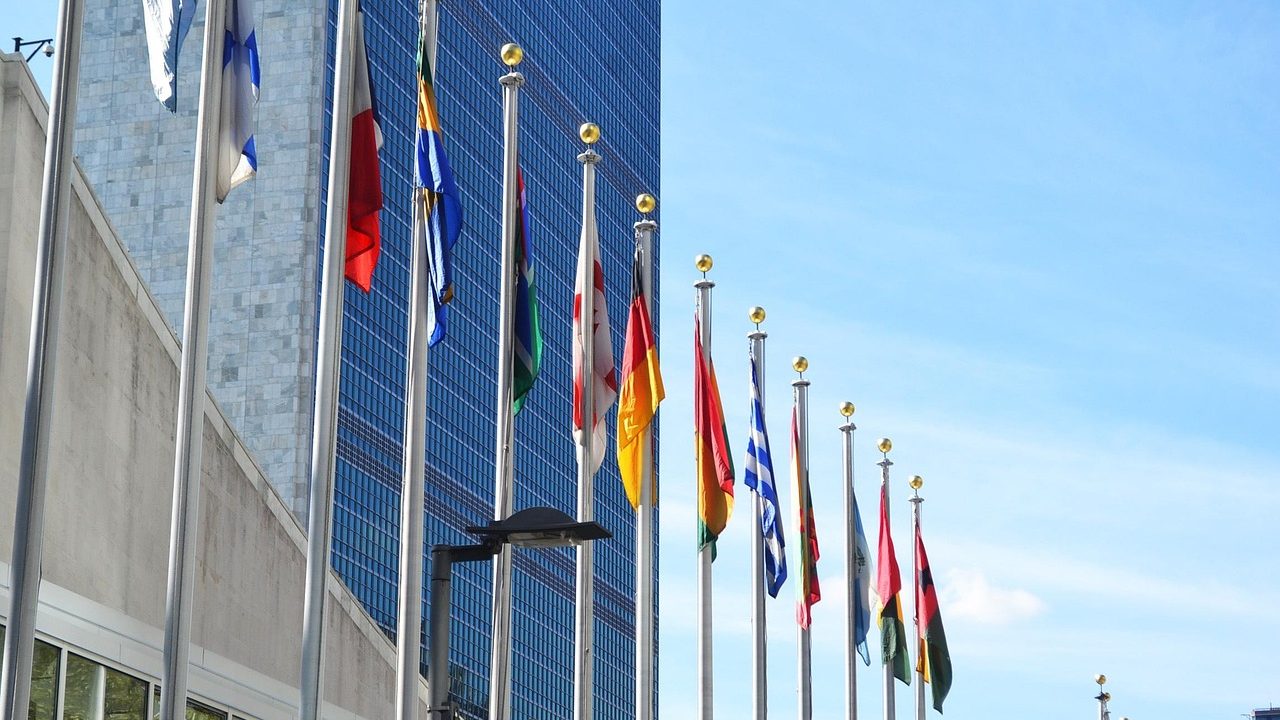
Britain and Germany are calling for an urgent UN Security Council debate on El Obeid, the capital of Sudan's North Kordofan state, where the Rapid Support Forces paramilitary has mounted a siege accompanied by reports of civilian massacres, displacement, and aid blockages. The call for formal debate is a diplomatic signal: any binding Security Council resolution will almost certainly be blocked by Russian or Chinese vetoes, but placing the situation on the record creates documentation that can support future accountability mechanisms. Sudan's broader conflict, which began in April 2023, has already displaced more than ten million people internally in what humanitarian organizations are describing as one of the worst displacement crises on the continent.
Venezuela presented a more pointed confrontation with international norms. Video surfaced showing Interior Minister Diosdado Cabello — already under U.S. Treasury sanctions under the Global Magnitsky Act for alleged drug trafficking connections — personally blocking a U.S. rescue team attempting to reach earthquake victims in La Guaira. Senators Rick Scott and Representative Carlos Giménez called for accountability, noting the act potentially runs afoul of international humanitarian law, which generally requires parties to facilitate disaster relief access regardless of political disputes. Both lawmakers represent Florida constituencies with direct ties to the Venezuelan diaspora, and their statements carry electoral weight as well as diplomatic intent.
On a separate domestic front, the Department of Justice filed suit against Massachusetts and Rhode Island over their in-state tuition policies for undocumented students, arguing the benefits violate the Personal Responsibility and Work Opportunity Reconciliation Act of 1996. Both states contend their policies are based on residency rather than immigration status. The litigation is part of a deliberate pattern of using DOJ suits to force states into choosing between federal compliance and their own legislative priorities — a strategy that will take months to resolve in court but is already reshaping the political landscape of immigration enforcement.
Birthright Citizenship Ruling Could Reshape American Identity
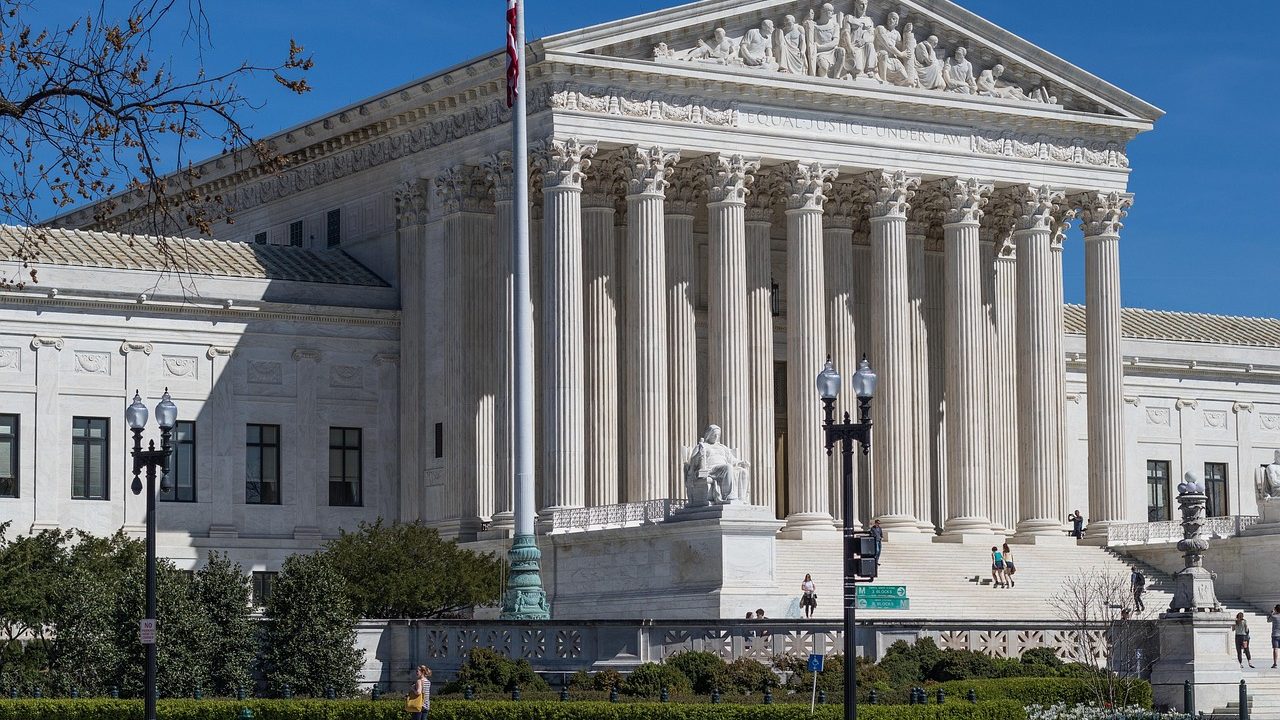
The Supreme Court is expected to issue its ruling imminently on President Trump's executive order challenging birthright citizenship — specifically the order attempting to deny automatic citizenship to children born on U.S. soil to parents without legal status. The case turns on the interpretation of the Fourteenth Amendment's citizenship clause, ratified in 1868, which grants citizenship to all persons born in the United States and 'subject to the jurisdiction thereof.' The administration argues that phrase excludes children of undocumented parents; more than a century of legal precedent, anchored by the 1898 case United States v. Wong Kim Ark, holds that birthright citizenship applies to virtually anyone born on American soil regardless of parental status.
The Court's ruling carries consequences beyond immigration policy. Several justices have signaled interest in whether a president can unilaterally reinterpret a constitutional amendment through executive action, or whether doing so requires congressional legislation. A decision upholding the order — even narrowly — could affect an estimated 150,000 to 200,000 births annually. A decision striking it down could reinforce limits on executive power to circumvent established constitutional interpretation. Either outcome will be immediately weaponized in the 2026 campaign cycle.
Several other domestic political developments are reshaping the landscape. Justice Neil Gorsuch issued a public warning that FCC investigations into ABC may be politically motivated — an unusual act of editorial commentary from a sitting justice that signals the Court may eventually confront First Amendment questions about regulatory capture of the press. A New York Times/Siena poll showing Democratic challenger Graham Platner leading Senator Susan Collins 49 to 47 in Maine has set off alarm bells at the National Republican Senatorial Committee, as Collins has been among the most durable moderate senators in that chamber. And both candidates in Pennsylvania's governor's race are trading accusations of flip-flopping on data centers, previewing an energy-and-land-use fault line expected to appear in at least a dozen state races this cycle.
AI Supercharges Fraud, and Banks Are Taking Notice

A joint investigation by the Associated Press and Frontline documented how ChatGPT, Google's Gemini, and Elon Musk's Starlink satellite internet service are being deployed at scale to industrialize cyberscam operations in Southeast Asia, primarily in Myanmar, Cambodia, and Laos. Researchers describe large 'scam compounds' — facilities where thousands of workers, many trafficked, run fraud operations targeting victims globally. AI tools generate convincing romantic personas for so-called pig-butchering scams, translate scripts into dozens of languages simultaneously, and handle initial victim contact at a scale that previously required far larger human teams. Starlink provides reliable high-speed internet in deliberately remote locations chosen to evade law enforcement.
The industrial implications caught the attention of the world's largest bank. JPMorgan warned this week that AI-powered cyberattacks now represent a larger risk to the banking system than traditional credit losses — an extraordinary statement that places deepfake voice and video fraud, AI-generated social engineering, and automated vulnerability discovery above loan defaults in the bank's formal risk register. A new poll found 68 percent of Americans support mandatory AI safety reviews, a level of consensus rare in the current regulatory environment, though translating that sentiment into law remains complicated in an administration that has favored industry self-governance.
The European privacy advocacy group Noyb, run by activist Max Schrems, added a transatlantic dimension to the regulatory picture, asking the European Commission to repeal the EU-U.S. Data Privacy Framework following a Supreme Court ruling affecting the FTC's independence. The group's argument is that if the FTC can no longer function as a truly independent enforcer, the enforcement mechanism underpinning transatlantic data transfers is compromised — creating legal uncertainty for virtually every major tech platform that moves European user data to U.S. servers.
On a parallel antitrust front, a price-fixing settlement in the egg market offered a smaller-scale illustration of how enforcement actually works. The Sherman Antitrust Act's Section One prohibits coordination between competing firms, and the settlement — $3.3 million in cash plus 53 million donated eggs across 17 states, alongside a DOJ resolution — produced a modest financial penalty for what was apparently years of coordinated price inflation. The signal, however, is less about the dollar amount than the deterrence message it sends to producers in other commodity markets: the DOJ is actively monitoring coordination patterns.
Amazon Soars, Oracle Sinks, and SpaceX Becomes the New Corporate Treasury

S&P futures opened essentially flat at around 7,509, but beneath that calm surface individual stocks told a story of sharply diverging investor conviction. Amazon drove the week's biggest headline, with Prime Day hitting a record $26.4 billion in sales — a figure that, coming during a period of elevated interest rates and persistent inflation anxiety, suggests consumer discretionary spending remains more resilient than bears had expected. Meta shares also climbed as analysts pushed back on what they characterized as an overcorrection to earlier concerns about the company's AI infrastructure spending, arguing that AI features are already showing up measurably in engagement and advertising metrics.
Oracle presented the starkest cautionary tale. The stock has fallen roughly 53 percent from its 52-week high, erasing approximately $100 billion from Larry Ellison's net worth and dropping him from a top-five to seventh-place ranking among global billionaires. The correction reflects a judgment that Oracle's cloud business, while growing, has not grown fast enough to justify the premium multiples it commanded at the peak of AI enthusiasm. Salesforce faces a structurally similar challenge: a downgrade to a three-year stock low signals market anxiety that AI-native competitors are narrowing the moat around the company's core CRM proposition. Palo Alto Networks bucked the trend with a record high, reinforcing the narrative that if AI-powered attacks represent the banking system's largest risk, security spending becomes one of the most defensible categories of technology investment.
The most structurally novel market development involves SpaceX. Small-cap Nasdaq companies — Solidion Technology and Triller Group among them — are purchasing SpaceX shares and holding them as treasury assets, replicating the corporate Bitcoin treasury strategy that MicroStrategy pioneered around 2020. The mechanism allows investors who cannot buy SpaceX directly in public markets to gain exposure through listed proxies, but it raises real questions about whether the acquiring companies' actual businesses have become afterthoughts — and creates concentration risk if SpaceX's valuation corrects sharply.
The Bitcoin undercurrent to all of this arrived when Strategy — formerly MicroStrategy — filed a plan to sell Bitcoin holdings as the cryptocurrency traded below $60,000, while simultaneously announcing a $200 million share buyback. When the firm that pioneered the corporate crypto treasury strategy begins filing liquidation plans, it carries a narrative weight that can move the broader market. A former Federal Reserve official's warning that Americans should plan for structurally higher interest rates compounds the picture: if the consensus shifts from anticipated rate cuts to a new higher-rate equilibrium, the implications for leveraged positions across equities, real estate, and crypto are significant.
Ozone History Rewritten, Glaciers Retreating, and a Breakthrough for Dwarfism

MIT researchers have determined that measurable ozone depletion began in 1957 — not 1985, when the Antarctic ozone hole was formally documented and which has served as the baseline for most ozone-related policy and scientific modeling. The 28-year revision matters enormously for understanding how long anthropogenic chemicals had been affecting stratospheric ozone before detection, and carries implications for modeling recovery timelines and verifying the effectiveness of the Montreal Protocol.
The atmospheric finding landed against a backdrop of acute climate stress. A historic European heatwave has caused more than 1,300 excess deaths since June 21st. Swiss glaciers have hit their second-earliest glacier loss day on record. In the United States, a heat dome is pushing dangerous temperatures to more than 100 million Americans as the July 4th weekend approaches, while the Lyle Hill Fire has burned 1,500 acres in the Columbia River Gorge — one of the Pacific Northwest's most biodiverse regions — forcing evacuations in late June, weeks before the fire season typically peaks.
On the medical front, BridgeBio published Phase 3 trial results for infigratinib, an oral drug targeting achondroplasia — the most common form of dwarfism, affecting roughly one in 25,000 births globally and caused by a specific FGFR3 gene mutation. The results, published in the New England Journal of Medicine, showed the largest height gains ever recorded in a Phase 3 trial for the condition, and the company said it plans to submit to the FDA this quarter. The FDA also accepted Sandoz's applications for generic versions of Eli Lilly's tirzepatide-based drugs Mounjaro and Zepbound, starting the formal clock on what could eventually be a far more accessible version of the decade's most commercially successful drug class — though patent litigation from Lilly is widely expected to delay generic entry.
Morgan Stanley's designation of sodium as 'the new oil' — tied to rising interest in sodium-ion battery technology — adds a commodity dimension to the energy transition story. Sodium-ion batteries carry lower energy density than lithium-ion but offer cost and abundance advantages that make them increasingly competitive for stationary grid storage, where weight matters less than price and cycle life. In a smaller but telling sign of how autonomous vehicles are beginning to pay unexpected municipal dividends, Austin reported that sensor data from Waymo robotaxis has helped identify roughly four dozen potholes since spring — data the vehicles collected anyway for navigation, now repurposed for infrastructure maintenance.
Governance Gaps, Cultural Flashpoints, and One Correction Worth Making
The Washington Post reported that a $500 million White House ballroom was built under a no-bid contract routed through an office specifically exempt from competitive bidding requirements, raising straightforward procurement questions about why standard procedures were bypassed for a project of that scale. Separately, both Defense Secretary Pete Hegseth and Secretary of State Marco Rubio reportedly continued using auto-deleting Signal messages for official government communications after the practice had already become the subject of public controversy. The Federal Records Act requires preservation of official communications, and the continued use of auto-deletion — after the issue was already public — suggests either a legal theory about Signal's status under the law or a judgment that enforcement risk is low.
California's SB 576, a law extending broadcast-TV volume rules to streaming platforms and taking effect Wednesday, represents a modest but concrete consumer protection advance in an area the streaming industry chose not to self-regulate. Governor Gavin Newsom signed a record $352 billion state budget the same day Florida Governor Ron DeSantis vetoed $1.6 billion in state spending, illustrating divergent fiscal philosophies in the two largest states as both governors eye national audiences. The First Bank of the United States reopened in Philadelphia after a $43 million renovation — the building where Alexander Hamilton's vision for federal creditworthiness through a central banking institution was first tested, and where Jefferson's fierce constitutional objections were ultimately overruled by the precedent of the republic's survival.
The WNBA's suspension of Lia Thomas drew public criticism from Chiney Ogwumike — who serves simultaneously as an ESPN analyst and president of the WNBA Players Association — who argued the decision was driven by 'optics' rather than basketball judgment. The league has not provided detailed public reasoning, leaving space for that interpretation to gain traction. The case will set precedents for how professional sports leagues navigate similar situations going forward. Political strategist James Carville, meanwhile, called on Democrats to formally distance themselves from democratic socialists following New York City primary results, arguing that primary victories by more progressive candidates would create general election vulnerabilities — a strategic memo that will shape campaign positioning heading into the next eighteen months.
The broadcast ended with a notable act of self-correction. In a May 18th episode, the hosts had reported that Ukraine struck ships in the Caspian Sea — a landlocked body of water hundreds of miles from Ukrainian-controlled territory where no such attacks were reported. The claim was a factual error, and the hosts named it directly, framing it as a reminder that dramatic military claims require a second layer of geographic and sourcing verification before broadcast, particularly in an information environment that all sides in the conflict deliberately obscure.