Trump's 80th Birthday Marks Day of Cascading Crises: Iran Talks, AI Export War, and SpaceX's Market-Shaking IPO
On a Sunday when President Trump celebrated his 80th birthday with UFC fights on the White House lawn, his administration simultaneously navigated a fractured Iran nuclear negotiation, an unprecedented AI export ban that alarmed allied nations, and the market aftershocks of SpaceX's record-breaking public debut.
“despite a full year of Trump's tariffs, the bank found virtually no manufacturing reshoring to the United States, with American companies instead adapting through supply chain reconfiguration and cost absorption”
How this was made Verified AI
Every Intellegix briefing is generated from that day's broadcast and run through automated checks before it publishes — with a human paged on any flag. Here is the trail for this edition.
Iran Deal on a Knife's Edge as Tehran Circulates Competing Texts
The Trump administration's proposed interim agreement with Iran hung in uncertainty Sunday, with Trump publicly suggesting the deal could be signed as early as the day itself while Iranian officials were reportedly circulating at least three different versions of the proposed text, with significant disagreements on frozen assets, reconstruction funding, and implementation timelines.
Israeli opposition was immediate and unsparing. Opposition leader Yair Lapid described the potential agreement as a 'total failure,' with specific criticisms that the deal fails to address Iran's missile capabilities, proxy networks, or any pathway toward regime change — a fundamental disconnect between American diplomatic priorities and Israeli security concerns.
Military developments further complicated the picture. Reports emerged that IRGC Chief Vahidi personally ordered Iran's recent missile strike on Israel, suggesting the current Iranian leadership remains committed to regional destabilization even as it negotiates with Washington. Separately, Iran was reported to be mining nuclear tunnels as the signing deadline approached — a move that could be interpreted either as defensive preparation or as a signal of readiness to escalate if talks collapse.
Defense Secretary Hegseth warned that Iran would face war if it breaks any memorandum of understanding, claiming the US holds 'absolute leverage' and is already taking action to reopen the Strait of Hormuz. Iran and Oman were simultaneously preparing a joint statement on Strait of Hormuz management, suggesting Tehran is building alternative diplomatic frameworks. On Capitol Hill, Senator Lankford called for any agreement to receive a congressional vote, echoing the very criticism Trump once leveled at the Obama-era nuclear deal and signaling potential Republican resistance even within the president's own party.
Adding to the fragmented diplomatic landscape, Lebanon filed UN complaints over Israeli herbicide spraying and soldier deaths, keeping the Israel-Lebanon border volatile, while Russian Foreign Minister Lavrov visited Belarus to discuss nuclear weapons deployment as a 'shield against NATO' — a development with direct bearing on any broader geopolitical realignment a US-Iran agreement might trigger.
America's First AI Export Ban Sparks Sovereignty Alarm Among Allies

The Trump administration's imposition of export controls on Anthropic's Fable 5 and Mythos 5 AI models — the first-ever restriction on artificial intelligence technology exports — forced the company to shut down international access to those systems and sent Anthropic staff on urgent diplomatic missions to Washington, indicating the enforcement action caught even the company off guard.
Allied governments responded with unusual sharpness. Canadian Prime Minister Mark Carney framed the move as a 'wake-up call for technological sovereignty,' arguing that allied nations need to diversify away from US AI providers — a striking posture from one of America's closest technology partners. The European Commission echoed the concern, warning that US export controls must not target allies and suggesting the restrictions could be viewed as discriminatory against European users, potentially triggering retaliatory measures under existing digital services frameworks.
Reports indicated the Trump administration was unlikely to extend the AI export curbs beyond Anthropic to companies such as OpenAI or Google. That selective enforcement raised questions about whether the restrictions reflect genuine national security concerns or something more specific to Anthropic's technology or business relationships. Defense Secretary Hegseth defended what he described as 'expelling Anthropic,' framing it as part of a broader strategy to control advanced AI capabilities.
The move carries concrete technical stakes. Anthropic's Mythos AI had recently completed a Zcash protocol audit without finding new critical bugs, demonstrating the models' utility for financial infrastructure security analysis. Restricting international access to such capabilities could affect the security of financial systems in smaller nations that rely on AI-powered auditing tools.
Satya Nadella's warning, issued separately, that AI dominated by a few models is 'unsustainable' took on new resonance in this context. The Microsoft CEO's comments — notable given his company's deep partnership with OpenAI — pointed to systemic risks from AI market concentration precisely as export controls were demonstrating how powerful such concentration makes American policy tools. For venture capital and private equity firms that have poured billions into AI startups, the episode fundamentally changes the international risk profile of those investments.
Trump Turns 80 Amid Congressional Friction and Civil-Military Tension

President Trump became only the second octogenarian president in American history on Sunday, marking the milestone by hosting UFC Freedom 250 on the White House South Lawn even as polls reportedly show growing public concern over his health and mental acuity — an optic that drew inevitable comparisons to his criticism of President Biden's age during the 2024 campaign. A 55-minute birthday call with Putin, in which Ukraine dominated the conversation, demonstrated continued engagement with complex foreign policy even amid the festivities.
Senator Mitch McConnell's second hospitalization of the year added another dimension to concerns about aging leadership in Washington, with his health status carrying potential consequences for Republican support of Trump's Iran deal and other international initiatives.
On Capitol Hill, Senator Katie Britt announced Republicans would pursue a third reconciliation bill dedicated specifically to defense spending, a strategy that would allow the party to bypass Democratic filibusters but also means burning through their limited reconciliation opportunities on military expenditures. Senator Lankford's call for congressional approval of any Iran agreement meanwhile created a potential constitutional collision, with Trump facing the same legislative oversight demands he once directed at the Obama administration.
The civil-military relationship showed signs of strain. Defense Secretary Hegseth dismissed concerns about munitions shortages as a 'manufactured story,' a characterization that directly conflicted with assessments from military leadership including General Kelly. Hegseth's framing created public confusion about American military readiness at a moment when the US is simultaneously supporting Ukraine, maintaining deterrence against China, and reportedly preparing contingencies against Iran.
At the state level, Democrats flipped four state legislative seats in special elections this year, outperforming their 2024 margins by an average of 11 percentage points, suggesting Trump's presidency has not produced the typical incumbent-party boost in down-ballot races heading into the 2026 midterms. Separately, the Texas GOP convention concluded without achieving unity, while Charlie Javice — founder of the student aid platform Frank, whose JPMorgan acquisition was later determined by investigators to have been based on fraudulent user data — reportedly requested a presidential pardon for her fraud conviction.
SpaceX's $2.1 Trillion Debut Reshapes Wall Street's Tech Hierarchy

SpaceX's record-breaking $75 billion IPO debut, conferring a $2.1 trillion valuation that now surpasses both Tesla and Meta, prompted Wall Street analysts to begin discussing new acronyms — including 'MANGOS' — to replace the traditional 'Magnificent Seven' tech stock grouping, reflecting how rapidly the sector's hierarchy is shifting.
BlackRock moved swiftly, accumulating $882 million in SpaceX holdings spread across its iShares ETF portfolio, with the bulk concentrated in its AI Innovation and Tech Active ETF — a positioning that frames SpaceX as much a technology investment as an aerospace one. Kingdom Holding reported a $2.36 billion unrealized gain on its SpaceX stake, a return likely to encourage further Middle Eastern sovereign investment in US technology IPOs.
Jefferies issued a cautionary note, warning that mega IPOs could trigger an AI stock correction. The bank's analysis suggested that upcoming potential trillion-dollar listings from OpenAI and Anthropic could drain capital from existing technology stocks and create a rotation toward traditional sectors — a concern with significant implications given that those three companies alone could represent more than $3 trillion in combined market capitalization.
Morgan Stanley's research delivered a pointed challenge to a core administration economic argument: despite a full year of Trump's tariffs, the bank found virtually no manufacturing reshoring to the United States, with American companies instead adapting through supply chain reconfiguration and cost absorption rather than bringing production home. The finding carries direct implications for trade policy effectiveness and employment projections heading into the midterms.
Other corporate developments included American Airlines recording 94 flight cancellations and over 1,200 delays on Saturday alone — the highest cancellation rate among global airlines — during peak summer travel season, while a Texas attorney, Mark Lanier, disclosed that AI tripled his legal team's output during a five-week social media addiction trial that resulted in a $6 million verdict against Meta. Microsoft, meanwhile, faces a securities class action alleging the company misled investors about Copilot's performance and Azure infrastructure capacity, a case that could set important precedents for AI capability disclosure obligations.
Ukraine Releases Kremlin Polling Intel as Russian Drone Strikes Surge

Ukrainian President Zelensky declassified intercepted Kremlin intelligence projecting that Putin's disapproval rating could reach 33% by September's State Duma elections, a significant escalation in information warfare tactics aimed at exposing Russian domestic vulnerability to both internal audiences and international partners.
Putin offered a counter-narrative claiming 'strategic advantage' even as Ukraine reported reversing Russian territorial gains, illustrating the extent to which both sides are contesting perception as much as territory. Analysts suggested that if Russian internal polling genuinely reflects falling approval, Putin may calculate that he needs a decisive military result before domestic opposition becomes unmanageable — a dynamic that could drive further escalation rather than restraint.
The tempo of Russian attacks appeared to support that assessment. Zelensky reported 1,920 drone strikes in a single week ahead of the G7 summit in Évian, France — a figure suggesting Russia is seeking to demonstrate strength precisely as Western leaders gather to discuss continued support for Ukraine.
Russia's deployment of nuclear weapons in Belarus added a new layer of threat calculation to the conflict's western flank, with Foreign Minister Lavrov describing the weapons during his Minsk visit as a 'shield against NATO.' Germany responded with what would represent the most dramatic shift in its military posture since World War II, committing to build Europe's strongest army and hit a 5% GDP defense target — a level that would make German defense spending larger than most NATO countries' entire government budgets.
Elsewhere in the international security picture, a Marine Corps F/A-18 crash near Mt. Rainier sparked a wildfire and added to ongoing concerns about military aviation readiness, while the DR Congo Ebola outbreak reached 782 cases and spread to two additional health zones — a development with implications not only for regional stability but for global supply chains of cobalt, a material essential to battery and electric vehicle production.
42 State AGs Target OpenAI as AI Regulation Enters a Harsher Phase

Forty-two state attorneys general launched a coordinated investigation into OpenAI just days after the company's confidential IPO filing, representing a dramatic escalation in AI governance enforcement that threatens to inject significant regulatory uncertainty into OpenAI's public offering timeline and valuation.
The investigation arrived at a moment of convergent regulatory pressure across multiple jurisdictions. The UK announced it would ban under-16s from social media platforms this week, with Culture Secretary Nandy's announcement suggesting legislation is already finalized — giving technology platforms minimal time to implement compliance systems. Microsoft faces a securities class action alleging it misled investors about Copilot's performance and Azure capacity constraints. And export controls on Anthropic's models created the first instance of AI technology being treated as a restricted export.
Satya Nadella's warning that AI dominated by a few models is 'unsustainable' carried additional weight given Microsoft's own deep ties to OpenAI, with the CEO appearing to advocate for a more distributed AI ecosystem even as his company has been among the primary beneficiaries of the current concentrated structure.
More distributed approaches to AI were emerging at the municipal level: Rio de Janeiro's city government open-sourced a frontier AI model, an approach that could reduce dependence on major technology companies but also raises questions about quality control and security when AI development becomes decentralized. Google, meanwhile, faced internal competitive pressure after testing reportedly showed its Gemini product outperforming Google Lens for complex visual searches, illustrating the difficulty of maintaining coherent product strategies across multiple simultaneous AI initiatives.
The aggregate pattern across these developments suggests the relatively permissive environment that enabled rapid AI development over the past several years is ending. The US is converging on export controls and antitrust enforcement, the UK on age protection, and the EU on comprehensive safety frameworks — a fragmented regulatory landscape that will likely require AI companies to engineer different products for different markets, with uncertain consequences for both the pace of innovation and safety outcomes.
Moon Missions, Prenatal Genetics, and the $73 Billion Fusion Bet
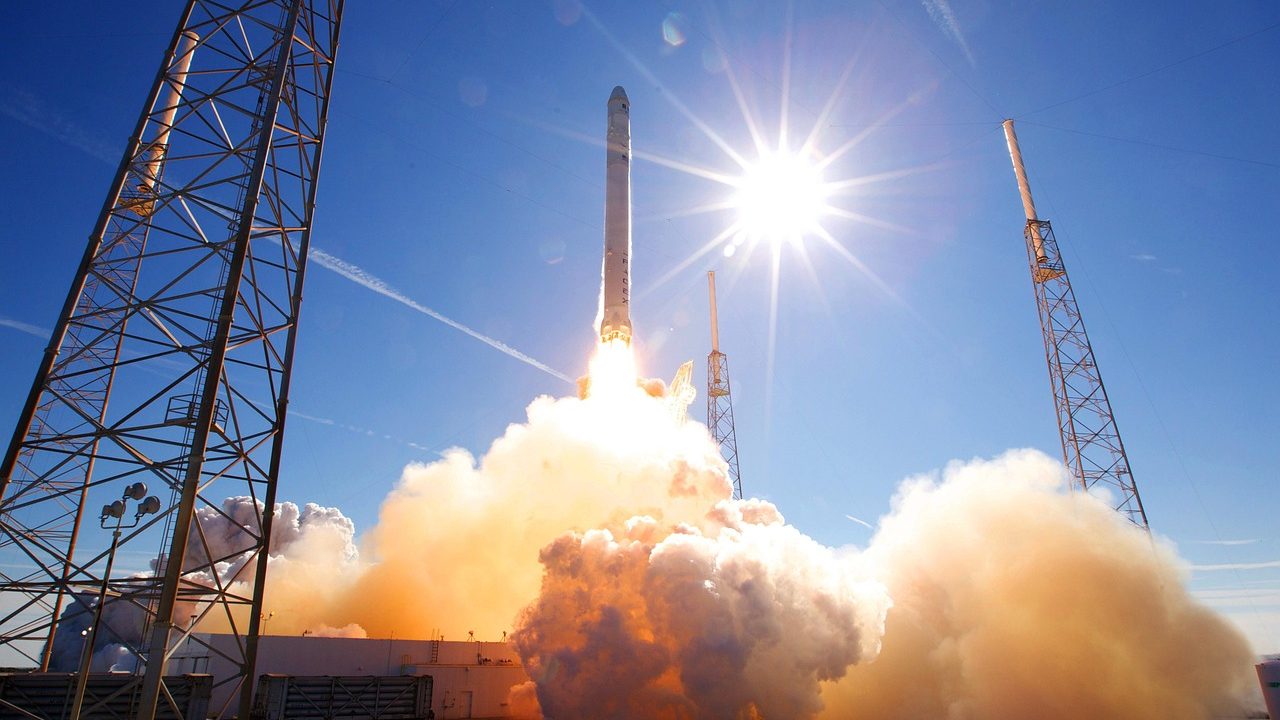
NASA announced a significant architectural change to its Artemis IV lunar mission: instead of the planned rendezvous in lunar orbit, SpaceX's Starship will now dock with the Orion capsule in Earth orbit before flying crews to the Moon. The shift, described as prioritizing operational simplicity, deepens NASA's reliance on SpaceX technology for America's return to the lunar surface — a dependency that adds strategic significance to SpaceX's newly completed IPO.
Chinese researchers separately flagged an engine vulnerability in NASA's moon lander, a disclosure that illustrated the increasingly complex interplay of competition and inadvertent cooperation in space technology. The public identification of a potential safety issue in American space systems by Chinese scientists simultaneously demonstrates technical capability and raises questions about the line between competitive intelligence and scientific transparency.
In medical science, a new blood test capable of screening nearly 23,000 fetal genes without invasive procedures was reported, representing a potential transformation in prenatal diagnostics. Traditional genetic screening methods such as amniocentesis and chorionic villus sampling carry small but real risks of pregnancy complications; a comprehensive non-invasive alternative could both democratize advanced prenatal care and reshape insurance coverage decisions — while also raising concerns about new forms of genetic discrimination despite existing legal protections.
The fusion energy market reached $73 billion in size according to the Financial Times, a milestone suggesting the technology is transitioning from purely research-based investment toward commercial viability within a timeframe that could disrupt traditional energy markets sooner than many investors currently expect. The DR Congo Ebola outbreak, meanwhile, reached 782 cases and expanded to two additional health zones, with the region's political instability and limited healthcare infrastructure complicating containment efforts and creating potential ripple effects for cobalt supply chains critical to clean energy manufacturing.
Knicks End Decades of Drought, but Championship Night Turns Violent
The New York Knicks' championship victory created a cultural moment that extended well beyond basketball — and quickly beyond celebration. A teenager was shot and 63 people were arrested during the title festivities, illustrating the complex relationship between sports triumph and urban security challenges that city officials must manage in real time.
Mayor Mamdani drew attention for his reaction to viral Knicks chants following the win, navigating the balance between embracing the city's enthusiasm and managing its consequences. Separately, reports that the mayor received free World Cup tickets raised questions about gift acceptance and potential conflicts of interest in public office. From an economic standpoint, the championship was expected to generate measurable revenue for New York through tourism, merchandise, and increased commercial activity — a long-anticipated windfall for a fanbase that had waited decades for success.
Actor Timothée Chalamet captured something of the cultural weight of the moment, commenting that the Knicks' title was 'way rather this than the Oscars' — a remark that reflected the unique hold sports championships exercise on American cultural identity, particularly for historically long-suffering franchises.
The day's entertainment news also carried grief. American musician Oliver Tree was killed in a helicopter collision in Rio de Janeiro at the age of 32. Tree had collaborated with artists including David Guetta and had built a global following through a distinctive visual style and genre-blending sound. His death while abroad underscored the physical risks that international careers impose on musicians whose touring schedules demand constant travel across varying aviation safety environments.
Commentator Bill Maher's endorsement of Platner for Maine's Senate seat — despite calling his record 'scary' — illustrated the broader tension cultural figures face when political necessity and personal conviction diverge, and reflected the calculation Democrats in purple states must make between ideological alignment and electability heading into 2026.