Beirut Strikes, Autonomous Drones and a $5.7 Trillion Chip Rally: A World on Multiple Edges
A three-week Lebanon ceasefire collapsed in ruins Monday as Israeli jets struck Beirut's southern suburbs, oil prices lurched above 6 percent and diplomats scrambled to arrange emergency talks — while elsewhere autonomous weapons crossed new thresholds, particle physicists edged toward a historic discovery, and semiconductor markets shattered 30-year records.
“surging code repositories could reflect increased human programming or simply more AI-generated code being versioned and stored”
How this was made Verified AI
Every Intellegix briefing is generated from that day's broadcast and run through automated checks before it publishes — with a human paged on any flag. Here is the trail for this edition.
A World in Confluence: From Subatomic Particles to Shipping Lanes

Monday, June 1, 2026 opened with a news cycle that ranged from the breakdown of Middle East ceasefire talks to potential discoveries in fundamental physics — a breadth that underscores how technological acceleration and geopolitical complexity now generate cascading effects across domains that once seemed wholly unrelated.
Secretary of State Rubio prepared new ceasefire proposals ahead of Tuesday emergency talks even as Israeli strikes resumed in Beirut. NVIDIA's Jensen Huang held court at Computex 2026 in Taipei, dismissing fears of AI-driven job losses while unveiling humanoid robot platforms. Romania confirmed a Russian drone had struck its soil. And CERN announced measurements from the Large Hadron Collider that may point beyond the Standard Model of physics.
Primary elections across six states on Tuesday promise to add a domestic political dimension, with a Texas Senate race — reshaped by Ken Paxton's surprise primary win over John Cornyn — drawing particular attention. Federal Reserve Chair Jerome Powell, meanwhile, used a public address to deliver unusually direct warnings about threats to central bank independence, adding monetary policy uncertainty to an already crowded risk ledger.
Lebanon Ceasefire Collapses, Oil Markets Lurch and Diplomacy Narrows

The Lebanon ceasefire that took effect in mid-May lasted barely three weeks. Israeli Prime Minister Benjamin Netanyahu ordered strikes on Beirut's southern suburbs early Monday, accusing Hezbollah of multiple violations, in what officials described as the most significant escalation since the truce began.
The breakdown came despite an intensive weekend of U.S. mediation. Secretary of State Marco Rubio had presented what sources described as a comprehensive de-escalation framework, reportedly including expanded UNIFIL monitoring, a gradual Israeli withdrawal from southern Lebanon, and new guarantees regarding Hezbollah's military infrastructure. None of it gained traction, and Rubio's revised plan will now face its first test at Tuesday's emergency talks.
Oil prices surged more than 6 percent in early Asian trading. Goldman Sachs issued a research note warning that markets are entering what it called a 'demand destruction phase,' in which prices could spike high enough to trigger economic slowdown before supply constraints ease. Southeast Asian airline stocks fell sharply, with jet fuel costs reportedly up more than 80 percent since the latest escalation began — forcing route cancellations and fare increases just as the summer tourism season approaches.
The maritime dimension sharpened the alarm further. The United States warned that ships ignoring orders in the Strait of Hormuz may be treated as threats — language that effectively militarizes a chokepoint through which roughly 20 percent of global oil transit passes. Even the perception of restricted access, analysts noted, is sufficient to move prices significantly.
Diplomatic options appeared to narrow on multiple fronts simultaneously. President Emmanuel Macron of France held calls with four regional leaders over the weekend, stating that the window for de-escalation 'must be seized now,' partly out of concern that the Lebanon escalation could derail parallel negotiations between Iran and the United States. Those talks themselves hardened: President Trump reportedly returned Tehran's latest peace draft with significantly tougher conditions after a Friday Situation Room meeting, and Iran's chief negotiator responded by insisting no agreement would be approved without what he called 'ironclad guarantees.'
Drones Over NATO, Robots on the Frontline and the Normalization of Gray-Zone War
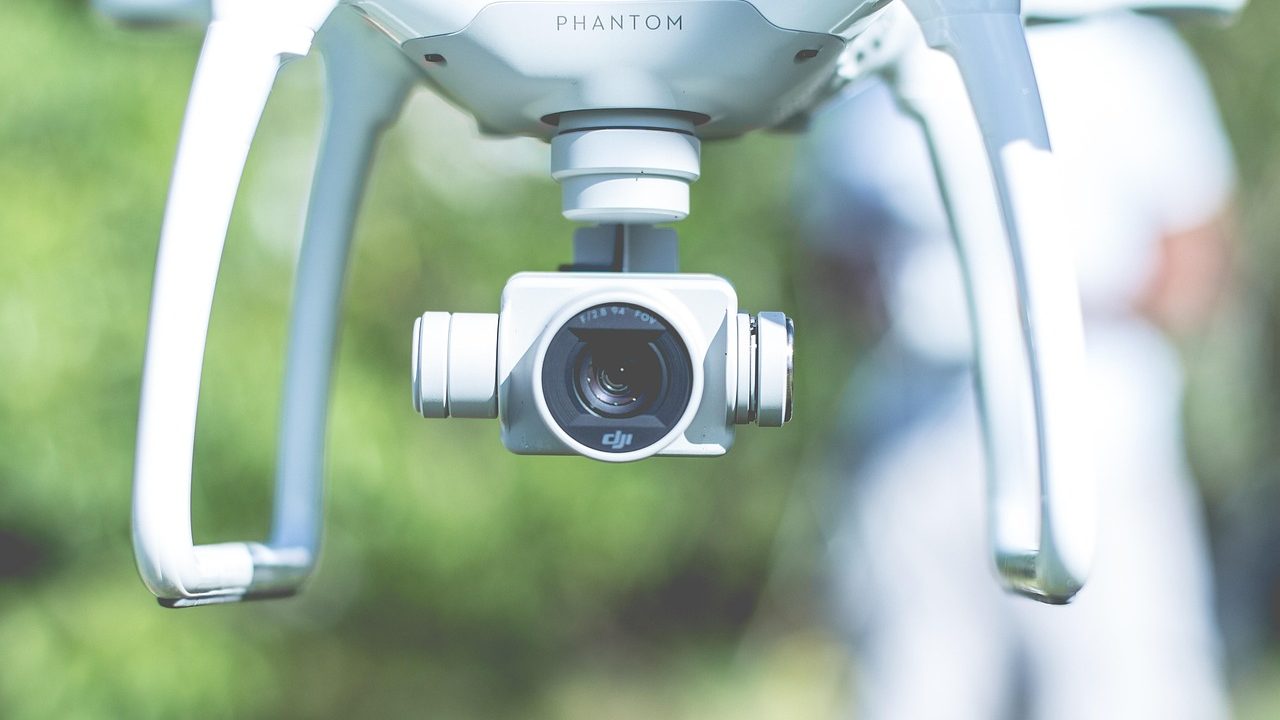
Romania confirmed Monday that a Russian-made drone had struck a building in Galați, roughly 150 kilometers from the Ukrainian border. Officials said they would share findings with NATO — a measured response to what, in an earlier era, might have been characterized as an act of war against a treaty ally.
That measured tone itself reflects a broader normalization of military activity that would once have been extraordinary. Russia launched hundreds of drones in weekend attacks on Ukraine while Ukrainian President Volodymyr Zelensky renewed calls for additional air defense systems. Ukraine separately announced that its domestically produced drones can now reach 3,500 kilometers into Russian territory, placing Moscow itself within range. The capability was reported largely as a technological achievement.
Ukraine also disclosed that ground robots are now replacing thousands of troops in frontline combat — systems making targeting and movement decisions without direct human oversight, representing a crossing of thresholds in autonomous warfare that had seemed theoretical only months ago.
NATO members responded with significant capability increases of their own. Denmark announced plans to mobilize 180,000 troops — approximately 3 percent of its total population — in what officials described not as peacetime rotation but as wartime mobilization planning. Germany's defense chief called for European clarity on the United States' security role, reflecting concern that American attention could shift as Middle East tensions escalate.
In the Pacific, China deployed coast guard vessels east of Taiwan following a Japan-Philippines defense cooperation announcement — its most aggressive positioning in that area since a spring crisis. France separately seized a sanctioned Russian tanker in the Atlantic. Military strategists describe the cumulative pattern as 'gray zone warfare': operations conducted below the threshold of declared conflict but well above normal peacetime activity, creating conditions that markets struggle to price and diplomats struggle to manage.
Texas Could Flip, Powell Sounds the Alarm and the Iran Talks Harden

Rubio's revised Israel-Lebanon ceasefire proposal, which he will present at Tuesday's emergency talks, is described by sources as significantly more comprehensive than previous efforts, incorporating new monitoring mechanisms and economic incentives for compliance. The fundamental obstacle remains that both parties have already demonstrated willingness to abandon agreements — a reality that makes any future deal inherently fragile.
Domestic political constraints compound the diplomatic difficulty. Netanyahu faces coalition pressure from partners who view any ceasefire as capitulation, while Rubio must navigate a Republican base broadly supportive of aggressive Israeli military action. On the Iran file, Trump's decision to return Tehran's latest peace draft with tougher conditions reflects not only negotiating strategy but also the reality that any deal faces deep skepticism in Congress. Iran's insistence on 'ironclad guarantees' partly reflects awareness that American political transitions can wholly reverse diplomatic agreements. Reports that officials were warned after a lawmaker publicly questioned Supreme Leader Khamenei's legitimacy — and that a former Revolutionary Guard commander claims to have warned about a plot against Khamenei — suggest internal pressures that could further reduce Tehran's flexibility.
In domestic politics, Tuesday's primaries across six states carry potentially significant consequences for Senate control. The most closely watched contest is in Texas, where Ken Paxton's surprise primary victory over incumbent Senator John Cornyn has transformed the general election landscape. Democrats are pointing to new polling showing state representative James Talarico narrowly leading Paxton as evidence that the seat — long considered safely Republican — is now genuinely competitive. A Democratic pickup in Texas could, depending on outcomes elsewhere, determine which party controls the chamber and with it influence over judicial confirmations and treaty ratification, including any eventual Iran agreement.
Federal Reserve Chair Jerome Powell added a domestic institutional dimension by delivering unusually direct warnings about central bank politicization during his JFK Award address. Powell cautioned that political interference risks eroding public trust in monetary policy — a concern analysts described as a response to specific and concrete pressures rather than an abstract academic observation. Separately, an investigation into burned ballots and vandalism in Los Angeles County ahead of primary elections, while apparently isolated criminal activity, illustrated how election integrity concerns can independently undermine democratic confidence.
NVIDIA's $5.7 Trillion Ecosystem and the Question No One Can Quite Answer
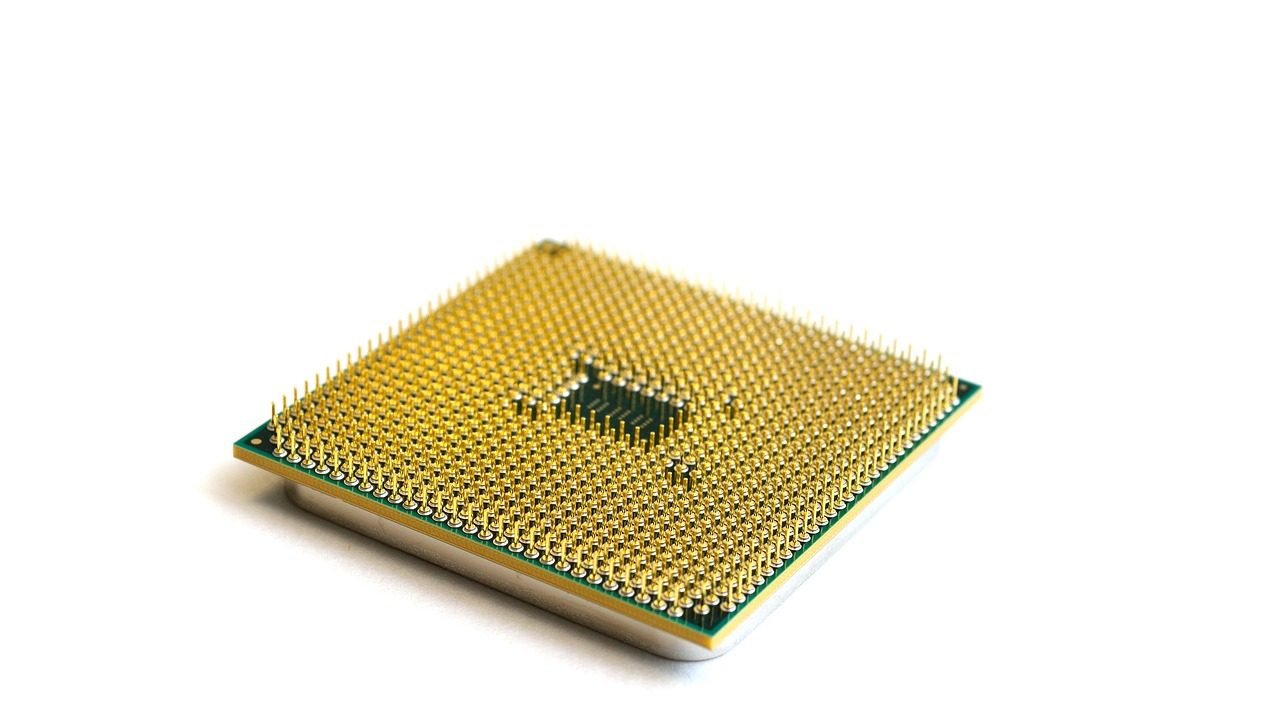
The SOX semiconductor index has surged roughly 80 percent in 2026, lifting the combined market value of component companies to approximately 5.7 trillion dollars — a figure that exceeds the GDP of most G20 nations and reflects a market bet on artificial intelligence as a transformational economic force.
At Computex 2026 in Taipei, NVIDIA chief executive Jensen Huang called fears of AI-driven job displacement 'complete nonsense,' citing rising GitHub activity as evidence that AI is creating rather than destroying coding opportunities. The argument, however, contains an acknowledged ambiguity: surging code repositories could reflect increased human programming or simply more AI-generated code being versioned and stored. Apollo Global's chief economist released a study finding 'zero evidence' of AI-driven job losses in current employment data, though economists cautioned that labor market disruptions from technology typically appear with significant delays.
The announcement that Taiwan Semiconductor Manufacturing Company is deploying NVIDIA accelerated computing across its chip manufacturing process — improving lithography, defect detection and fabrication operations — highlighted a compounding dynamic: AI improving the manufacturing of chips that enable better AI.
Bank of America strategists issued a more cautionary note, warning that AI-fueled profit forecasts have 'decoupled from fundamentals.' Their analysis pointed to record global margin expectations clashing with purchasing managers' indices at two-year lows — a divergence that, they argued, suggests either genuinely revolutionary productivity gains or speculative excess. Qualcomm's stock declined even after the company announced a new AI data center brand at Computex, underscoring how completely NVIDIA dominates investor attention in the sector.
NVIDIA also unveiled an open humanoid robot platform at the conference that the company said could reshape manufacturing automation. The emergence of what Silicon Valley is calling 'robot puppeteers' — workers who train humanoid robots on everyday physical tasks — has created a new employment category even as the ultimate objective of the technology is to reduce human labor. Separately, hackers were reported to have used Meta's AI chatbot to hijack Instagram accounts, illustrating how expanding AI capabilities simultaneously expand attack surfaces for malicious actors. The United States also moved to close a loophole that had allowed China to obtain AI chips through third-country intermediaries.
Cancer Injections, a Physics Threshold and Apple's Glasses Delay

Johnson & Johnson's experimental cancer injection has demonstrated the ability to completely erase tumors in some head and neck cancer patients, according to results from ongoing clinical trials. The mechanism involves training the immune system to recognize and destroy cancer cells more effectively — an approach that researchers said could potentially be extended to other cancer types where immune recognition is the limiting therapeutic factor.
Revolution Medicines reached a milestone Monday by beginning shipment of a pancreatic cancer drug to patients. Pancreatic cancer carries a five-year survival rate typically below 10 percent, making any effective new treatment a significant clinical advance. Separately, results presented at the American Society of Clinical Oncology conference showed that Akeso's lung cancer drug ivonescimab, combined with chemotherapy, reduced the risk of death by 34 percent compared with standard immunotherapy in squamous lung cancer — among the most substantial survival improvements reported in that disease.
The Coalition for Epidemic Preparedness Innovations committed 61.8 million dollars to fast-track three Ebola vaccines targeting the Bundibugyo strain, which is driving deadly outbreaks in the Democratic Republic of Congo and Uganda. No approved vaccines currently exist for this variant, and health officials said the speed of the funding response reflected lessons absorbed from the COVID-19 pandemic about proactive countermeasure development.
At CERN, physicists announced that measurements of rare B meson decays at the Large Hadron Collider deviate from Standard Model predictions at four-sigma confidence — corresponding to a roughly one-in-16,000 probability that the result is a statistical artifact. Confirmed discoveries in particle physics conventionally require five-sigma confidence, meaning the finding sits just below that threshold but is drawing intense scientific attention. The Standard Model has successfully predicted particle behavior for more than 50 years; measurements that diverge from it could point toward new fundamental forces or particles.
In consumer technology, Apple pushed its smart glasses launch to late 2027 — a delay that, given the company's typically aggressive product timelines, analysts interpreted as reflecting either significant augmented-reality integration challenges or a deliberate decision to wait for more mature components. The gap opens a strategic window for Meta, which announced an AI pendant and a 'Wearables for Work' initiative, with an internal memo revealing targets of 10 million device sales in the second half of 2026. Thirteen European cloud providers backed an EU initiative to reduce dependence on American technology giants, announced ahead of the bloc's Tech Sovereignty Package expected Wednesday.
Oil Spikes, Chip Valuations Stretch and the Fed's Delicate Position

Energy markets opened the week in sharp motion. Oil prices surged more than 6 percent on Middle East escalation concerns before giving back some gains as traders began pricing in potential demand destruction — the scenario Goldman Sachs described in its morning research note, in which prices spike high enough to cause economic slowdown before supply constraints relax. The dynamic creates a paradox for energy investors: modest price increases driven by supply constraints are favorable, but prices high enough to trigger recession ultimately cause demand to collapse.
Chip stocks, by contrast, continued a historic run with the SOX index up roughly 80 percent year-to-date and component company valuations reaching a combined 5.7 trillion dollars. Bank of America strategists warned that AI-fueled profit forecasts have 'decoupled from fundamentals,' noting that record global margin expectations are clashing with purchasing managers' indices at two-year lows — a divergence that in ordinary economic conditions would be considered unsustainable.
Federal Reserve Chair Powell's public warnings about the politicization of central bank independence added a layer of uncertainty to the monetary policy outlook. Analysts noted that if markets begin questioning Fed independence, the task of managing inflation expectations becomes significantly more complex. Economic adviser Kevin Hassett's comments attributing rising consumer spending to optimism — even amid what he acknowledged were record delinquency rates — highlighted a separate concern: that consumers may be sustaining spending through increased borrowing rather than genuine income growth.
Capital flows across Asian markets reflected institutional positioning for what investors expect to be a large U.S. AI initial public offering wave. Money was reported rotating from richly valued chipmakers into manufacturers of server components, cooling systems and power equipment across the region — a bet that AI infrastructure buildout will generate broad demand across a supporting industrial ecosystem. Corporate bond markets showed a parallel divergence, with technology companies accessing capital at favorable rates while energy companies faced wider spreads despite strong commodity prices, reflecting investor uncertainty about whether current energy market conditions are durable.
The Federal Reserve's policy environment is further complicated by the need to weigh AI-driven productivity changes alongside traditional inflation and employment data, geopolitical risk premiums and the political pressures Powell publicly flagged. The combination, analysts said, makes the central bank's forward path more uncertain than at any recent point.
Physics at the Edge, Cancer on the Retreat and Ebola Vaccines Accelerated

CERN's measurement of rare B meson decays at four-sigma deviation from Standard Model predictions places particle physicists at what may be the threshold of a generational discovery. A five-sigma result is conventionally required to claim a confirmed finding; the current measurement gives researchers only a one-in-16,000 probability of a statistical fluke. Should additional scrutiny sustain the result, it could point toward new fundamental particles or forces entirely absent from current theory.
The practical significance of such discoveries typically manifests decades after the initial finding. Relativistic corrections first described by Einstein are now required for GPS satellites to function. Quantum mechanics, formalized in the early twentieth century, undergirds modern semiconductors. Researchers cautioned that any technological applications arising from new particle physics would likely emerge on similarly long timelines.
Cancer medicine offered more immediate cause for optimism. Johnson & Johnson's experimental injection showed the ability to completely erase tumors in some head and neck cancer patients — a disease category historically resistant to immunotherapy approaches. The underlying immune-priming mechanism, researchers said, may have applicability across other cancer types. Revolution Medicines began shipment of its pancreatic cancer drug to patients, representing tangible clinical progress in a disease with historically dismal outcomes. Akeso's ivonescimab combination trial, presented at the American Society of Clinical Oncology conference, showed a 34 percent reduction in death risk versus standard immunotherapy in squamous lung cancer.
The Coalition for Epidemic Preparedness Innovations committed 61.8 million dollars to accelerate development of three Ebola vaccines for the Bundibugyo strain, which is driving active outbreaks in the Democratic Republic of Congo and Uganda without any currently approved vaccine. Public health officials described the funding speed as a deliberate application of lessons from the COVID-19 pandemic, when delays in vaccine development and manufacturing proved costly.
Researchers also noted an acceleration in the translation of laboratory findings into patient treatments. Development timelines that once spanned 10 to 15 years are reportedly compressing to 3 to 5 years in many cases, driven by improved regulatory processes, better research methodologies and the application of machine learning to protein structure analysis, drug interaction prediction and therapeutic target identification.
Is the 'New Cold War' the Wrong Map Entirely?

The accumulation of military escalations — drone strikes on NATO territory, autonomous ground robots in frontline combat, coast guard vessels repositioned near Taiwan, a seized Russian tanker in the Atlantic — has reinforced a prevailing analytical framework: that the world is entering a new Cold War, with clearly defined blocs and a familiar logic of deterrence and proxy competition.
That framework is worth scrutinizing. The original Cold War featured near-total economic separation between adversarial blocs. Today, China remains deeply integrated into global supply chains, including for Western technology companies, and Russia continues selling energy to European customers through various intermediaries. The economic decoupling, for all the tariffs and sanctions, remains far more limited than it was during the original Cold War.
Technology also operates differently. During the Cold War, advanced capabilities were largely national assets controlled by governments. Today, artificial intelligence, semiconductors and biotechnology advance through private companies operating across borders — systems that governments can influence but not fully control. The nuclear balance has similarly fragmented: where the original Cold War featured two superpowers with relatively predictable command structures, nuclear capabilities now extend across multiple states with varying degrees of political stability and differing strategic calculations.
Two alternative frameworks merit consideration. One holds that the post-World War II international order is breaking down without a coherent replacement emerging — producing more chaotic and less predictable conflict patterns than Cold War logic would anticipate. Another suggests that technological change is outpacing political and institutional adaptation, generating tensions that reflect governance failure rather than fundamental ideological rivalry.
If either alternative proves closer to reality, current military buildups and alliance configurations may be preparing for the wrong kind of conflicts. Traditional deterrence presupposes rational state actors with defined objectives; it becomes significantly less reliable when conflicts involve non-state actors, technological accidents or institutional failures. The signals to monitor, analysts suggested, include whether conflicts remain geographically bounded, whether alliance commitments hold under real pressure, and whether international cooperation on AI, space and cyber governance makes meaningful progress or continues to lag behind capability development.
Tuesday in Focus: Diplomacy, Primaries and the Questions Markets Cannot Price
Monday's events traced a through-line connecting the collapse of Middle East diplomacy, the normalization of autonomous warfare, a historic semiconductor rally and potential discoveries at the frontier of physics — a day that illustrated, with unusual clarity, how interconnected disruptions across separate domains can arrive simultaneously.
The immediate focus shifts to Tuesday, when Secretary Rubio presents his revised Lebanon ceasefire plan at emergency talks, voters in six states cast primary ballots in contests that could determine Senate control, and Microsoft's Build 2026 conference continues with expected announcements on AI agents and NVIDIA-powered computing integration. Whether diplomacy can interrupt the Lebanon escalation, and whether Texas polling showing Democrat James Talarico narrowly ahead of Ken Paxton holds on election day, will both shape the week's trajectory significantly.
Medical breakthroughs offered a measure of counterbalance to the day's geopolitical stress: J&J's tumor-erasing cancer injection, Revolution Medicines' first pancreatic cancer drug shipments, Akeso's 34 percent reduction in lung cancer mortality, and 61.8 million dollars committed to Ebola vaccines. CERN's four-sigma deviation from Standard Model physics may, in the long run, prove the day's most consequential development — though its implications, as with most fundamental discoveries, will take decades to fully materialize.
The hardest question — whether chip valuations at 5.7 trillion dollars reflect genuine AI-driven productivity transformation or speculative excess — remained unresolved. Bank of America's warning that profit forecasts have 'decoupled from fundamentals' and Goldman Sachs' 'demand destruction' alert on oil both pointed toward a financial landscape where confident predictions are encountering, as they often do, a messier reality.