Iran Deal Framework, Quantum Upsets, and an AI Reckoning: The Forces Reshaping a Volatile World
Oil futures slid and global bond yields fell on May 25, 2026, as diplomats edged toward a US-Iran nuclear framework — even as Lebanon, ballistic missiles, and hawkish domestic politics threatened to unravel the most consequential Middle East agreement in years.
How this was made Verified AI
Every Intellegix briefing is generated from that day's broadcast and run through automated checks before it publishes — with a human paged on any flag. Here is the trail for this edition.
The Lebanese Stumbling Block Inside the US-Iran Nuclear Framework

A proposed framework between Washington and Tehran would require Iran to surrender its highly enriched uranium stockpiles and reopen the Strait of Hormuz to international shipping — but it conspicuously omits any restrictions on Iran's ballistic missile program, a gap that Israel has been pushing hard to close. According to Israeli defense officials speaking to The New York Times, the US has 'almost completely excluded' Israel from the negotiations, marking a dramatic departure from Washington's traditional approach to Iran-related diplomacy.
The talks have drawn in a wide cast of regional actors. French President Macron held calls over the weekend with Trump, Jordan, Qatar, and Saudi Arabia, signaling a broader realignment beyond bilateral US-Iran channels. Pakistan has emerged as a formal mediator, with Chinese President Xi explicitly backing Prime Minister Sharif's efforts during meetings in Beijing — a China-Pakistan axis that carries diplomatic weight precisely because Pakistan maintains credibility with both Washington and Tehran.
Lebanon is threatening to derail any comprehensive agreement. Hezbollah's leader has rejected disarmament demands and is actively calling for Lebanese citizens to topple their own government, drawing a sharp public rebuke from Secretary of State Rubio. Meanwhile, Iran's top diplomat skipped a UN meeting over what Tehran described as US visa issues — a procedural dispute that echoes the 2020 denial to then-Foreign Minister Zarif and reflects the deeper trust deficits that can kill substantive talks even when both sides have incentives to deal.
Domestic US politics add further turbulence. John Bolton publicly called on Trump to end the ceasefire and abandon negotiations entirely, while Trump has again sidelined Vice President Vance — whose 'locked and loaded' warning earlier in the week was seen as undermining diplomatic flexibility — from the Iran talks team. Reports of an IRGC-linked militant allegedly plotting against Ivanka Trump, ostensibly to avenge the 2020 killing of Qasem Soleimani, are generating additional pressure on the administration to harden its posture regardless of progress at the negotiating table.
The economic stakes are acute. Oil and LNG tankers have resumed transit through the Strait of Hormuz for the first time in three months, immediately pushing crude prices lower. Yet the Carlyle Group is warning that Asian oil stocks are near minimum operating levels and that shortages could cascade to Europe and the United States by July. Toyota has already announced cuts of 83,000 vehicles from overseas production due to ongoing supply disruptions — a reminder that even a full Strait reopening cannot quickly reverse months of inventory depletion. Global bond yields are falling on hopes that eased Middle East tensions could relieve inflationary pressure, but strategists at Bank of America are cautioning that fiscal policy remains 'the elephant in the room,' potentially keeping yields elevated regardless of oil price normalization.
Ukraine's Drone Campaign and a Widening Web of Regional Conflicts
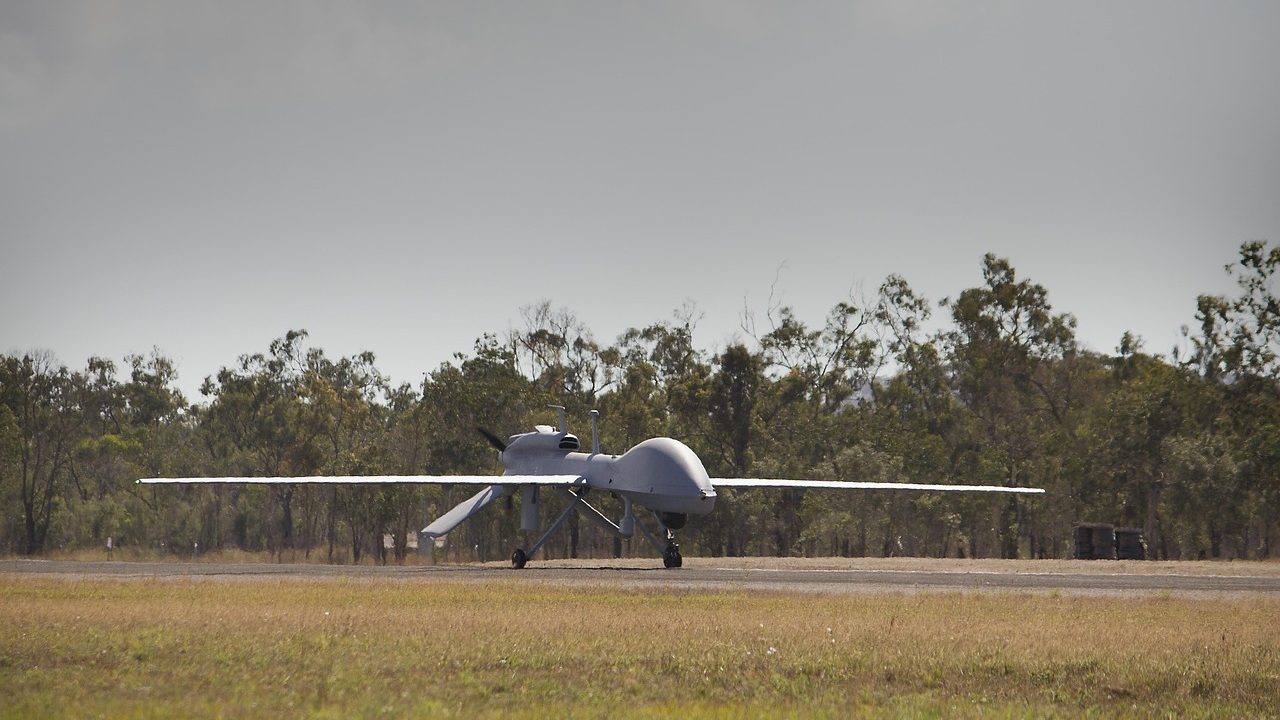
Bloomberg is reporting growing confidence among Ukrainian officials and Western allies that Russia's offensive capability may be genuinely degrading, with Putin himself reportedly seeking to end the war by year's end — a significant shift from what had appeared to be an open-ended commitment to territorial conquest. On the ground, Ukraine's Spartan brigade has been systematically destroying Russian transport vehicles near Donetsk in what analysts describe as an increasingly effective supply-line interdiction campaign, while the Black Sky battalion's drone operations are raising the cost of maintaining Russian forward positions.
Ukrainian drone capabilities have extended deep into Russian territory. A strike on Yaroslavl forced highway closures toward Moscow, demonstrating reach and precision that would have been unimaginable early in the conflict. Ukraine subsequently demanded a UN Security Council meeting following a massive Russian strike on Kyiv, though the Council remains paralyzed by Russian vetoes, pushing practical problem-solving toward bilateral and regional channels.
The broader international security picture is equally complex. The Shangri-La Dialogue convened this week in Singapore against the backdrop of both the Iran crisis and ongoing Taiwan tensions, with Ukraine's drone warfare lessons drawing intensive study from defense establishments across the Indo-Pacific. China's explicit backing of Pakistan's Iran mediation signals a desire for regional stability, even as five EU nations are pushing for comprehensive trade crackdowns on Beijing — a tension that places China in the awkward position of pursuing diplomatic solutions abroad while managing escalating economic confrontation with Europe at home.
Secretary of State Rubio's planned visit to Armenia to advance a US-brokered peace deal illustrates how American diplomacy is attempting to manage several regional conflicts simultaneously, with the Armenia-Azerbaijan dispute directly connected to questions about Russian influence in the Caucasus. Reporting from The Guardian on growing elite frustration with Putin over both the war's trajectory and deteriorating economic conditions provides context for the diplomatic openings now emerging: when domestic support among key constituencies erodes, incentives for face-saving exits from costly conflicts tend to increase.
Tillis Unloads, Democrats Eye 2028, and Trump Skips the Wedding

Retiring Senator Thom Tillis is using his remaining time in office to deliver unusually candid intraparty criticism, characterizing Defense Secretary Pete Hegseth as making former South Dakota Governor Kristi Noem 'look like a five-star recruit' and accusing Hegseth of repeatedly overselling progress in the Iran war while costs and casualties mount. On CNN, Tillis also called Trump-backed Texas Senate candidate Ken Paxton 'a failure' ahead of Tuesday's Republican primary runoff — a direct challenge to the president's endorsement power that carries no electoral risk for a senator who is not seeking reelection.
Trump, meanwhile, has endorsed Kansas Senate leader Dan Masterson for governor, signaling continued active involvement in candidate selection across the country. On the Democratic side, early positioning for 2028 is already underway, with potential candidates reportedly seeking the backing of Senator Elizabeth Warren, whose endorsement is seen as conferring both progressive credibility and organizational know-how.
Federal-state tensions are generating policy friction on several fronts. Governor Newsom has requested federal disaster aid over a toxic chemical tank threatening Orange County, creating a test case for how the Trump administration handles emergencies in politically opposed states. California separately passed a sweeping voting rights act following a Supreme Court ruling that weakened federal protections. On immigration, USCIS has instructed officers to treat in-country green card applications as extraordinary rather than routine — a significant operational shift affecting thousands of families that has received limited public attention compared to higher-profile enforcement actions.
Trump's decision to skip son Don Jr.'s wedding, citing the Iran war, generated public commentary about the intersection of presidential duty and family life. The DOJ's anti-weaponization fund, intended as an institutional reform, is facing both a GOP revolt and three separate federal lawsuits — a dynamic that illustrates how efforts to depoliticize government can themselves become sources of acute political conflict.
ECB Sounds the Alarm on AI, and a Laptop Challenges Quantum Supremacy

The European Central Bank has summoned major financial institutions over AI cybersecurity vulnerabilities, a direct regulatory intervention that signals growing concern that the banking sector's aggressive AI adoption — in fraud detection, algorithmic trading, and elsewhere — has outpaced security frameworks in ways that could threaten financial stability. The action is widely expected to reshape how AI systems are deployed across critical financial infrastructure in Europe.
The scale of potential exposure was underscored by newly published research demonstrating that inaudible sounds embedded in podcasts can hijack AI voice assistants, triggering unauthorized actions on affected devices without users' knowledge. Because podcasts reach massive audiences across virtually every smart device in homes and businesses, researchers describe the potential attack surface as vast.
In quantum computing, physicists at the Flatiron Institute have used tensor networks running on a standard laptop to match results that D-Wave claimed in 2025 only quantum computers could produce — a direct challenge to D-Wave's supremacy claim and, by extension, the commercial proposition that quantum hardware can solve problems classical computing cannot. D-Wave's business model depends partly on demonstrating that advantage, making the university team's replication both a technical and a financial complication for the company.
The White House has approved nine billion dollars for intelligence agencies, including the CIA and NSA, to acquire Nvidia chips and deploy advanced AI systems — a classified funding commitment that reflects official recognition of AI as central to national security competition. The investment arrives alongside reports of Iranian hacker groups posing as recruiters to target US aviation engineers, the kind of sophisticated, AI-enhanced cyber operation the funding is explicitly designed to counter.
At the corporate level, Microsoft CEO Satya Nadella has dismantled the company's traditional executive structure in favor of smaller, flatter leadership groups in what is being described as an AI-era overhaul. Amazon's Bee AI wearable is drawing fresh privacy concerns over its expansive data collection, cloud storage, and third-party sharing practices. And Pope Leo XIV, in his first encyclical, called for humanity to 'disarm' AI — a formal papal position on technology policy that carries influence well beyond any single institution's direct membership.
Uber Chases Delivery Hero, Zoom's Anthropic Bet Pays Off, and Yields Complicate the Rally

Uber is reportedly considering raising its acquisition bid for Delivery Hero above the already-rejected offer of 38 euros per share. Delivery Hero's shares surged to an 18-month high on speculation that a sweetened proposal is coming, with investors signaling they believe consolidation in global food delivery is both inevitable and value-creating. For Uber, acquiring Delivery Hero would provide established operations across European and emerging markets where building organic presence would take years and cost substantially more than an acquisition premium.
Zoom's early investment in Anthropic has grown to a valuation of 1.27 billion dollars, validating a strategic bet made before Anthropic became widely recognized as a leading competitor to OpenAI. The return reflects not only financial gain but the speed at which AI company valuations are evolving — Anthropic has moved from technical-community recognition to enterprise-scale revenue streams in a compressed timeframe that illustrates both the opportunity and the risk in AI investing.
Snowflake's first-quarter earnings report, due Wednesday, is attracting significant attention as investors evaluate companies not only on traditional growth and margin metrics but on how effectively they are positioning themselves as foundational platforms for AI deployment. The broader market backdrop is supportive but complicated: bond yields are falling on hopes of a US-Iran deal, yet Bank of America strategists are already cautioning that fiscal policy — characterized as 'the elephant in the room' — could keep yields structurally elevated even if geopolitical tensions ease and oil prices normalize.
The passing of Toshifumi Suzuki at 93 offered a moment of reflection on a contrasting era of corporate strategy. Suzuki transformed 7-Eleven into a global empire through patient, decades-long international expansion and the systematic integration of technology with convenience retail — a model of durable competitive advantage that stands in sharp contrast to the rapid, acquisition-driven growth now defining technology sectors. Japanese stock markets surged to record highs on hopes of ending the US-Iran conflict, a reminder that traditional manufacturing supply chains — including Toyota's, which has cut 83,000 vehicles from overseas production — remain acutely sensitive to geopolitical conditions thousands of miles from the factory floor.
GLP-1 Drugs Show Cancer Promise, and a Blue Octopus Turns Up Near the Galápagos

A Cleveland Clinic study has linked GLP-1 drugs — originally developed for diabetes and more recently deployed for weight management — to reduced cancer progression, an unexpected finding that points to complex interconnections between metabolic health, immune function, and cancer biology. If subsequent research confirms consistent benefits, the discovery could shift these medications from targeted treatments for specific conditions toward broader preventive care, with potentially transformative consequences for healthcare costs and prescription patterns.
In marine science, researchers have discovered a golf ball-sized blue octopus off the Galápagos Islands, adding to the biodiversity record of an archipelago that has been intensively studied since Darwin's time. The find highlights how much biological diversity remains undocumented even in well-researched ecosystems, a point made more urgent by the warming ocean temperatures and changing current patterns already placing pressure on Galápagos habitats.
The octopus's coloration and size raise questions about ecological niche specialization: blue pigmentation in marine environments commonly serves functions including camouflage, warning, or mating signaling, and understanding this particular species' adaptations could illuminate broader principles of evolutionary innovation in isolated environments. From a conservation standpoint, each newly identified species potentially requires habitat assessment and protection review — the newly discovered octopus may have specific requirements not covered by existing conservation frameworks.
Both discoveries — unexpected pharmaceutical benefits from well-known drugs and new species in supposedly familiar environments — illustrate the continuing value of curiosity-driven research. As the White House directs nine billion dollars toward targeted AI development for intelligence agencies, basic scientific inquiry into secondary drug effects or overlooked marine habitats depends on separate institutional support with longer time horizons, including university funding and international research partnerships.
Dart's Trump Rally, Fraser's Green Flag, and Votto's Second Act

Giants quarterback Jaxson Dart introduced Donald Trump at a New York rally over the weekend, generating significant backlash and reigniting debate about athlete political engagement. The controversy underscores how professional athletes, whose platforms reach millions of fans across the political spectrum, face an increasingly complex calculus about when and how to use those platforms for partisan purposes.
The contrast with Brendan Fraser's appearance at the 110th Indianapolis 500 was striking. Fraser, who was born in Indianapolis, served as honorary starter — waving the green flag and calling the speedway 'the Vatican' — in a ceremonial role that celebrated regional identity and shared cultural heritage without advocating for specific political positions. The two appearances illustrate the range of choices available to public figures navigating questions of platform and political expression.
CBS drew its own controversy after initially moving to take down episodes of Stephen Colbert's public access show, then suspending those takedowns following public backlash. The reversal suggests that aggressive copyright enforcement can generate more reputational damage than the underlying intellectual property issue warrants, particularly when audience relationships are at stake.
Former Cincinnati Reds first baseman Joey Votto offered a quieter story of reinvention, revealing in retirement that he has earned sushi accreditation in Japan and yoga certification in Spain. His post-career path — immersive study in entirely different disciplines across different cultures — represents a departure from the coaching and broadcasting routes that most professional athletes follow and touches on broader conversations about career flexibility and lifelong learning.
Europe Moves to Crack Down on China While Regulators Scramble to Keep Pace With AI

Five European Union nations are pushing for comprehensive trade crackdowns on China, citing systemic concerns about state subsidies, technology transfer requirements, and market access reciprocity that standard multilateral dispute mechanisms have proved inadequate to address. The push represents a hardening of positions that could fundamentally reshape commercial relationships between the EU and Beijing.
The initiative puts multinational technology companies in an awkward position. Nvidia CEO Jensen Huang has acknowledged that the company's 200-billion-dollar CPU market forecast includes China, illustrating how deeply integrated global technology markets have become even as governments drive toward economic decoupling. The competitive tension is compounded by the fact that Chinese firms receiving state support can undercut private competitors operating under market-based constraints — a dynamic that critics argue falls outside the scope of traditional antitrust remedies.
The European Central Bank's intervention on AI cybersecurity — summoning major financial institutions over vulnerabilities that could threaten systemic stability — reflects a parallel evolution in regulatory thinking. Central banks have traditionally focused their oversight on capital adequacy, liquidity, and market conduct; AI-driven threats to the financial system operate through different mechanisms entirely and require new tools. The ECB's action may signal the beginning of much more aggressive oversight of AI deployment across critical infrastructure sectors.
Pope Leo XIV's call in his first encyclical to 'disarm' AI adds a moral dimension to debates that have largely been framed in economic and security terms. When the Vatican issues formal positions on technology policy, it influences both individual behavior and government regulation in ways that transcend commercial or competitive considerations. The convergence of trade restrictions, financial regulation, and ethical objections suggests that technology policy is becoming inseparable from broader questions about economic systems and social values — making traditional trade negotiation considerably more complicated than in previous eras.