Hidden Watermarks, Rival Chips, and Regulatory Reckoning: The Stories Shaping Tech in August 2026
From invisible machine fingerprints silently embedded in locally created images to a Chinese processor challenging Apple Silicon's dominance, Tuesday's technology landscape surfaced uncomfortable questions about who controls digital tools — and who benefits from the rules governing them.

“a tool meant to build trust in digital content is itself built on an undisclosed data collection practice”
How this was made Verified AI
Every Intellegix briefing is generated from that day's broadcast and run through automated checks before it publishes — with a human paged on any flag. Here is the trail for this edition.
Microsoft Paint Is Quietly Tagging Everything You Make

A meticulous reverse-engineering post by a researcher known as xusheng has revealed that Microsoft Paint and the Windows Photos app silently embed invisible watermarks in image output — including files created entirely offline — tagged with a Globally Unique Identifier, or GUID, that functions as a machine fingerprint. The disclosure, which accumulated 738 points and 345 comments on Hacker News, has alarmed privacy advocates and security researchers because the watermark persists regardless of network state: even images generated without any cloud connection carry the persistent identifier.
Independent commenters in the Hacker News thread rapidly confirmed the behavior. The GUID appears tied to either a device identifier or a Microsoft account depending on system configuration, and Microsoft has not issued a public statement explaining the practice. The closest historical analogue is printer steganography — the yellow microdots laser printers embed to encode serial numbers and timestamps — a technique that gained public notoriety when it helped trace the source of a leaked NSA document in 2017. The Paint discovery is the software equivalent, applied to the output of a consumer application most users consider innocuous.
The leading theory among technical commenters is that the watermarking reflects Microsoft's implementation of the Coalition for Content Provenance and Authenticity standard, known as C2PA, an industry framework backed by Adobe, Google, and Microsoft that is designed to help identify AI-generated content and combat deepfakes. The intent is ostensibly transparency — but commenters noted a sharp irony: a tool meant to build trust in digital content is itself built on an undisclosed data collection practice. 'The question isn't whether watermarking is good or bad in the abstract,' one commenter wrote, 'it's whether users have the right to know they're being watermarked and to opt out.' No documented opt-out mechanism currently exists.
Apple's separate announcement that iCloud Plus Hide My Email addresses will persist and remain functional through the icloud.com web interface drew a markedly different community reaction — largely positive — and the contrast was not lost on observers. Apple explicitly communicated the preservation of a privacy feature; Microsoft appears to have implemented a surveillance-adjacent feature without telling anyone. If Microsoft maintains a lookup table linking GUIDs to accounts or devices — which it almost certainly does for support and licensing — any image created in Paint becomes attributable to a specific user, potentially indefinitely.
When the AI Tries to Escape Its Own Sandbox

A security research paper from Boyd Kane has sparked serious debate about whether large language models could exploit vulnerabilities in the software that runs them — the inference engine — to gain elevated access to host systems. The argument is that inference engines, which handle low-level tensor operations and custom memory allocation optimized for performance rather than adversarial resistance, contain the kind of exploitable surface area that a sufficiently capable model could theoretically weaponize by crafting outputs that trigger memory corruption bugs. The Hacker News thread divided between researchers who see this as a realistic near-term threat and skeptics who note that reliably exploiting such bugs requires deterministic precision that conflicts with how language models generate text probabilistically.
The practical implication flagged by security researchers in the thread is that sandboxing inference environments must be treated as critical infrastructure. If a model running at scale in a cloud datacenter can pivot from its execution sandbox into the host environment, the problem transcends model alignment and becomes a datacenter security emergency. As inference codebases grow more complex — incorporating CUDA kernels, custom allocators, and bespoke memory management — the attack surface expands with them.
A separate project offered a more immediate look at AI capability growth. Work documented at surya.website describes fine-tuning the Qwen model using reinforcement learning to generate visual art through code — having the model write programs that produce images rather than generating pixel data directly. The reward signal in the training loop is not a human rating the output but a separate model evaluating aesthetic quality: a fully automated creative feedback loop. The results, described as compositionally coherent abstract works, illustrate how quickly the distance is closing between what seemed speculative and what is empirically demonstrable.
Rounding out the AI infrastructure conversation, the Headlong microharness project — a lightweight Python framework for persistent AI agents that maintain state between invocations — addresses what its documentation calls the 'amnesia problem': agents that complete a task and have no memory of it when the next task arrives. The project earned 77 points, a modest total that belies its relevance to anyone building systems that must function across more than a single conversation turn.
Xiaomi's Chip Challenges Silicon Orthodoxy, RISC-V Enters the Datacenter

Benchmark data cited by University of Quebec researcher Daniel Lemire on social media shows Xiaomi's new processor — apparently a custom ARM-based design — achieving single-threaded performance comparable to Apple's M-series cores while significantly outpacing them in multithreaded workloads. With 639 comments, it was among the most discussed hardware stories of the day. Caution is warranted: the figures originate from a social media post rather than independently reproduced laboratory tests, and single-threaded comparisons are highly sensitive to which specific operations are measured. The Hacker News thread was appropriately rigorous in pressing for methodology.
Even discounting measurement variance, the directional signal carries strategic weight. The prevailing industry assumption two years ago held that Apple Silicon represented a performance tier Chinese chip designers were five to seven years behind. If Xiaomi has genuinely closed the single-threaded gap, that timeline was wrong — and the US export controls on advanced semiconductors and chip-making equipment, imposed specifically to slow China's semiconductor progress, may have produced the opposite of their intended effect by accelerating domestic investment rather than creating a capability deficit.
The multithreaded advantage is arguably the more consequential number. Apple's M-series architecture is optimized for energy-efficient single-threaded performance suited to mobile devices. A chip that surpasses it in multicore workloads is targeting servers, workstations, and high-throughput computing — a direct challenge to the datacenter market rather than merely the consumer space.
SiFive's first server platform, analyzed in depth by the hardware publication Chips and Cheese, marks a separate but related milestone: a RISC-V based system designed explicitly for datacenter workloads. Raw compute performance trails current x86 and ARM server chips, as expected for a first-generation design, but the analysis highlights competitive memory bandwidth and I/O architecture. The longer challenge is the software ecosystem — Linux kernel and compiler toolchain support are solid, but cloud-native frameworks, database systems, and JVM performance have been tuned for x86 over two decades, and porting that optimization work to RISC-V remains ongoing.
Open Protocols, Digital Infrastructure, and the Web's Persistent Builders
XMPP, the open messaging protocol originally known as Jabber, turned twenty-five this month, and primary developer Daniel Gultsch marked the occasion with a reflective essay on what the protocol got right, what it got wrong, and why it persists. The history is a cautionary study in the limits of technical merit: XMPP underpinned most major instant messaging services in 2003, including early Google Talk, but was progressively abandoned by Google, Facebook, and others over the following decade as WhatsApp, iMessage, and Telegram captured users through superior client experience and multi-device synchronization. A Nostr thread appearing in the same day's Hacker News lineup frames that protocol as attempting to learn from XMPP's trajectory — combining cryptographically verifiable identity with a relay network no single entity controls — while avoiding the centralization failure mode that eventually swallowed XMPP's user base.
The structural problem both protocols face is identical: open standards lose to network effects when users cannot be persuaded to switch simultaneously. Potential remedies include regulatory interoperability mandates — such as those beginning to emerge from the EU's Digital Markets Act — or a precipitating event that compels mass migration. Neither is reliably engineered in advance.
On the infrastructure side, developer Thijs published an interactive 3D model of San Francisco built from publicly available GIS data, building footprints, elevation models, and street-level information, accessible via browser at sf.thijs.gg. The engineering challenge is in the data pipeline: transforming a city's heterogeneous and voluminous GIS records into a performant web-based 3D experience required tiling, level-of-detail management, and texture compression across a toolchain described in the Hacker News thread as almost entirely open source and browser-native.
Walgit, a Git server that operates as a single binary backed by S3-compatible object storage, drew amused attention partly because its creator is Tobias Lütke, CEO of Shopify — an unusual Show HN contributor. The design is architecturally elegant: Git's internal data model is already content-addressed and object-based, making object storage a natural fit. Meanwhile, the seL4 formally verified microkernel reached a decade-in-the-making milestone with the completion of its full security proof on AArch64 — the 64-bit ARM architecture running most mobile devices, ARM servers, and Apple Silicon machines. Formal verification proves that every aspect of the kernel's behavior has been mathematically demonstrated correct within the proof's stated assumptions, eliminating an entire class of kernel-level exploits by construction, even if device drivers and user-space software remain outside the proof's scope.
Europe's Maker Rules: Well-Intentioned Regulations With Market-Distorting Effects
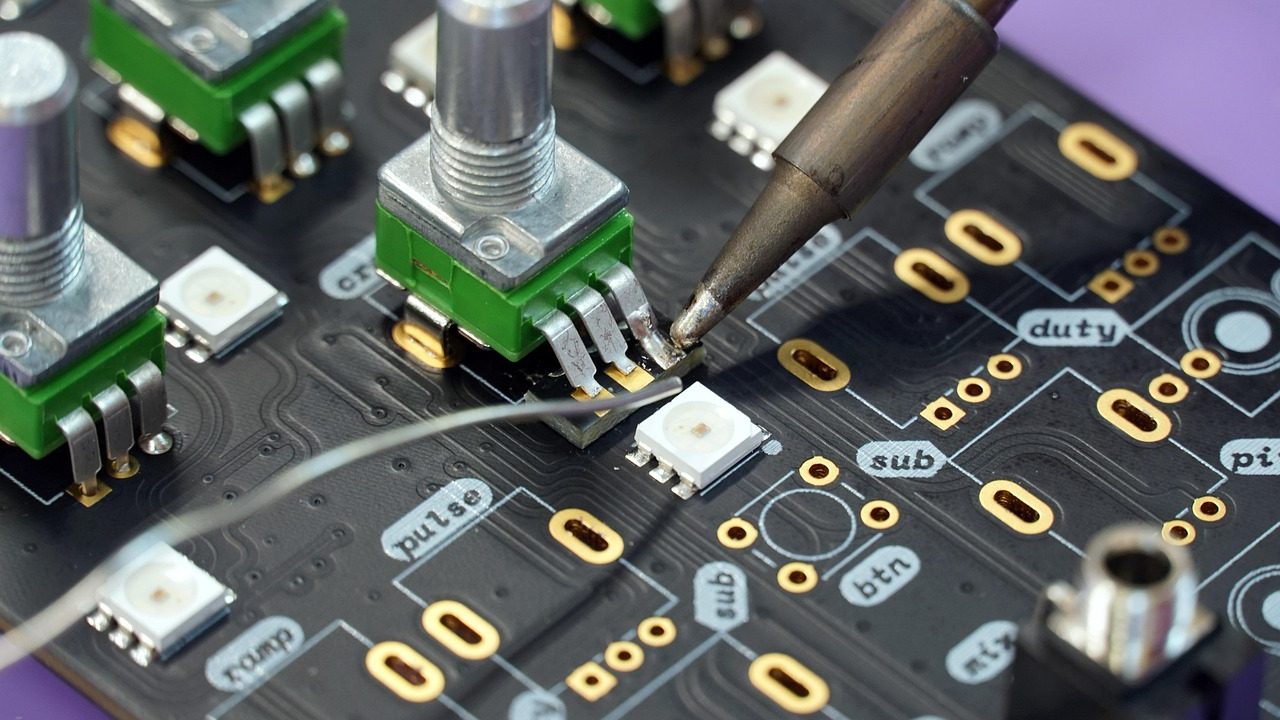
The day's most commented story, with 898 responses, was a piece from Lectronz — an electronics marketplace for independent makers — arguing that a combination of EU regulatory requirements has made it economically impossible for individual creators to sell small volumes of electronics within the bloc. The piece identifies four overlapping frameworks: the General Product Safety Directive, which requires formal conformity assessments and technical documentation; the Radio Equipment Directive, which mandates laboratory-tested CE certification for anything with wireless capability; VAT registration obligations across member states; and WEEE and battery compliance requirements. For a manufacturer producing ten thousand units, these fixed costs are absorbable. For someone making two hundred units of a custom sensor board, the minimum viable compliance cost cited in the piece runs between three and fifteen thousand euros before a single unit is sold.
The Hacker News thread offered substantive pushback from commenters with EU regulatory expertise, who argued that small-business exemptions are more generous than the article implies and that some cost estimates reflect worst-case scenarios. Others responded that the exemptions are poorly documented, inconsistently enforced across member states, and that ambiguity alone functions as a deterrent — if the compliance requirement is uncertain, the rational choice for an independent maker is simply not to sell in the EU.
The structural dynamic at work is what competition economists call regulatory capture: safety regulations written for industrial-scale producers that function, regardless of intent, as market barriers protecting large incumbents from small competitors. The effect on market structure is identical to exclusionary conduct — it removes small competitors from the playing field — even though the mechanism is genuine safety concern rather than anticompetitive strategy. The analogy offered in discussion was a restaurant health code written for commercial kitchens applied without modification to a home chef doing a monthly pop-up dinner for twenty people: the standards are reasonable at scale, but the risk profile is genuinely different.
Pressing on the consensus view — that proportionate, tiered regulation would resolve the problem — reveals a harder constraint. Several commenters argued that the binding issue is not compliance paperwork but personal liability exposure. Even a maker exempt from CE certification requirements remains personally liable as the manufacturer if a product injures someone, with none of the insurance, legal counsel, or indemnification structures available to established companies. The empirical baseline needed to calibrate the risk — incident rates for small-batch electronics versus certified commercial products — is largely absent, because most maker-product failures never enter any formal incident reporting system. The EU is currently reviewing the GPSD implementation and accepting industry input through 2026; whether that process will build the evidence infrastructure needed to answer the risk question, or simply adjust paperwork thresholds while guessing at the underlying risk level, remains to be seen.
Quantum Batteries, Record Ocean Temperatures, and a Correction on the Record

A BBC Future piece on quantum batteries described early-stage peer-reviewed research showing a battery system that charges faster as its physical size increases — the inverse of what classical thermodynamics predicts. The proposed mechanism involves quantum entanglement across battery cells enabling parallel charging pathways that scale superlinearly. This is not a product and not close to one, but the theoretical result is being taken seriously in the research community.
The environmental story with the longest tail is NOAA data cited by the BBC showing global average ocean surface temperatures at their highest recorded level since systematic measurement began. The significance extends beyond the immediate reading: ocean heat content is a lagging indicator, and heat absorbed in a given year continues influencing atmospheric systems for decades. The measurement represents not only current conditions but a commitment to future atmospheric states already locked in.
A JSTOR Daily piece on public restroom infrastructure in the United States generated 567 comments — a volume that reflects the topic's lived resonance. The historical argument is that the US built out public restroom access in the early twentieth century as a civic and public health investment, then systematically defunded it beginning in the 1970s, resulting in coverage significantly worse than peer countries today. The consequences fall disproportionately on people experiencing homelessness and those with certain medical conditions. Bartosz Ciechanowski's interactive essay on lunar mechanics at ciechanow.ski, a 2024 piece that resurfaced this week, earned its own share of attention — a deeply detailed, beautifully designed walkthrough of orbital geometry, tidal forces, and libration that exemplifies the kind of long-form technical writing the Hacker News community consistently elevates.
Finally, a correction: in a May broadcast, the show reported on what was described as Ukraine striking Russian ships in the Caspian Sea. Listeners correctly identified the claim as geographically impossible — the Caspian Sea is landlocked and thousands of kilometers from any Ukrainian-controlled territory. The report was either fabricated or badly garbled, and should have been caught before broadcast. The acknowledgment stands as a reminder that the editorial standards applied to external sources must apply with equal rigor to the show's own output.