AI Skepticism, Price Wars, and the Integrity of Automated Systems: Hacker News Digest, August 18, 2026
A viral call to reject AI-generated summaries, a fifty-percent price cut on OpenAI's latest model, and a security incident traced to AI-generated code dominated the Hacker News community on Tuesday — all pointing to a single, deepening question about how much automated systems can be trusted.

“some protocols survive because they are simple enough to be unkillable”
How this was made Verified AI
Every Intellegix briefing is generated from that day's broadcast and run through automated checks before it publishes — with a human paged on any flag. Here is the trail for this edition.
The Day's Agenda: From AI Revolt to Trebuchet Forensics

A blog post coining the term 'AI;DR' — AI Didn't Read — collected 918 upvotes and 555 comments on Hacker News by Tuesday morning, becoming the day's most-discussed item and a bellwether for a broader mood of discontent with automated information pipelines. The post arrived on the same day OpenAI announced a fifty-percent price reduction on its GPT-5.6 Sol model and researchers alleged that a foreign government had fabricated a think tank to seed AI training data with preferred viewpoints.
The day's stories spanned model pricing strategy, a GitHub Copilot security incident at Snowflake's Jira instance, the release of DuckDB v2.0, Linux 7.3 improvements for GPU memory management, and Bluesky's pixel-level screenshot watermarking technique. Lighter fare included the first archaeologically confirmed trebuchet fatality, a color that human eyes cannot ordinarily perceive, and the engineering folklore behind Quake's CD-ROM packaging problem.
The Trust Problem: Opt-Out Movements, Fake Think Tanks, and Collapsing Benchmarks

Rick Manelius's 'AI;DR' piece argues that a compounding degradation of information quality is underway: AI systems increasingly summarize content that was itself AI-generated, laundering original source material through successive layers of abstraction. Hacker News engineers responding in the comments described recognizing this experience firsthand — reading model output and sensing it had passed through multiple rounds of automated processing. The 918-upvote response, the piece's authors suggested, reflects power users actively developing norms of avoidance, a dynamic with significant implications for AI product retention strategies.
A separate story from Responsible Statecraft alleged that researchers had identified a fabricated policy organization — complete with a professional website, attributed scholars with no verifiable academic records, and policy papers taking specific positions on Middle East issues — reportedly created to seed AI training pipelines with particular viewpoints. The story received 601 upvotes and 371 comments. The underlying vulnerability, commenters noted, is that large language models are trained on web-scraped data at a scale that precludes the credibility audits a human researcher might perform: checking for conference presence, verifiable publication histories, or Wikipedia entries.
Completing the trilogy, an essay by Dan Luu — catalogued under the term 'Benchmarkpocalypse' — documented systematic failures in AI model evaluation. The failure modes Luu identified include training data contamination, where models are inadvertently trained on benchmark test sets; Goodhart's Law dynamics, where labs optimize for the metric rather than the underlying capability; and 'benchmark rot,' where standards that were meaningful two years ago no longer discriminate meaningfully between frontier models. The practical implication: when a press release claims a model scores 87.3% on a named benchmark, there is often little basis for knowing whether that figure reflects genuine capability or benchmark-specific optimization — a problem that affects procurement decisions, regulatory frameworks, and academic research alike.
All three stories share a common structure: systems designed assuming good-faith inputs are being stress-tested by adversarial or degenerate ones. Whether the input layer in question is AI training data, benchmark test sets, or end-user information diets, the integrity of that layer is under pressure in ways that were not fully anticipated at design time.
OpenAI Halves the Price of Its Best Vision Model — and Raises Antitrust Questions

Roboflow's technical analysis of GPT-5.6 Sol — 343 upvotes, 163 comments — made a specific case: Sol's performance on vision tasks, including document understanding, spatial reasoning, and multi-step visual question answering, represents the best OpenAI has shipped to date across those categories. OpenAI then announced a fifty-percent price reduction on the model, drawing 481 upvotes and 302 comments. It marked the third major price reduction in the GPT-5 series within six months.
The pattern has precedent in cloud computing: AWS applied similar pricing pressure to storage and compute in the 2010s, driving adoption at scale while locking in customers through switching costs accumulated in prompt engineering, fine-tuning workflows, and evaluation frameworks. If Sol holds a genuine lead in visual applications and that lead now comes at half the cost, the economic argument for competing models in that category narrows significantly — at least temporarily.
Hacker News commenters flagged the antitrust-adjacent dimensions of the move, prompting a review of what predatory pricing claims actually require under the Sherman Antitrust Act of 1890. Legally, monopolization requires both monopoly power in a relevant market and anticompetitive conduct to acquire or maintain it — not merely high market share. Price cuts reflecting genuine cost efficiencies are generally lawful; cuts designed to drive competitors below viability with documented intent to raise prices later cross into predatory pricing territory, though that is notoriously difficult to prove. The AI API market remains competitive enough that monopolization claims appear premature, though the pricing trajectory is worth monitoring as consolidation continues.
DuckDB 2.0 Threatens the Data Warehouse Layer — While Copilot Introduces a Security Hole

DuckDB v2.0's preview drew the day's highest-scoring developer tools discussion — 653 upvotes, 116 comments. The in-process analytical database, often described as 'SQLite for analytics,' added persistent secrets management for external data source credentials, a significantly extended catalog API, and meaningful performance improvements on multi-threaded query execution. Several data engineers in the comments described having moved production workloads entirely to DuckDB that would have required a cloud data warehouse two years prior.
The business implication is the disintermediation of managed data warehouse services. For teams running analyses on datasets under a few hundred gigabytes, the case for a managed warehouse from Snowflake, Databricks, or BigQuery grows harder to make as DuckDB's capabilities expand — a structural pressure on a segment of the cloud infrastructure market.
Ironically, Snowflake appeared in a very different context on the same day. Wiz Research published a detailed writeup — 382 upvotes, 146 comments — documenting how GitHub Copilot's Autofix feature generated a code fix for a known vulnerability in Snowflake's internal Jira instance. The fix was syntactically plausible but logically incorrect, failing to remediate the root vulnerability while introducing a new attack surface. A red team subsequently exploited that surface to achieve what the writeup described as meaningful access to CI/CD pipeline components. The error followed a recognizable pattern: the model apparently matched to a common fix template for authentication and session management without correctly analyzing whether that template applied to the specific code context.
A companion piece from Acadia Engineering arguing for pushing more business logic into the database layer — rather than treating databases as dumb storage — generated characteristically split commentary: advocates of database-centric design and detractors citing testability concerns debated without reaching consensus, reflecting an architectural question the industry has not resolved.
Linux 7.3 Expands GPU Access for Independent Researchers; PostmarketOS Extends Phone Lifespans
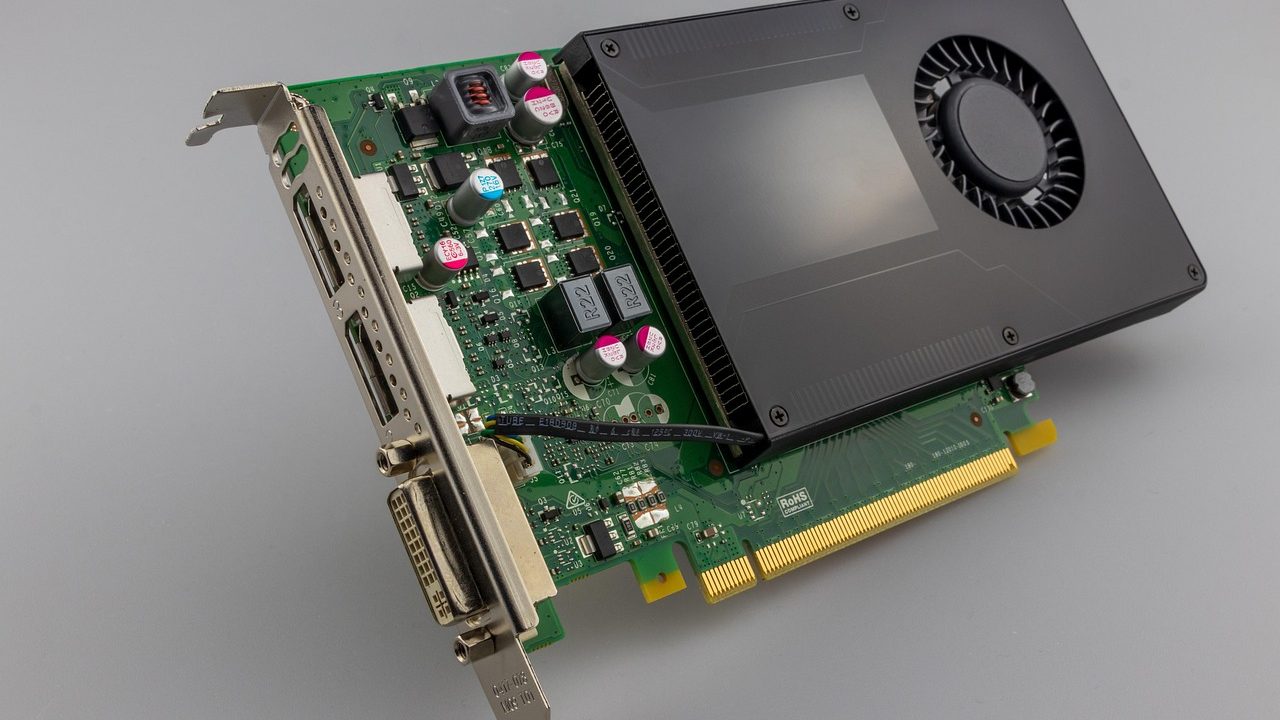
Linux 7.3's vRAM overcommit patches, documented on Pixel Cluster's blog, address a long-standing failure mode: under prior kernels, GPU memory exhaustion produced unusable performance degradation or outright crashes. The new patches implement transparent spilling to system RAM with substantially better management of which data remains hot in GPU memory. The practical result is that models previously requiring 24 gigabytes of VRAM to run at all can potentially operate on 16-gigabyte GPUs with acceptable degradation rather than complete failure — a meaningful expansion of accessibility for home-lab researchers, academics without institutional GPU budgets, and developers in regions where high-end hardware is expensive or scarce.
A preprint on GPU offload in Rust described a framework for writing GPU-accelerated code that compiles to portable GPU bytecode without requiring CUDA. The authors — and the preprint status warrants appropriate skepticism about specific performance figures — frame the work around Rust's core properties of safety and portability applied to GPU programming. CUDA's NVIDIA-specific architecture creates vendor lock-in for anyone doing GPU computing; alternatives like OpenCL and Vulkan Compute exist but carry ergonomic costs most developers find prohibitive. A Rust-native path with safety guarantees represents a potential long-term counter to that lock-in.
The Fairphone 6 and PostmarketOS story added a consumer hardware dimension to the accessibility theme. The PostmarketOS project achieved functional camera support on a Fairphone 6 running a community-maintained Linux distribution — technically demanding because modern smartphone camera pipelines typically rely on proprietary firmware tied to specific Android versions. The accomplishment serves as a proof of concept for indefinite software support on consumer hardware, extending Fairphone's existing repairability commitments further than most Android OEMs reach.
The Repair Cafe movement — a global network of over 2,500 free community repair events that originated in Amsterdam in 2009 — drew 129 upvotes for its organization's website. Volunteers with repair skills help attendees fix electronics, clothing, furniture, and appliances at no cost. The movement's rejection of commercialized repair in favor of community commons represents a more structurally radical position than the corporate right-to-repair framing that typically attracts media coverage.
Invisible Watermarks, Unseen Colors, and a Medieval Skeleton: Hacker News at Its Widest

Tim Marinov's reverse-engineering investigation of Bluesky's screenshot system — 554 upvotes, 362 comments — revealed that the mobile app composites a subtle watermark into screenshots at the pixel level, encoding the identity of the account that took the screenshot in a way invisible to the human eye but recoverable by software. The technique differs from traditional steganography and is applied to a specific rendered region of the interface. Comments split between admiration for the implementation and concern that users may not know their screenshots carry identifying information.
A Wikipedia article on 'Olo' — a hue that exists between blue and green but outside the gamut of colors the human eye can perceive without external stimulation — collected 465 upvotes and 84 comments. Researchers have induced the experience of seeing Olo using precisely calibrated laser stimulation of individual cone cells, bypassing the normal color perception pathway. The discussion ranged from neuroscience to philosophy of mind, including extended debate about what it means to 'see' something that corresponds to no physical wavelength encountered in the natural world.
Archaeologists confirmed the first physical evidence of a trebuchet fatality from the medieval period at a Scottish castle, with bone fragmentation patterns in a skeleton distinguishing the cause of death from other injuries. The story drew 78 upvotes and 51 comments that spanned trebuchet mechanics, siege warfare history, and references to a Physics Girl trebuchet video. The IBM Simon's 1994 advertisement — for a device that already featured a touchscreen, email, fax capability, and third-party apps — drew 41 upvotes and prompted discussion about how to recalibrate mental models of technological progress across a thirty-two-year span.
A Gmail-to-Fastmail migration retrospective — 256 upvotes, 158 comments — stood out within the recurring genre of Google-escape narratives because it was a multi-year update rather than an initial enthusiasm post. The author reported that Fastmail's core email held up well, calendar integration retained rough edges, and the mental shift from Google's search-everything paradigm to a folder-and-tag model took longer than expected. A Quake shareware CD-ROM engineering story, receiving 370 upvotes, documented how id Software navigated a disc too full to hold the game: the solution combined creative file system manipulation, sector-level tricks, and a data layout hack exploiting multisession disc reader behavior — the kind of engineering folklore that the HN community preserves with unusual fidelity.
Stress-Testing the Day's Confident Claims — and Two Corrections From the Archive
The Snowflake-Jira Copilot incident prompted a deliberate challenge to the day's skeptical narrative about AI-generated code. The strongest counterargument: the incident is a single data point, and selection bias is severe. Dramatic AI-generated exploits attract writeups; the far larger population of cases in which Copilot Autofix correctly patched vulnerabilities does not. The Wiz Research report came from a red team whose mandate is to find failures — it is not a balanced sample of all Autofix suggestions.
For AI code assistants to be net-positive for security despite incidents like this one, the rate of correctly fixed vulnerabilities would need to substantially outweigh incorrectly fixed ones that introduce new issues, and incorrectly fixed cases would need to be caught elsewhere in the security review pipeline. Two empirical signals would indicate the skeptical view is correct: meta-analyses showing measurable AI-patch failure rates across large repositories, and cyber insurance underwriters pricing AI-generated code as a distinct risk category in their policies. Underwriters price from actuarial claims data; if a pattern exists, premium adjustments would precede press coverage. If the optimistic view holds, incident rates should decline relative to the volume of AI-generated fixes over the next 18 to 24 months — a falsifiable hypothesis rather than a hope.
Two archival corrections were also surfaced. A vague May prediction — that 'companies ignoring this trend might find themselves facing unexpected competition from directions they didn't anticipate' — was acknowledged as too generic to be evaluable, and a commitment was made to issue concrete, falsifiable predictions going forward. More seriously, a May reference to Ukraine striking Russian ships in the Caspian Sea was identified as a factual error: the Caspian Sea is landlocked, shares no access with Ukrainian-controlled territory, and no such strikes occurred. Research process improvements are underway.
The Finger protocol — a 1971 social networking tool reportedly still running on active servers — drew 13 upvotes and a quietly resonant observation: some protocols survive because they are simple enough to be unkillable. A practical guide to disabling or avoiding AI-generated content across major platforms drew 306 upvotes and 182 comments, translating the AI;DR sentiment that opened the day into actionable tools — browser extensions, email client settings, and opt-out procedures. The day's through-line, from fake training data to watermarked screenshots to collapsed benchmarks, was institutional trust in automated systems: how it is built, how it fails, and what communities do when they decide to work around it.