From Xbox Outages to ESP32 Language Models: The Day Digital Ownership Became a Philosophical Crisis
A Microsoft server outage that locked physical disc owners out of their own games ignited one of Hacker News's most charged debates of the year, while a packed slate of AI, privacy, and hardware stories underscored how much of modern life depends on infrastructure nobody fully controls.

“buyers did not purchase a game but rather a revocable license that arrives in a cardboard box.”
How this was made Verified AI
Every Intellegix briefing is generated from that day's broadcast and run through automated checks before it publishes — with a human paged on any flag. Here is the trail for this edition.
The Day a Server Outage Redefined What 'Owning' a Game Means
An Xbox Live outage this week exposed a fault line that the games industry has spent fifteen years carefully papering over: when Microsoft's license-verification servers went down, players holding physical discs — pressed plastic purchased at retail — found themselves locked out of games they nominally owned. The incident generated 698 comments on Hacker News, one of the platform's highest tallies of the week, and the discussion that followed was less a customer-service complaint than a jurisprudential argument.
The top comments were not venting about interrupted gaming sessions. Commenters carefully articulated the gap between what 'ownership' means in a commercial transaction and what it means in practice when a publisher controls the authentication layer. The framing that recurred throughout the thread: buyers did not purchase a game but rather a revocable license that arrives in a cardboard box.
From a business standpoint, the situation represents the logical endpoint of roughly fifteen years of platform strategy. Microsoft, Sony, and every major platform have systematically shifted economics toward digital distribution and subscription services, where margins are higher and the secondary resale market disappears. The physical disc had long been positioned as the consumer's fallback — something playable offline, lendable, and immune to service shutdowns. Server-dependent disc authentication collapses that promise entirely.
Several Hacker News commenters noted a potential legal dimension. In many jurisdictions, the sale of a physical good carries implied warranties about fitness for purpose; selling a disc that cannot function without a server the seller controls and can deactivate may not satisfy that standard. The European Consumer Rights framework is explicit on the point, and the incident could yet become a test case. Adjacent EU Right to Repair rulings earlier this year — addressing embedded software in products — map directly onto the same argument.
Waymo Opens Dallas to All Riders as NIMBY Battles Reshape Data Center Geography
Waymo this week opened its Dallas robotaxi service to all riders rather than a waitlist, drawing 541 comments on Hacker News. The consensus in the discussion was that the technology performs reliably within the specific conditions Waymo deploys it — but commenters probed what 'open to all' truly means when service areas remain limited, pricing details are sparse, and autonomous-vehicle regulations still vary block by block in some cities.
Dallas is strategically significant: it ranks among the highest-volume rideshare markets in the country and carries a relatively permissive regulatory posture toward autonomous vehicles. Hacker News commenters with transportation industry backgrounds described it as a proving ground for the operational model Waymo needs to demonstrate before any serious push into other major metros. The city has reportedly provided infrastructure coordination support, a form of municipal cooperation that competitors would struggle to replicate quickly.
The business question shadowing every Waymo expansion remains constant: at what scale do unit economics turn positive? Alphabet has absorbed development costs for years, and the operational expense of maintaining the sensor-laden fleet — plus the remote-monitoring infrastructure behind it — still requires either premium pricing or a volume threshold demanding much faster geographic expansion than the company has achieved. Firsthand accounts from riders in San Francisco and Phoenix, shared extensively in the thread, described the experience as technically impressive but noted that the absence of a human in ambiguous situations is genuinely disorienting.
A piece published separately at jasmi.news, also circulating on Hacker News, drew an almost satirical throughline between the Waymo discussion and the growing NIMBY resistance to data centers. Communities that depend on streaming, cloud computing, and instant commerce are simultaneously opposing the physical infrastructure — noise, heat, water consumption, visual impact — that powers those services. Commenters noted that localized opposition concentrates data centers geographically, creating exactly the single-point-of-failure risk that the Xbox outage illustrated.
Stateless AI Protocols, Mistral's Open Moderation Model, and Interpol's Alarming Africa Report

Simon Willison's post on stateless Model Context Protocol drew 128 comments and a score of 254 — notable engagement for a technical protocol discussion. MCP, originally developed by Anthropic, defines how AI language model systems communicate with external tools such as databases, APIs, and file systems. Willison's argument for the stateless variant is that each tool call carries all required context rather than forcing the server to maintain session state, eliminating a category of failure modes — session expiry, state corruption, replay attacks — that have plagued early MCP deployments.
Comments split between practitioners relieved by the direction and architecture purists who observed that the state does not disappear under stateless design; it migrates into the token context window, which carries its own cost and size constraints. A related arXiv paper, Zero-Mem, addresses this bottleneck directly, proposing a framework for LLM agents that achieves effective memory operations with near-zero additional token consumption by restructuring how agents encode and retrieve information. The post had attracted little discussion yet, but commenters flagged it as potentially addressing the core architectural constraint as agents grow more complex.
Mistral's release of Shieldstral — a 3-billion-parameter open-weights multimodal content moderation model capable of analyzing images and text together — carries significant real-world deployment implications. Mistral's decision to release the weights openly is consistent with the company's differentiation strategy of openness and European identity; a moderation model is not its core commercial product, so the release generates developer goodwill without surrendering primary revenue levers. At 3 billion parameters, the model is compact enough to run on consumer hardware or a single lightweight cloud instance, dramatically improving the economics of content safety at scale.
Interpol's report that artificial intelligence now drives more than half of all cybercrime across the African continent provided the week's starkest AI-safety data point. The report describes not merely automated phishing but voice cloning for fraud calls, deepfake identity documents, and AI-generated social engineering scripts localized with cultural specificity that earlier mass-spam operations could not achieve. Hacker News commenters with direct regional knowledge pushed back on framing it as an 'Africa problem,' arguing instead that the continent is experiencing disproportionate consequences because digital financial inclusion has outpaced fraud-detection infrastructure — and because regional operators lack the decades of labeled training data that major financial institutions in wealthier markets have accumulated. Open-weights moderation models like Shieldstral represent a partial remedy, narrowing the resource gap for fintechs in cities such as Nairobi or Lagos without requiring OpenAI API costs or a ground-up research effort.
Apple's Privacy Promise Leaks, and Developer Tools Get a Platform Upgrade

iOS security research blog Mysk documented a WebKit vulnerability in which the browser engine underlying Safari and all iOS browser applications leaked real IP addresses and DNS queries even for users running VPN or proxy configurations — including users of Apple's iCloud Private Relay, the paid two-hop privacy service the company has marketed as hiding browsing activity from both Apple and destination websites. The leak vector involves WebKit making certain network requests, including speculative pre-loading, outside the proxy tunnel before the tunnel is consulted — a class of bug with a long history across multiple browsers, but one with particular commercial consequences for Apple given that privacy has been a central brand and sales argument.
Hacker News commenters noted that the implications extend to third-party proxy browsers — apps whose core feature is routing traffic through a privacy proxy. If WebKit bypasses those configurations, the products do not work as described, and the developers of those apps may not know their protection is incomplete.
On a more constructive note, the Rio terminal emulator announced the extraction of its core VT parsing and rendering engine into standalone libraries — rio-vt and librio — that other projects can embed. Commenters compared the move to the way libvte became a shared rendering core for GNOME terminals and Alacritty's GPU-acceleration work influenced the entire terminal ecosystem: factoring out a high-quality engine tends to raise the floor for all projects that adopt it, compounding improvements across editors, IDEs, and web-based terminal emulators simultaneously.
A widely shared CSS piece captured a different flavor of developer frustration: browser sidebars — the built-in AI assistant and reading-mode panels appearing in Chrome, Firefox, and Edge — are introducing layout complexity that breaks established flexbox and grid centering techniques. Browsers are beginning to expose sidebar dimensions through new CSS environment variables, but adoption is inconsistent and default behaviors vary across configurations, leaving developers without a clean detection and compensation path. The comment thread, rich with the weary humor of twenty years of layout edge cases, included a timeline of CSS centering techniques from table-based hacks to grid that commenters described as both funny and painful.
Skin Tones, Tiny Hardware, and the Quiet Infrastructure Keeping the Internet Alive
The highest-scoring technical Show HN of the week — 548 points — was a browser-based demonstration of an algorithm for generating a perceptually diverse and mathematically principled palette of human skin tones. Rather than sampling RGB space, the algorithm maps skin tone variation onto a specific path through a perceptual color space such as OKLAB, where equal numerical steps correspond to equal perceived color differences. The 94-comment thread drew color scientists, professional photographers, UX researchers, and product managers, with photographers noting that skin tone accuracy has been a known equity problem since the days of Kodak's Shirley cards — calibration references developed using white women as the standard, a bias that propagated into digital camera sensor calibration.
The libexpat funding announcement addressed a quieter but arguably more urgent problem. libexpat, a foundational XML parsing library embedded in Python, Apache, and countless other projects for over two decades, has received a commitment from the City of Munich to fund its primary maintainer for up to six months through an open-source sabbatical program. Munich has been an active open-source advocate — it famously migrated city administration to Linux and LibreOffice before taking a more nuanced approach that now includes funding critical dependencies rather than merely consuming them. The six-month timeline is modest but sufficient for meaningful technical debt reduction and a proper security audit. The parallel revival of the Bugtraq vulnerability disclosure mailing list at its original securityfocus.com home drew nostalgia from the security community and underscored the same theme of maintaining foundational infrastructure.
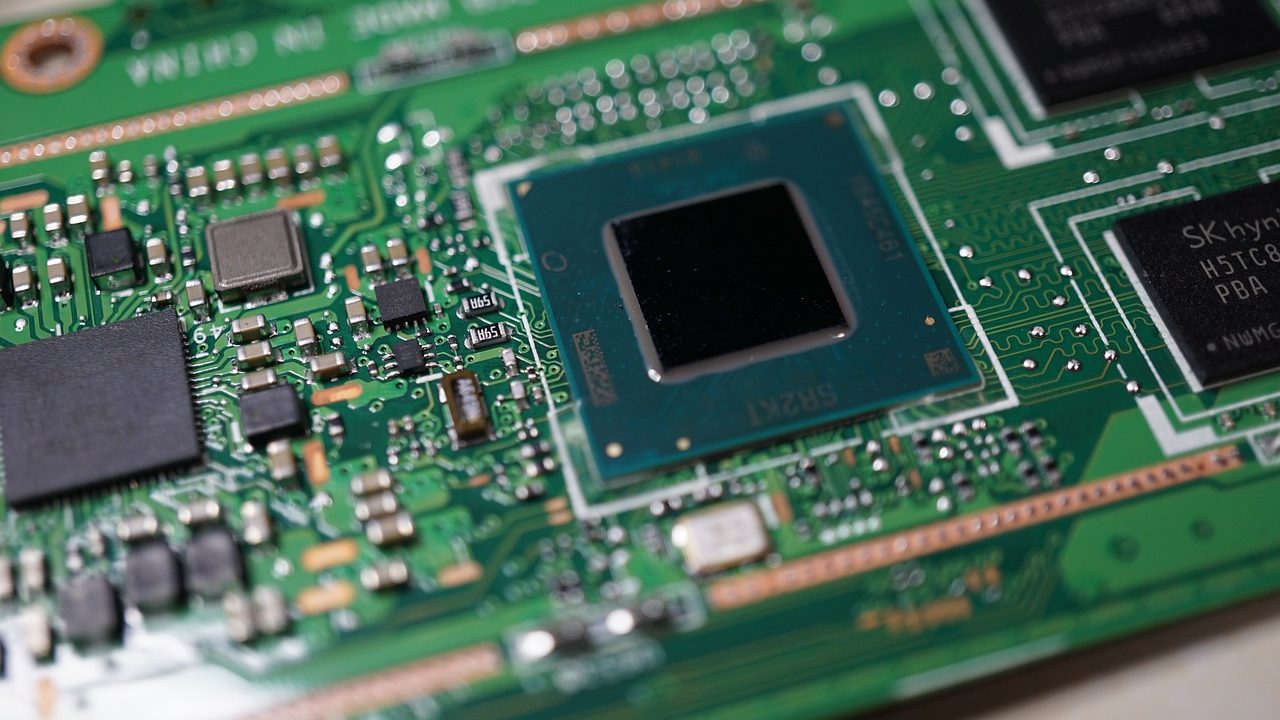
At the hardware frontier, a Show HN entry demonstrated a small language model running on an ESP32-S3 microcontroller retailing for eight dollars — a chip with 512 kilobytes of RAM and 8 megabytes of flash. Practical output quality is limited, but as a demonstration of the lower bound for language model inference in IoT contexts, it brackets one end of a capability spectrum whose upper end is represented by Maple-Preview: a 20-billion-parameter ternary mixture-of-experts model achieving 120 tokens per second on an iPhone. Ternary weight representation — encoding each weight as negative one, zero, or positive one rather than a floating-point value — reduces memory and compute cost dramatically while, according to recent research, preserving a surprising fraction of full-precision quality. At 120 tokens per second, the speed is production-usable for conversational interaction, with significant implications for privacy-preserving on-device inference and AI features in regions with unreliable connectivity.
Rounding out the hardware and craft segment, a project called Birduino — a card-triggered audio player for learning bird calls, built on Arduino — circulated with the quiet affection that Hacker News reserves for things built out of genuine enthusiasm rather than commercial intent. And an 1851 English translation of Hero of Alexandria's pneumatics treatise, documenting first-century working steam-powered and coin-operated devices, earned 34 upvotes as a reminder of what the platform's audience finds intrinsically exciting.
Testing Confident Claims: On-Device AI, Antitrust Basics, and the GenAI Myths

The Maple-Preview iPhone benchmark generated a widely shared inference: on-device AI has crossed a threshold making cloud inference optional for most use cases. Scrutiny of that claim reveals meaningful caveats. The 120-tokens-per-second figure is almost certainly measured under controlled conditions — specific hardware state, stable thermal environment — while real-world iOS apps contend with background processes, thermal throttling, battery management, and memory pressure. The gap between benchmark and sustained deployment performance can be substantial. Beyond speed, ternary quantization degrades unevenly across task types: tasks requiring precise numerical reasoning or careful logical chaining tend to suffer more than tasks rewarding fluent text generation, meaning a model that scores comparably to a full-precision baseline on general benchmarks may underperform on specific application requirements.
There is also a reference-point problem. Cloud models are updated continuously for all users; on-device models are frozen at the shipped version and updated only through app downloads. User expectations about AI capability are rising against a baseline of continuously improving cloud models, meaning 'good enough today' may not hold as that reference point moves. The honest posture, as noted in the discussion, is that the Maple-Preview result is genuinely impressive and the caveats are genuine: the signal to watch is whether quality complaints cluster around specific task categories in deployed apps and whether ternary training methodology iterates fast enough to maintain parity with cloud model improvements.
An ACM Queue piece cataloguing eight myths about software engineering and generative AI drew 189 comments — the highest engagement in the developer tools category. The paper examines empirical evidence behind claims ranging from 'GenAI will replace most programming jobs within five years' to 'AI-generated code is less secure than human-written code,' finding them ranging from unsubstantiated to actively misleading. The substantive Hacker News debate was not between optimists and skeptics but about measurement: researchers in the thread noted that credible empirical instruments for assessing AI coding-tool productivity effects at population scale do not yet exist, with lines of code a poor metric, deployment frequency confounded by other variables, and developer satisfaction surveys carrying their own biases.
The editorial arguing that analytics platform Pi's intentional minimalism is becoming a competitive advantage against Databricks prompted a curriculum moment on antitrust law. Databricks, valued well above $60 billion at its last funding round, is an extraordinarily capable platform — but its expanded feature surface creates onboarding and operational costs that a simpler, more opinionated entrant can exploit for the majority of common use cases. Antitrust scrutiny of such a player would focus not on market share alone — holding a monopoly is not illegal under the Sherman Act — but on whether licensing structures make data migration prohibitively expensive, technical interfaces create artificial lock-in beyond genuine product complexity, or exclusive dealing arrangements with cloud providers foreclose competition. Courts have historically applied serious scrutiny above roughly 70 percent market share, but the conduct that produced the share matters more than the number itself.
Corrections, Community, and What the Week's Stories Actually Had in Common

The week's highest-scoring Hacker News post — 1,417 points with 81 comments — was not a product launch or a technical paper. It was Stephen Wolfram's personal essay about his late wife, Elise Cawley, a tribute characterized by the warmth and specificity that makes a single life feel present rather than generic. The post and its reception were cited as evidence of the humanity that the Hacker News community does not always receive credit for.
A Wired investigation into a civilian plane crash linked to military GPS-blocking operations circulated alongside the week's technology stories as a quieter cautionary note. Military GPS interference in certain training corridors is legal and operationally common; the FAA maintains Notices to Airmen about interference zones. The investigation documented how the system for ensuring real-time civilian pilot awareness of active interference remains imperfect, and the crash it examined is a case study in the consequences of that gap.
The show also issued a direct correction: a claim made in mid-May that Ukraine had struck Russian ships in the Caspian Sea was flatly wrong. The Caspian is landlocked, located well over a thousand kilometers from any territory Ukraine has controlled, and no such events occurred. The error was attributed to insufficient scrutiny of a dramatic-sounding claim before broadcast — precisely the condition under which verification is most necessary.
If the week had a unifying theme, it was the question of what anyone actually controls in a networked world. Xbox players discovered that physical disc ownership does not guarantee access. iCloud Private Relay users found their IP addresses more visible than the service's premise allows. And the open-source community, through Munich's libexpat funding and the Bugtraq revival, continued the unglamorous work of ensuring that foundational infrastructure does not quietly decay beneath the applications everyone depends on.