Robotics Breakthroughs, Physics Paradoxes, and a Rocket Bound for the Moon: The Tech World's Thursday
From DeepMind's claim of whole-body robot intelligence to a muon anomaly that grew more puzzling after a supposed resolution, Thursday's Hacker News front page traced the jagged edge of what science and engineering can and cannot yet do. A rocket stage is six days from lunar impact, solid-state batteries remain tantalizingly out of reach, and a cloud database vulnerability reminded users that multi-tenant isolation is never quite as solid as it looks.
“the real cost of technical debt today isn't write time, it's review time.”
How this was made Verified AI
Every Intellegix briefing is generated from that day's broadcast and run through automated checks before it publishes — with a human paged on any flag. Here is the trail for this edition.
A Snow Globe of Big Ideas: What Thursday's Front Page Reveals

Thursday's Hacker News front page ranged from humanoid robotics and a particle-physics crisis to vintage pinball machines and decorative tilework — a spread that, taken together, says something about where the technology community's collective curiosity is pointing. Nearly 190 comments gathered beneath the DeepMind robotics announcement alone, a reliable signal that a story has genuinely landed.
The day's lineup included DeepMind's Gemini Robotics 2 platform, a new theoretical calculation that resolved one physics disagreement while creating another, confirmed lunar-impact tracking for a wayward rocket stage, solid-state battery engineering, a serious Azure cloud vulnerability, and Ron Gilbert's official announcement that Thimbleweed Park 2 is in active production. Developer tools, retro computing, internet governance, and a Wikipedia deep-dive on Portuguese tilework rounded out a characteristically eclectic slate.
DeepMind's Whole-Body Robot and a Muon Mystery That Got Messier

Google DeepMind published the Gemini Robotics 2 announcement Wednesday, describing a system that coordinates arm motion, leg movement, balance, and task planning as a unified whole rather than as separately optimized modules stitched together — what the company calls whole-body intelligence. The business framing is deliberate: DeepMind is not positioning itself as a hardware manufacturer but as the software and model layer that physical robot makers will build on top of, an approach one analogy in the discussion compared to Android's relationship with smartphone manufacturers. The timing is pointed, with Figure AI, Physical Intelligence, and other well-funded startups racing toward similar goals.
The technical claim drawing the most scrutiny is around emergent coordination — the idea that the model develops movement strategies that were not explicitly programmed, by training across varied physical scenarios. Critics in the Hacker News thread, including at least one commenter with an apparent robotics research background, argued that whole-body coordination for humanoid robots in unstructured environments remains largely unsolved and that a compelling demo does not demonstrate generalization. The counter-argument is that the underlying Gemini 2.5 reasoning engine is broad enough that the training distribution is genuinely wide — but whether that translates cleanly to physical control loops remains the open question.
The physics story of the day involves a paradox of scientific progress. The muon g-minus-2 anomaly — a long-standing discrepancy between the measured magnetic moment of the muon and the Standard Model's prediction — had been watched for years as a possible signal of new particles or forces. A new lattice QCD calculation, using supercomputers to simulate the strong nuclear force from first principles, now produces a theoretical prediction that matches the experimental measurement far more closely, which should be good news.
Except a second, earlier set of theoretical calculations performed using a data-driven method based on electron-positron collision data does not agree with the new lattice QCD results. Two valid first-principles calculations of the same quantity now disagree with each other, meaning one contains a systematic error that has not yet been found. The stakes are real: if the anomaly was a theoretical error all along rather than a genuine signal, a much-hoped-for window onto physics beyond the Standard Model — including possible evidence for supersymmetric particles — closes.
Solid-State Batteries, a Quiet Glass Shortage, and a Rocket Six Days from the Moon
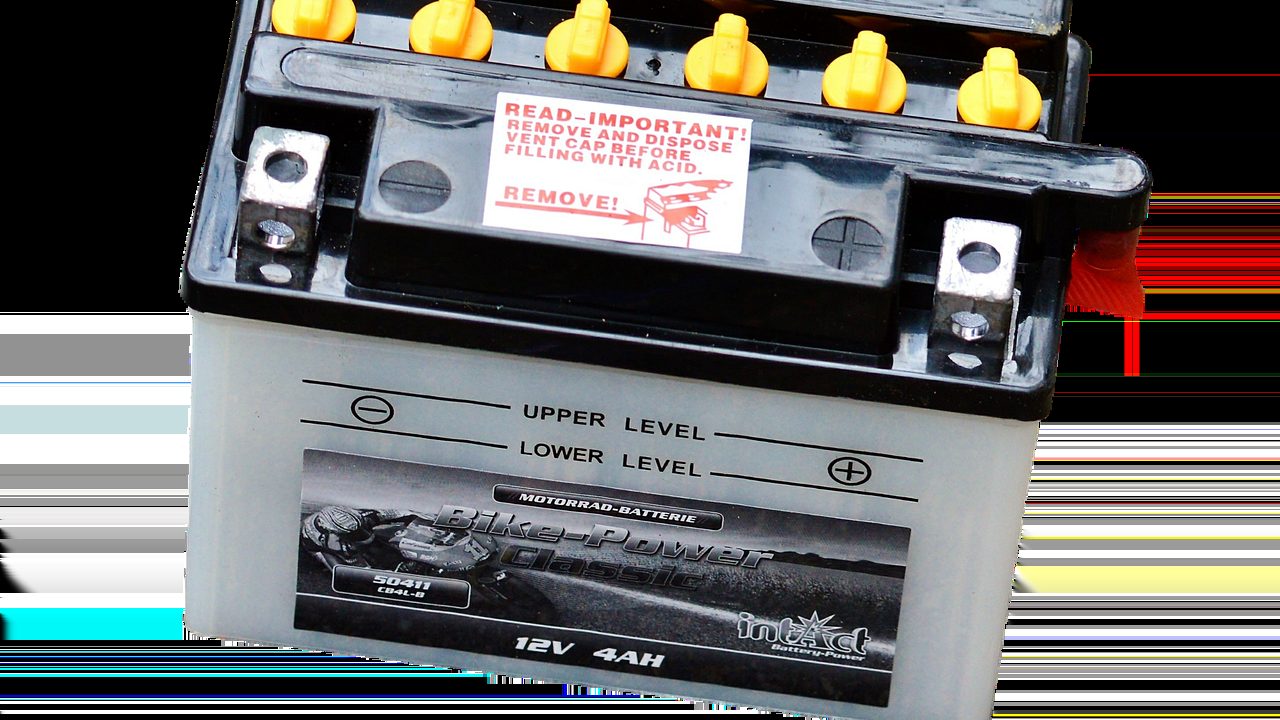
A piece from Construction Physics earned a front-page score by explaining why solid-state batteries are hard rather than merely asserting that they matter. The fundamental appeal is well known: replacing a liquid electrolyte with a solid eliminates the primary fire risk, potentially raises energy density, and extends cycle life. Toyota, Samsung, QuantumScape, and Solid Power all have programs running. The engineering obstacle the article handles well is the interface problem — solid electrolytes and solid electrodes expand and contract at different rates during charging and discharging, causing microcracks that erode ionic conductivity over time. Liquid electrolytes simply accommodate that movement; solid ones cannot.
Manufacturing compounds the materials challenge. Conventional lithium-ion production is a mature, highly optimized process at enormous scale. Solid-state cells require different deposition techniques, often in extremely dry or inert environments, with tighter tolerances throughout. Most credible industry timelines for mass-market solid-state electric vehicles remain in the 2028-to-2032 window despite decades of research, largely because the capital cost of retooling an entire battery supply chain is staggering.
A related materials story — Ed Conway's Glass Famine — describes a quieter supply chain constraint in specialty glass: the specific formulations used in pharmaceutical vials, lab equipment, and advanced display panels. Conway argues that the concentration of specialty glass manufacturing in a small number of facilities, combined with growing demand from biotech and electronics, has created a structural shortage that most people outside those industries have not yet noticed. The pattern fits a broader category of strategic dependencies in non-consumer-facing materials that attract little public policy attention compared with semiconductors or rare earth metals.
The space story carries a specific date. A rocket upper stage — the tracking community's best current assessment identifies it as a Chinese booster, though some ambiguity about the exact mission persists — is on a confirmed impact trajectory with the moon, with the projectpluto.com tracking page placing the strike on August 5th, six days out. The object has been in a chaotic, sun-perturbed orbit for several years, an unusual trajectory attributed to a disposal maneuver that apparently never occurred after a mission to the lunar vicinity. There is a small incidental science payoff: any operational lunar seismometers could capture the impact signal, and the ejecta plume may be detectable from orbiting spacecraft. Also on the physical-world beat, an IEEE Spectrum piece profiled Olinia, a Mexican startup designing electric vehicles specifically for Mexican road conditions and variable grid reliability — framed as a test case for whether the EV transition can happen in emerging markets on their own terms.
Refactoring in the AI Age, a Cloud Escape Route, and Pre-Loaded Spyware on the Cheap

A piece attributed to Martin Fowler takes an angle on technical debt that hasn't been widely framed before: given that generative AI coding tools can produce working code faster than humans, does that change the economic case for refactoring? The article's answer is no — but the reasoning shifts. The cost of a messy codebase in an AI-assisted workflow isn't slower code generation; it's that models trained on inconsistent, poorly structured context make confident-sounding completions that are semantically wrong given what the system is actually supposed to do. Refactoring improves AI tool effectiveness by improving signal quality. A highly upvoted comment in the HN thread reinforced the point: the real cost of technical debt today isn't write time, it's review time.
Grafana released an open-source Go SDK for building LLM-powered backends, with companion React components on the frontend. The company is betting that engineering teams already using Grafana for observability will want a Grafana-native path to adding AI features to internal tools. The SDK handles streaming responses, tool-calling, and conversation state — infrastructure plumbing that most teams building on large language models currently assemble from scratch. A smaller Show HN entry called claude-account drew attention for solving a specific friction point: switching between multiple Claude Code accounts without a full logout-login cycle, storing session tokens keyed to profile names.
Security researcher Brian Krebs published a warning about low-cost Android-based streaming sticks — the kind sold on marketplace platforms for fifteen to thirty dollars — that ship with pre-installed malware capable of credential exfiltration, ad injection, and click-fraud network participation. The attack surface is the home network: once on a shared WiFi connection, the device can probe other connected hardware. The root cause is weak supply chain integrity at the low end of the Android TV market, outside Google's certification program for major brands. The practical recommendation from Krebs is to buy only from Roku, Amazon Fire, Apple TV, or Chromecast through verified retailers.
The more structurally alarming security disclosure came from Wiz Research, which found a way to escape the isolation boundaries of Azure Cosmos DB — a multi-tenant managed database service — and potentially reach other customers' data. The attack chain involves a container escape into the underlying host infrastructure, giving an attacker blast radius across the entire Cosmos DB fleet rather than a single tenant. Microsoft has patched the vulnerability, and Wiz reported no evidence of exploitation in the wild. The researchers framed the underlying issue as a feature of multi-tenant cloud architecture generally: serverless databases rely on isolation layers that can sometimes be peeled back, meaning the threat model for managed cloud databases is more complex than simply delegating security to the provider.
Logic Gates to Pinball: The Joy of Building Things That Don't Need to Scale
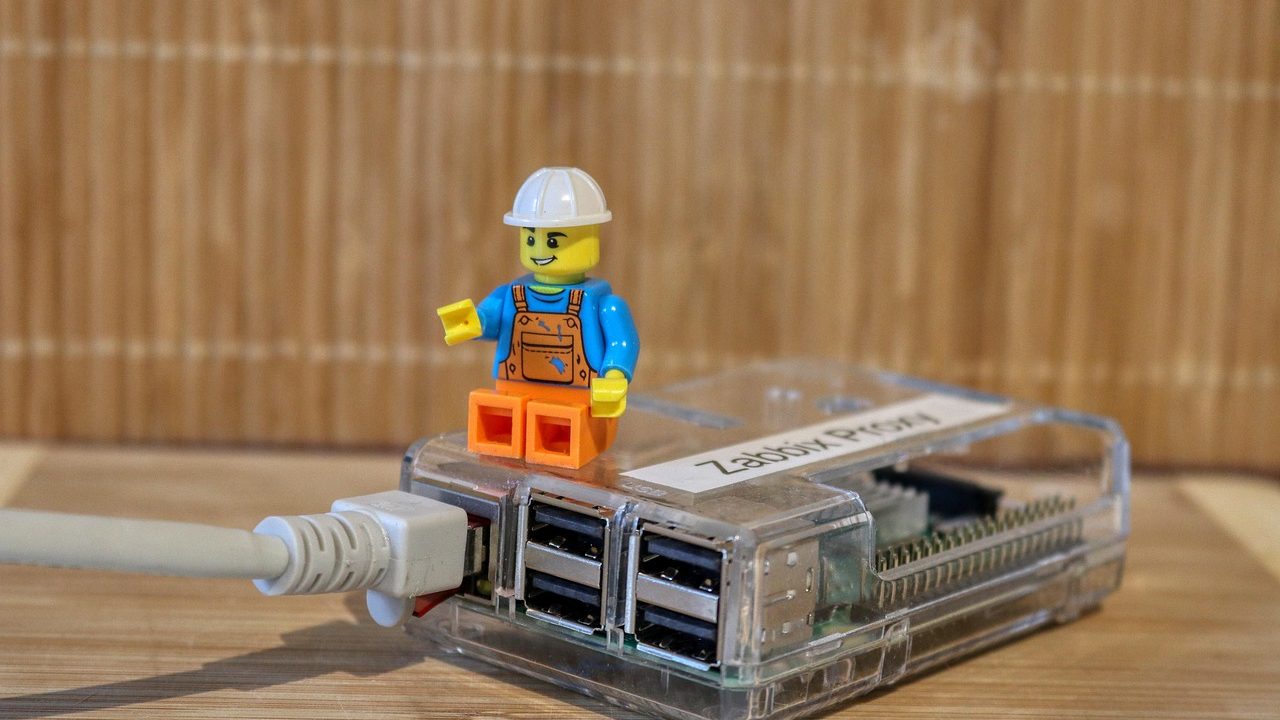
A cluster of Thursday stories shares no headline theme but a common sensibility: people building things for the pleasure of building, and the Hacker News community voting accordingly. Gpiozero Flow, written by Ben Nuttall — one of the original Gpiozero library developers — adds a visual dataflow programming interface to the Python library used to connect sensors and motors to Raspberry Pi hardware. Users draw diagrams where components are nodes and data flows along edges; Flow compiles those diagrams into optimized static Python rather than interpreting them at runtime, which matters on resource-constrained hardware like a Pi Zero. The pedagogical appeal is real: visual dataflow lowers the conceptual barrier for beginners who understand cause-and-effect better than imperative code.
A Show HN project called Chipbuilder drew favorable comparisons to Nand2Tetris, the long-beloved computer architecture course. The premise is graphical and progressive: start with basic logic gates, build half-adders, then full adders, then registers, then a functioning CPU, with visual feedback showing signals propagating through each circuit. Where Nand2Tetris has users write hardware description language by hand, Chipbuilder is immediate — a distinction that matters for the insight it's trying to deliver, namely that a CPU is logic gates arranged in particular patterns all the way down.
The RCade project documents a homebuilt arcade cabinet with a CI/CD pipeline: new game ROMs deploy by pushing to a Git repository, with testing pipelines, rollback capability, and deployment logs. The cabinet drives a CRT display, which the creator notes is functionally necessary rather than merely nostalgic — many classic 1980s arcade games were designed with CRT scanline behavior baked into their visual appearance and look subtly wrong on flat panels. The 3D Pinball for Windows, playable in a browser through the 98.js Windows 98 emulation project, carries its own cultural weight: Space Cadet shipped with Windows XP and was quietly removed in Vista, making it the background noise of an entire generation's early computing.
The azulejo Wikipedia article earned 144 upvotes and 45 comments — a remarkable score for an encyclopedia link. The article covers the tradition of decorative glazed tilework that originated in the Islamic world and became central to Portuguese, Spanish, and Latin American visual culture, tracing it from 15th-century Moorish influence through regional variations from Lisbon to Bahia to Seville and into the chemistry of tin-glazed earthenware. A sub-thread examined whether the tradition is being displaced by cheaper digitally-printed tiles that approximate the look without the craft — a question that the same community dissecting cloud architecture vulnerabilities apparently found worth forty-five comments.
Ron Gilbert announced on his Grumpy Gamer blog that production has officially started on Thimbleweed Park 2. Gilbert was the lead designer on Maniac Mansion and The Secret of Monkey Island; Thimbleweed Park, released in 2014 following a Kickstarter campaign, was a deliberate return to the point-and-click adventure format those games helped define. The HN thread combined nostalgia with a pragmatic question: whether the mechanics that felt fresh in 1990 can feel fresh thirty-six years later, or whether a sequel must find a way to honor the tradition while genuinely evolving it. Gilbert's announcement post is, by accounts in the thread, characteristically self-aware about that tension.
Startups, Antitrust Context, and a Stress Test for the Robotics Scaling Hypothesis

Two YC S26 companies surfaced in Thursday's feed. Prized is building a platform for non-engineering staff to create secure internal tools without writing code, with security-first positioning: the permission model is designed to prevent accidental data exposure structurally rather than relying on users understanding access control correctly. The HN thread included skepticism about how robust that claim is in practice, but the product is clearly aimed at the IT and security buyer rather than the end user — a smart framing given that the failure mode companies fear from citizen-developer platforms isn't a broken tool but an inadvertently exposed database.
The no-code and low-code market provides a useful entry point into antitrust context. Under the Sherman Antitrust Act of 1890, having a monopoly is not itself illegal — what Section 2 prohibits is acquiring or maintaining a monopoly through exclusionary conduct, behavior that suppresses competition without reflecting better products or lower prices. Courts define the relevant market before assessing market power: in the Microsoft case of 2000, which resulted in a finding of Section 2 violation, the relevant market was PC operating systems, where Microsoft held over ninety percent share, and the violation turned on specific conduct like tying Internet Explorer to Windows to foreclose browser competition. For a startup like Prized, the antitrust frame matters less directly than as structural context: hyperscaler incumbents including Microsoft's Power Platform, Salesforce, and ServiceNow hold distribution advantages in adjacent spaces that create barriers for smaller entrants — a competitive challenge, though not a legal violation.
A DuckDB paging blog post offered a practical engineering finding: when paginating through a large Parquet file, using the file_row_number virtual column is substantially faster than SQL OFFSET, because OFFSET requires scanning all preceding rows while file_row_number can skip directly to the relevant row group. A separate post proposed cryptographic URL signing as a mechanism for verifying both the origin and integrity of links in emails and documents, with HN commenters flagging adoption challenges given that the scheme requires both sender and destination to support the protocol. Low-Tech Magazine contributed a piece on balcony awnings as passive solar cooling — a characteristically low-tech intervention the site argues is underrated relative to active cooling systems, and increasingly practical given rising urban summer temperatures.
The day's most substantive analytical exercise was a stress test of the scaling hypothesis for physical AI — the claim embedded in the Gemini Robotics 2 narrative that large models trained on diverse data will naturally develop general physical intelligence when paired with appropriate hardware. Three specific failure conditions were identified. First, the physical world imposes feedback constraints that language does not: a robot's wrong movement can cause irreversible consequences, and training on video of robot demonstrations does not capture proprioceptive feedback, contact forces, or the full sensory state of the robot during the demonstration. Second, the assumption that intelligence generalizes across physical form factors is unproven — a model trained on bipedal locomotion data does not obviously transfer to a robotic arm on a fixed base. Third, robotics research benchmarks have a documented history of overfitting to demo conditions, making it difficult to assess true generalization from published results. The signal that would justify higher confidence, by this analysis, is sustained third-party performance evaluation with adversarial test conditions — and that has not yet appeared consistently in the literature.
Craft, Trust, and a Correction: Three Threads That Ran Through the Day

Stepping back from the individual stories, three threads ran across Thursday's front page. The first is craft under pressure — solid-state battery engineers working around ceramic interface physics, physicists interrogating decades of electron-positron collision measurements, azulejo artisans whose tradition is being displaced by digital printing. The community's appetite for stories about hard things done well, regardless of domain, is consistent and telling.
The second thread is trust infrastructure. The CosmosEscape vulnerability, the Krebs warning on streaming sticks, the cryptographic URL-signing proposal, and RFC 8890 — the 2020 Internet Architecture Board document arguing that internet technical standards should prioritize end users when their interests conflict with those of operators, vendors, or governments — are all variations on the same question: who has the authority to define what systems do, and how do you verify it? That question is simultaneously technical and political, and the two cannot be separated neatly.
On the science calendar, the muon anomaly will require watching over the next year or two. The discrepancy between the lattice QCD calculation and the data-driven calculation must be resolved before the anomaly can be considered settled, and additional experimental data from the Muon g-2 experiment at Fermilab may help arbitrate between the two approaches. August 5th — six days out at time of publication — brings the concrete satisfaction of orbital mechanics predictions tested against reality, when the tracked rocket stage is expected to reach the lunar surface.
A correction also belongs in the record. In coverage on May 18th, a report stated that Ukraine had struck Russian ships in the Caspian Sea. The Caspian Sea is landlocked, bordered by Russia, Kazakhstan, Turkmenistan, Iran, and Azerbaijan; Ukraine has no access to it and no credible strike capability there. The report was wrong. Separately, a prediction from the same episode — that companies ignoring a certain trend would face unexpected competition — was flagged as too vague to be meaningful, a hedge that could apply to almost any trend in any industry. Future predictions will aim to specify the mechanism, the timeline, and the measurable outcome; where that is not possible, the prediction will not be made.