Cloud Billing Phantoms, Camera GPS Leaks, and Fifty Years of the Z80: A Day in Tech's Trust Crisis
A $1.7 billion billing phantom on Amazon Web Services, a six-year GPS leak buried in smart cameras, and a landmark chip anniversary converged on Saturday to illuminate a single, urgent theme: the systems professionals trust most are the ones most quietly failing them.

“the camera purchased for security was reportedly undermining it in a way they had no means to detect”
How this was made Verified AI
Every Intellegix briefing is generated from that day's broadcast and run through automated checks before it publishes — with a human paged on any flag. Here is the trail for this edition.
From Phantom Billions to Exoplanets: What's on the Radar

Saturday's edition of the Hacker News daily digest arrived with an unusual breadth of urgency — a nine-figure cloud billing error, a half-century chip milestone, a potentially atmosphere-bearing exoplanet, and a security flaw that reportedly broadcast the precise home coordinates of roughly 2.2 million smart camera owners for nearly six years without detection.
The day's dispatches ranged from TP-Link Kasa cameras silently leaking GPS data through an unauthenticated UDP port, to LG monitors pushing unapproved software through Windows Update, to a framework designed to cryptographically verify software supply chains from source code to deployment. Rounding out the lineup: static search trees clocking speeds 40 times faster than binary search, SQLite production learnings, a port of the nanochat model from PyTorch to TPU, the Zilog Z80 at 50, and an open-source e-reader seeking crowdfunding.
The podcast is produced independently, drawing its content from Hacker News at news.ycombinator.com and carrying no affiliation with or endorsement from Y Combinator.
AWS's $1.7 Billion Billing Phantom Shakes Cloud Finance Trust

Amazon Web Services posted an official status notice acknowledging that estimated billing data shown to customers was inaccurate, with the figure attached to the discrepancy reaching $1.7 billion. AWS clarified that actual invoices were not affected — but that legal distinction, analysts and engineers argued, misses the practical damage almost entirely.
In cloud-native organizations, estimated billing dashboards are not decorative. Finance teams use them for monthly accruals — accounting entries that recognize expenses before invoices arrive. Engineering teams rely on billing estimates to trigger autoscaling, set budget alerts, and evaluate whether new feature deployments remain within cost bounds. Participants in the Hacker News thread, which drew 1,213 upvotes and 715 comments by publication time, described specific real-world consequences: one commenter recounted waking to a PagerDuty alert because a billing estimate had jumped by a factor of several hundred overnight, triggering incident response resources and engineering hours.
The root cause has not been fully disclosed, but the HN community has focused on a plausible theory: a join or aggregation error in the billing data pipeline, where cost data from multiple regions or services was summed incorrectly — possibly double-counted or subject to a unit conversion error compounding across millions of metered line items. Cloud billing systems process hundreds of billions of individual events per day across services with distinct pricing models, making such errors difficult to catch before they surface in customer dashboards.
The episode raises unresolved regulatory questions. If a publicly traded company's finance team used AWS billing estimates as an input to quarterly cost guidance and those estimates were materially wrong, that could constitute a disclosure issue — not AWS's legal liability, but a consequence of the structural dependency that cloud-native finance has built on vendor-supplied preliminary data. Third-party cost management tools such as Cloudability and Vantage were cited as partial mitigants, though they ultimately pull from the same AWS billing APIs, meaning corrupted source data flows downstream regardless.
A full postmortem has not yet appeared. The HN community, which maintains a long institutional memory for how vendors handle incidents, is watching closely: the level of technical detail in that postmortem, when it arrives, will carry significant weight for how the industry reassesses cloud billing trust.
Three Security Failures and the Framework Trying to Stop the Next One

Three distinct security stories converged on Saturday to sketch a portrait of where consumer and enterprise security is struggling: LG monitors pushing unapproved software through Windows Update, TP-Link Kasa cameras leaking home GPS coordinates through an unauthenticated port, and a renewed push for the in-toto supply chain verification framework as a structural remedy.
The LG story centers on a trust relationship Microsoft has long maintained with users: that Windows Update delivers security patches and system updates from verified sources, not ancillary software. Microsoft's Windows Hardware Quality Labs program allows hardware vendors to publish driver packages through Windows Update, ostensibly limited to software that enables the hardware to function. LG's use of that channel to install additional software — without user notification or consent — exploits the implicit contract users have with the update mechanism. The HN community has questioned whether Microsoft's certification process inspects package payloads in detail or primarily performs a code-signing check, and whether the episode could attract regulatory scrutiny given that a dominant platform's control over software distribution channels has drawn increasing attention from competition authorities, particularly in the European Union.
The TP-Link Kasa story is more serious in its privacy implications. Security researcher BadChemical published findings that the Kasa EC71 camera model — and potentially a wider product family — leaked precise GPS coordinates via an unauthenticated UDP port. This was not locked behind any authentication wall: any device on the same network, or in some configurations reachable from outside it, could query the port and receive the exact geographic location the camera owner had entered during setup. The flaw reportedly sat in deployed devices for approximately six years before being publicly documented. For roughly 2.2 million deployed devices by some estimates, that meant six years of home locations — not city-level approximations but GPS-coordinate-level precision — quietly available to anyone who knew to look. For domestic abuse survivors or others whose physical location constitutes sensitive information, the camera purchased for security was reportedly undermining it in a way they had no means to detect. The fix is straightforward in principle — authenticate the discovery protocol or strip sensitive metadata from responses — but a significant fraction of IoT device owners never apply firmware updates, leaving the legacy of already-deployed hardware as an enduring problem.
The in-toto framework, a Cloud Native Computing Foundation project, addresses the structural problem underlying both incidents at a deeper level. It works by requiring each step in the software supply chain to produce a signed cryptographic attestation — essentially a verifiable receipt stating that a specific authorized party produced a specific output from a specific input. Chaining those attestations from source code to final package creates a tamper-evident record: if any step is compromised, the chain breaks and the anomaly becomes detectable. Renewed HN interest in in-toto is likely connected to the growing visibility of supply chain attacks following incidents including SolarWinds in 2020 and the XZ Utils compromise in 2024. Organizations are increasingly asking not just whether a package is signed, but whether the entire path from commit to deployment can be verified.
Kimi K3 and the TPU Frontier: What Hardware Diversity Actually Costs
Two AI stories on Saturday illuminate where the frontier of model development and hardware strategy currently sits. Simon Willison's analysis of Kimi K3, the latest model from Chinese lab Moonshot AI, uses the pelican benchmark to argue that aggregate leaderboard scores are losing their discriminating power — and that the pattern of a model's failures is now as informative as its headline number. Separately, a detailed technical writeup on porting the nanochat model from PyTorch to JAX for TPU execution documents what actually breaks when training workloads move to Google's custom hardware.
The pelican benchmark tests reasoning about unusual, low-frequency scenarios that models cannot navigate through pattern matching against training data, because the scenarios are deliberately constructed to fall outside common distributions. Willison's analysis found that Kimi K3 shows specific strengths in certain reasoning chains while falling short on others — a fingerprint of architectural capability and brittleness that aggregate scores obscure. The K3 results are also a data point in an ongoing empirical argument: Moonshot AI is among a cluster of Chinese labs, alongside Zhipu AI and Baidu, demonstrating frontier-level model performance despite U.S. export controls on advanced semiconductors, raising questions about whether chip access restrictions are materially constraining Chinese AI development. The story drew 353 points and 185 comments.
The nanochat TPU porting writeup addresses the less glamorous side of hardware diversity. PyTorch uses an eager execution model — operations execute immediately, making debugging intuitive. JAX, the native framework for TPUs, uses a functional transformation model in which pure functions are written first, then transformed with primitives like jit for compilation, vmap for batching, and pmap for cross-device parallelism. The mental shift is significant: PyTorch patterns including in-place operations, dynamic graph construction, and certain forms of conditional logic either fail in JAX or require substantial restructuring. The nanochat author describes specific cases where PyTorch idioms had to be rewritten from scratch. This software ecosystem fragmentation means that moving workloads across hardware is not plug-and-play — and that ecosystem lock-in, whether to TPUs via JAX or to Nvidia via CUDA, is an architectural consequence as much as a commercial strategy.
The Z80 at 50, Caches, and the Argument for Working Within Constraints
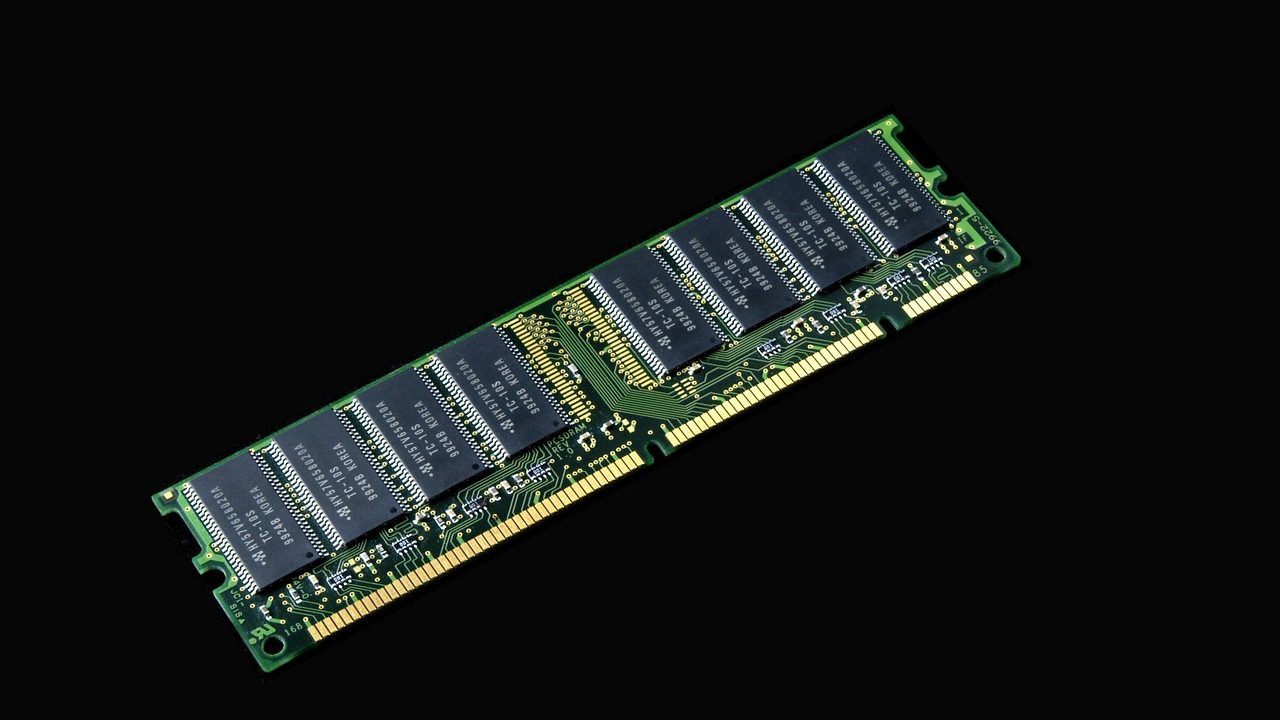
The Zilog Z80 turned 50 this year, and the milestone attracted the kind of HN discussion that goes well beyond nostalgia. Introduced in 1976 by Federico Faggin and Masatoshi Shima — who had previously worked on the Intel 8080 — the Z80 powered the TRS-80, the ZX Spectrum, the Amstrad CPC, and thousands of embedded systems across industrial, medical, and consumer applications. Fifty years later, the Z80 instruction set architecture remains in production in various forms. At 2.5 MHz the Z80 executed roughly one to two million instructions per second, a figure that invites an obvious comparison to modern cores executing billions. What the HN anniversary discussion returned to was not that gap but its implication: the Z80 was architecturally comprehensible — a skilled engineer could hold the entire design in their head and reason about every clock cycle. That transparency is essentially impossible with modern out-of-order superscalar processors.
The static search trees paper — technically a 2024 post resurfacing on HN — makes a related argument through a very different lens. Binary search on a sorted array is optimal in comparisons, requiring at most log-base-2 of N to find any element, but comparisons are not the bottleneck on modern hardware: cache behavior is. Binary search jumps around an array in patterns that hardware prefetchers cannot anticipate, generating cache misses that dominate total cost on large datasets. Static search trees rearrange sorted data in a B-tree-like memory layout aligned to cache lines, so that each lookup accesses memory in patterns the prefetcher can handle. The reported benchmark result is 40 times faster than naive binary search — but the honest qualification is that this advantage materializes only for datasets too large to fit in L3 cache, roughly tens of millions of elements or more. For datasets with temporal locality or non-random access patterns, the gap narrows considerably. Static search trees are also immutable by design; any insertion or deletion requires rebuilding the structure, making them best suited to read-heavy, write-rare workloads. Much of the underlying optimization, it was noted, is already implemented heuristically in production database B-tree indexes including PostgreSQL's.
Julia Evans's SQLite production piece added practical texture to the systems theme. Her analysis covers what happens in high-concurrency scenarios, how write-ahead logging mode changes the behavior of simultaneous readers and writers, and where SQLite's single-writer limitation creates real bottlenecks versus where it doesn't — the latter being more common than assumed. The Open Book Touch, an open-source e-reader on a custom board with an e-ink display currently seeking funding on Crowd Supply, and the Stenchill 3D-printable solder paste stencil generator rounded out a segment whose implicit argument was consistent: raw resources rarely substitute for clear understanding of the system you're working within.
Gratitude, Grocery Patterns, and the Art of Getting Things Wrong Creatively

The post that drew the most personal response on Saturday was a thank-you letter from a user identified as nicholasjbs, reflecting on 15 years in the Hacker News community and crediting it with helping them find what they described as their life's work. It scored 633 points and attracted 70 comments — remarkable figures for a personal reflection carrying no product announcement or technical finding. What distinguished it from generic appreciation posts was specificity: particular conversations, particular ideas surfaced in comment threads, particular moments when a shared link led somewhere consequential. The comment section filled with parallel accounts.
The regressive JPEGs project at maurycyz.com offered a sharply different register. The project inverts the JPEG compression algorithm's optimization target — rather than compressing toward high-quality output, it deliberately seeks the most aesthetically interesting incorrect representations, iterating compression to produce color banding, blocking artifacts, and emergent visual patterns that function as generative art. The HN community's 403-point response reflected a shared recognition: JPEG's lossy artifacts, normally treated as degradation to minimize, become a creative medium when approached intentionally. The IKEA Complexity Index, a scraped and ranked database of IKEA furniture by assembly complexity using step count, part count, tool requirements, and component diversity, generated its own productive thread — part shared trauma, part genuine analysis of how assembly instruction design has evolved across the company's history.
A post titled 'Three Ways People Respond to a Problem Other Than Solving It' drew 142 comments by cataloguing the patterns: denial that the problem exists, reassignment of responsibility to someone else, and redefinition of success criteria so the problem no longer constitutes failure. The framework itself is intuitive; the thread's value lay in the organizational examples engineers, founders, and policy professionals contributed from their own experience. Complementing the introspective tone was a piece on 'dirt notebooks' — physical notebooks maintained specifically for rough, unfinished thinking, explicitly not journals or project logs, but spaces designated for messy in-progress ideas not ready to be shared.
The Vāgdhenu Sanskrit chanting text-to-speech system attracted 185 points for work that is technically ambitious in an underserved domain. Building a TTS system for Sanskrit requires handling complex sandhi rules, specific prosodic requirements for Vedic chanting, and limited digital training data. Getting prosody right for chanting is a distinct problem from conversational TTS — it demands accurate capture of rhythm, pitch patterns, and the specific articulation of Vedic recitation. An Instacart order co-occurrence analysis, running association rule mining across 3.2 million grocery orders, completed the lineup by surfacing unexpected item pairs that co-occur at rates unexplainable by chance — results the thread described as simultaneously revealing about American grocery habits and genuinely funny.
The segment closed with a 'What If We're Wrong' exercise applied to the day's most confidently stated technical claim: the 40-times speed advantage of static search trees over binary search. The strongest version of the counterargument is that the gain is real but narrowly conditioned — it requires large datasets, random access patterns, and a benchmark measuring lookup throughput in isolation. Workloads with temporal locality, hot-element skew, or sequential access patterns may see the gap narrow dramatically, and the optimization is already implemented heuristically in production database systems. The honest framing: a useful and formalizing theoretical contribution most relevant to specialized high-performance contexts, not a general replacement for binary search across application development.
Trust as Infrastructure: What Saturday's Stories Share
The through-line across Saturday's episode is the tension between trust and verification. The AWS billing story is about whether vendor-supplied numbers can be relied upon for financial planning. The LG monitor story is about whether a hardware company can be trusted to respect the implicit contract of a software update channel. The TP-Link story is about whether a security device might be creating the exact vulnerability it was purchased to prevent. In-toto is a direct attempt to make trust mechanically verifiable rather than assumed. None of these failures, it was noted, trace to malicious actors in the conventional sense — AWS did not intend to show wrong numbers, LG likely did not anticipate the implications of its Windows Update approach, and TP-Link's unauthenticated UDP port was probably an engineering shortcut that was never revisited. Failures of systems and incentives are harder to fix than failures of individual actors, because there is no single bad actor to remove.
The technical stories carry a parallel argument. The Z80 was durable partly because it was comprehensible. SQLite is powerful partly because its single-writer constraint forces clarity about access patterns. Static search trees only outperform binary search when the bottleneck has been correctly diagnosed. In each case, the performance or longevity comes from understanding the system rather than assuming that additional resources resolve underlying problems.
The exoplanet story — reporting what appeared to be the first atmospheric detection on an Earth-like planet in a habitable zone, enabled by the James Webb Space Telescope's transmission spectroscopy capability — was flagged as the day's story with the longest potential tail. Coverage was careful to distinguish 'atmosphere detected' from 'biosignatures detected,' and the HN community maintained the same rigor. The methodological advance, however, was described as real: JWST performing this analysis at these distances was not a given even five years ago.
The episode also carried an explicit correction. In a prior May broadcast, the podcast stated that Ukraine had struck Russian ships in the Caspian Sea. That claim was wrong: the Caspian Sea is landlocked and deep inside Russian territory, making any military operations there geographically impossible. The correction was offered as a concrete example of the risk that AI-assisted research pipelines can produce plausible-sounding claims that do not survive basic factual checks.