Cerf Retires, Circular GPU Debt, and the Infrastructure Questions Defining the AI Era
From Vint Cerf's departure after fifty years shaping the internet to a web of leveraged GPU financing that some analysts are comparing to the fiber-optic bubble, Sunday's Hacker News surfaced a set of stories united by a single thread: how foundational infrastructure gets built, financed, and stressed across generations.

“UPI's success depended on regulatory mandates requiring bank participation and prohibiting consumer transaction fees, eliminating the adoption friction that defeated most Western mobile payment experiments in the 2010s.”
How this was made Verified AI
Every Intellegix briefing is generated from that day's broadcast and run through automated checks before it publishes — with a human paged on any flag. Here is the trail for this edition.
The Internet's Architect Steps Down
Vint Cerf, the co-designer of TCP/IP alongside Bob Kahn and the protocol suite's most enduring public champion, is retiring at eighty-two from his role as Chief Internet Evangelist at Google, a position he has held since 2005. A TechCrunch piece surfacing on Hacker News framed the departure as the end of an era — a characterization that, given Cerf's half-century of technical and political engagement, is difficult to dispute.
What distinguishes Cerf's career is the combination of foundational invention and sustained advocacy. After co-authoring the RFC specifications in the 1970s, he spent subsequent decades actively campaigning for net neutrality, open standards, and internet access as a human right — positions that at various points put him at odds with the very company that employed him. The internet's extensibility, critics and admirers alike agree, is precisely why it absorbed the web, mobile computing, streaming, and the current AI layer — none of which Cerf and Kahn specifically designed for.
Hacker News commenters pushed back on purely celebratory framing, noting that TCP/IP's design choices — particularly the absence of built-in authentication at the network layer — left structural gaps that produced decades of security problems, from email spam to BGP hijacking. Those gaps, the discussion noted, reflect design assumptions from an era when the network's users were a small, mutually trusting academic community. Whether that constitutes a flaw or an unavoidable product of the design context remains contested.
Cerf's retirement arrives as the principles TCP/IP encoded — end-to-end neutrality, packet-switched resilience, no single point of control — are being renegotiated in practice. Large-scale AI inference distributed across heterogeneous compute clusters, edge computing blurring client-server boundaries, and regulatory regimes in the EU, India, and China effectively partitioning what was intended as a global network are all applying structural pressure that no revision to the specifications has yet addressed.
Peer-to-Peer AI: A Project Tests the Internet's Founding Philosophy on Compute

A project called Mesh LLM, generating serious discussion in the Hacker News community, is asking whether large language model inference requires centralized data centers at all — or whether that centralization is simply the path of least resistance given available infrastructure. The project enables distributed AI inference across heterogeneous nodes using iroh, a peer-to-peer networking library built on the QUIC protocol developed by the team at number zero.
Iroh provides hole-punching and relay capabilities that allow nodes behind NAT and firewalls to communicate directly — a problem that most peer-to-peer systems handle badly. Mesh LLM layers on top of that a coordination mechanism for routing inference requests across contributing nodes, structuring the arrangement as something analogous to BitTorrent-style resource sharing applied to AI compute rather than file transfer.
The business challenge Mesh LLM addresses is significant: essentially all commercial LLM inference currently runs through a handful of massive data centers operated by OpenAI, Anthropic, Google, and Microsoft. Latency is the acknowledged constraint — distributed inference over peer-to-peer links will have higher and more variable latency than a rack of accelerators communicating over InfiniBand. For interactive applications that is a genuine limitation; for batch workloads or cost-sensitive use cases, the tradeoff looks different.
Sixty comments on the HN thread included pointed skepticism about the incentive structure for node operators — the documentation does not fully specify why a contributing node would participate. That remains an open question. But the connection to Cerf's legacy was explicit in the discussion: the internet's original architecture was deliberately designed to route around centralization, a principle influenced partly by Cold War concerns about network resilience. Mesh LLM is, in effect, asking whether that same logic can be applied one layer up, at the compute level.
Simplicity vs. Scale: The AI Agent Debate and a Crowded JavaScript Runtime Market
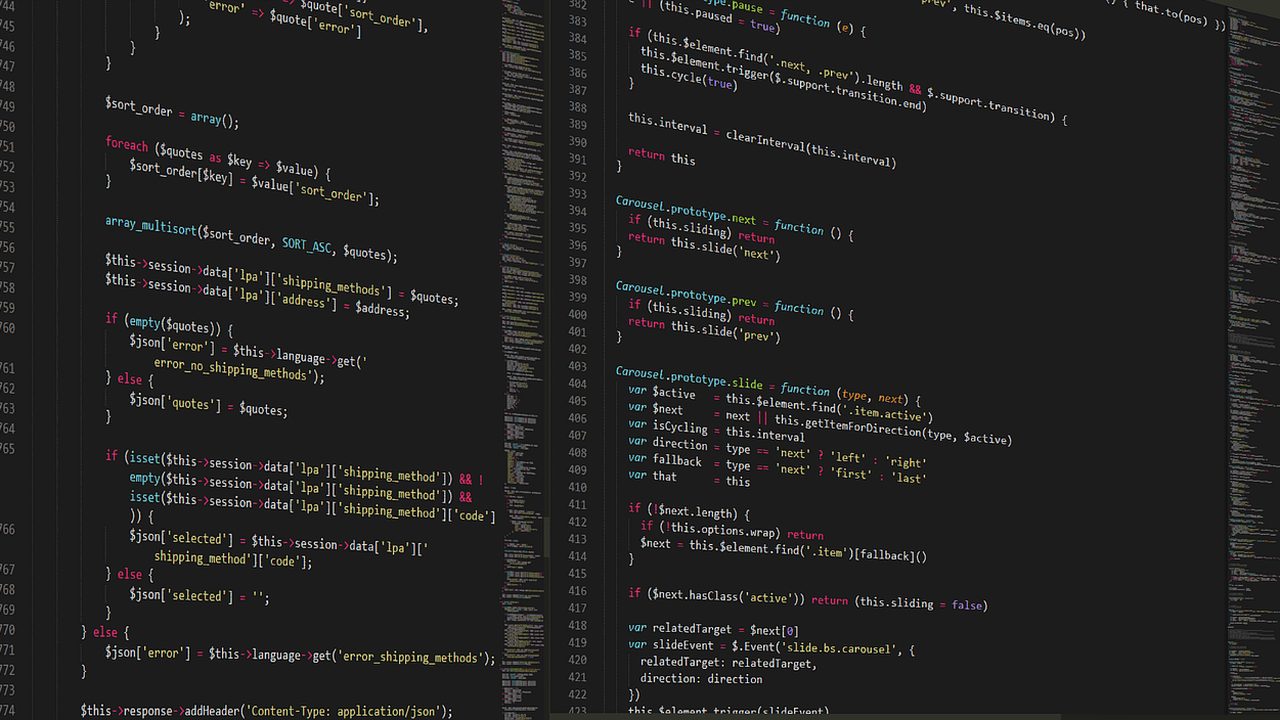
A blog post demonstrating a functional AI agent written in one hundred lines of Lisp earned a hundred sixty-six points and thirty-six comments on Hacker News — notable attention for a piece that is, at its core, an argument for minimalism. The post, from Jamie Beach's personal site, uses Common Lisp macros to build a recursive tool-calling loop: define available tools, write a dispatch function keyed to the LLM's output, feed results back into the context window. The entire implementation fits on a single screen.
The HN discussion quickly moved from technical elegance to a structural question about whether the complexity in current agent frameworks — LangChain, AutoGen, and their peers, running to hundreds of thousands of lines — is incidental or essential. One camp argued the frameworks became complex because they were shipping production features rapidly, not because agents are inherently complex. The counterargument was that production requirements genuinely add up: error recovery, retry logic, state persistence across sessions, observability hooks, and compliance audit trails each contribute real code. Both positions drew significant support.
A related Show HN project, Mindwalk from cosmtrek, earned seventy-seven points for a different approach to agent complexity: a debugging and visualization tool that replays coding agent sessions on a three-dimensional map of a codebase, letting developers watch the agent's reasoning path through the code graph rather than reconstructing it from logs. One of the hardest problems with AI agents in production is interpretability after the fact; a spatial visualization may make traversal patterns substantially more legible.
In the runtime space, a new JavaScript and TypeScript runtime called Ant — built on V8 by developer theMackabu and targeting the same territory as Deno and Bun — earned two hundred seventy-five points and a hundred twenty comments. The most upvoted responses were variations of 'do we need another JavaScript runtime,' answered by counter-responses noting that identical skepticism greeted Deno when Node existed and Bun when Deno existed. Ant's current differentiator appears to involve its module system and package management, though documentation remains sparse; the community's response was a request for benchmarks and a production use case. Separately, Buf's new Python Protobuf library earned fifty-seven points and uniformly positive early comments from developers who have long found the official Google implementation's developer experience lacking — specifically, it reportedly generates idiomatic Python objects rather than the awkward message wrappers the official library produces.
Database Discipline, Connection Pooling Gains, and the Infrastructure Powering 14 Billion Monthly Payments

A blog post titled 'Prefer Strict Tables in SQLite' earned three hundred three points and a hundred forty-eight comments — an unusually strong signal for a post about a database feature. The argument is straightforward: SQLite, one of the most widely deployed pieces of software in existence, is permissive about types by default, allowing a string to be inserted into an INTEGER column without complaint. SQLite 3.37, released in 2021, added STRICT table mode as an optional feature that enforces declared column types in the way most developers coming from Postgres or MySQL intuitively expect. The post argues strict mode should be the default mental model for anyone building with SQLite today.
The HN discussion surfaced that SQLite's type flexibility was a deliberate design choice by D. Richard Hipp, not an oversight, intended to make the database forgiving of external data sources. A significant portion of commenters concluded that the philosophy made sense for embedded use cases in 2000 but that the bar has shifted now that SQLite serves as a primary database for production web applications — particularly in the Litestream and Turso ecosystems, where Postgres-level type guarantees matter.
ClickHouse's engineering post describing how they scaled PgBouncer to four times its previous throughput earned two hundred sixteen points and fifty-three comments. PgBouncer is a connection pooler that multiplexes many application connections onto a smaller pool of actual Postgres connections — a critical infrastructure layer for any web application handling thousands of concurrent requests. The standard PgBouncer has historically been single-threaded, creating a bottleneck on multi-core hardware before the database itself is saturated. ClickHouse's gains came from a combination of upgrading to a more recent version with improved event loop handling, tuning pool sizing based on careful profiling, and restructuring connection reuse patterns — and the write-up is explicit that some of the improvement came from correcting configuration mistakes that had been in production for a long time.
The most expansive infrastructure story in this cluster covers India's Unified Payments Interface, which processed approximately fourteen billion transactions in May 2026 alone — more digital payment transactions in a single month than most countries conduct in a year. A detailed architectural breakdown on HN explains the hub-and-spoke model operated by the National Payments Corporation of India, with banks participating as payer or beneficiary service providers and NPCI routing transactions in real time. The two-factor authentication model is technically notable: a UPI PIN is never transmitted to the merchant or to NPCI but is used locally on device to generate a cryptographic signature proving authorization without exposing the credential itself — a clean implementation of minimum disclosure. The business story is equally instructive: UPI's success depended on regulatory mandates requiring bank participation and prohibiting consumer transaction fees, eliminating the adoption friction that defeated most Western mobile payment experiments in the 2010s. Google Pay, PhonePe, and Paytm all run on UPI's rails as competing front-ends for the same government-run infrastructure, not as competing payment networks.
Open Silicon, Fracturing Fluids, Long COVID in Cardiac Tissue, and What a Billion Sketches Reveal About Culture

RISCBoy, an open-source portable games console designed from the transistor level up and implemented on an FPGA with a custom RISC-V soft-core processor, earned a hundred fifty points on HN. What distinguishes the project is the absence of any black-box IP cores: the RISC-V processor, display controller, and audio pipeline are all written in Verilog and publicly available. In an era of pervasive proprietary firmware, a fully open hardware gaming device is genuinely rare. The RISC-V instruction set architecture being open was a prerequisite — five years ago, an equivalent project would have required ARM licensing fees or a truly niche architecture. The bill of materials remains high compared to commercial devices, and the project requires FPGA development experience, but as an educational platform and proof of concept it is considered significant by the HN community.
An autopsy study presented at a major pathology conference found replicating SARS-CoV-2 in the heart tissue of patients with Long COVID — a finding that earned seventy-two points on HN and deserves careful attention. The significance lies in the word 'replicating': prior research had established that viral RNA fragments persist in Long COVID patients' tissues, but RNA fragments can be residue from the original infection and do not prove active viral presence. Evidence of active viral replication in cardiac tissue months or years after the initial infection points toward different treatment approaches — potentially antiviral therapies rather than purely immunomodulatory ones. Caveats apply: this is conference abstract-level evidence, not a peer-reviewed longitudinal study, and autopsy populations are not representative of the broader Long COVID population. As a signal warranting larger studies, however, it is significant.
A Quanta Magazine piece on liquid fracture behavior earned ninety-four points and forty-seven comments by reporting that simple liquids — including water — can fracture under certain high-strain-rate conditions, a result that challenges classical fluid mechanics' definition of liquids as materials that flow rather than fracture. When a liquid is pulled apart faster than its molecular relaxation time, it temporarily behaves as a solid and can fracture; the fracture surfaces then immediately relax back into droplets. The experimental setup used high-speed laser cavitation to measure mechanical response at nanosecond timescales. Practical implications include improvements to therapeutic ultrasound and lithotripsy — the shock-wave procedure used to break up kidney stones.
A study analyzing billions of sketches from Google's Quick, Draw! dataset — over a billion human drawings collected through an online game — found systematic, culturally driven variation in how people from different countries conceptualize the same objects. When asked to quickly draw a 'chair,' participants from Japan and the United States produced sketches that differed in which features were emphasized, which canonical orientation was chosen, and which type of chair was treated as the default mental image. The arxiv paper earned a hundred four points, with the HN discussion focusing on downstream implications for AI systems: if training data is disproportionately drawn from certain cultural contexts, models learn those cultural defaults as universal. Image generation models consistently producing culturally inflected outputs from neutral prompts — a 'village' rendered in American suburb aesthetics, 'traditional food' dominated by over-represented cuisines — now has a principled measurement framework rather than only anecdotal documentation.
The GPU Debt Loop: How Circular Financing Is Funding the AI Buildout

A piece from IO Fund titled 'Nvidia, CoreWeave, and Nebius: Inside the Circular Financing of the GPU Boom' earned two hundred seventy-seven points and a hundred ten comments on Hacker News — and may be the most consequential business story of the week. The article's core claim is that several major players in the AI compute ecosystem are engaged in financing arrangements that create circular dependencies: Nvidia sells GPUs to CoreWeave through financing arrangements; CoreWeave uses those GPUs to provide compute services to AI companies, many of which are backed by venture capital with exposure to Nvidia's stock; the GPU assets on CoreWeave's balance sheet serve as collateral for additional debt financing; that financing is used to purchase more Nvidia GPUs. Nebius — the AI cloud infrastructure company formerly known as Yandex's international business — reportedly operates in a similar pattern, building out infrastructure on debt collateralized by depreciating hardware to serve customers burning venture capital.
The IO Fund piece argues this structure means Nvidia's revenue growth is partially self-reinforcing in a way that does not reflect genuine organic end-user demand. A significant portion of GPU demand is being driven by leveraged cloud infrastructure companies whose customers are themselves sustained by venture funding. HN commenters drawing bearish conclusions pointed to the fiber optic buildout of the late 1990s: telecoms borrowed heavily to build capacity, that capacity justified further borrowing, and when actual traffic growth failed to match projections the structure unwound sharply. WorldCom's fraud was partly a concealment of that underlying dynamic.
Bulls counter that the comparison is imprecise because GPU compute, unlike dark fiber, is being actively consumed — utilization rates on these clusters are real, models being trained are producing real revenue for real end users, and the debt is against assets that generate cash while they depreciate. The more important bull case is that enterprise demand from companies like JPMorgan, Walmart, and major pharmaceutical firms — using internal capital, not venture funding — may be large enough to absorb a venture slowdown without cascade. Those enterprises represent a demand floor that fiber capacity never had.
The critical uncertainty is one the available data cannot resolve: what fraction of CoreWeave's and Nebius's contracts are with venture-backed AI startups versus enterprises with independent capital? That mix is not publicly disclosed at sufficient granularity. The signal to watch is contract renewal rates over the next two quarters — rates dropping below sixty percent or contract durations shortening materially would suggest customers are losing confidence in their own ability to sustain demand, the early warning sign of circular demand becoming real. Conversely, strong renewal rates and new enterprise logos in customer lists would support the argument that the demand base is broadening. Nvidia's next earnings call, specifically geographic and customer-type breakdowns of data center revenue, offers another data point: if hyperscaler capex levels off while pure-play AI cloud provider revenue grows, the circular financing risk is concentrating rather than dispersing.
Corrections, Caveats, and the Week's Connective Thread

A correction merits direct acknowledgment: a previous episode of this program stated that Ukraine had struck Russian ships in the Caspian Sea. Listeners were right to flag the error — Ukraine has no credible military capability to reach the Caspian, which is landlocked and thousands of kilometers from Ukrainian-controlled territory. The detail should not have appeared in the script; to the extent it originated in an AI-assisted research pipeline, it represents a failure of fact-checking that the program is taking seriously.
Several stories did not receive full treatment this week but are worth noting. A piece on Fibonacci's Liber Abaci argues the book's genuine contribution was not the sequence bearing his name but the systematic introduction of place-value arithmetic to medieval Europe — a change that transformed commerce and science. A 1993 paper by Stewart on the history of Singular Value Decomposition continues resurfacing on HN as one of the best mathematical history write-ups in the numerical analysis literature, recommended for any machine learning practitioner who uses SVD without knowing its origins. Research on minimalist interior design found that highly sparse environments — white walls, bare surfaces, minimal visual texture — correlate with higher sustained cognitive load in occupants, possibly because the brain's scene recognition systems work harder with less pattern information to anchor on. And the Jellyfish Undersea Roundabout in the Faroe Islands, a traffic roundabout passing beneath a fjord via submerged tunnel, serves as a reminder that civil engineering continues to produce genuinely surprising solutions in unusual geographies.
The stories of the week share a connective thread: the gap between how systems appear in documentation and how they behave under real conditions. SQLite strict tables address the gap between declared types and actual enforcement. The hundred-line Lisp agent exposes the gap between the conceptual simplicity of agents and the complexity of production systems. The Long COVID cardiac research probes the gap between a cleared infection and whatever is actually occurring in tissue that produces persistent symptoms. The GPU financing story is about structural properties of financial infrastructure that are not fully visible until stressed. Vint Cerf spent fifty years on that question at the network layer; the week's other major stories suggest it is the defining question at the compute, payments, and financing layers as well.