Open Silicon, Fracturing Fluids, Long COVID in Cardiac Tissue, and What a Billion Sketches Reveal About Culture
How this was made Verified AI
Every Intellegix briefing is generated from that day's broadcast and run through automated checks before it publishes — with a human paged on any flag. Here is the trail for this edition.
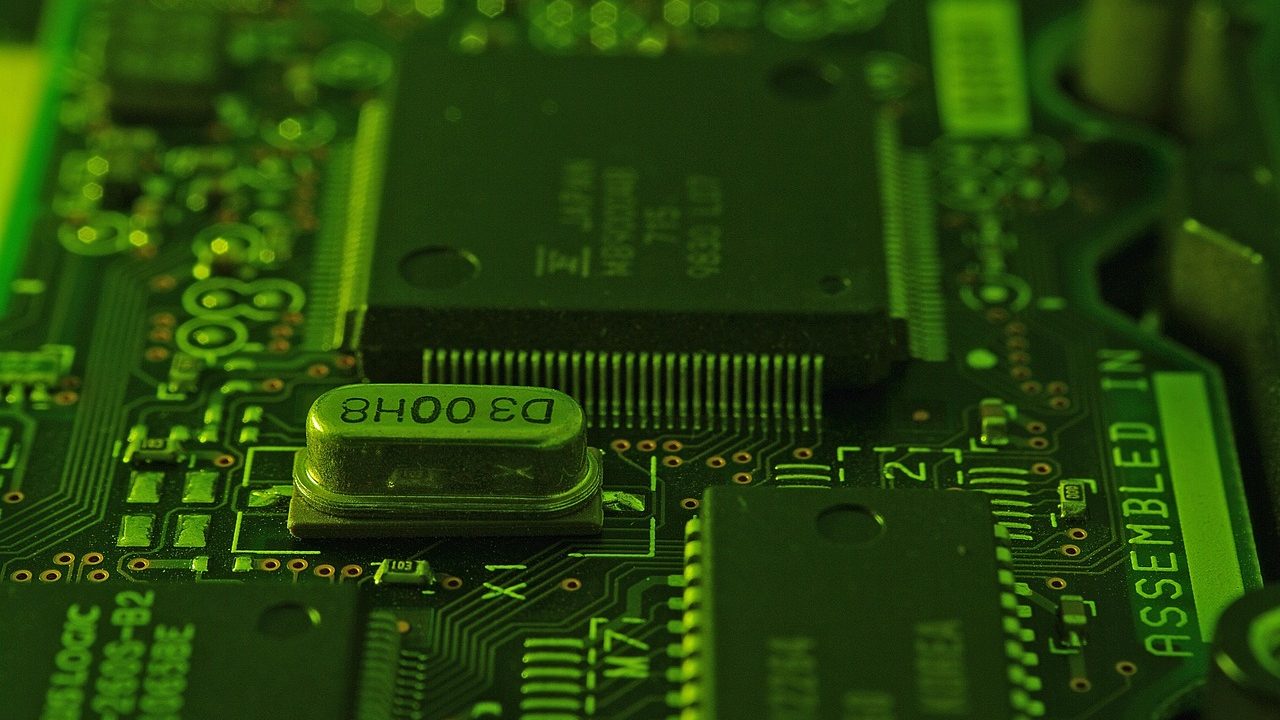
RISCBoy, an open-source portable games console designed from the transistor level up and implemented on an FPGA with a custom RISC-V soft-core processor, earned a hundred fifty points on HN. What distinguishes the project is the absence of any black-box IP cores: the RISC-V processor, display controller, and audio pipeline are all written in Verilog and publicly available. In an era of pervasive proprietary firmware, a fully open hardware gaming device is genuinely rare. The RISC-V instruction set architecture being open was a prerequisite — five years ago, an equivalent project would have required ARM licensing fees or a truly niche architecture. The bill of materials remains high compared to commercial devices, and the project requires FPGA development experience, but as an educational platform and proof of concept it is considered significant by the HN community.
An autopsy study presented at a major pathology conference found replicating SARS-CoV-2 in the heart tissue of patients with Long COVID — a finding that earned seventy-two points on HN and deserves careful attention. The significance lies in the word 'replicating': prior research had established that viral RNA fragments persist in Long COVID patients' tissues, but RNA fragments can be residue from the original infection and do not prove active viral presence. Evidence of active viral replication in cardiac tissue months or years after the initial infection points toward different treatment approaches — potentially antiviral therapies rather than purely immunomodulatory ones. Caveats apply: this is conference abstract-level evidence, not a peer-reviewed longitudinal study, and autopsy populations are not representative of the broader Long COVID population. As a signal warranting larger studies, however, it is significant.
A Quanta Magazine piece on liquid fracture behavior earned ninety-four points and forty-seven comments by reporting that simple liquids — including water — can fracture under certain high-strain-rate conditions, a result that challenges classical fluid mechanics' definition of liquids as materials that flow rather than fracture. When a liquid is pulled apart faster than its molecular relaxation time, it temporarily behaves as a solid and can fracture; the fracture surfaces then immediately relax back into droplets. The experimental setup used high-speed laser cavitation to measure mechanical response at nanosecond timescales. Practical implications include improvements to therapeutic ultrasound and lithotripsy — the shock-wave procedure used to break up kidney stones.
A study analyzing billions of sketches from Google's Quick, Draw! dataset — over a billion human drawings collected through an online game — found systematic, culturally driven variation in how people from different countries conceptualize the same objects. When asked to quickly draw a 'chair,' participants from Japan and the United States produced sketches that differed in which features were emphasized, which canonical orientation was chosen, and which type of chair was treated as the default mental image. The arxiv paper earned a hundred four points, with the HN discussion focusing on downstream implications for AI systems: if training data is disproportionately drawn from certain cultural contexts, models learn those cultural defaults as universal. Image generation models consistently producing culturally inflected outputs from neutral prompts — a 'village' rendered in American suburb aesthetics, 'traditional food' dominated by over-represented cuisines — now has a principled measurement framework rather than only anecdotal documentation.