Synthetic Life, Agentic Payments, and a €4.7B Antitrust Verdict: The Tech Stories Shaping July 2026
Researchers have built a cell from scratch that grows and divides, crossing a threshold in synthetic biology that scientists have chased for decades. That milestone leads a day packed with consequential developments in AI tooling, antitrust law, robotics, and the infrastructure of the web.
“the real test is long-term kernel maintenance commitment, not launch announcements”
How this was made Verified AI
Every Intellegix briefing is generated from that day's broadcast and run through automated checks before it publishes — with a human paged on any flag. Here is the trail for this edition.
Life From Scratch: Scientists Cross the Synthetic Cell Threshold

For the first time, researchers have constructed a cell entirely from non-living chemical components — no parent cell, no biological lineage — that grows and divides. The result, reported by Quanta Magazine and discussed extensively on Hacker News with 868 points and 278 comments, represents a categorical departure from everything that came before it in synthetic biology.
Prior achievements fell into two categories: Craig Venter's team in 2010 inserted synthetic genomes into existing bacterial shells, and subsequent researchers stripped cells down to minimal genomes. Both approaches still relied on a pre-existing cellular chassis. What the current work accomplished was building the physical structure — the membrane and internal machinery — from scratch, and then getting it to replicate. That is the line that had not previously been crossed.
The implications branch in multiple directions. For basic science, the result bears on one of biology's oldest questions: what is the minimum physical and chemical requirement for life? For medicine, cells built to custom specifications open paths to drug delivery systems that are programmable at a biological level. For biosecurity and ethics, it raises questions that existing regulatory frameworks are not currently equipped to handle. The NIH framework for recombinant DNA work dates conceptually to Asilomar in 1975; the European Cartagena Protocol covers genetically modified organisms. Neither was designed for a cell with no biological parent and no lineage to trace.
The Hacker News comment thread split between those treating the result as a scientific milestone and those focused immediately on dual-use implications. One commenter with a synthetic biology background argued that the hard part is not building the first cell — it is that the protocols will eventually become reproducible in less controlled environments. A parallel philosophical thread examined what the result means for vitalism: the intuition that life possesses some property beyond its chemistry. When life can be assembled from inert components, that intuition, several commenters argued, takes a serious hit.
From a commercial standpoint, the biotech sector has watched synthetic biology for decades with substantial investment appetite. Companies including Ginkgo Bioworks and others have been building toward programmable biology. Even as a proof-of-concept, this result is expected to move capital — and the gap between academic demonstration and commercial application in synthetic biology has been compressing.
AI Coding Race: New Models, Tougher Benchmarks, and the Deflating Theorem Economy
Kimi K2.7 Code, the coding-focused model from Chinese AI lab Moonshot AI, became generally available inside GitHub Copilot this week, joining a roster that already includes GPT-4o, Claude Sonnet, and Gemini variants. The integration signals that Microsoft, which owns GitHub, is building Copilot as a multi-model interface layer rather than betting exclusively on any single model — a shift in the competitive axis from which company makes the best coding AI to which platform aggregates the best.
ZCode from Z.ai, described as a harness for Zhipu AI's GLM-5.2 model, generated 414 points and 297 comments — among the highest engagement of the day. Community reaction mixed genuine technical curiosity about the harness architecture with ongoing skepticism about benchmark reliability for Chinese frontier models. Several commenters noted that demo quality was high but that independent evaluation lags behind the marketing cycle.
CursorBench 3.1, Cursor's updated evaluation framework, attempts to measure AI coding agents on tasks closer to real engineering work: debugging across file systems, maintaining context in long codebases, handling ambiguous requirements. A related open-source benchmark, Senior SWE-Bench from Snorkel AI, evaluates agents specifically on work expected of a senior engineer — system design tradeoffs, cross-cutting concerns, and underspecified problems. Early scores on Senior SWE-Bench are reportedly significantly lower than on the original SWE-Bench, which the community largely characterized as an honest result.
A philosophical essay titled 'The Fall of the Theorem Economy' by David Bessis provoked a pointed discussion despite a lower score of 74. Its argument: as AI systems demonstrate competence in pattern-matching and empirical validation, the premium on formal theorem-proving as a signal of intelligence is deflating. Mathematicians in the comment thread pushed back sharply, arguing that theorem-proving is not primarily about credentialing — it is the only method available for establishing certain kinds of truth. An AI system correct 99.9% of the time is still wrong about the 0.1%, and for cryptography, formal verification, and safety-critical systems, that gap is not acceptable. The thread's conclusion, broadly, was that formal proof may be declining in prestige for general software development while becoming more essential in safety-critical AI contexts simultaneously.
Google Loses €4.7B Android Antitrust Appeal as Privacy and Malware Questions Mount

The Court of Justice of the European Union upheld a four-point-seven billion dollar fine — 4.125 billion euros — against Google this week, concluding an eight-year legal process that began with the European Commission's 2018 ruling. The Commission found that Google illegally required Android device manufacturers to pre-install Google Search and Chrome as a condition of licensing the operating system. The court agreed and upheld the fine in full.
The antitrust argument centers on a distinction that market-share figures alone cannot capture. European competition law does not prohibit dominance; it prohibits using dominance in one market to foreclose competition in another. Google's position was that bundling Chrome and Search with Android licensing was efficient — manufacturers received a free, well-tested OS and Google received distribution. The Commission's position was that this arrangement structurally prevented competing browsers and search engines from reaching consumers on the dominant mobile platform. The court sided with the Commission. Going forward, Google operates Android licensing in Europe under modified rules requiring genuine choice screens, though the Hacker News comment thread debated whether those behavioral remedies have materially shifted competitive dynamics or whether Google's position is sufficiently entrenched that the fine functions as a cost of doing business.
On the malware front, F-Droid — the open-source Android app repository favored by privacy-conscious users as an alternative to Google's Play Store — published an advisory about Android malware that drew 722 points and 287 comments. The comment thread actively debated attribution and whether the phrase 'from Google' in the headline refers to Google's infrastructure being abused or to something else. Modern Android malware increasingly exploits legitimate-looking app updates, Android's accessibility APIs, and supply chain compromises of SDKs that legitimate developers include unknowingly.
Also on the privacy side, Google published an open-sourcing of its zero-knowledge proof technology for age assurance. The mechanism allows a user to prove they satisfy an age condition — over 18, for example — without revealing any underlying personal data. The website learns only that the condition is met. The 168-comment HN thread engaged with both the genuine cryptographic utility and the question of whether Google open-sourcing this is primarily a privacy contribution or primarily a move to make Google's identity services the standard infrastructure for age verification across the web. The thread largely concluded that both things can be true simultaneously.
Cloudflare Activates HTTP 402, FFmpeg Earns Its AAC Stripes, and a DIY Robot Vacuum Emerges

Cloudflare announced that any resource sitting behind its network can now charge for access using the x402 protocol — effectively HTTP 402, the 'Payment Required' status code that has existed in the HTTP specification since 1996 but was never widely implemented because no viable payment infrastructure existed. What has changed is twofold: stablecoin settlement on Ethereum and other chains has become fast and cheap enough for micropayments to be practical, and AI agents that consume APIs programmatically are far better suited to autonomous payment flows than human users navigating payment walls.
Cloudflare is positioning x402 as the payment layer for what developers are calling the agentic web — an emerging architecture where AI agents navigate the internet autonomously on behalf of users. If every resource carries a machine-readable price, agents can evaluate cost versus value and execute payments without human intervention. The 213-comment thread ranged from builders already prototyping on the protocol to skeptics who noted that this model concentrates further economic power through Cloudflare's already-substantial network position, and raised fraud concerns: a per-access charging model creates incentives for artificially inflating access counts, a problem payment networks have always faced.
FFmpeg 9.1 introduced a native AAC encoder that replaces previous dependencies on external libraries such as libfdk-aac. Early MUSHRA listening tests at HydrogenAudio — considered the gold standard for lossy audio quality evaluation — indicate the native encoder is competitive with the best commercial and open-source implementations at equivalent bitrates. For developers working in streaming infrastructure, the practical implications include fewer licensing concerns, simpler build systems, and more consistent cross-platform behavior. The 124-comment thread treated this as a meaningful quality improvement for a project that has served as invisible infrastructure for enormous amounts of the world's media for two decades.
Qualcomm Linux 2.0 continued the story of Arm-based Linux development, with Qualcomm publishing board support package improvements, better hardware abstraction layers, and upstream kernel contributions. Community response in 50 comments was positive but measured — the thread noted a history of hardware vendors promising Linux support and delivering inconsistently, and emphasized that the real test is long-term kernel maintenance commitment, not launch announcements. On the maker side, the Oomwoo open-source robot vacuum from the MakersPet project drew 335 points for publishing full hardware designs, firmware, and assembly guides. Comments highlighted the project as a strong robotics education platform, bundling ROS integration, sensor fusion, motor control, and real-time constraint programming into a single buildable project.
Home Robots at $7,999, Meta Enters Cloud, and the Case for Skepticism About the Robotics Price Curve
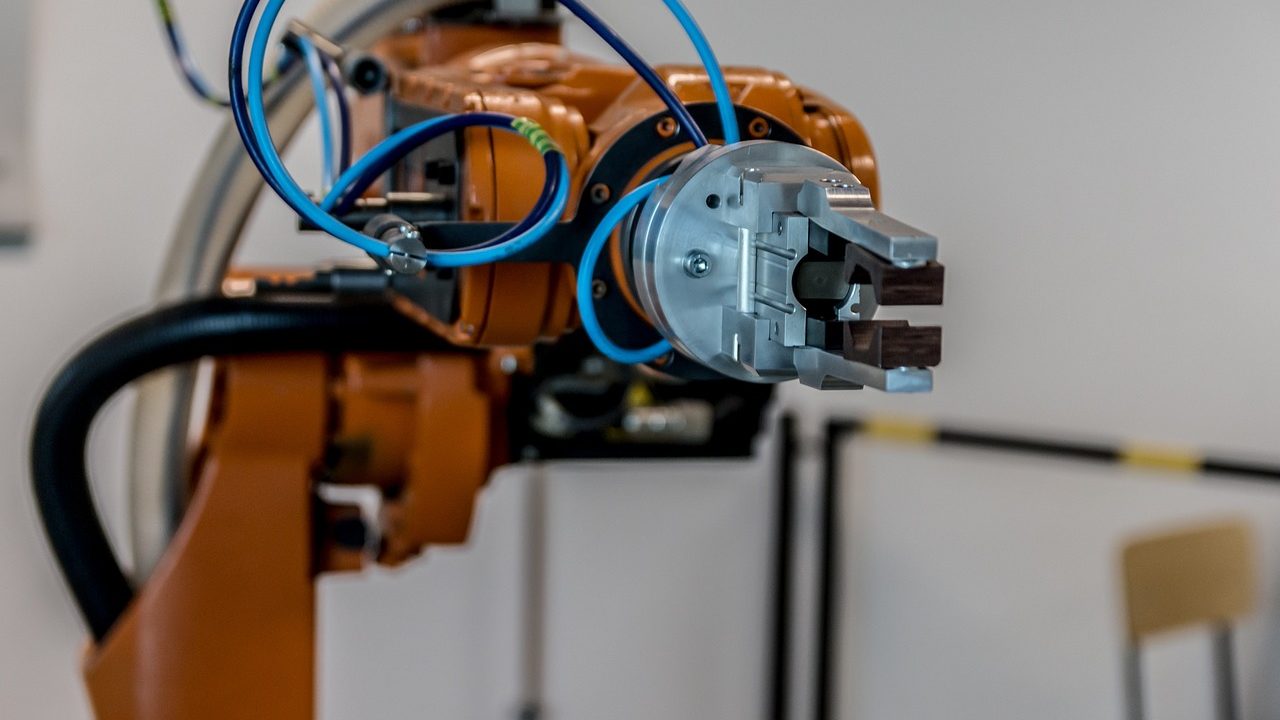
Weave Robotics announced the Isaac 1 — a bipedal home robot designed to navigate domestic environments and perform physical tasks — at $7,999 with Fall 2026 delivery commitments. The announcement drew 192 points and 278 comments. At that price point, the product sits squarely in enthusiast and early-adopter territory, and the dominant question in the thread was whether a credible path exists to the price compression that would make general-purpose home robots a mass-market product.
The optimistic case draws on the EV analogy: the Tesla Roadster in 2008 cost over $100,000; by 2024, EVs were available under $30,000. Scale manufacturing, software improvements without hardware changes, and component cost competition drove that compression. Skeptics in the thread, several of them robotics engineers, offered a structural counterargument. EVs replaced an existing product — the internal combustion vehicle — that consumers were already spending forty to fifty thousand dollars on. The value proposition was substitution of a known expenditure. Home robots are creating a new product category. More critically, EV cost compression was primarily a physical engineering problem with clear progress metrics in battery chemistry and manufacturing scale. Home robot capability requires solving open AI problems: reliable manipulation in unstructured environments, safe behavior around children and pets, and long-context task planning. The research timeline for those problems does not follow the same curve as lithium cell manufacturing.
The practical signal the thread converged on: watch for Isaac 1 and comparable products to achieve task completion rates above 95% on household errands in independent third-party testing — not manufacturer demonstrations or controlled environments, but standardized tests across diverse home configurations. If that figure does not appear by mid-2027, the timeline for mass-market adoption should be revised significantly. If it does, the price compression argument becomes substantially stronger. The technology readiness level, not the price announcement, will determine whether this is an early EV or an early Segway.
On adjacent business developments, Reuters reported that Meta plans to sell excess AI compute capacity through a cloud offering — a direct consequence of its infrastructure buildout for internal AI products, where owned GPU clusters are not saturated around the clock. The move places Meta in indirect competition with AWS, Azure, and Google Cloud for AI compute. Nvidia, meanwhile, is reportedly offering select startup customers access to compute in exchange for a percentage of future revenue rather than upfront payment — a venture-style financing model unusual for a chip company that reflects how central compute access has become to startup trajectories.
A searchable directory of more than 22,000 products from worker-owned cooperatives worldwide generated 362 points — a higher score than many hardware and software announcements. The comment thread attributed this to genuine philosophical and practical interest in alternative ownership structures among a significant portion of the Hacker News readership, with users identifying worker-owned alternatives to products they were buying from conventional companies. The July 2026 'Who Is Hiring' thread, meanwhile, showed meaningful concentration of hiring in AI infrastructure, robotics, and defense technology, and a notable pullback from mid-size SaaS companies — a structural shift from hiring patterns two to three years earlier.
Wombat Geometry, Forum Nostalgia, and the Stories That Round Out the Day

Three stories from today's episode carry particular forward-looking weight. The synthetic cell result opens biological engineering questions that will remain active for decades. Cloudflare's x402 monetization gateway is a quiet infrastructure announcement with outsized potential: if the agentic web develops as the AI community expects, a machine-readable payment layer on every web resource is foundational plumbing. And the Google EU antitrust ruling closes an eight-year legal chapter while opening a new question about whether behavioral remedies imposed after the fact can meaningfully shift entrenched market structures.
Among the day's shorter items, a Science.org piece explaining the biomechanical mechanism by which wombat intestines produce geometrically regular, cube-shaped feces earned 133 points — enough to confirm the Hacker News community's appetite for rigorous explanations of unusual natural phenomena. The piece is, at its core, a materials science question about how soft tissue can shape matter in transit, and the comment thread included mechanical engineers offering theories.
An essay titled 'Bring Back Crappy Forums' from Tedium generated 196 comments. The piece argues that the decline of phpBB and vBulletin-era forums in favor of Reddit, Discord, and Twitter has made the web worse for persistent, searchable, community-owned knowledge. The comment thread offered a counterargument — old forums were often hostile to newcomers and search-unfriendly in practice — while acknowledging that the ownership and archival permanence of forums versus platforms represents a genuine and meaningful difference.
A graphics programming curriculum from demofox.org drew 366 points and 187 comments, offering a path from rasterization fundamentals through ray tracing, GPU architecture, shader programming, and real-time rendering techniques. The comment thread added resources and corrected gaps. Elsewhere, a post about generating a personalized iCal calendar for a local council's recycling collection schedule served as a reminder that programming's value is not confined to frontier AI — sometimes it means never missing recycling day. A game teaching Vim motions through an ice cream van delivery mechanic rounded out the day, with commenters reporting it works as genuine muscle memory training.